
 Membership
 Donate
 Shop
Shop


















Woman's Work: The Wild Life of Martha Maxwell
She didn’t just mount animals—she mounted an entire challenge to nineteenth-century science, one fox and one fearless quote at a time.
You’ve probably walked through a natural history museum and marveled at a fox frozen mid-leap or a grizzly mid-roar, staged in a landscape so vivid you could swear you heard the wind blow.
You might have thought, “Wow, nature is impressive.”
You probably didn’t think about the people who pioneered that immersive style—like a five-foot-tall vegetarian woman from 19th-century Colorado who hunted bears, tanned hides, sculpted poses, and built entire lifelike scenes by hand—all while being told she had no business doing any of it.
But maybe you should’ve.
This is the story of Martha Maxwell, a woman who refused to stay in the parlor where society tried to park her.
She didn’t just break into the boys’ club of science and taxidermy. She gutted it, stuffed it, and mounted it for public display. Long before women were “allowed” in labs or given space in scientific institutions, Martha was hunting, preserving, and building immersive exhibits that would change museum culture forever.
She wasn’t invited to the table, so she built her own—sometimes literally, out of rocks and bones.
She wasn’t interested in becoming “an exception.” She was there to work. And when someone had the audacity to ask why a woman was doing a man’s job, she didn’t offer an apology or excuse. She made it clear she belonged.
So yeah, this isn’t just a history lesson. This is a reclaiming. A resurrection. A reminder that some pioneers carried scalpels instead of compasses—and had just as much grit.
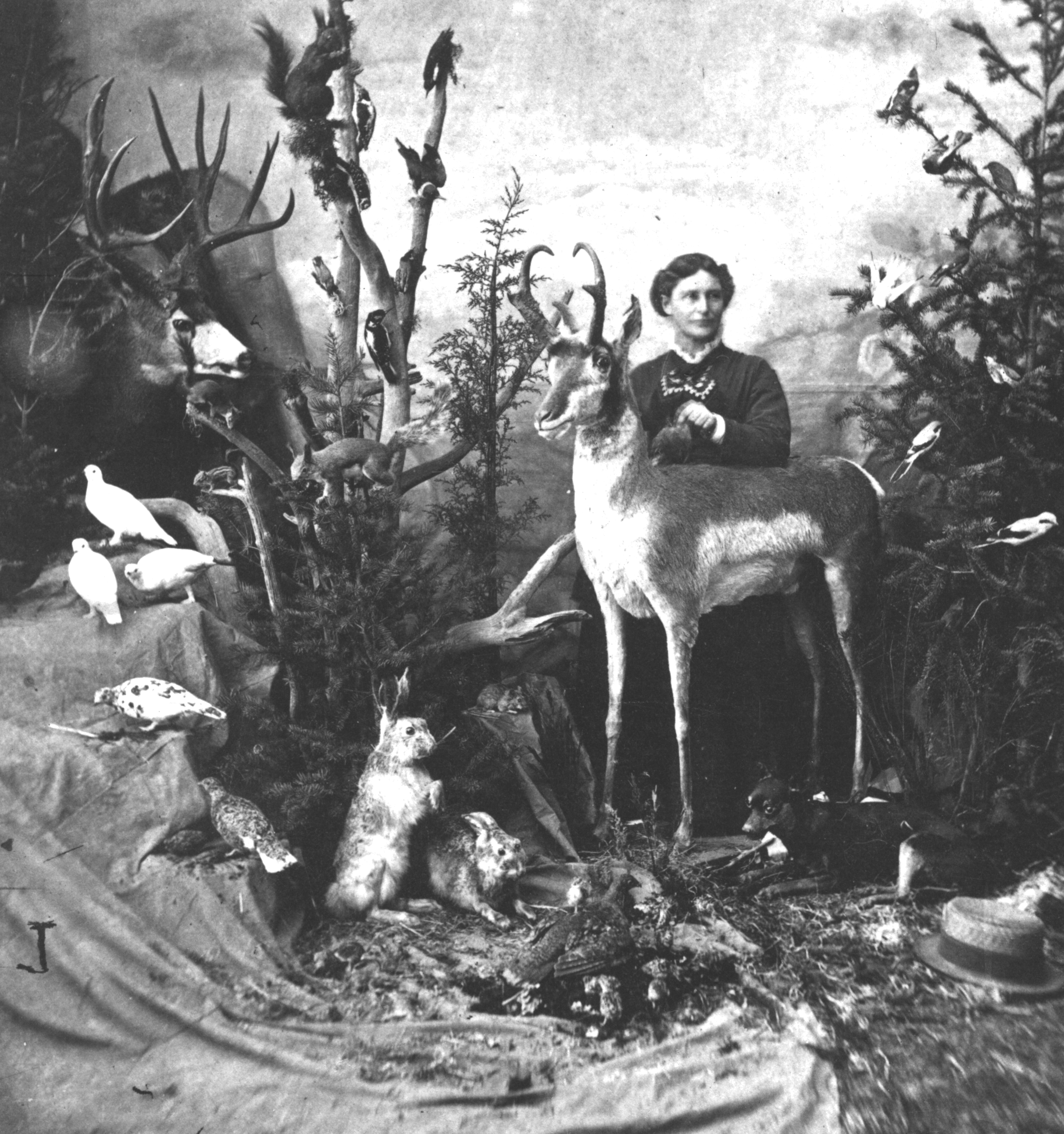
Martha Maxwell stands with specimens and preserved animals.
The Girl in the Woods
Martha Maxwell didn’t exactly ask for permission to be remarkable. She just went ahead and did it.
Born on July 21, 1831, in a log cabin in Dartt’s Settlement, Pennsylvania, by adulthood Martha stood barely five feet tall but packed the stubbornness of a mountain lion. Her earliest years were marked by separation and grief. Her father died suddenly of scarlet fever when she was just two and a half.
Her mother’s chronic illness meant Martha spent much of her childhood with her fiercely independent grandmother, Abigail Sanford—a woman who took her on long walks in the forest, showed her wild plants, and taught her to look nature in the eye, not from behind a window.
This was more than childcare. It was an immersive, backwoods education in curiosity and resilience.
Despite the family’s limited resources, her stepfather, Josiah Dartt, recognized her hunger for learning. In 1847, they managed to send her to Oberlin College, one of the few schools in the country that admitted women.
But she was forced to return home after just one term. The cost of tuition and living expenses proved unsustainable, and her family needed her. Like many working-class women of the era, she was expected to set aside her ambitions and contribute to the household.
Although her time at Oberlin was brief, it left an indelible mark. The exposure to formal education sharpened a drive that would resurface in her scientific work years later.
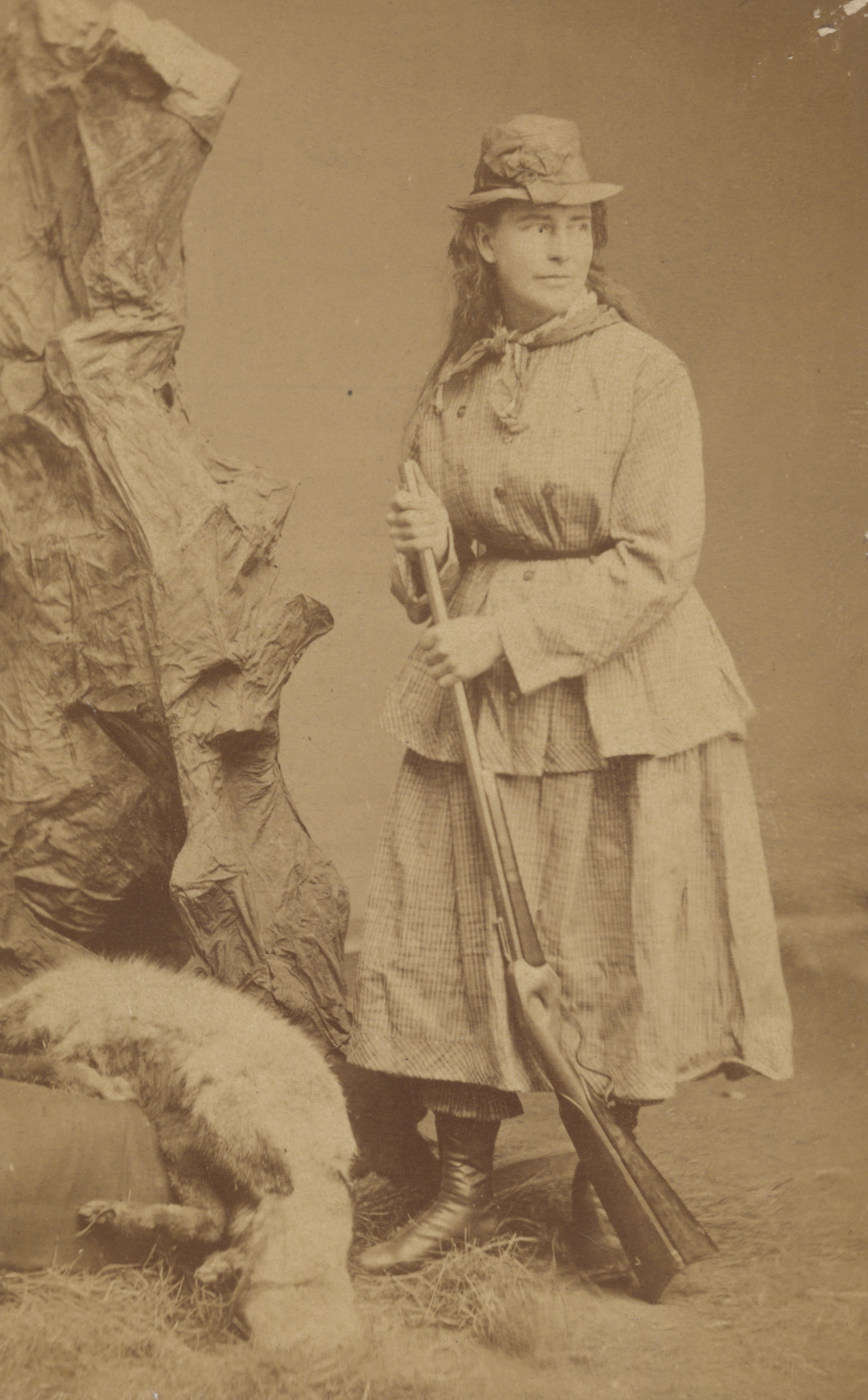
Titled "In the Field," Martha Maxwell poses with a gun and an animal.
Revolution in Fur and Form
Fast forward to 1860, and Martha was in Colorado, chasing a new life with her husband James during the Pikes Peak Gold Rush. He was into gold; she was into wilderness.
After a failed stint running a boarding house (lost to fire), they moved to a cabin outside Denver, only to find it occupied by a squatter.
When the squatter left, he didn’t take all his belongings. Namely, he left behind a box of poorly mounted animal specimens—heads askew, eyes staring in different directions, limbs where limbs probably shouldn’t be. Most people would’ve screamed, gagged, or at least called it cursed.
Martha was fascinated. This was her lightning strike.
There’s something deeply poetic about it: a woman out of place, finding inspiration in animals out of proportion. She studied the odd lumps, the lumpy seams, and decided she could do it better. She had to. This was where fur met fate.
She dove in, first teaching herself from whatever scraps of technique she could find, then—in classic Martha fashion—convincing a professional taxidermist in Wisconsin to take her on as a student. Some sources even suggest she disguised herself as a man to gain access to proper training—not exactly confirmed, but let’s be honest: It sounds like her.
When doors closed, Martha kicked them off the hinges.
At the time, taxidermy was basically corpse-stuffing. Think glassy eyes, rigid limbs, and animals frozen in poses that made them look less like wild creatures and more like poorly sewn puppets.
But Martha wasn’t in it for trophies. She was telling stories.
She studied animal behavior with the patience of a predator—watching, learning, sketching—and then recreated what she saw with remarkable precision. Her animals weren’t dead things on display. They were caught in the act: a fox mid-pounce, a hawk mid-screech, a weasel sniffing for prey. She placed them in full, elaborate habitats with native plants, stones, and even the suggestion of weather.
It was immersive. It was theatrical. And it was decades ahead of its time.
Martha pioneered what we now call the diorama—the centerpiece of modern natural history museums—long before institutions were willing to admit a woman could innovate anything in science, much less redefine an entire medium.
She didn’t just mount animals. She resurrected their world.
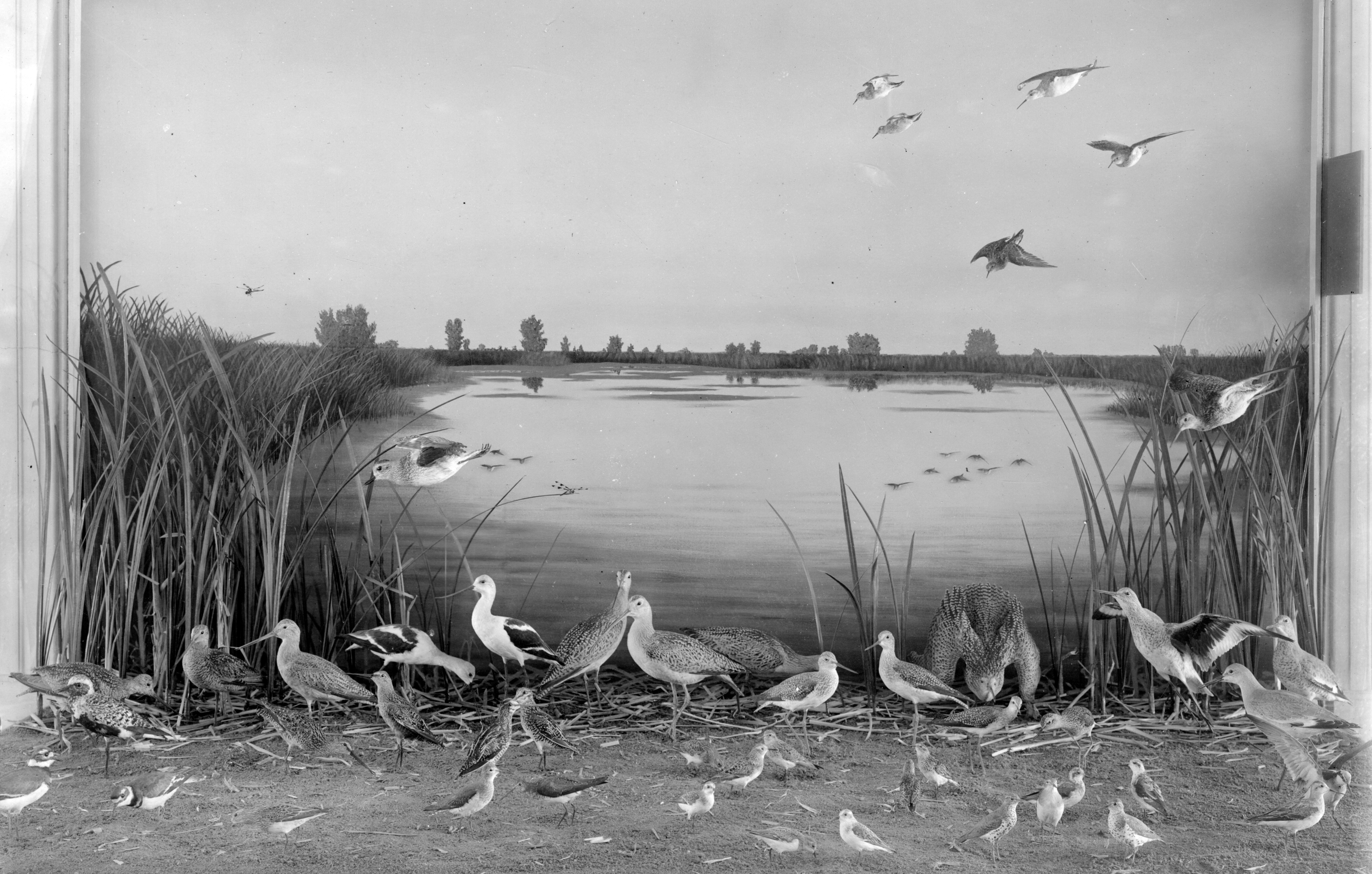
Shore Birds grouping, about 1911. Handwritten on original negative envelope: "#2682 Bird Studies (Shore Birds)" "EB-x-25 Barr Lakes Region Group Shore Birds. Colo. Bird Hall. 1911 Dismantled 1917."
Museums, Mountains, and Misconceptions
By 1874, Martha Maxwell wasn’t just collecting, she was curating an empire. She opened the Rocky Mountain Museum in Boulder, Colorado, filling it with over 600 specimens: bears, bobcats, birds, foxes, owls—a full tour of the region’s wild inhabitants.
And she didn’t just mount them. She found them, studied them, and yes, she shot them.
It’s true: Martha hunted. Not because she relished the kill, but because the scientific world wasn’t about to deliver dead animals to her doorstep. If she wanted to be taken seriously in a male-dominated field, she had to do it all—rifle in one hand, scalpel in the other.
She insisted on being called a naturalist, not a huntress—a distinction that mattered to her deeply. To Martha, death was not about domination. It was about understanding. Every animal she collected was not a conquest, but a lesson in anatomy, movement, ecology—and reverence.
But Boulder was still a frontier town with a population barely topping 300. Visitors were fascinated, but the museum struggled to stay afloat. Eventually, she moved it to Denver, hoping for more foot traffic and a fresh start.
The money didn’t follow. But her moment was barreling toward her like a bull elk through the brush.
That brings us to Philadelphia, 1876. America’s big 100th birthday bash. There were steam engines and telegraphs and marble busts of white men with deeply judgmental facial hair. But tucked inside the Kansas-Colorado Building was something entirely different. It was wild, raw, and shockingly lifelike: a fully reconstructed slice of the Rocky Mountains, teeming with taxidermied animals, native plants, and even a live prairie dog scuttling around like he owned the place.
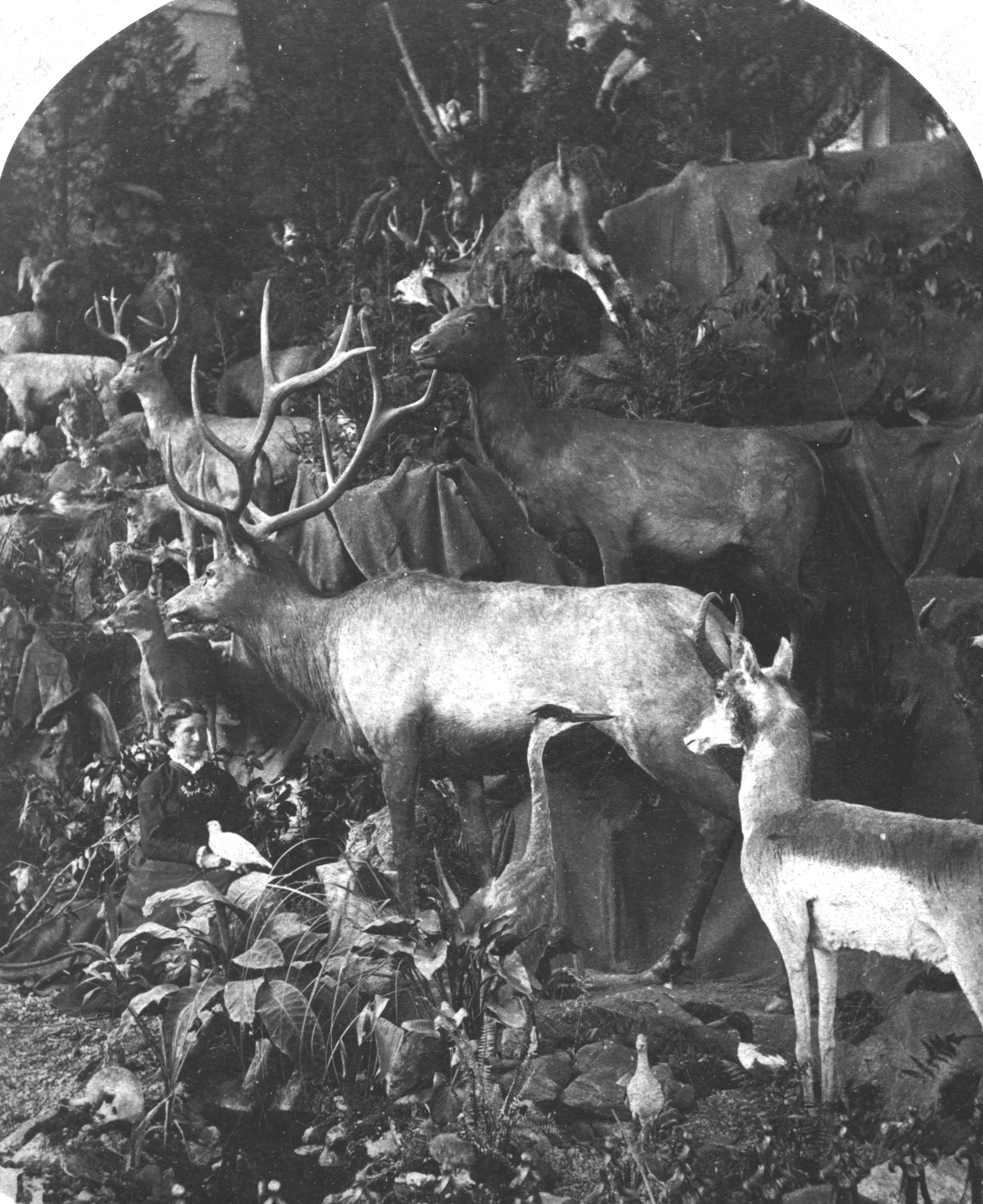
A collection of preserved animals in Martha Maxwell’s showroom.
Martha Maxwell, underfunded and underestimated as ever, had hauled the entire thing across the country herself. She didn’t just show up. She built her way in.
Visitors were entranced. Her diorama was one of the most talked-about attractions in the Kansas-Colorado Building—until, of course, they learned it was the work of a woman. That’s when the Victorian pearl-clutching kicked in. A woman? Doing science? With a gun and a glue pot?
Martha wasn’t having it.
She hung a sign right in the middle of her exhibit: “Woman’s Work.” Not a footnote. A billboard. A mic drop. And when one particularly clueless man asked what she was doing there, she didn’t blink.
According to accounts, she coolly asserted that she had every right to be there—a quiet but powerful rebuke to the gatekeeping norms of her time.
That moment—one woman standing alone in a building full of men and exhibits that had tried to exclude her—wasn’t just personal. It was political. It was revolutionary. And it’s a line that still belongs stitched into every lab coat, ranger jacket, and museum curator’s lanyard.
Legacy in Dioramas: Denver Museum of Nature & Science
Today, Martha Maxwell’s fingerprints are all over modern natural history museums, especially in her home state of Colorado. At the Denver Museum of Nature & Science (DMNS), her legacy isn’t behind glass—it’s in the glass itself, in the curated wildernesses, and in the immersive magic that’s become standard.
Jeff Stephenson, science liaison at the museum, says that although the institution hasn’t produced new taxidermy since 2009, Martha’s signature style—lifelike, immersive, and biologically precise—still shapes the museum’s approach.
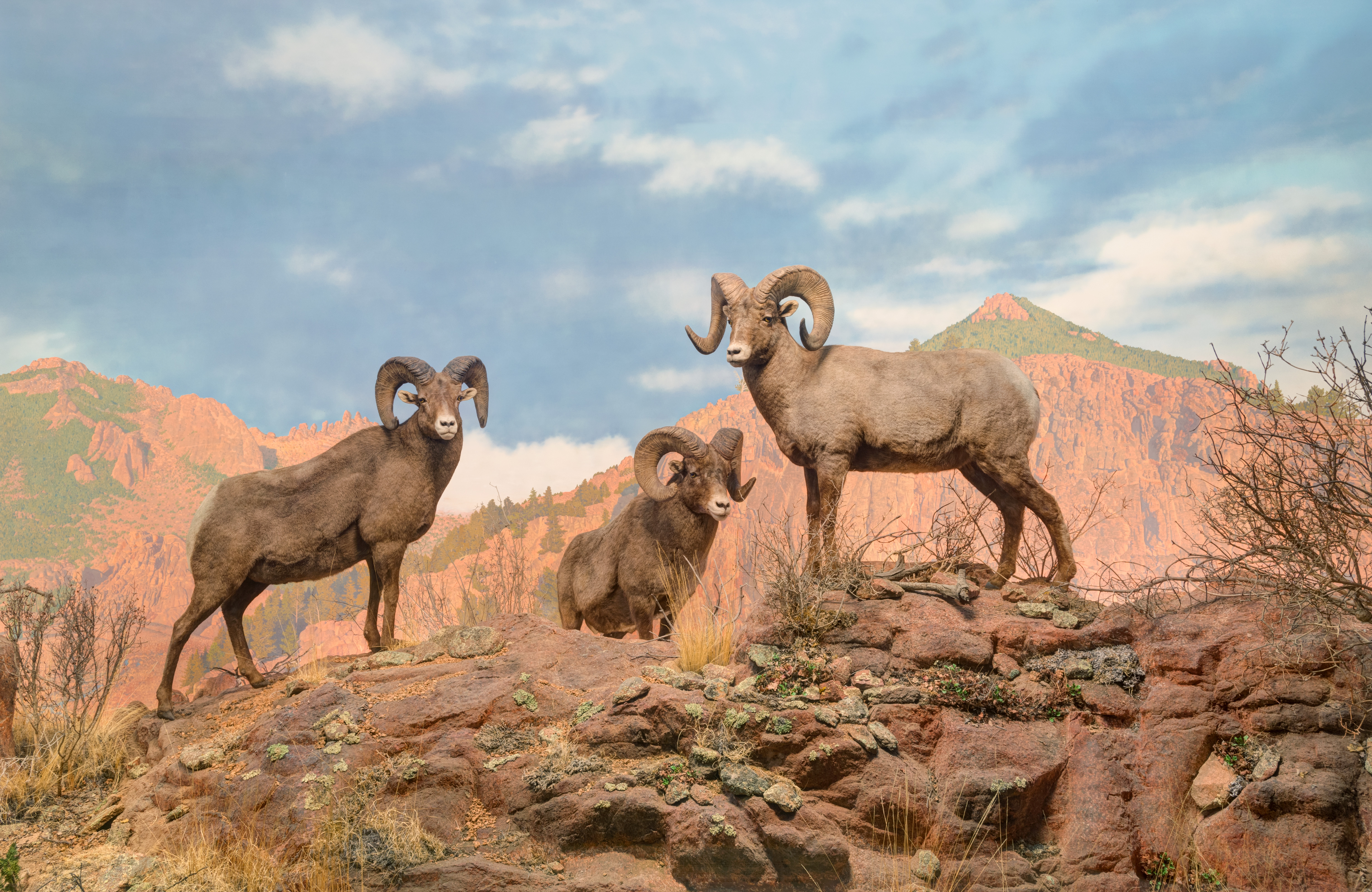
Image taken from the right side of the bighorn sheep diorama.
“Certainly, the wave of lifelike and accurate animal mounts took hold here by the time we were making diorama halls with themes,” he explains. “Most of our dioramas from the 1930s–1980s represent a specific place in time and space. All the organisms, including plants and animals, were documented in situ by our teams, with careful attention to season, day, and time.”
Sound familiar? It should. That obsessive detail, that insistence on accuracy, on story, on natural drama frozen mid-beat—that’s textbook Maxwell. She didn’t just want animals on display. She wanted people to understand them, to see them.
And the museum has evolved with that same spirit. Stephenson notes that in recent years they’ve added touches Martha could’ve only dreamed of: soundscapes, artificial waterfalls, and interactive features to help bring the exhibits to life.
“We have been making changes that are fun, engaging, accurate, and innovative,” he says.
Even the ethics of collection—something Martha wrestled with in her time—have changed in ways that would likely earn her approval.
“We don’t collect specimens for exhibition, not since the 1980s,” Stephenson explains. “We do collect scientific research specimens in many fields, abiding by strict international, national, and state laws. We will not hunt endangered species, and the days of massive collecting expeditions are over.”
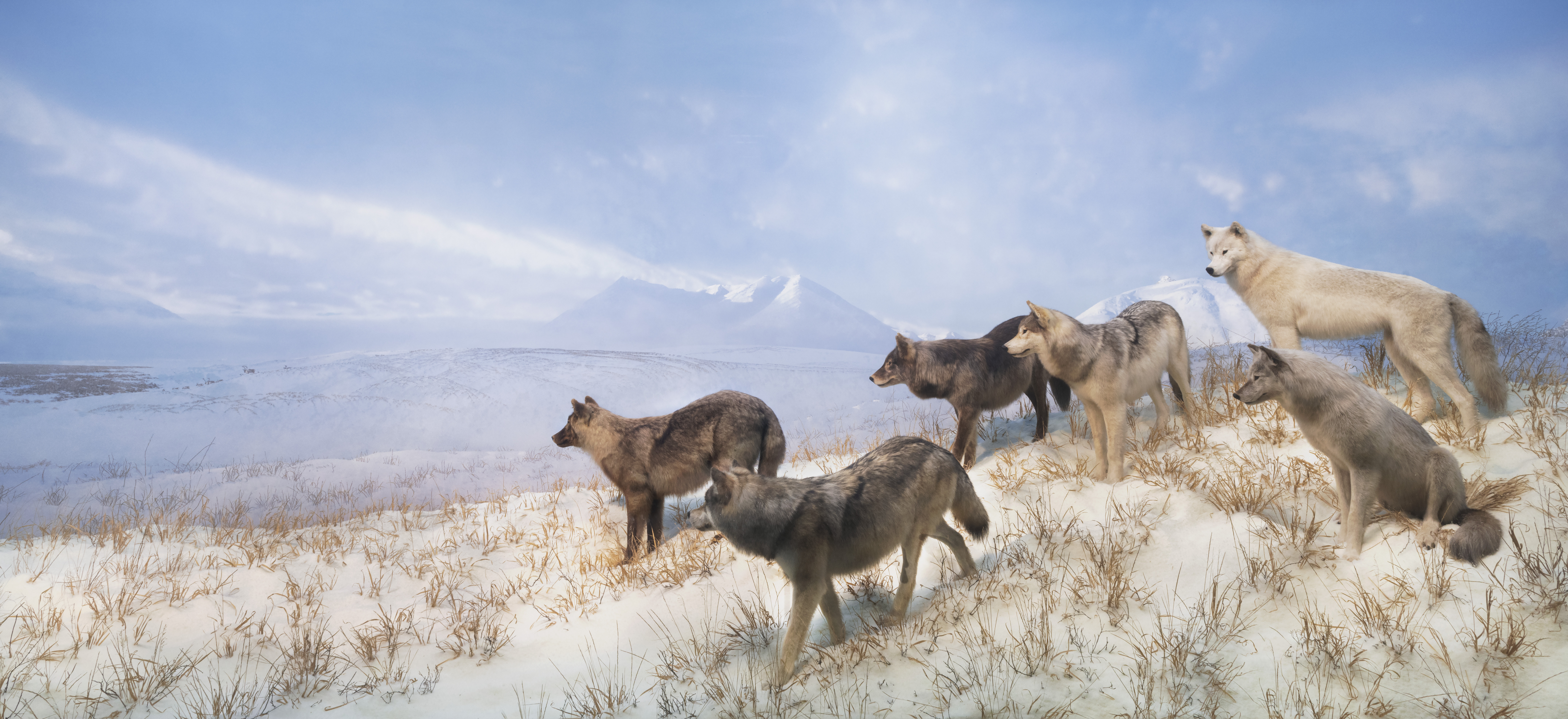
The Gray Wolf diorama in Bonfils Hall, DMNS.
Today, the museum serves as a federal repository for threatened and endangered species, sometimes receiving specimens from the US Fish and Wildlife Service or the Denver Zoo. That means the mission has shifted: less about possession, more about preservation. And it’s hard not to imagine Martha—rifle slung, sharp-eyed, sharp-tongued—nodding with quiet approval at the evolution of the work she helped pioneer.
Most poignantly, Stephenson reflects on what her reaction might be if she could walk through the museum today:
“I think Martha would be impressed with the stories behind the creation of many of our dioramas,” he says. “I’m also inclined to think that Martha would enjoy watching the many, many visitors who come into our diorama halls, often pausing for grandparents to tell stories to their grandchildren. Because I think that Martha thought about her work in the same way: as a gift to the people.”
A gift, indeed. Wrapped in moss and mountain air, in fur and feathers, in careful angles and lived knowledge—left for future generations to unbox with wonder.
Ethics, Education, and the Future of the Craft
If Martha Maxwell were around today, there’s a good chance she’d be elbow-deep in resin, wire, and ethically sourced rabbit bones at The Terrorium Shop, a Denver-based taxidermy and entomology studio run by Ian Johnson and Amber Hage-Ali. And while you won’t find any corseted Victorian formality in their workspace, you will find her spirit—fierce, resourceful, and deeply committed to honoring nature, not exploiting it.
“We want to aim to use things that are like scraps—byproducts of other industries, things that were found naturally,” says Ian. “Nothing that was just intently killed for the use of taxidermy.”
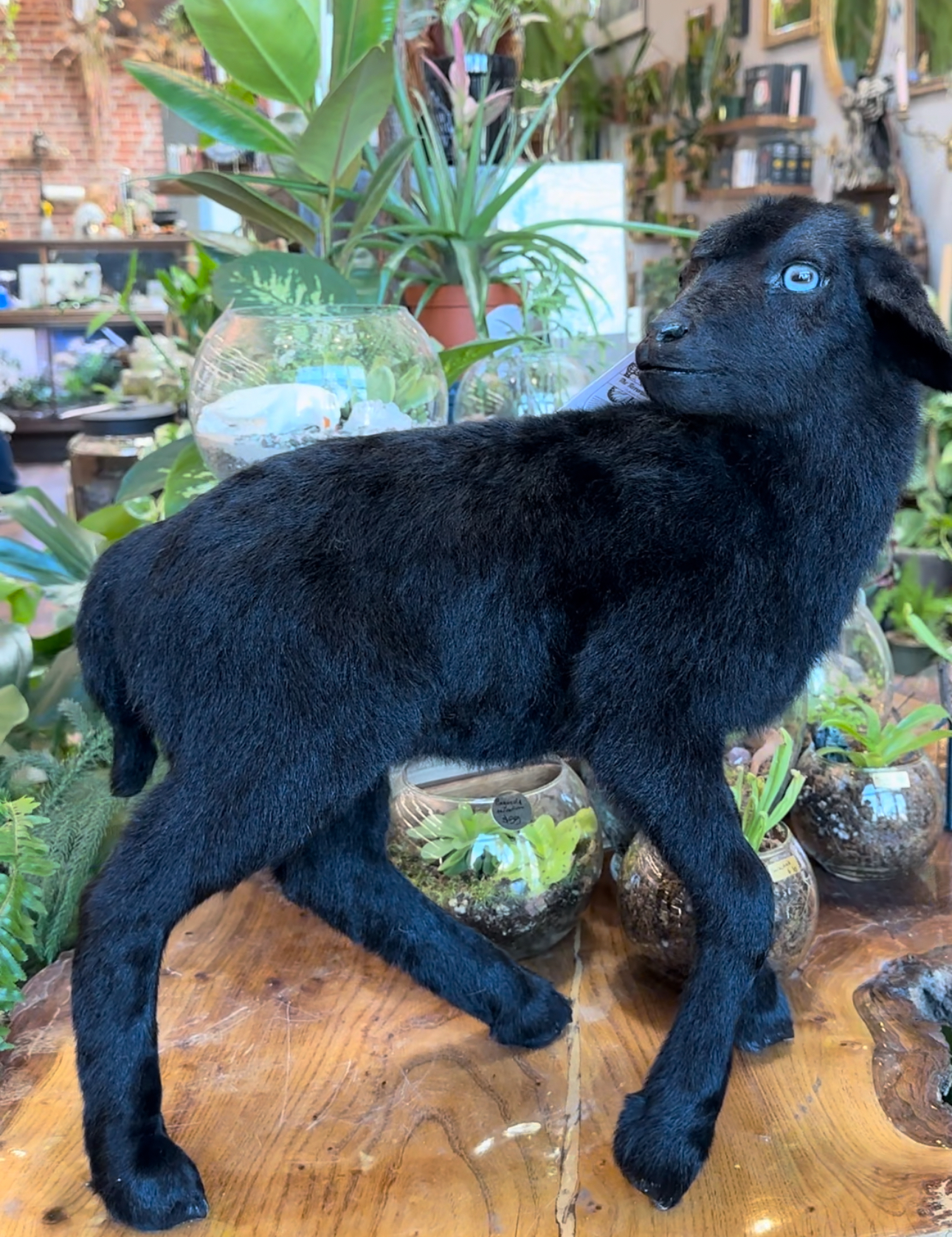
A black lamb, preserved through taxidermy.
Sound familiar? That echoes Maxwell’s own approach. While she hunted out of necessity and access, she didn’t kill for glory. She collected specimens herself because no one else was going to do it for her, and she used every part with intention.
Terrorium goes even further: They work directly with local farmers to repurpose stillborn livestock and other unavoidable losses. “It kind of helps the farmer recoup some costs as well,” Ian explains. “It’s a really good symbiotic relationship because there’s so much work that goes into farming animals, and they just lose those animals. So it allows them to cope with some of that loss while giving us a sustainable outlet.”
This ethos—using what nature already gives—marks a broader shift in the taxidermy world, one that blends education, reverence, and radical creativity. Just like Martha did with her prairie dog and painted backdrops, Terrorium is about connection, not conquest.
“I think if we all appreciate nature more, we're going to respect her more,” says Amber. “And I think that’s a really important piece, especially with everything going on right now.” To that end, the shop doesn’t just mount animals—it teaches. Through hands-on workshops, it shows people how to preserve, learn, and reconnect.
“Something I feel like we’ve kind of lost with time is that connection to nature,” Amber says. “I remember growing up and playing outside until nine at night, hiking and collecting things. I really hope that our store can kind of ignite that excitement again for people to get out there and collect and share the joy of creating.”
This is taxidermy reimagined—not a dusty Victorian relic, but a living, evolving form of ecological storytelling.
Modern taxidermists, much like Martha in her day, are confronting the ethics of the practice head-on. Laws like the Migratory Bird Treaty Act and CITES are reshaping what’s permissible—and what's responsible—in the world of specimen work. Ian sees it firsthand. “What I’ve seen with the boom in oddities is amazing, but there’s also a lack of education right now. I feel like there’s a lot of questionable sources out there,” he says.
His advice? “I always encourage people to call their local US Fish and Wildlife Service if they have questions, because they’re there to educate and help, not to be feared.”
Beyond legality, the field is also embracing technology. Martha sculpted her animal forms by hand. Today’s taxidermists are molding with two-part AB foam and even 3D printing. “I do see a lot of different transformations coming in the industry—3D printing is one of them,” Ian notes. “It’s going to evolve, and it’s going to be cool to see that.”
And then—maybe most importantly—there’s the shift in who gets to do the work.
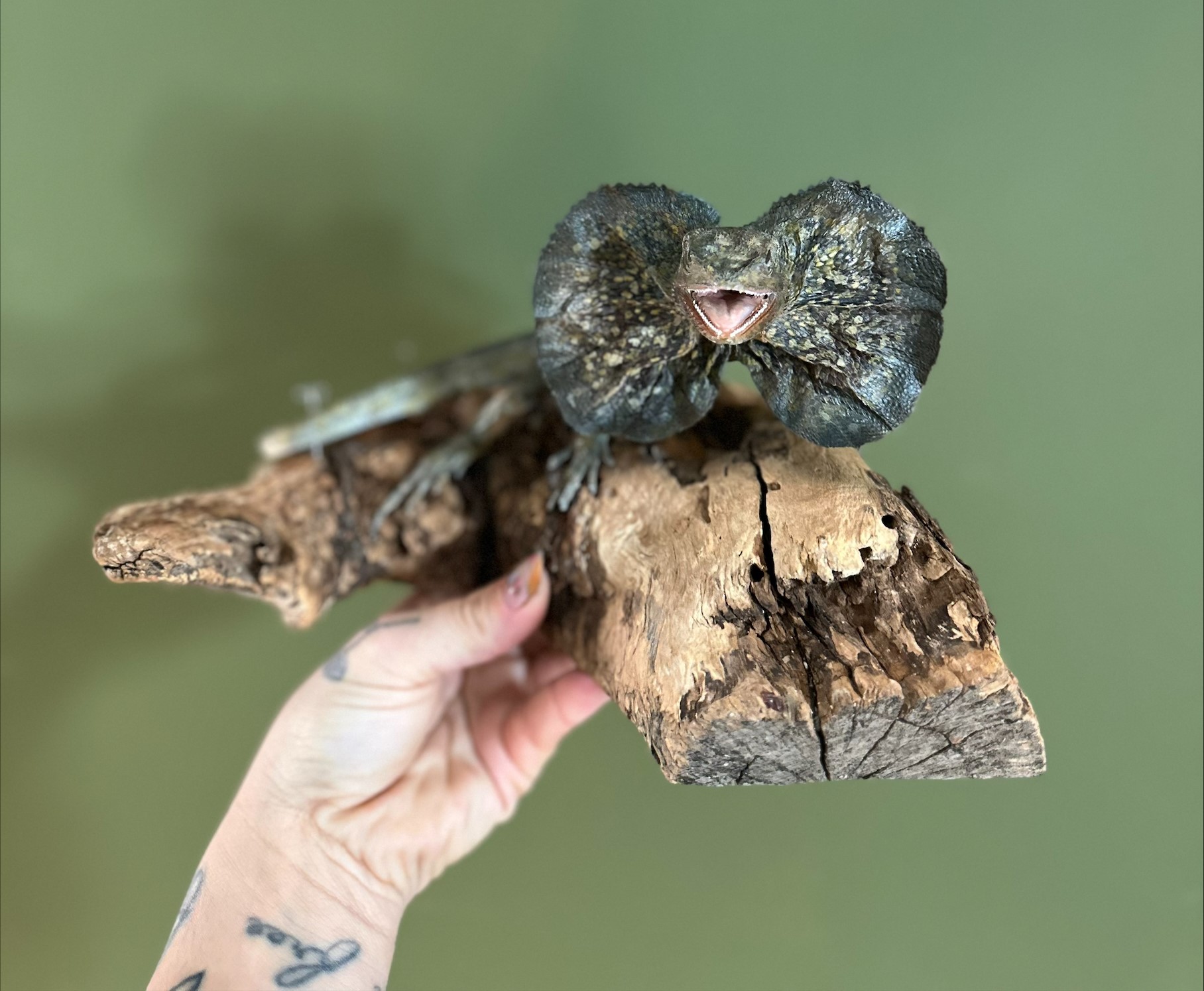
A taxidermy reptile specimen poses on top of a piece of wood.
“There are so many cool female taxidermists coming up now,” Amber says. “Before, they didn’t really get recognition, but now they’re making an impact. And there’s more inclusivity in general—not just for women, but for the LGBTQIA+ community as well. I love seeing that, because it shows how we’re growing as a culture.”
In a field once monopolized by mustachioed gatekeepers with rifles, there’s now space for queer artists, feminist scientists, and scrappy outsiders, just like Martha was. She may not have received the credit she deserved in her own time, but her legacy laid the bones—literally—for a future that’s more thoughtful, more inclusive, and far more alive.
Martha’s Ghost Is Laughing
Martha Maxwell died in 1881, broke, exhausted, and too far ahead of her time to get the kind of credit she’d earned ten times over. She passed away at just 49 years old, in Rockaway Beach, New York, after years of dragging a taxidermy empire across states, fighting for recognition, and working herself into the ground.
But her story didn’t end there. Because when she reimagined the lifeless animal mount into a lifelike diorama, she didn’t just change a craft, she changed how people understand nature. She made museumgoers see animals as living beings in living systems, not as trophies or oddities. And while she may not have lived to see the wave she started, we are standing in it now.
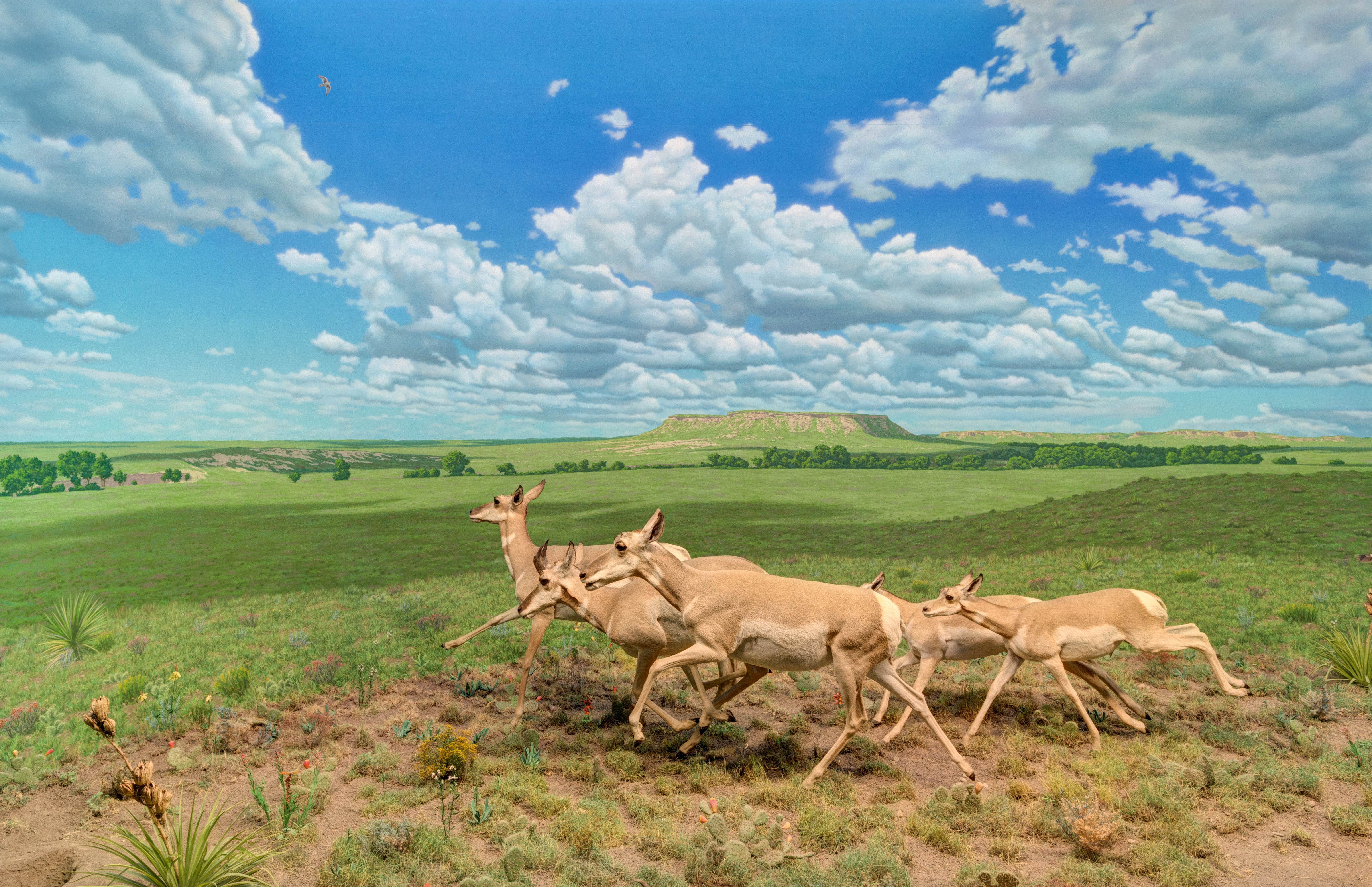
The Pronghorn diorama at DMNS, from the left side.
We see it in every museum hall that pauses time to show a wolf stalking a snow-covered ridge. We see it in the ethical studios like Terrorium that teach preservation, not just presentation. We see it in every woman and every outsider who steps into a space they were never invited into and makes that space better—more honest, more dynamic, more wild.
Even her daughter, Mabel, didn’t quite understand what she was building. She remembered the long, cold hunting trips as miserable. She craved warm shoes and normalcy. But Martha wasn’t interested in comfort. She was interested in contribution.
Martha Maxwell never had a degree. She never had a patron. But she had a rifle, a scalpel, a homemade exhibit, and the clearest sense of purpose a person could carry. When the world questioned her presence, her intellect, her right to build, she responded with steady determination—not with loud protest, but with unwavering action and the deep conviction that she did, in fact, belong.
Because in the end, what Martha Maxwell built wasn’t just taxidermy or museum displays. It was a legacy of persistence and presence. She helped redefine what “woman’s work” could look like, turning a label of limitation into a declaration of power.
Her hands shaped animals and ideas alike, and the echoes of that work still call to anyone who’s ever been told they don’t belong.
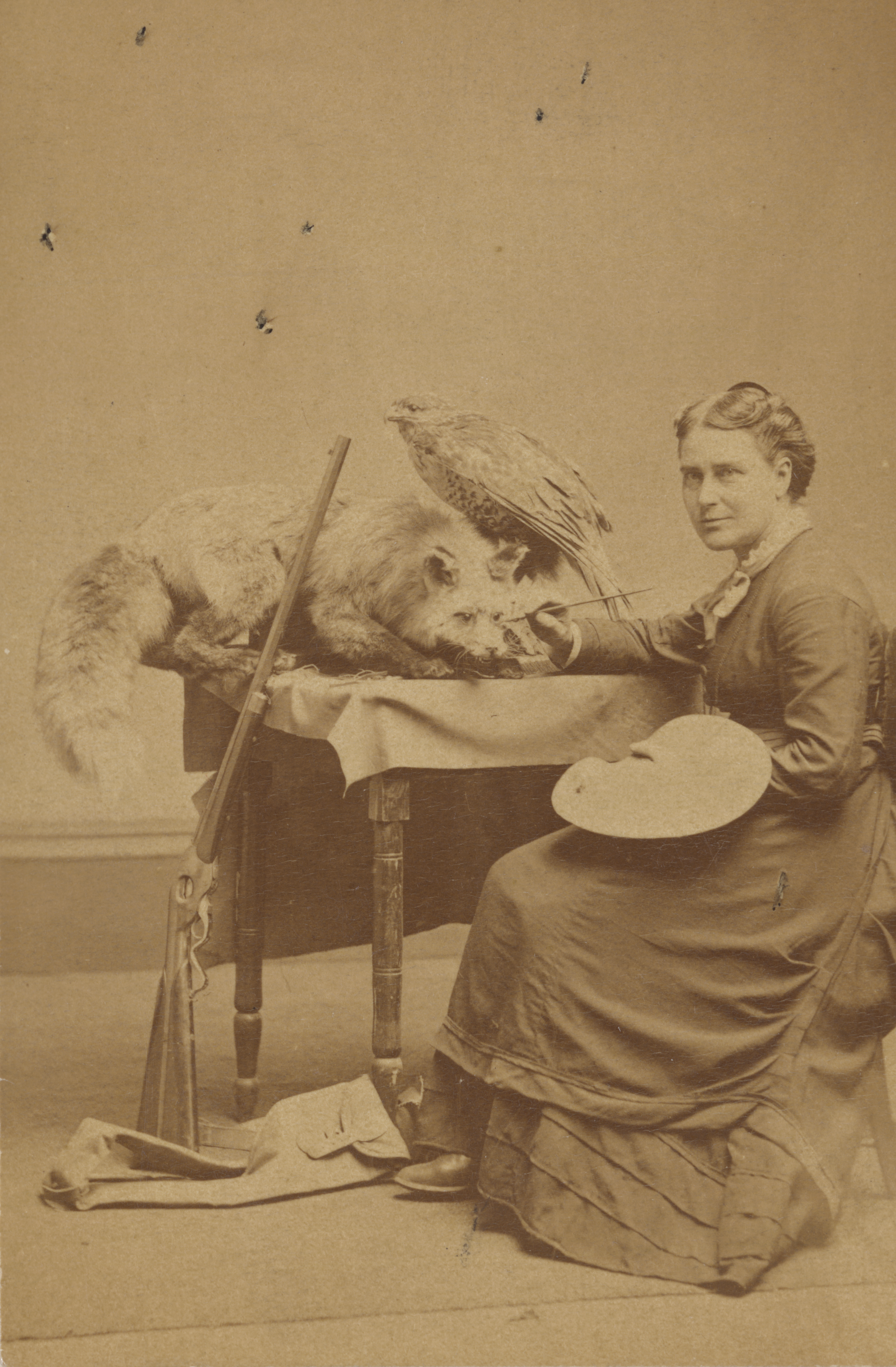
Martha Maxwell poses at her desk with animals she has preserved, in a photograph titled In the Work Room.