
 Membership
 Donate
 Shop
Shop




















Making a Museum
Society, environment, and the origins of the Colorado Museum of Natural History.
Editor's note: This article was adapted by the author for The Colorado Magazine from the 2024 winning entry of the Emerging Historians Contest.
“In the wild wooly west, on the plains of Colorado, beneath the shadows of the Rocky mountains, a museum of natural history is in course of construction that, so far as it goes, stands quite superior to any other similar institution in the world, should be a reflection of supreme satisfaction to all our people.” These were the first words spoken at the opening of the Colorado Museum of Natural History in 1908. They mirrored the sentiments that drove the museum’s creation and signaled its importance. The museum stood as a symbol of the rugged environment of Colorado and the emerging prestige of the city of Denver. Situated in the crux of these two ideas, the museum entangled narratives of conservation and industrialization, rural and urban environments, science and social values. These contrasting themes have been overshadowed by the seemingly objective natural science exhibited in the museum, that while presented to the public as a scientific institution, has a deeper history waiting to be uncovered.
Denver’s interest in natural science began well before the founding of its museum. The State Historical Society maintained a natural history department until 1897, when it separated to form what would become the Colorado Museum of Natural History. This institution, now known as the Denver Museum of Nature & Science, officially opened to the public in 1908 after a decade of planning and preparation. The creation of the museum was a product of the Colorado environment and the social atmosphere of Denver during the Progressive Era. Chronicling the development of the museum from before its proposal to its initial opening years reveals how the scientific information presented in the museum was influenced by the social views of those who donated and curated the items. While the exhibits aimed to educate the public on the natural world, a more in-depth analysis reveals that although the museum intended to be a reflection of nature, in many ways the curators of the exhibits forced nature to reflect the societal values of the time.
Environmental Origins of Colorado
Colorado’s landscape also played an important role in shaping how objects were displayed within the museum, as the wildlife dioramas were sourced from the state’s sports hunters and taxidermists. Because of their donations, the museum came to represent Colorado's landscape through their interpretations of the environment. In addition to cultivating an appreciation for natural history, the museum sought to use Colorado's natural landscapes and natural resources as a means to establish a state identity. The relationship between many citizens of Denver and nature was informed greatly by the development of mining and hunting, and these industries played a major role in forming the identity of Colorado that was expressed through the museum.
The mining industry played a pivotal role in Colorado's development, fueling the state's growth and attracting settlers who would later become key contributors to the establishment of the museum. Americans from the east along with immigrants were drawn to the territory because of the economic opportunities of mining. Prior to the discovery of gold, many Eastern Americans viewed Colorado as a vast desert best left to Native Americans. The gold rush in 1859 brought an influx of people to Colorado yet the decline in gold in the early 1870s triggered an exodus from the territory. This boom-and-bust cycle gave Colorado the reputation as a transient space where resources were extracted for the benefit of eastern business men. Eventually, as more natural resources were discovered throughout the state, the population of the settlement steadily increased. Prominent figures of the state’s mining industry, such as Governor James B. Grant and first president of the museum, John F. Campion, used their wealth accrued from mining ventures to help support the establishment of the museum. Additionally, mining companies, such as the Colorado Fuel and Iron Company contributed gem and mineral collections to the museum as a way to promote state interest in natural resources. As Colorado continued to evolve, influential figures used their resources to educate the public about the state's rich natural heritage through the museum.
In reaction to the urbanization and industrialization of Colorado, many men desired to reconnect with the natural world through hunting. With nationwide urbanization and industrialization, many men felt a crisis of masculinity. Hunting became a way for upper-class white men to exercise their masculine authority and reconnect with the natural world. Hunting romanticized the relationship between humans and the wild. Colorado, rich with diverse wildlife and rugged environment, was the perfect setting for a wilderness adventure. Many of the animals in the museum's wildlife dioramas were donated by hunters. Because hunting was a highly gendered practice, the views of wildlife present within the museum mirrored how men engaged with the environment. In many ways these exhibits replicated the idealized relationship between men and nature. The dioramas allowed visitors to interact with the animals up close, yet the male hunters, who were memorialized for their contributions by plaques placed next to the exhibits, were the true heroes for killing these animals in the wild. This served as a reminder to visitors of their dominance over beasts and men's place at the top of the food chain.
Taxidermy became a way to preserve and commemorate hunting expeditions, but was also a form of ecological study incorporated into the museum. Edwin Carter, a naturalist and taxidermist in Breckenridge, held one of the most prominent collections of Colorado species. Originally from New York, Carter moved to Colorado to become a miner. Eventually disillusioned by the industry due to his concerns with environmental damage, Carter devoted himself to collecting and studying the flora and fauna of the state. Naturalists such as Carter gave animals a second life through taxidermy. In doing so, these animals were used to document and study the natural history of Colorado, which was increasingly threatened by the destruction of urbanization and mining. Carter's collection, among others, eventually made their way into the museum. Another example was Wyoming farmer and hunter B. W. Mcguire who donated a group of grizzly bears. Taxidermy was a means of domesticating nature and made it accessible to a wider audience indoors. These taxidermied animals were a way to engage with nature in an unprecedented way and were a key avenue for the public to learn about the natural world.
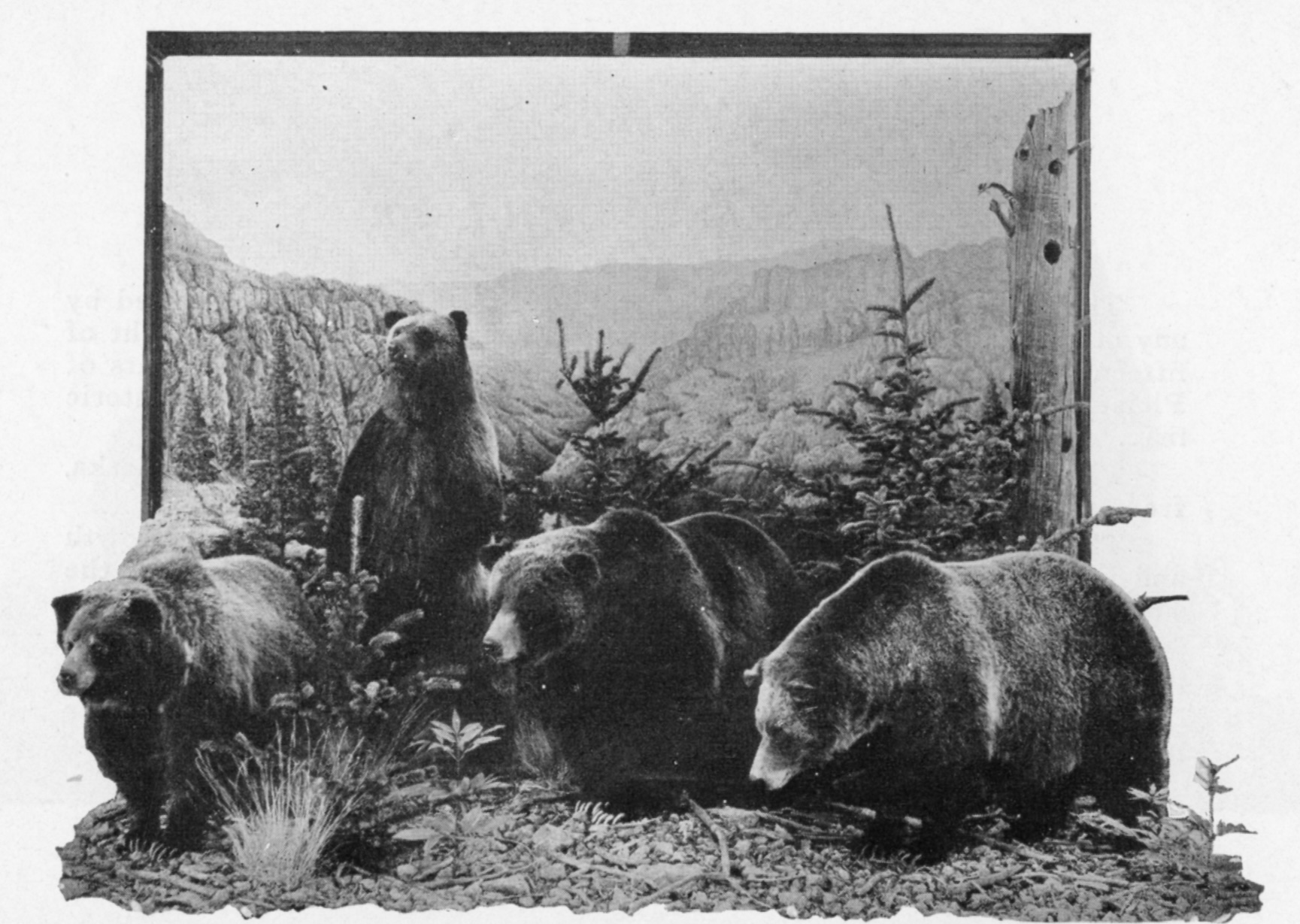
Grizzly Bear Group, 1928, Colorado Museum of Natural History
Despite hunting and taxidermy being a predominantly male pursuit, a few women also created their own space within this world. Martha Maxwell and her husband moved to Colorado in 1860, drawn west by the promise of finding their fortune through mining. It was here that she became passionate about taxidermy as a means of studying natural science. She immersed herself in the process from beginning to end, hunting and skinning the animals herself. Maxwell even adapted clothing, fashioning her skirts into pants, to make it easier to navigate difficult terrain. In many ways she refused to be constrained by the physical and social limitations placed on women during the era. Eventually, Maxwell's collection grew and she established her own museum in Boulder and would go on to display her exhibits at the Centennial Exposition in Philadelphia. Although Maxwell’s exhibits were widely praised by many, some, such as The Cecil Whig newspaper of Maryland, expressed concerns about Maxwell's involvement in activities typically reserved for men, fearing that in doing so she could become “coarse and masculine, and loses those sweet tender graces that are distinctly feminine.” Despite such criticisms, Maxwell and her exhibits embodied Colorado’s rugged Western identity, which captivated many viewers. Maxwell's work set a precedent for the standard of wildlife dioramas and helped to popularize interest in natural history that predated the museum. Unfortunately, due to financial struggles and her death in 1881, her collection was not preserved. While it is unclear what potential inspiration the founders of the Colorado Museum of Natural History took from Maxwell's exhibitions, it was her work that primed the public of Colorado for the establishment of the museum to fulfill their desire for scientific learning.
Colorado’s identity was heavily tied to the landscape and environmental elements, yet due to its recent statehood, there was a lack of permanence and authority. Colorado's statehood in 1876 was partially due to the extraction of natural resources through mining. During the settlement and expansion of the American West, Denver operated like an outpost. With the discovery of natural resources, people and money poured into the territory and resources moved out and east. Before its statehood, men were drawn west to Colorado through the appeals of mining and hunting. Few remained in the territory to contribute to the economy and development, as they were incentivized by the idea of striking rich and moved out of the state when resources ran dry. Once Colorado became a state, it was important for residents to regain authority and reclaim these resources by telling their story at a local and regional level, as opposed to solely their utility to the broader nation. The people of Colorado became possessive over their claims to collections, a sentiment expressed by the Rocky Mountain News who complained: “would not the citizens of Denver do well to interest themselves more in the mining property of the mountains, thus identifying themselves with the true interests of Colorado before it becomes too late and Eastern capitalists have absorbed all the best of such property and become the arbiters of Colorado’s future destiny.” Because of these concerns, the museum became an authority to stake claim over the resource of the state. The representation of mining and hunting within the museum spoke to the prevalence of these practices in the lives of Coloradans and the importance that they held within their culture. This led to the creation of a distinct identity that was sourced from elements of the environment and the Colorado Museum of Natural History reflected these sentiments back to the people.
Mining, hunting, and taxidermy supplied the museum's collections and wildlife dioramas and mineral displays. Through these practices, inside and outside of the museum, people engaged with the nature of Colorado in a way that shaped the identity of the state. The history of Colorado's environment is essential to understanding the state and would become an essential part of the museum. The Colorado Museum of Natural History sought to appeal and engage with the public through these avenues of understanding the environment. Because of this, the displays within the museum relied on the resources of the state and sought to be a reflection of the natural world in an urban environment.
A Developing Denver
In 1897, Denver was at a turning point in its identity. Suddenly the frontier town found itself with about 165,000 permanent residents. Colorado's urban centers were modernizing. Influenced by social reforms of the Progressive Era, city leaders contributed money and effort to bolster the cultural atmosphere, especially in Denver. Through the vision and wealth of local industrialists, along with their desire to cultivate public interest, the Colorado Museum of Natural History was born. These aspects of the museum's founding were instrumental in shaping how the museum was constructed and its relationship to the public. Although the Denver museum is an institution of science, the museum was founded by the businessmen of Denver who sought to use the museum as a means of developing the city and increasing tourism.
The idea to showcase the discoveries of the natural world in Denver was, ironically, born in the White City, the architectural wonder of the Chicago World's Fair of 1893. Like many other visitors to the World's Fair, John F. Campion returned to his home inspired by the marvels of industry and exploration from around the world. Unlike many other visitors, Campion had the wealth and influence to transform his ideas into reality. Campion, one of the most prominent men of Denver at the time, made his fortune in the mining industry, owning gold and silver mines, and was president of the Western Sugar Company. His visit to Chicago was the inspiration to bring the City Beautiful movement west. The World's Fair exemplified this Progressive Era movement that emphasized urban planning and public infrastructure in the late-nineteenth to early-twentieth centuries. Campion believed that this ideology could be of great benefit to the city and people of Denver.
The proposal of a natural history museum became the manifestation of Progressive Era aesthetics and social values. The museum coincided with the creation of City Park, which further emphasized the importance of bringing elements of the natural world into the urban environment. The space in which the museum occupied reflected the City Beautiful movement and values of the Progressive Era by providing a public space for locals and tourists that encouraged recreation and promoted the beauty of their city. The construction of the museum shaped the physical and intellectual landscape of Denver by creating an urban space to facilitate education of the natural world. During a visit to Denver in 1899, Professor Pepper, an anthropologist of the Museum of Natural History in New York, stated “a museum of natural history would be the most important addition that could be named for adding to the attractiveness” of Denver. Whether Pepper meant attractiveness in terms of aesthetic qualities or appealing to visitors, his double entendre held true on both accounts. The construction of a grandiose museum building contributed an air of elegance to the city that appealed to citizens and visitors alike.
The plans for the Denver museum arose, in part, from the desires of city leaders in order to serve the public and its creation greatly involved the citizens of Colorado. This genesis of the Denver museum distinguished it from other museums in the east which were financed by independent benefactors who initially kickstarted projects by contributing large sums of money. Instead, the funds for the museum were drawn from a multitude of businessmen and collections were donated by the people of Colorado themselves. The Colorado Museum of Natural History was unique in this way. Campion and Carter, industrialist and naturalist, represented two archetypes of Colorado that came together to support the museum. Carter held a large collection of specimens of the state's flora and fauna and was lobbied by Campion to contribute his collection to the museum. The combination of business efforts and collections of naturalists allowed for their dreams of a museum to come to life.
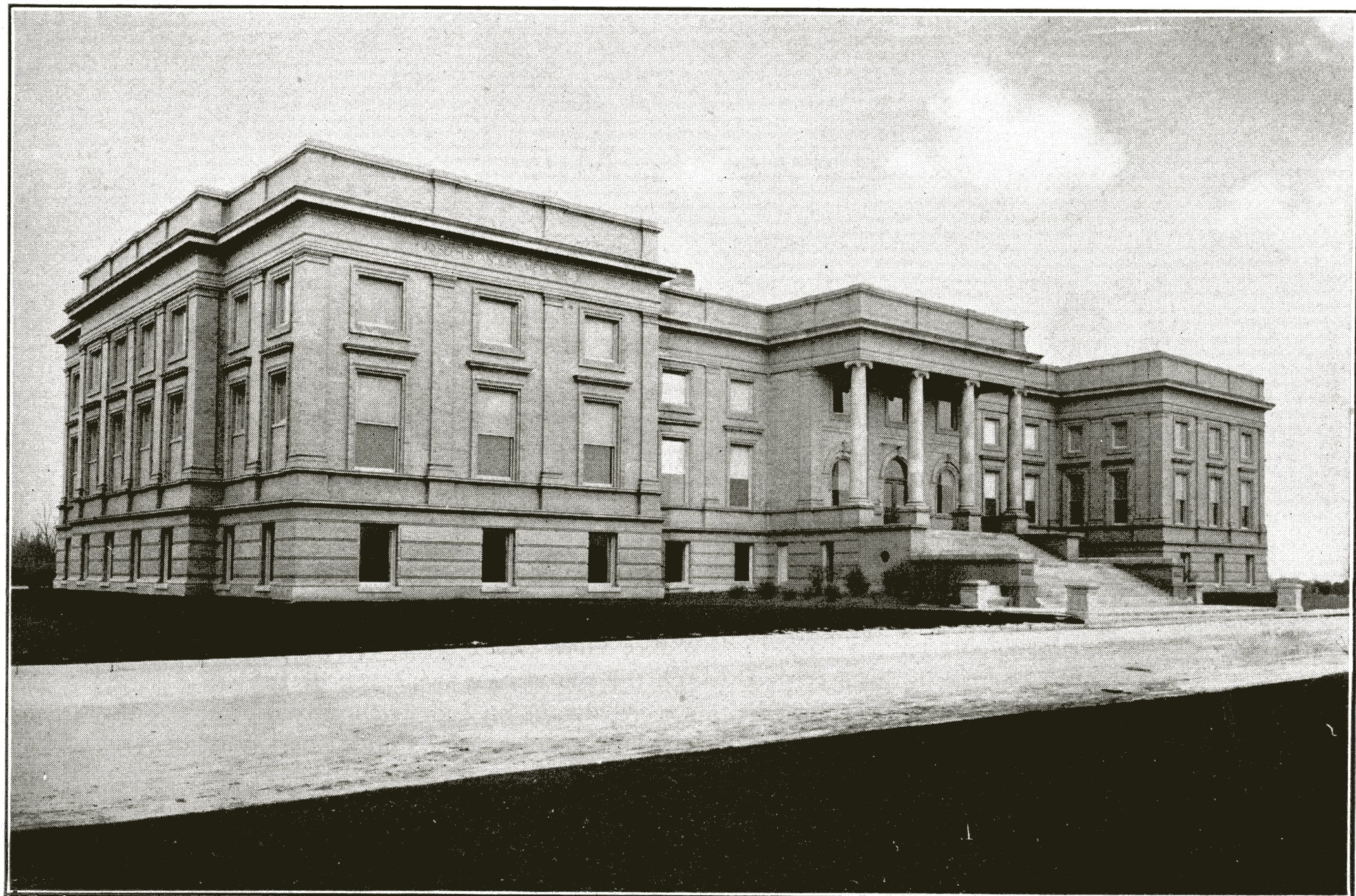
The Colorado Museum of Natural History, City Park, Denver, Colorado, 1928.
Unlike collections such as the Smithsonian, which originated as primarily a research institution, the Colorado Museum of Natural History was always intended to be public facing. Because the origins of the museum were rooted in the community of Denver, it was a great source of pride. This sentiment was translated to the public through the museum’s focus on education and was well received as the Rocky Mountain News reported that no other museum in America “had its conception in so substantial broad-minded and public spirited interest as the Colorado Museum of Natural History.” This intentionality of the museum's founders overall continued to positively shape visitors' experience and relationship to the museum as a large majority of Denver residents felt pride in the museum. According to the first director of the museum Jesse Figgins, other natural history museums in the east attracted “one seventh to one third of the population of the cities which they are located in,” while the Denver museum attracted 190,354 visitors in 1915, with a city population of around 230,000. This amounted to approximately four-fifths of the population, which was substantially higher than other museums. The impressive number of visitors, as well as the appeal of education and entertainment proved to strongly appeal to the public.
One of the most positive relationships between the museum and the residents of Denver was seen through the museum's programming for schools. The administration specifically designed ways to engage school groups and incorporate the exhibits of natural history into the local science curriculum. After a visit with her class to the museum Prudence Bostwick, a Denver science teacher, wrote to the director of the museum: “the firsthand information which we obtained about animal and bird life was splendid aid to us in our study at school.” Public education was an important aspect of Progressive Era museums, and was a way to inspire attendees with new ideas. The Colorado Museum of Natural History specifically worked to introduce concepts of conservation to the youth through exposing them to local wildlife. The scientific knowledge of the museum contributed to the education of young students and in return, the attendance of school helped to cement the museum as an essential institution.
Not only was the museum intended to be of great benefit to those who lived in Denver, but its appeal to tourists was instrumental in drawing attention to the city. Because the museum was instigated by business leaders, it was seen as an investment to the city that would ultimately increase its economy. The museum was a symbol of Denver's cultural development and urbanization and placed it in competition with more-established cities in the east. As Denver developed, citizens began to present a mentality of western boosterism by arguing that a sense of destiny allowed for their settlement and that their continued improvement of the city would validate their claim to the land. The success of the museum became synonymous with the achievements of the city. City leaders and supporters of the museum believed with Carter, that as Denver was “destined to be among the great cities of the continent so will a museum be founded…to be one of the great entertainment and educational institutions of the country,” as expressed by Carter in a letter to Campion. The national recognition gained through tourists to the museum helped to validate Denver as a sense of cultural authority in the west.
The social atmosphere of Denver in the late 1890s pushed the desire for the museum and prepared the public for this new addition to their city. The Progressive Era and urbanization sparked the idea for the museum and encouraged a relationship to be developed between the institution and the people of Denver. The prominent roles of men like Campion and Carter drew attention and prestige to the city through the museum's agenda of educating the public. Although the museum was a scientific institution, its conception evolved out of the desire of city leaders to boost the social capital of Colorado. As Denver continued its urbanization, people began to increasingly express their concerns about industrialization and their relationship with the natural world. The museum served as a reflection of the natural world as a way to bring nature and ideas of conservation into the evolving city.
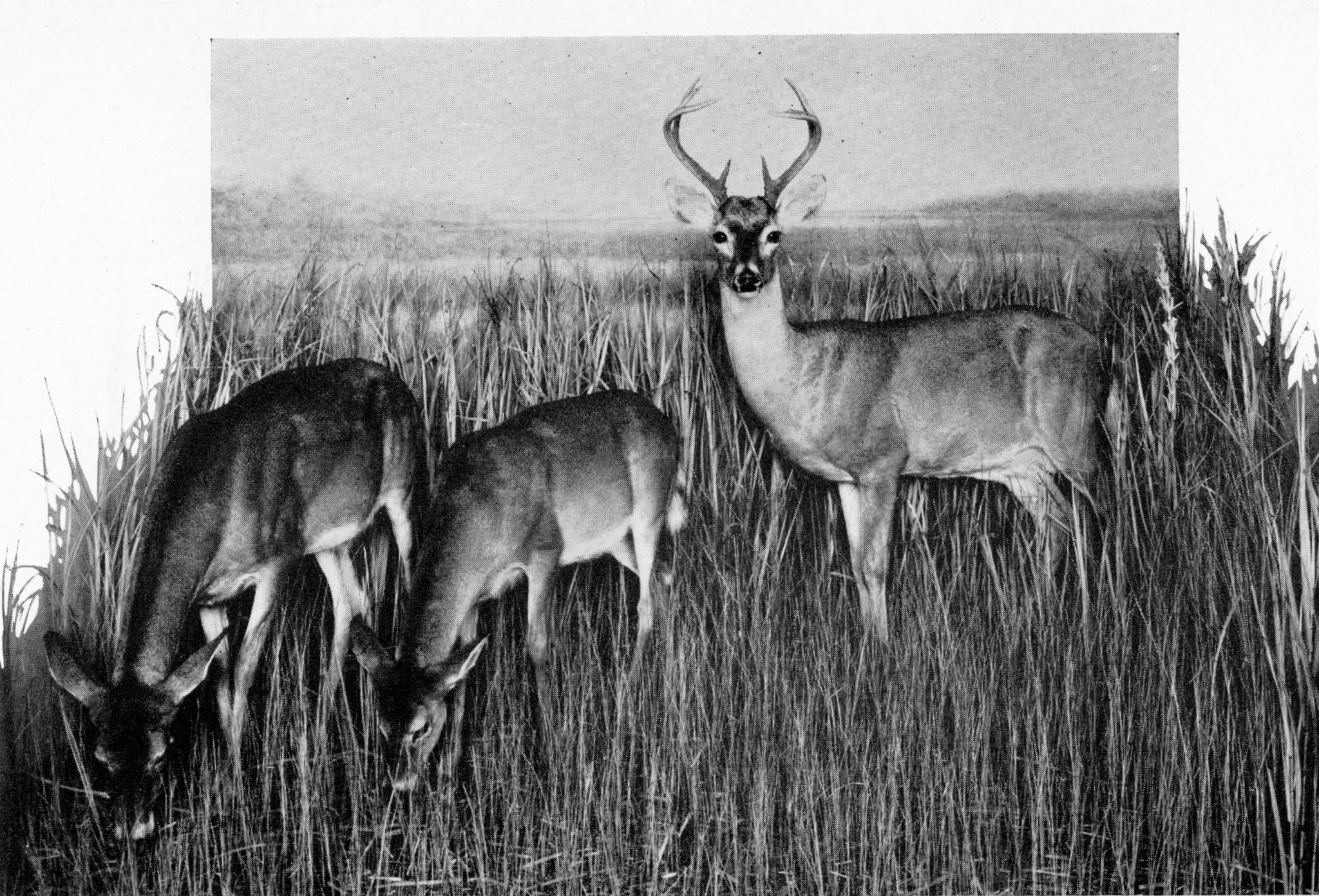
Louisiana White-tail Marsh Deer diorama, 1928, Colorado Museum of Natural History.
Museum Messaging and The Public Impact
Although progressive ideas of conservation and education are what spurred the creation of the Colorado Museum of Natural History, these ideas were limited in perspective. Natural history museums have stood as institutions of scientific knowledge and have been authorities trusted to disseminate this knowledge to the public. While the Colorado Museum laid claim to this knowledge, constructs of race, class, and gender were interwoven into aspects of the museum. In many ways, the Colorado Museum followed the broader trend in natural history museums whose “founders often regarded it as their mission to provide a bulwark against the deleterious effects of immigration, integration, and equality among genders,” according to historian Mary Anne Andrei. Examining the design of exhibits, their creators, and the donors of items indicates a notable absence of diverse perspectives.
The personal views of the leaders of the Colorado Museum during its early years exemplify the systemic racism that was in place in Denver during the late-nineteenth and early-twentieth centuries. In particular the first director of the museum Jesse D. Figgins was a registered member of the Ku Klux Klan (KKK). The 1920s marked a high point in KKK membership in Colorado, and Figgins was among the thousands of well-connected white men in positions of power who joined the Klan. Published ledgers from the organization reveal that over 30,000 people were registered, including members of the Denver police and firemen, employees of the state history museum, and even some who worked at the capitol. While the prevalence of the KKK speaks to the racist attitudes present in Denver, it is not necessarily a direct correlation for how scientific knowledge was presented within the museum. Though Figgins may have personally held these views, his letters and correspondence do not reveal that he is fulfilling a specific agenda. Even if the museum was not an instrument of the KKK to spread hateful messaging, it reflected the perspectives of those who led it. Men such as Figgins helped to shape and execute the vision of the museum and, in doing so, may have imbued the museum with their own perspectives. The biases present in the museum were instituted through those in power and therefore reflective of their social attitudes.
The Colorado Museum of Natural History also represented the agriculture of Colorado, yet the narrative represented by these displays excluded broader information on issues of labor. The museum understood that it had relevance to the public of Colorado by exhibiting local agriculture. In particular, the museum housed displays of sugar beets, which were a common crop within the state. These items were donated by the Great Western Sugar Company and Campion was also involved in this industry through the Colorado Sugar Manufacturing Company. Director Figgins believed that “collections of this nature would not only be helpful to the citizens of Denver, but would be of vast assistance to the agricultural and horticultural interests throughout the state.” Although it is not explicit in the museum records how these items were exhibited, it is understood that the displays accredited those who donated the items. In these early years, the museum curators believed that exhibit labels had to be presented in the driest possible form, which prohibited educating visitors on anything of biological or economic history. Due to the way items like the sugar beets were presented, visitors took away little more than the names of the men that donated them.
While it is understood that the sugar beets were donated to the museum and who they were donated by, looking at what is absent in these displays points to broader issues of white-dominated narratives in the museum. The sugar beet industry, pioneered by men like Campion and Charles Boettcher of the Great Western Sugar Company, relied on immigrant labor, the majority of whom were noncitizens and nonwhite. The narratives of these people and how their labor contributed to the items displayed in the museum were not represented or credited. While Figgins may have claimed that these exhibits were intended to serve the agricultural interests of the public, his definition of the public did not extend beyond a white audience. Similarly, Campion’s speech at the opening of the museum proclaimed that “it is the plan and policy of our Trustees to make this institution typical of the West and true to the life and genius of its people.” The trustees in reference were other white male industrialists who did not see the need to diversify their displays in order to more accurately reflect the demographics of their state and in doing so, they failed to address the different publics present within the state. Because the museum only reflected the perspective of men like Campion and Figgins, it excluded information that could have better served the broader population of Colorado.
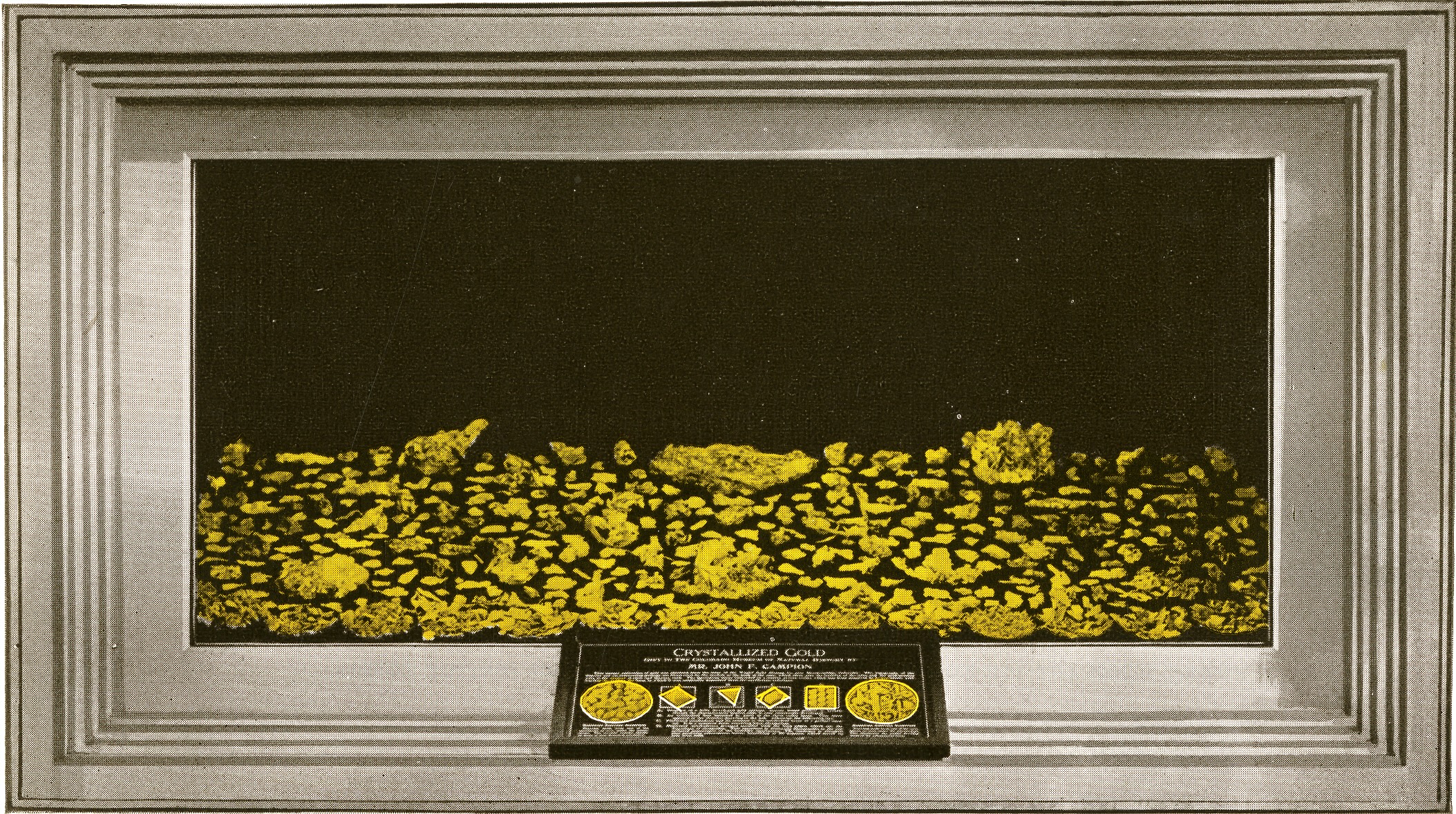
Crystalized Gold Collection, 1928, Colorado Museum of Natural History.
Similarly to how the museum represented Colorado agriculture, gems and minerals were presented in a way that overlooked the nuances of the mining industry and those who labored to produce the minerals and gems. The mineral department had specific appeal to the people of Colorado due to the prevalence of the mining industry. According to the Denver Municipal Facts publication, the science and study of mineralogy was “the leading educational requirement of Colorado students” so these exhibits held relevance to many visitors. Curator of Mineralogy William S. Ward wrote to Campion that these displays were “made to illustrate the use of minerals in the industrial world,” one of which being an exhibit donated by the Colorado Fuel and Iron Company (CF&I). This exhibit opened to the public in 1909 and showcased an enlarged display of shale, coal, and iron. Although only a vague description of the exhibit exists, the museum also housed a collection of crystalized gold donated by Campion, which suggests how minerals were displayed in the museum. These exhibits were intended to showcase the mineral’s formation and likely, the coal and iron were similarly displayed. The museum's curation of these items focused on geological science yet was still subject to the views of the curators and donors.
Although the CF&I exhibit honors the importance of mining to the state of Colorado, this exhibit obscures broader issues of labor and class during the early twentieth century. Between 1903 and 1904, workers of the Colorado Fuel and Iron Company led a strike against the company and advocated for better working conditions and higher pay. A second strike followed from 1913 to 1914, and escalated to outbreaks of violence and the death of at least nineteen people during the Ludlow Massacre.
The massacre and the media surrounding it highlighted the unfair working conditions set by CF&I and their extreme opposition to unionization. It is unclear how long the CF&I exhibit remained in the museum and there is no record of how the strike and massacre may have impacted the museum's relationship with the company. It is evident, however, that those who held influence within the museum were men who had benefited from the mining industry. These biases were interpreted through the curation of exhibits where they crafted a narrative shaped by their own world view, which often excluded stories and realities of wildlife that confronted their personal beliefs. Evidence of working-class contributions was present from the coal and iron displayed to the men who financed the museum with their fortunes made in mining. The museum stood as a place shaped by labor, yet their contributions were erased through the curation of the exhibit. Because of these biases, the museum-going public potentially took home a narrow understanding of the minerals that were essential to understanding their state’s history in the present and past.
These biases permeated the wildlife dioramas as well. Throughout the history of natural history museums many of the animals on display were representative of stereotypical coy females and passionate males through their positioning. For many of the species in the wildlife halls of the Colorado Museum of Natural History, these models of species sex were more a reflection of human constructs of gender. In reality, the differences in biological sex of certain animals is visibly indistinguishable. The curators and museum staff recreated the natural world through their own perspectives in a way that distorted biological reality and instead prioritized their social values. Specifically, wildlife dioramas began to falsely model ideas of human gender roles.
One example of these gender biases is shown through the golden eagle exhibit. The description of this display stated, “here a nesting female and her two chicks are paired with an eagle, back from a hunt.” While the description did not explicitly state that the larger bird was male, the positioning and distinction of the female led the audience to presume that it is a male. By placing the male in a position so that it appeared larger and more menacing, while the female was lower to the ground with the young, suggests that these biological roles were fulfilled by the different biological sexes of the golden eagles. In reality, female golden eagles can be larger than the males. The positioning of these birds and the gendered ideas that they suggested were more aligned with the social expectations of the museum staff and many visitors. In many ways this diorama modeled American gender dynamics of male and female, husband and wife, breadwinner and caretaker. The positioning of the birds even bears stark similarities to how men and women were positioned in family portraits during this era. Whether this was a conscious choice or not is unclear, but it is evidence of the significant impact that social values had on the reconstruction of nature within the museum.
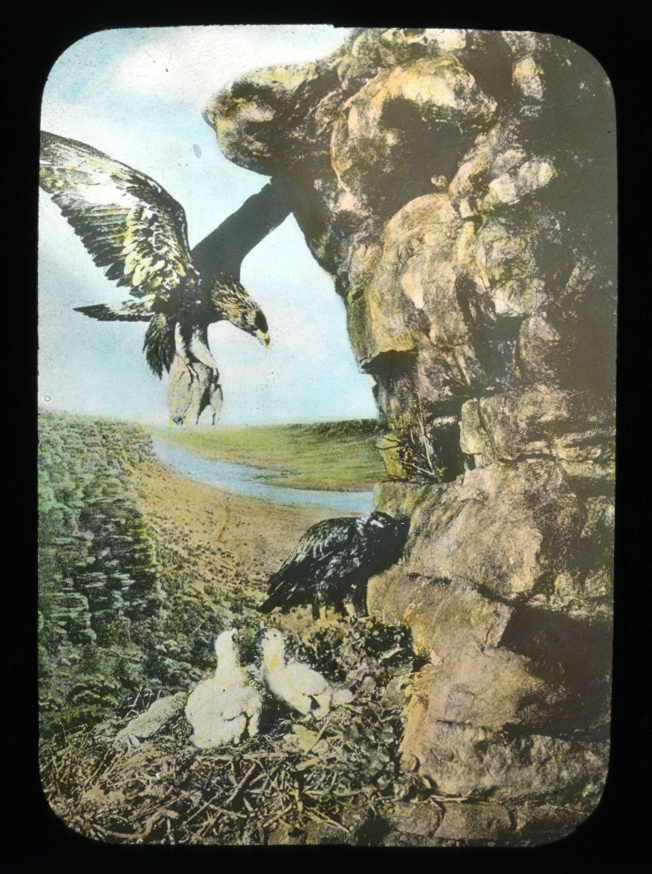
Golden Eagle diorama, 1928, Colorado Museum of Natural History.
Similar examples of biological representation of sex were seen through the exhibits of the Louisiana white-tailed marsh deer and Canada moose. The displays of these two species followed patterns of male and female stereotypes by presenting the males as alert in upright positions while females were meek and unaware. Additionally, males were staged in combat and while the females were represented in passive stances. The deer on display represented the alert-male and meek-female dynamic. For the moose diorama, museum records stated: “males indulge in fierce combats for the favor of the female during the mating season, and such a scene is represented in the group. The contest for supremacy illustrates the law of the ‘survival of the fittest,’ the female being indifferent as to the outcome of the contest.” This follows the aggressive male and passive female archetype as well. This is not to suggest that these scenarios did not occur in nature. They do to an extent. The museum however, presented male and female animals with one-dimensional behaviors that mirrored human gender norms. The public may have only encountered these animals in the museum; therefore, giving them a misleading perception of biological sex in nature. As ecologist and evolutionary biologist Chase D. Mendenhal explained, the repetition of these sex dynamics in displays packaged “human gender ideals as natural phenomena genetically inherited and determined by biological sex” and became misperceptions of the natural world that the public took home.
While these curatorial implications were subtle and imperceivable to most, they reinforced harmful yet prevalent social stereotypes of the twentieth century. Museum leaders like Figgins and Campion claimed that the museum was of benefit to the people of Colorado and a reflection of the interests of the state. Because of the lack of diverse representation within the museum, it failed in these regards. While nature itself does not follow social or cultural values, the way that it was recreated within the museum prescribed new meaning to aspects of the natural world.
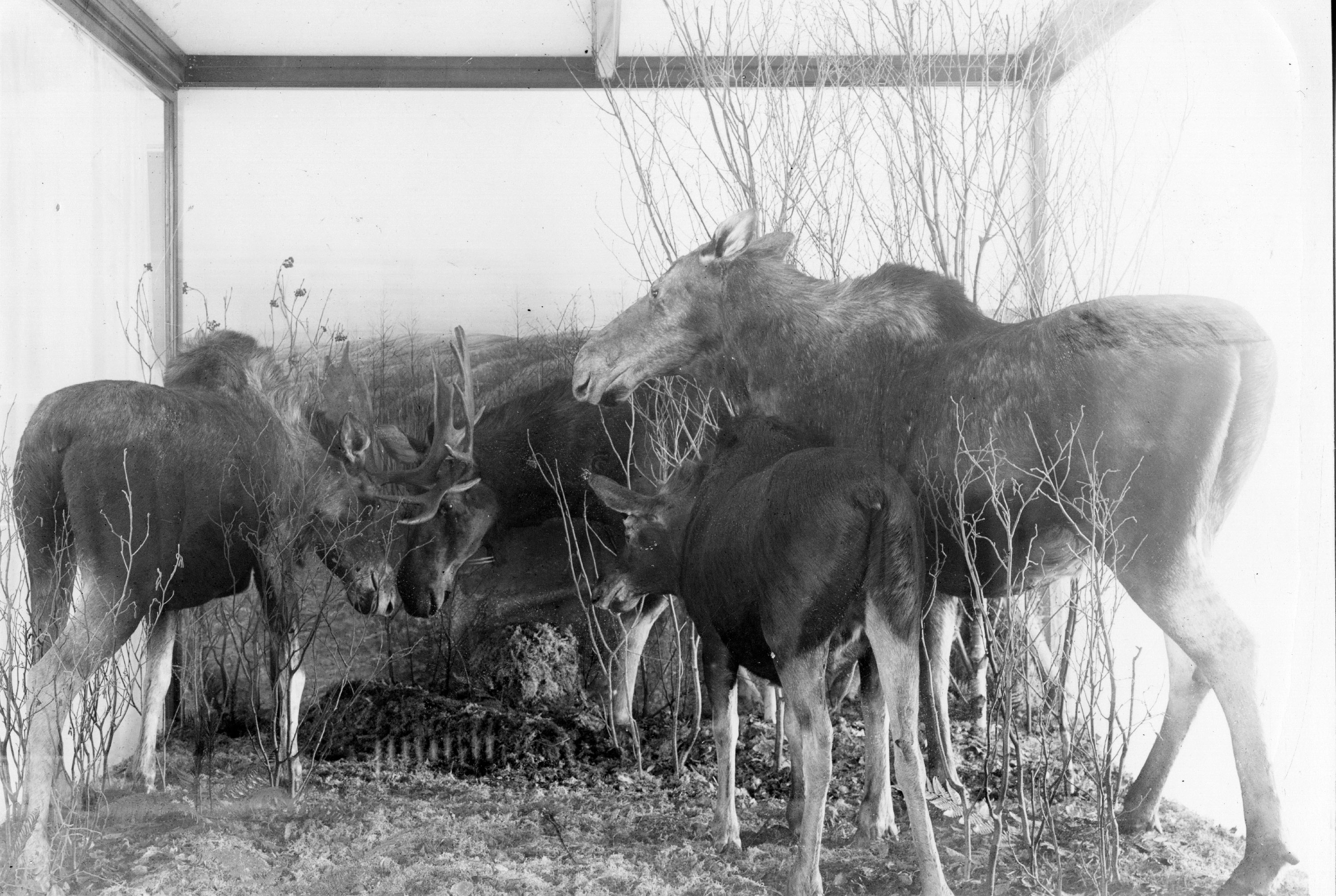
Canada Moose diorama, 1928, Colorado Museum of Natural History.
Moving Towards a More Inclusive Museum
Studying the history of museums is significant because museums are not detached from history; they are pieces of history themselves. Although natural history museums have been regarded as scientific authorities, science, and in particular natural science, has historically operated as institutions that systematically overemphasize white male voices, while excluding or repressing the narratives of minorities. This disproportionate structure has led to a distortion of the reality and truth about the natural world. It is impossible for the narratives presented in these museums to the public to be entirely objective. By acknowledging the historical contexts and events that influenced the establishment of these museums, we can identify and address the biases ingrained within them, fostering inclusive spaces for all individuals. Historians of science and museums have become increasingly aware of the dynamics of power present within the museum built on race, class, and gender. According to historian Sally Gregory Kohlstedt, the success of natural history museums has been dependent “on their congruence with the rules, structures, and premises of a particular place and time.” While the Colorado Museum of Natural History operated within the societal norms at the time of its creation, the problem lies with the static nature of the exhibits while social values have evolved. Challenging traditional administrative histories is essential. Asking who might feel excluded in the narratives presented by the museum allows historians and museum practitioners to consider how older exhibits may be perpetuating harmful stereotypes or outdated hierarchies and led to a more inclusive museum experience.
The Colorado Museum of Natural History has in many ways sought to correct exhibits and keep up with contemporary social standards. The museum underwent a name change in 2000, shifting from the Colorado Museum of Natural History to the Denver Museum of Nature & Science. This change, part of a broader trend of museums transitioning from traditional specimen displays to more interactive and education-focused exhibits, was exemplified by the decision to change from natural history to nature and science museums. This points to a democratization of the museum space, where science is no longer curated for a specific demographic but accessible and engaging for all viewers. Additionally, in 2023 the Denver Museum of Nature & Science announced its removal of the North American Indian Cultures Hall, which was originally created in 1970. The museum acknowledged the harmful stereotypes of Indigenous cultures that these exhibits perpetuated along with a statement that they would be working with Indigenous community members to “reimagine exhibition curation, collecting, programming and conservation practices with respect to Indigenous culture, heritage and belongings.” These steps taken by the museum are evidence of their attempts to continuously update and reimagine the museum, yet digging deeper into their history is important to continue this work and make the museum a more welcoming space for all visitors.