
 Membership
 Donate
 Shop
Shop




























Black Voices in the Mountain West
For more than seventy years, the Denver Star and The Colorado Statesman were vital channels for national and local news for Black residents of the Rocky Mountain West.
Editor’s Note: The Statesman, later renamed the Denver Star, and its peer publication The Colorado Statesman, were weekly newspapers published in Denver during the latter part of the 19th century and into the 20th century, by and for the Rocky Mountain region’s Black residents. What follows features two essays written for the National Endowment for the Humanities’s National Digital Newspaper Program and Library of Congress’ Chronicling America, a joint venture which supports the digitization of America’s historic newspapers.
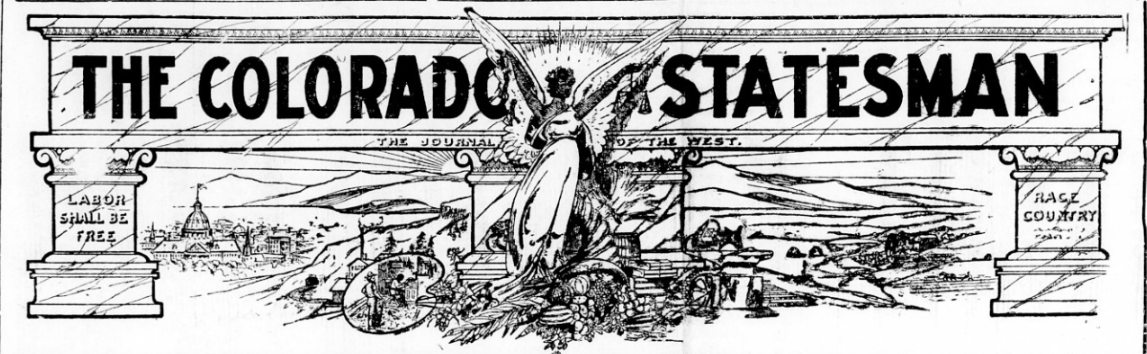
Masthead from The Colorado Statesman newspaper, 1943.
The Statesman was founded in 1888 and published in Denver. It was a weekly paper that served the Black community in Colorado, Wyoming, Montana, Utah, and New Mexico. The paper acted as a channel through which its readers could "voice their opinions, assert their rights, and demand their due recognition." The newspaper reported local, church, and society news and events, as well as national stories that would be of particular interest to African Americans residing in the Mountain West. The publication also featured op-eds about interracial marriage, Jim Crow Laws, and segregation. When the controversial movie The Birth of Nation was released in 1915, the paper, by then known as the Denver Star, ran opinion pieces condemning the film, noting in one such piece that its evil "lies in the fact that the play is both a denial of the power of development within the free Negro and an exaltation of race war." The paper repeatedly called upon its readership to boycott Birth of a Nation and printed scathing opinion pieces such as a speech delivered by William Lewis, the first Black assistant attorney general, in which he referred to the reels of the film as "three miles of filth."
Joseph D.D. Rivers was the original proprietor and first editor of the Statesman. Rivers came to Denver, Colorado in 1885 after graduating from the Hampton Institute in Virginia. The former student of Booker T. Washington joined the crowds leaving the East in an "attempt to discover the wonders of the Middle West, then termed the Wild, Wooly West" as The Colorado Statesman of June 8, 1918 described it. Arriving in Denver, he filled various positions in the state and municipal departments. He was the first Black license inspector of the City of Denver and the first Black advisory member of the Republican State Central Committee. He also studied law and ran a real estate business. In 1888, he founded the Statesman. Edwin H. Hackley took over as editor in 1892. Hackley was the first Black man admitted to the Colorado Bar and originated the American Citizens' Constitutional Union. The organization was "designed to unite the efforts of the colored people in all parts of the country for the advancement of their rights and opportunities,” as it was described in the Castle Rock Journal in 1891. His wife, Azalia Smith Hackley, a renowned singer, choral director, and activist, served as a co-editor of the women's section of the Statesman, and was the first Black graduate of the University of Denver's School of Music.
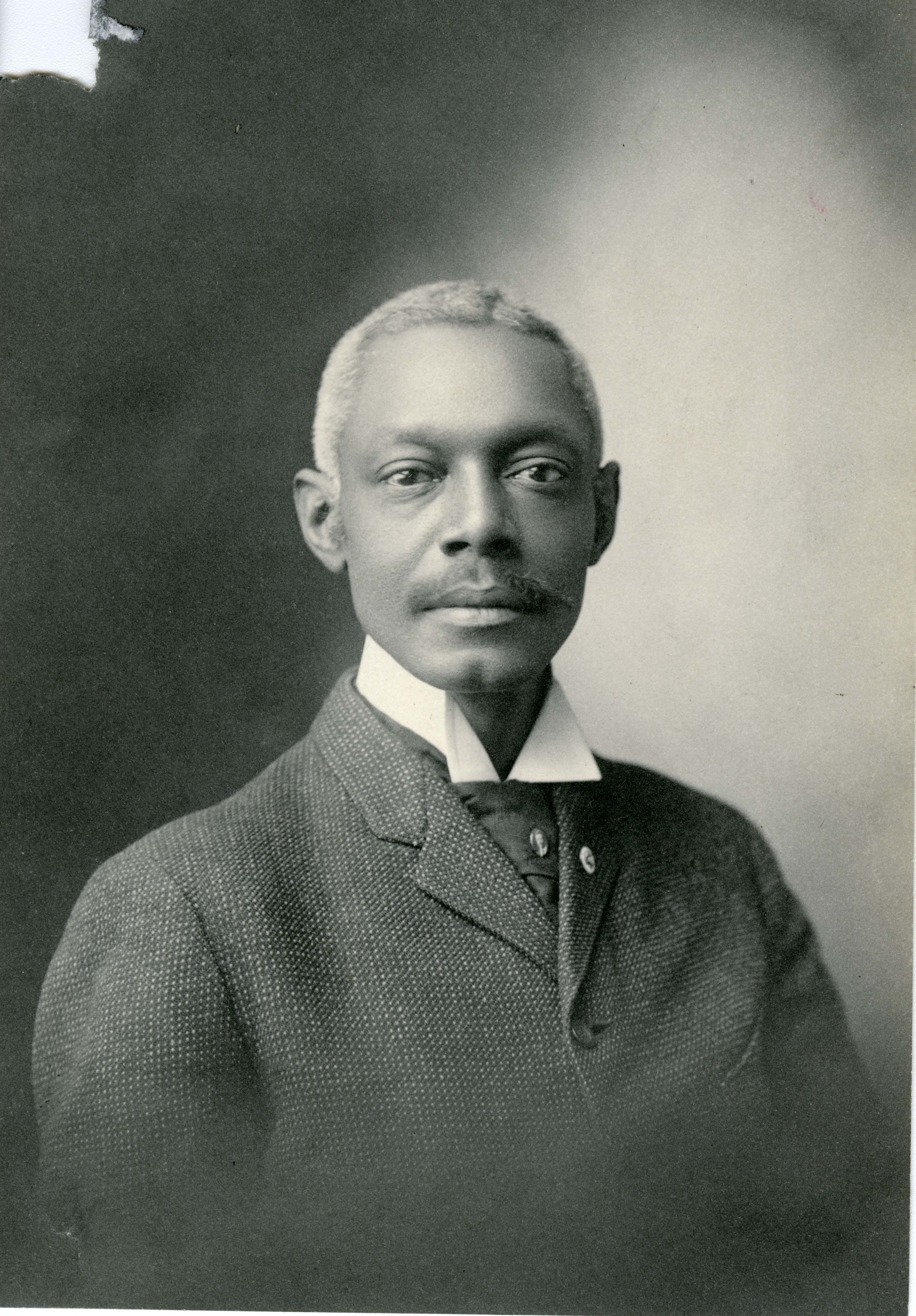
Portrait of Joseph D.D. Rivers, about 1900.
In 1898, George F. Franklin purchased the Statesman from Hackley and served as editor until his death in 1901, after which his widow, Clara Williams Franklin and his son, Chester Arthur Franklin, acted as editors and publishers. In November 1912, C.A. Franklin announced that the Statesman would become the Denver Star, stating that it was "a change of name and nothing more," in order to distinguish it from the similarly titled Colorado Statesman. In March 1913, Franklin sold the Denver Star to the Denver Independent Publishing Company which published the paper under this name until 1963.
In 1895, "[J.D.D] Rivers felt that apart from his individual successful achievements he could be serviceable to his race … [and] entered the field of journalism" as proprietor and editor of his own publication, The Colorado Statesman. The Colorado Statesman later stated that it had "developed into the mouthpiece of the people in this western country, and received a recognition from all parts of the United States as well as beyond the seas as a staunch advocate of 'Human Rights and Liberties.'" Rivers acted as managing editor, business manager, publisher, and owner. But to give credit where credit was due, he also described his wife, Ritchie, as being of the "most valuable assistance to her husband in disseminating the knowledge of uplift and advance to her people."
As publisher of The Colorado Statesman, in 1896, Rivers was arraigned before the United States commissioner on the charge of "causing to be deposited in the mails printed matter of indecent and obscene nature" reported The Aspen Weekly Times in February 1896. The Boulder Daily Camera explained that the obscene matter in question was an article under the title of "An Evil Eye" that referred to deacons, pastors, and other officers of “the colored churches in such a manner as to rouse their indignation." Rivers gave as an excuse that his local editor was ill and that he was so busy that he did not read the article closely.
Besides his editorial and publisher's duties, Rivers was also a member of the United States Grand Jury, the National Negro Press Association, and the National Negro Business League, as well as the secretary of the Western Loan and Investment Association and the president of the Colored Citizens' League. In the latter capacity, Rivers was also a very vocal opponent of the exhibition of the film The Birth of a Nation. The League petitioned the mayor of Denver not to issue a license to show it, and Rivers published the following: "Petitions, protests, delegations should flood the office of the Mayor and other City commissioners, expressing our utter disapproval of the exhibition of this picture, and as we have a city ordinance which gives our municipal fathers the right to act, we trust they will rise to the occasion which is of paramount importance and defeat the introduction of anything in this city which will break the links in the chain which every citizen, irrespective of class, creed or color, has helped to make" (The Colorado Statesman, December 4, 1915).
The newspaper was staunchly Republican and proclaimed its "readiness to do whatever that lies in our power to insure its success and its cause." The Colorado Statesman employed Mrs. Mabel B. Fallings, "a bright young newspaper correspondent," and John H. Pynter as its Washington, DC correspondents. (Pynter also served as a delegate to the Negro National Educational Congress.) The paper carried coverage of "Race News" from across the country, Republican politics, and opinion pieces on topics that affected the Black community such as Jim Crow laws and universal suffrage. It printed national and state news items, city and regional news, and serialized and patent content such as "Foibles of Fashion" and "The Kitchen Cabinet." The pages of the Colorado Statesman teemed with advertisements from black-owned businesses. For nearly forty years, Rivers was the editor and publisher of The Colorado Statesman, until his retirement in the early 1930s. Joseph D.D. Rivers died in 1937; however, the paper continued to publish for close to another thirty years, finally folding in 1965.
History Colorado, working as a content partner with the Colorado Historic Newspapers Collection (CHNC), supported the digitization of the Statesman/Denver Star and The Colorado Statesman. CHNC, a service of the Colorado State Library, had also digitized a number of newspapers representing Black voices in Colorado in the 20th century. Learn more about them on History Colorado’s Historic Black Newspaper webpage.