
 Membership
 Donate
 Shop
Shop




















Making Americans
How Colorado Fuel & Iron’s kindergartens Americanized southern Colorado’s immigrant families.
A group of happy elementary-aged children gathered around their teacher to inspect vegetables growing in neat garden beds. Clad in white bonnets and straw-brimmed hats to keep away the sun, the inquisitive brood was participating in a new program. During the first decade of the twentieth century, the Pueblo-based industrial giant Colorado Fuel & Iron Company (CF&I) sponsored a free kindergarten program for the children of some of its laborers.
The kindergartens, under the leadership of Dr. Richard Warren Corwin, were a profit-oriented endeavor. As an arm of the company’s industrial welfare program, the schools’ aim was to increase productivity and “dividends for the company.” In fact, Denver’s Rocky Mountain News quoted Corwin in 1901 claiming the Sociological Department to be a project “not of charity, but of business.”
The image of happy children inspecting veggies in their school garden as training for their future as laborers or in order to improve a company’s bottom line may be at odds with the ways modern Colorado communities think about and approach education. But company-funded child care has long been an important perk for employers looking to increase their workers’ happiness (or the amount of time they can spend at their desks). Such programs have rarely been thought of in terms of the role they played in assimilation and Americanization, and yet that was exactly the rationale behind company schools like CF&I’s. They were making Americans, and the values the schools instilled played an influential role in developing a regional education system in southern Colorado that endures today.
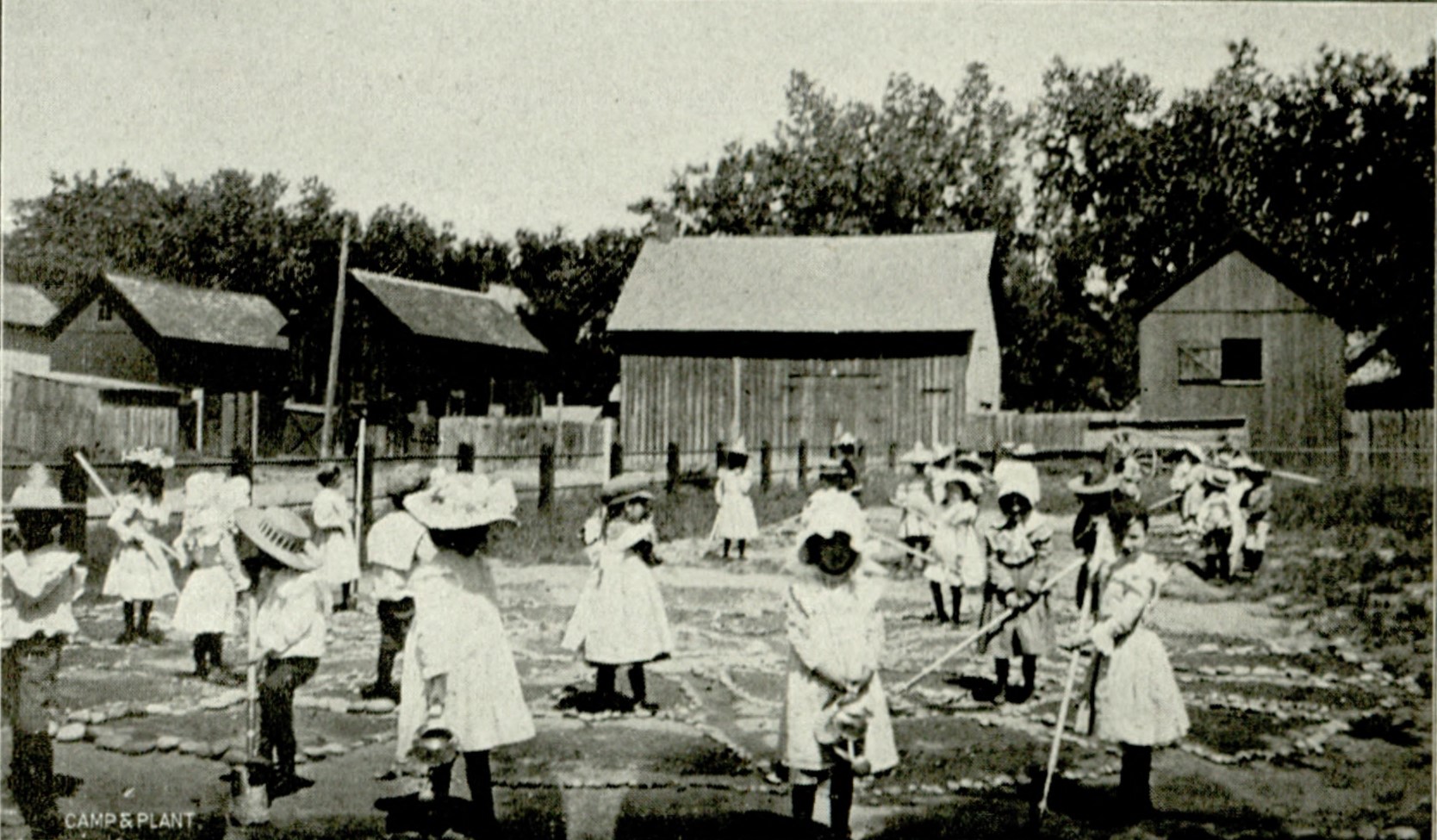
Children of the Corona Kindergarten in Pueblo working in their garden, around 1902.
An Age of Immigration
An influx of children from Catholic nations in Europe in the late 1800s and early 1900s brought dramatic changes to the ethnic makeup of southern Colorado’s mining and steel towns. CF&I was the main employer for the company town of Pueblo, and for many of the mining communities in the region’s remote mountain valleys. Its employees were increasingly drawn from a polyglot mix of immigrant families living at CF&I camps and the ethnic enclaves near the smelter in Pueblo.
The diversity of its labor force was a major factor in the company’s decision to sponsor free kindergartens with the express aim of Americanizing its workforce, starting with their children. Administrators intended the classrooms to unite under a singular identity which reflected the white, middle class, Protestant worldview of Colorado’s business class. For those Coloradans with their hands on the levers of power, diversity in nationality, language, and religion represented divisiveness and even potential threats to the country’s—and the company’s—social hierarchy. Such xenophobic fears and prejudicial attitudes were common tropes at the time, but the nativism—an intense opposition to immigration on the grounds of perceived foreign loyalty—that such beliefs represent has ebbed and flowed in political influence all throughout United States history.
Some of the earliest and longest-lasting nativist sentiments to arise in the US were directed against immigrants bringing along their Catholic faith. A deep strain of anti-Catholic suspicion has long run through American society, a holdover from the religious wars of seventeenth-century Europe and a prejudice that was explained with nods to the founders’ emphasis on personal liberty as antithetical to the centralized structure of the Catholic Church. Resentment towards Catholic immigrants only grew as more and more began arriving from majority-Catholic countries in the mid-nineteenth century.
Anti-immigrant sentiment hit a crescendo in the 1880s, as unskilled laborers seeking economic opportunity streamed into the US from southern and eastern Europe, primarily Italy and the Austro-Hungarian Empire. Later, immigration expanded as new arrivals started coming from Poland, Russia, and the Iberian Peninsula. Between 1905 and 1914, ten million immigrants entered the United States, sparking a massive response reaching across many social and government organizations (along with ongoing waves of social anxiety and anti-immigration backlash).
Expanding urban centers were places where the inequalities between foreign-born laborers and business owners were most obvious, since these tended to be the places where immigrants congregated and established new communities. New social settlement organizations aspired to improve the inhumane conditions of urban ethnic slums. Government organizations, labor unions, churches, and social clubs all launched efforts to assimilate immigrants into Western culture through lessons on language, civics, and cuisine, representing the softer side of the Americanization Movement. Hereditary societies like Daughters of the American Revolution were on the other end of the spectrum. Motivated by fear of foreign political radicalism, they and like-minded groups pursued an agenda of patriotic education focused on obedience. Adherents to this way of approaching integration became known as “Americanizers.”
The Americanization movement emerged around the turn of the century, peaked during the First World War, then waned in the late 1920s. In Colorado, the nativist elements of the Americanization movement found their most vocal and active adherents in the state’s substantial and powerful Ku Klux Klan. Conceived as the “100 Percent American” campaign, its supporters aimed for naturalization of all eligible immigrants into citizens, emphasized the English language over multilingualism, and called for an abandonment of all “Old World loyalties, customs, and memories” in the words of author John Higham. However, World War I ushered in a resurgence of nativism as paranoia spread about “undesirable” people—foreigners, Jews, Catholics, Bolsheviks, and more. The melting pot dream gave way to a stronger appeal to preserve “America for Americans,” culminating in a spate of new anti-immigration laws in the 1920s. The Immigration Act of 1924 (also known as the Johnson-Reed Act) placed quotas on European immigration and eliminated immigration from Asia. President Lyndon B. Johnson would later sign legislation replacing race-based quotas, but not until 1965.
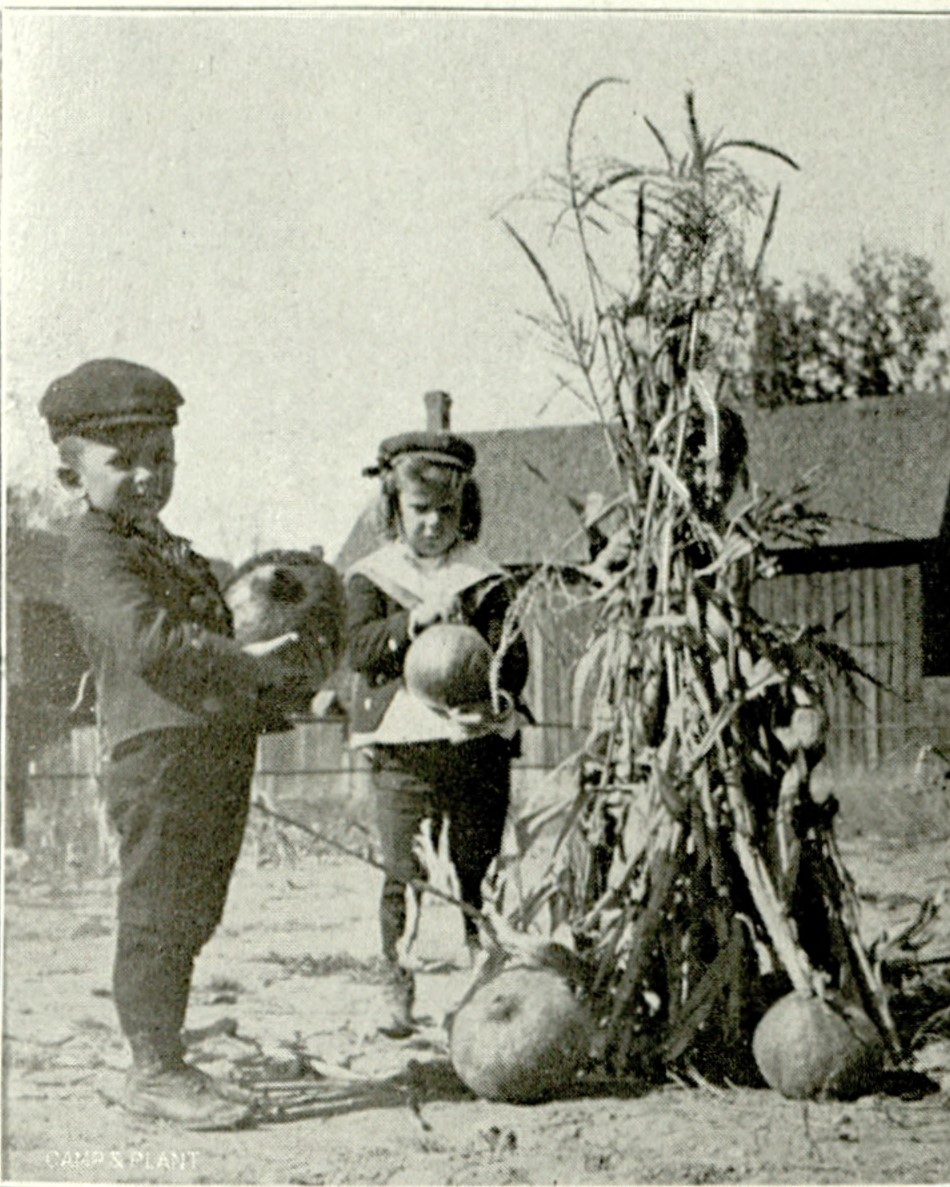
Two kindergarten boys displaying their fall harvest, around 1902.
Many Americanizers were concerned that incoming waves of immigrants taxed public education systems across the nation. Although turn-of-the-century reformers believed kindergartens were unnecessary for their own children, they were thought of as a valuable tool for the Americanization movement, reflecting strains of prevailing paternalistic social attitudes about the role of public education that have long flowed through American education systems. In the industrial town of Buffalo, New York, according to historian Maxine Seller, school officials believed kindergarten classrooms should remove immigrant children from their families, which were then considered to be “deficient and immoral or, at the very least, un-American.”
By the early 1900s, activists had cemented public kindergartens into the American education system, but from the beginning there was an ulterior motive. In her book Mothers of All Children, historian Elizabeth Clapp documents middle-class social reformers proposing the idea that kindergartens could erase urban poverty and socialize poor children in “habits of cleanliness and discipline.”
Changes in Southern Colorado
With energy-rich coal fields nearby and the Arkansas River running through town, Pueblo’s Colorado Fuel & Iron Company was a powerhouse of steel development in the late nineteenth century. It formed in 1892 out of a merger of two rival companies, resulting in a monopoly that vertically integrated coal mining and steel production along the Rocky Mountains. CF&I’s expansion between 1890 and 1900 relied on large amounts of immigrant labor, drawing workers from around the globe to meet the company’s demand. Men flocked to Pueblo’s Minnequa Steelworks and the forty coal mining and coke camps scattered across New Mexico, Colorado, and Wyoming. In 1902, CF&I counted 17,000 male employees, with their families totaling 80,000, representing an array of home countries including Mexico, Italy, France, Germany, Scandinavia, the Slavic states, and Japan.
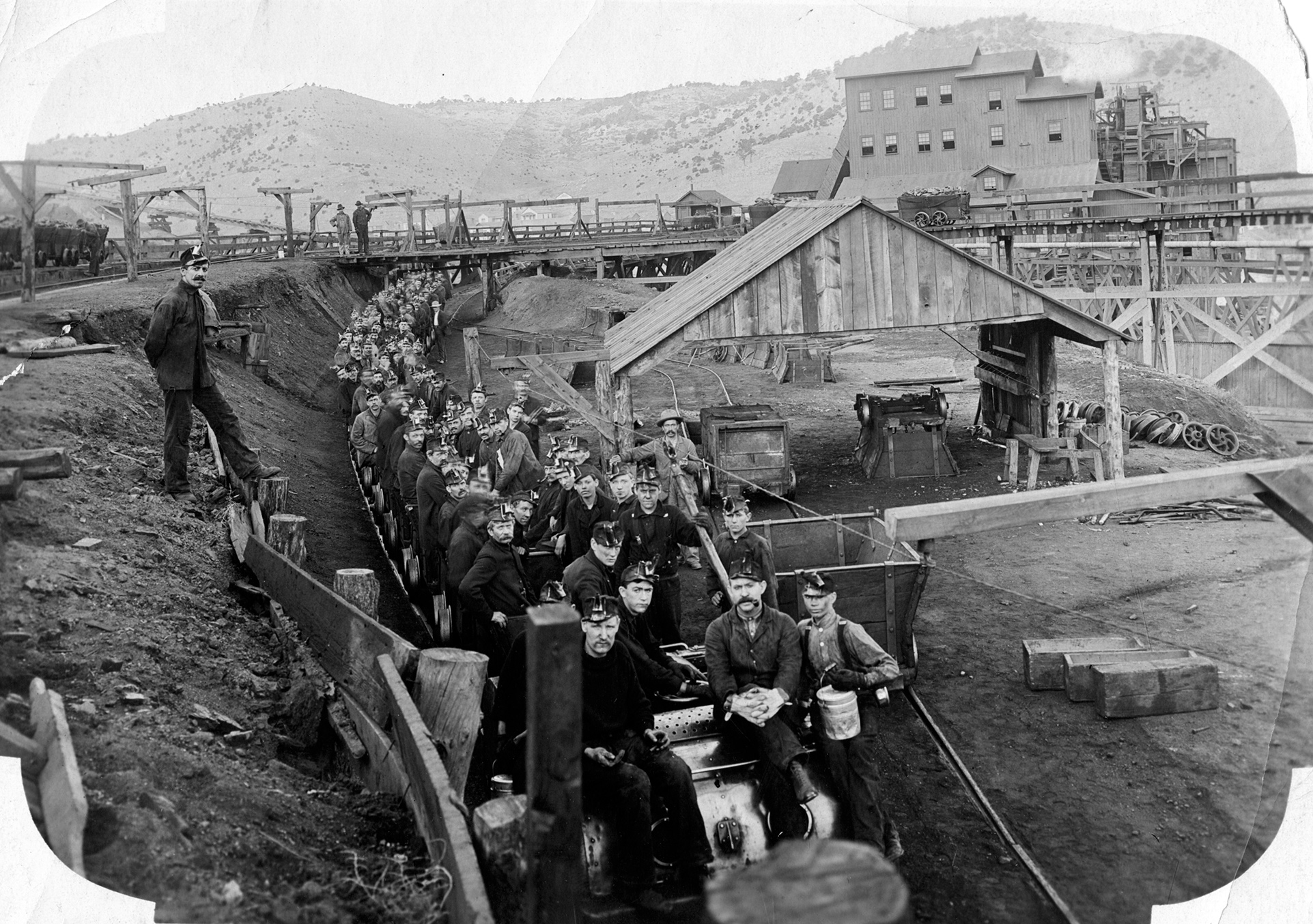
Miners at Starkville prepare to descend the mine.
Most of the company’s laborers were Italians, Mexicans, and people from the multi-ethnic Austro-Hungarian Empire. By 1900, Italians comprised more than 20 percent of the state’s population of 539,700, and more than half of them lived in the counties of Las Animas, Pueblo, Huerfano, and Fremont. Many Italians in Pueblo came from regions south of Rome, a vast agricultural area economically marooned during the Italian Unification of 1861.
Colorado’s southern region was also home to large numbers of Hispanos—descendants of Spanish-speaking settlers who had formed communities in New Mexico and southern Colorado before the region was conquered by the United States—and Mexican nationals, more recent immigrants who often came north fleeing the economic instability under Mexican President Porfirio Díaz.
Around the turn of the century, a large number of Slovenian immigrants came to Pueblo, fleeing poverty and military conscription in their homeland which was then part of the Austro-Hungarian Empire. Like many of their Hispano, Mexican, and Italian neighbors, most Slovenians were Catholic. They founded what is known as the Eiler Heights neighborhood near the Eilers Smelter in Pueblo, which was derogatorily called Bojon Town—likely after a nickname given to the Slovenians who called it home. Today, the neighborhood is called Eilers Heights.
Stereotypes of the day derided southern and eastern Europeans as inferior and less-intelligent than Anglo Americans. Although these ethnic prejudices were founded in fiction, their existence did shape the immigrants’ reality. For example, in the 1915 report by the United States Commission on Industrial Relations, the author documents how CF&I executives believed they needed to control all aspects of the workers’ lives because “the inhabitants of the coal camps, being largely of foreign birth and speech, were incapable of either political self-government or of exercising a voice in determining their working conditions.”
These conspicuous groups of immigrants often caught the ire of nativists, who perceived them as a threat to the American way of life, but communities made up of people from somewhere else continued growing across Colorado. In southern Colorado, CF&I families together with management established the trappings of community life, from booming towns to rustic mining camps. Employees and their families lived in company housing, shopped at company stores, and soon after their arrival, would be sending their children to company schools.
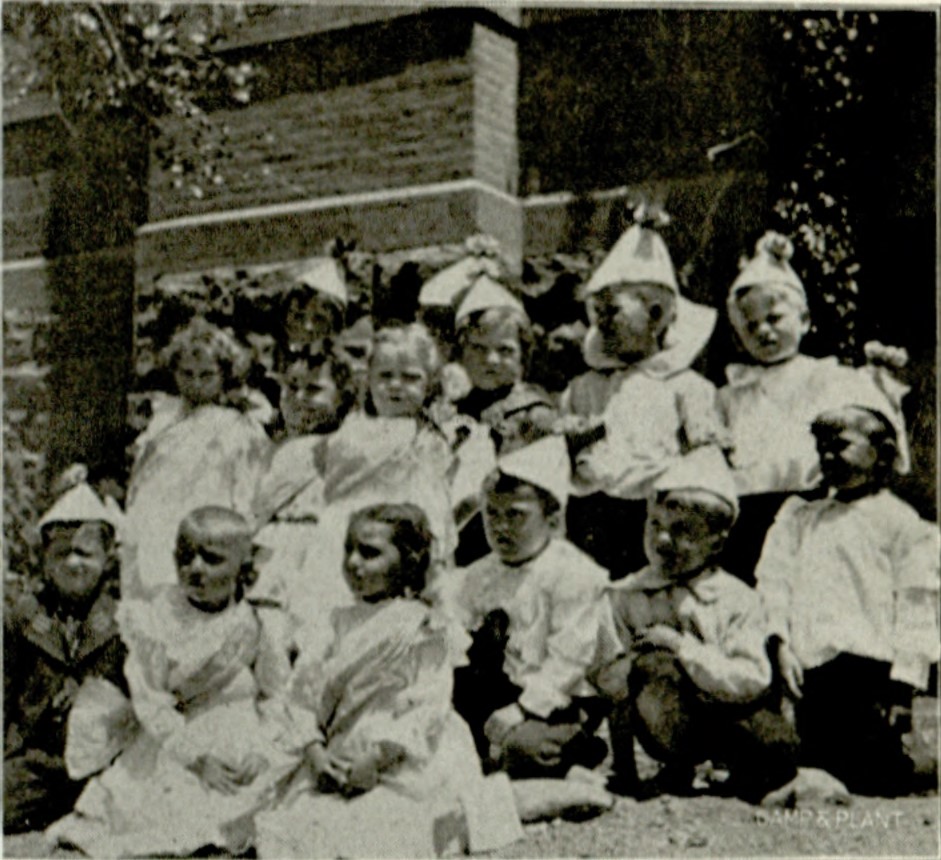
Children of the Wildeboor Kindergarten in Pueblo celebrating the Fourth of July, around 1902.
Becoming Americans at School
Schools were among the first markers that a new camp or town was going to stick around as Colorado made the transition from territory to state in the 1870s. Statehood came in 1876 and, in less than twenty years, even the farthest-flung camps were building schools. In 1892, the camp town of Sopris built a schoolhouse with a day nursery, which was followed by similar classrooms in Engle, El Moro, Starkville, Rockvale, and New Rouse. Residents of the camps raised money to erect the buildings, but Emma Abbot Kebler, wife of CF&I’s then-general manager, is credited for the organization and establishing the spirit of the early schools.
Enthusiasm for community childcare soon spread. In El Moro teachers recounted how one boy, “who came tugging his tiny baby sister, was asked how old she was. ‘Oh,’ he replied, ‘she’s five years old when she comes to school but she’s two and a half at home.’” The schools provided pillows for nap time because so many children under the age of three attended. Within a decade, CF&I had appropriated community-led efforts to establish public education systems and was organizing its own schools for the children of its workforce.
In 1900, Dr. Corwin began collaborating with John F. Keating, Superintendent of School District No. 20, to start three kindergartens in Pueblo’s immigrant neighborhoods south of the Arkansas River: Wildeboor in the Grove, Corona on West Abriendo Avenue, and Bessemer on East Routt. The classrooms followed a “Froebelian” model. German scholar Friedrich Froebel had developed a new method to teach young children, focused on play, nature, and social unity, and coined the term “kindergarten,” meaning “child garden.” These programs literally involved gardening, as it was believed the responsibility would allow children to become inquisitive, creative, and responsible. As a result, Colorado’s early kindergartens operated from April to December so that the children, born to industrial laboring families, could learn to grow food and the school could take advantage of their labor for the growing season. The Pueblo school board proclaimed that a “study of nature is the best means of awakening in children the power of keen and accurate observation, of visualization and of discrimination.”
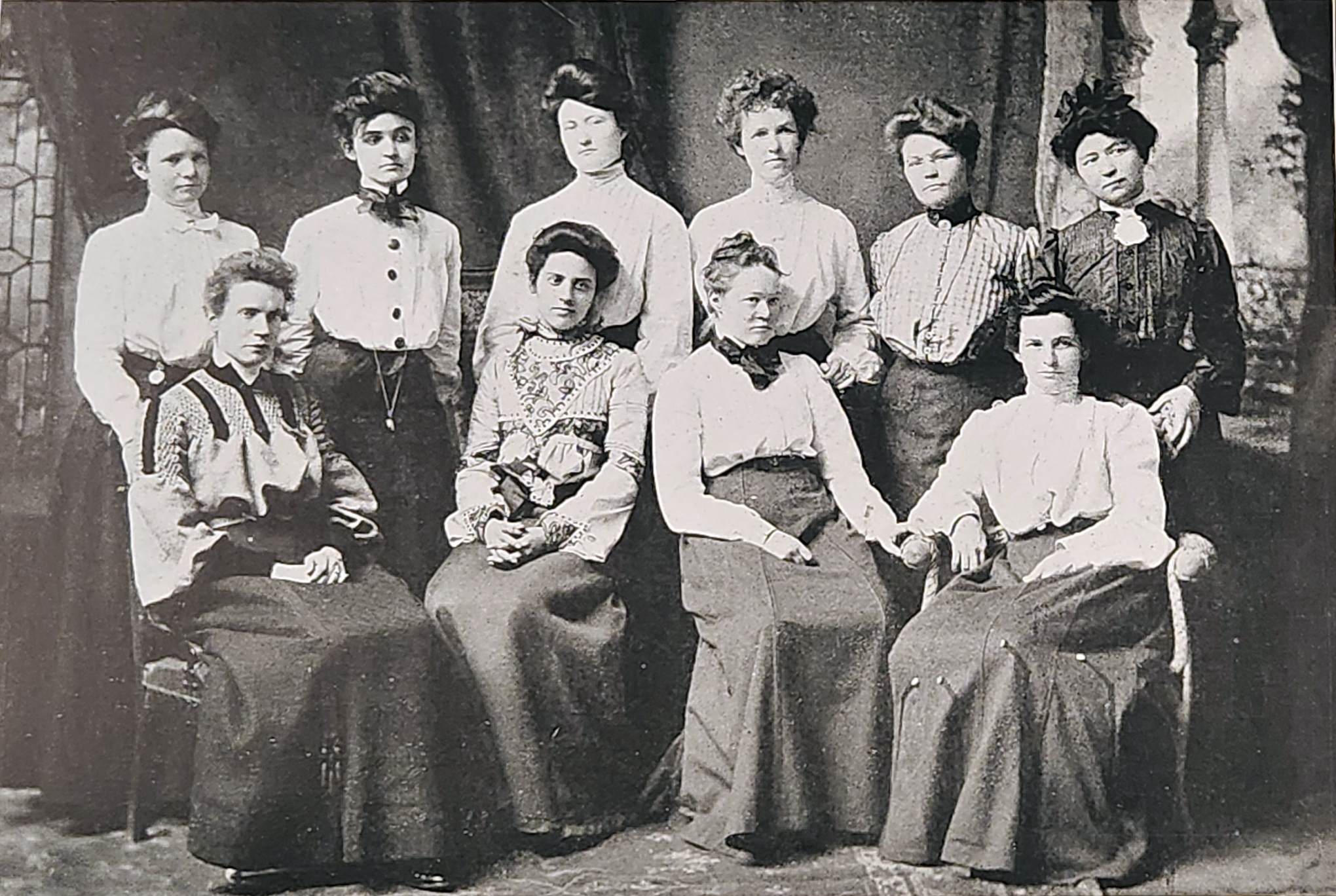
Kindergarten teachers employed by Colorado Fuel & Iron Company, around 1903–1904. Kindergarten Superintendent Margaret Grabill is in the top row, fourth from the left.
Classes were held five mornings a week. The children first tended their vegetables: radishes, lettuce, turnips, beets, carrots, squash, and pumpkins, alongside flowers. They then returned inside for paper crafts, singing, and watercolors. The Pueblo school attempted to be frugal—the Pueblo Water Company donated water, nearby property owners donated land, and students ate their own produce for lunch. The classrooms also raised funds by selling vegetables to parents. Enrollment numbers revealed the experimental curriculum was well-attended. CF&I also supported classrooms in the mining towns of Sopris, Rouse, Starkville, Engleville, El Moro, Pictou, Primero, Segundo, Tercio, Berwind-Tabasco, and in the mountain villages of Redstone and Crested Butte. Camp towns’ enrollment actually exceeded Pueblo’s. Class sizes in distant camps reached the forties, and the Starkville kindergarten even boasted fifty boys and fifty-five girls.
In 1901, CF&I created its Sociological Department under the leadership of Dr. Richard W. Corwin, the company’s Chief Surgeon, who championed “the cause of social betterment” for the workers and their families. Corwin was both a nativist and also a eugenicist, who believed in the inherent inferiority of some people based on their race, ethnicity, or heritage. Corwin distinguished “Latin peoples,” his term for Italians and Mexicans, from “American” Pueblo residents. The company’s September 1903 newsletter Camp and Plant, under Corwin’s direction, projected their discriminatory views on the Italian and Mexican neighborhood located on Smelter Hill, describing the homes there as too filthy, their streets as too crowded, their men as too angry, and their speech as too loud.
Corwin’s work for CF&I can be described as a type of welfare capitalism, a movement for companies to provide their workers with education, healthcare, and recreation to mollify union demands. Alongside the continued operation of the kindergartens, the Sociological Department worked to establish “model communities” for CF&I workers. It worked to improve hygiene and provide company-approved leisure activities (to distract from alcohol, gambling, prostitution, and union organizing). Distinctively, CF&I already operated closed camps. In isolated southern Colorado, workers lived in company houses and shopped at company stores with their company-issued money, all under the authority of the mine superintendent. In the beginning, much of the company housing consisted of dirt floor shacks without access to water or heating. However, soon the Sociological Department declared the importance of “improving the home relations and furthering the interests of the men, making them better citizens and more contented with their work.”
And in the early 1900s, pacifying workers was high on the CF&I priority list since Colorado miners and smelter workers had joined in a large protest movement in 1903 seeking an eight-hour workday, among other workplace protections that we take for granted today.
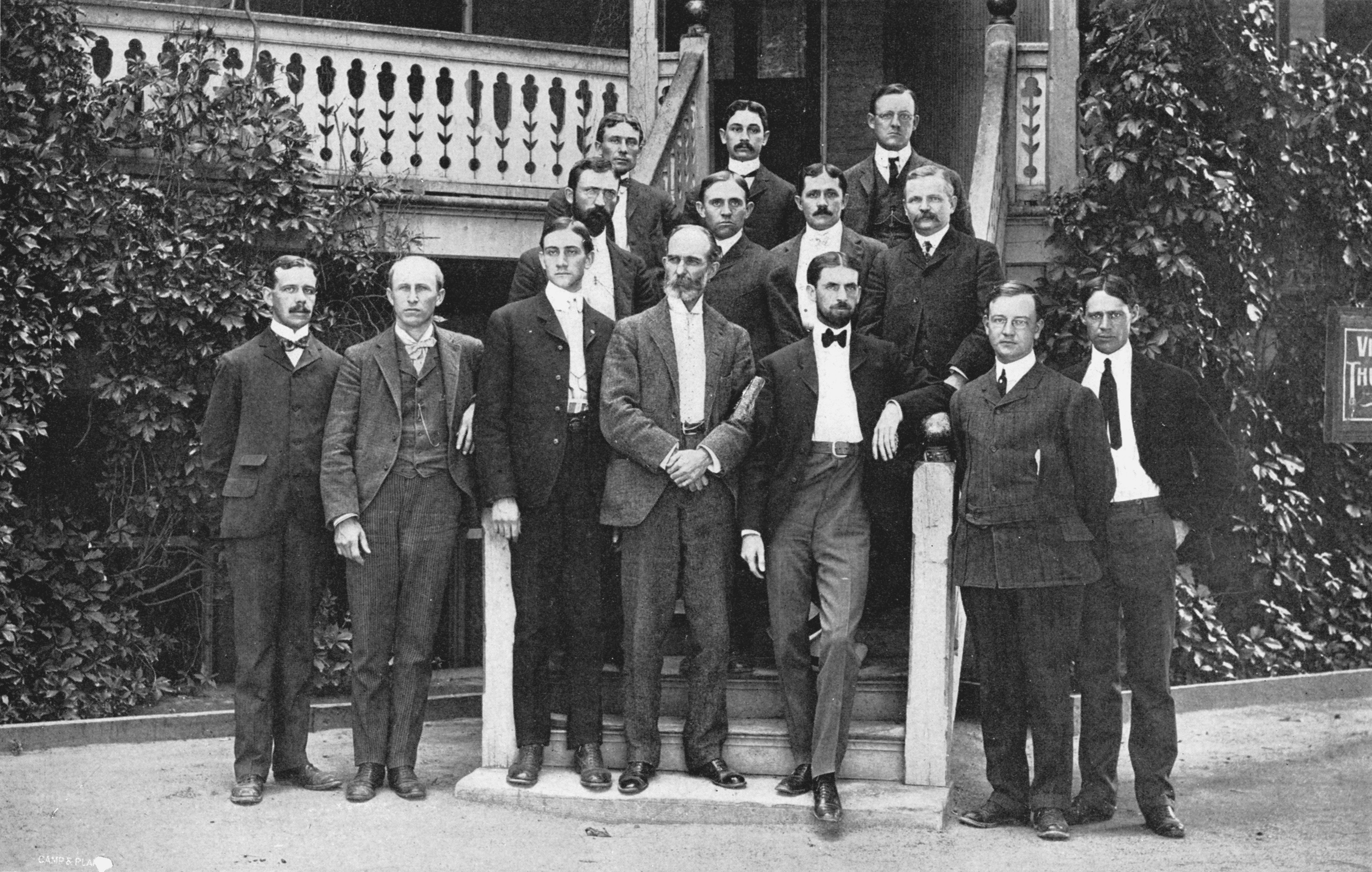
Richard W. Corwin (at front center) is joined by his staff in 1902. Courtesy Bessemer Historical Society/CF&I Archives.
American Ways
In January of 1902, Pueblo’s Colorado Daily Chieftain newspaper ran an article praising the city’s new schools, quoting extensively from Lois J. Shepherd, then superintendent of schools for Pueblo County. When asked about the free kindergarten program, she spoke at length, capturing the popular attitude and paternalistic outlook of the school district:
There is nothing like the civilizing influence of [free kindergartens]. The worst elements and questions which confront our land are found in these crowded, foreign-speaking localities. Man, fearing neither God nor man, spurning the governments left, indifferent to the new, indifferent to all law but that of love for their children, are being led by them to truth and true patriotism.
Richard Corwin, reflecting similar thinking about the benefits of education, wrote that the kindergartens of CF&I’s Sociological Department were its most important work because unlike adults who “come to us with habits fixed,” these “children readily absorb American ways.” Americanizing lessons in most schools included personal hygiene, moral virtues, and Christmas gift giving, although the most salient goal for CF&I schools was to inhibit union support. The classrooms, according to noted Colorado historian Thomas Andrews, functioned as an inoculation “against the contagion of unionism” spreading through the company and threatening its attempts at social control and revenue-oriented reform.
In the company schools’ curriculum, Corwin charged the kindergarten teachers to inspire women through social and educational gatherings. Influenced by prevailing ideas about childhood, middle-class women across the United States adopted “educated motherhood.” This enriched version of motherhood held women responsible for protecting the country’s future by raising children based on scientific methods. Teachers led Mothers’ Meetings, but the curriculum differed depending on which language the audience spoke. One meeting of camp women attending could not speak English, so the instructor had them make scrapbooks and weave baskets. The Child Study Club, consisting entirely of English-speaking women, spent a meeting complaining about the women’s home lives.
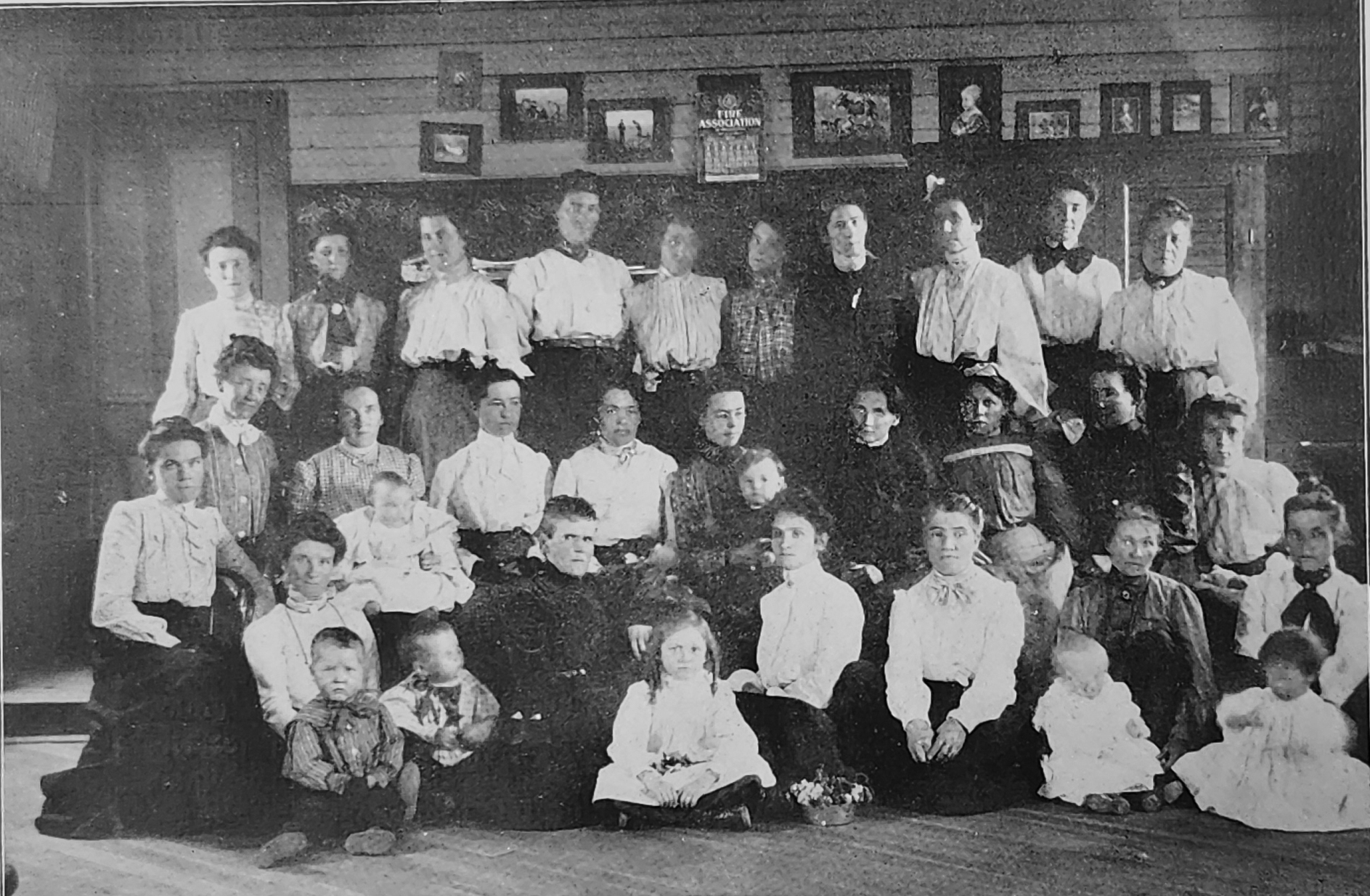
Women meet for a Child-Study Club at Crested Butte, around 1903–1904.
The many languages spoken among the laborers and their families were emblematic of the way Americanizers talked about their fears at the changing ethnic makeup of the region and the country more broadly. The presence of immigrants speaking Italian, German, and Spanish was a deepening identity crisis that demanded swift and far-reaching action. In 1902, according to the company, CF&I employees spoke twenty-seven different languages. The kindergartens tried to remediate that by teaching English to both the children and adults. However, the Sociological Department claimed that “the language difficulty, so troublesome in all other branches, seems to be but a comparatively small obstacle” in the kindergartens because “the little foreigners watch and imitate the movements of the lips” of their teachers. Company newsletter Camp and Plant highlighted how the thirty pupils of the Wildeboor kindergarten were unable to speak “anything but German, Slavonic, Spanish or Italian” but “most wisely the teachers have directed their efforts at this school along patriotic lines, and have spent a great deal of time in the inculcation of a spirit of love of country.”
Amid an explosion in the nation’s rate of alcohol consumption in the early 1900s, CF&I’s Sociological Department was also charged with curbing drinking habits, but it was like holding back the incoming tide. Countless saloons dotted ming camps across the state. They catered to the coal miners and other laborers, and served as community centers and even union halls—important sites for social bonding and a relief from the hazards of their work. Saloons carried a dim reputation in Colorado mining camps, and were frequently the site of both bar fights and less-dramatic disagreements.
The men in CF&I’s upper management experimented with different ways to temper drinking and settled on blaming the women in the workers’ lives. Dr. Richard Corwin argued husbands drank when their wives failed to provide enough comfort at home. He asserted that training from the kindergarten teachers would prevent the future husband of a girl “who has learned to keep a tidy home and cook a savory meal” from drunkenness. Regardless, CF&I still sold liquor concessions and rented retail space to saloon owners in its territory. Realizing the futility of dry policies, the company eventually reverted to preaching temperance to the men through their families.
Men resisted such heavy-handed attempts by the Sociological Department to control their leisure time. Saloons fostered union organizing, as miners appreciated the camaraderie formed over shared frustrations. Tellingly, some of the nation’s biggest capitalists and employers like the Rockefeller family supported both state and national prohibition amendments, noted by Robin C. Henry in Making an American Workforce, because they believed “alcohol fueled vice and unrest among workers.” The Sociological Department at CF&I responded by creating clubs and reading rooms as alternative entertainment. In Pueblo, the Minnequa Reading Room hosted card games to promote “social gatherings of a wholesome sort,” the opposite of raucous watering holes. Corwin’s attempts at “soft power,” argues Thomas Andrews, turned home and community into a “key battlefield,” escalating a labor conflict over pay and working conditions into a fight for “the fate of America.”
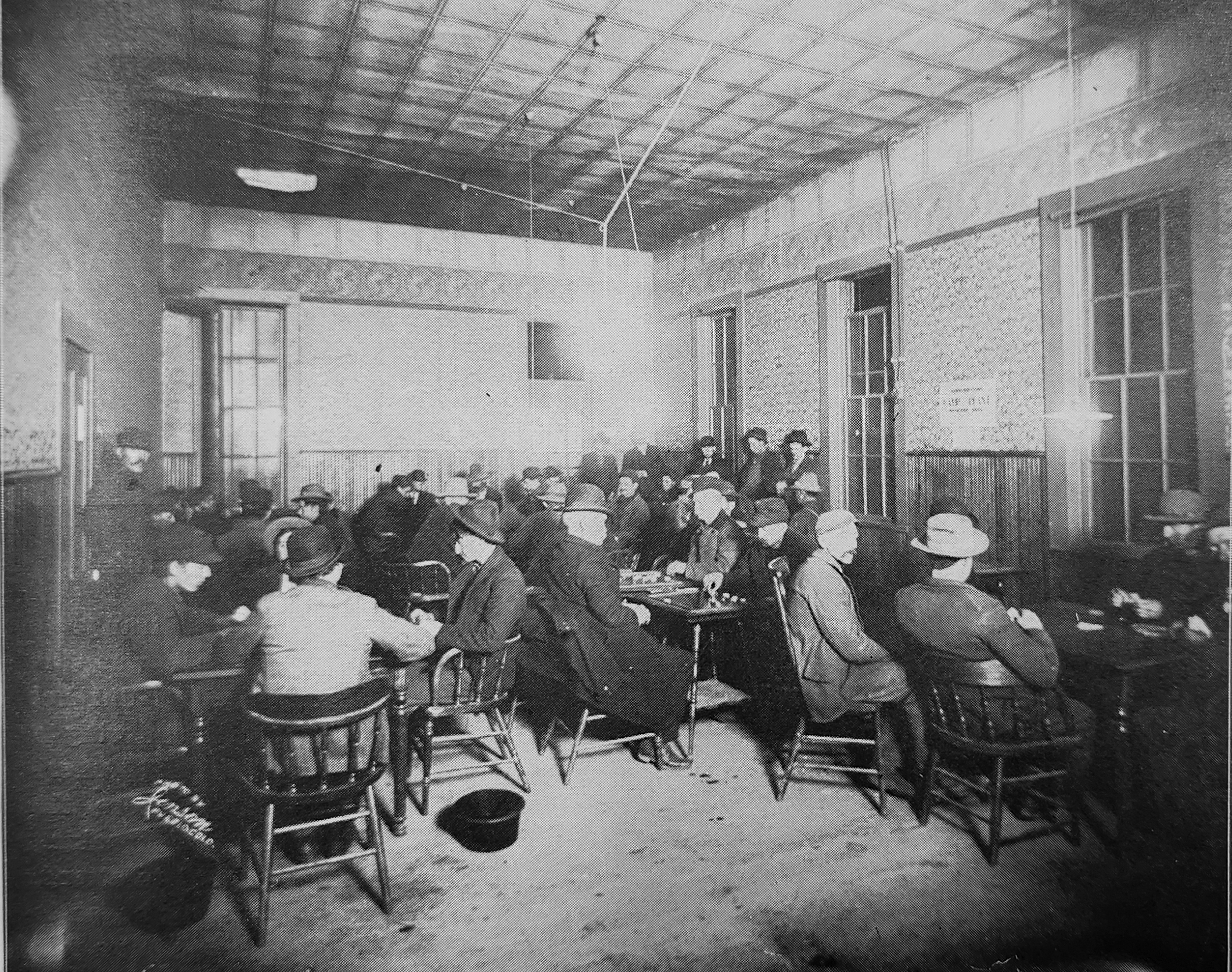
Men socializing in the card and game room at Pueblo’s Minnequa Works, around 1901–1902.
Meddling in the workers’ home lives, their children’s education, and community spaces only frustrated the workers and undermined loyalty they might otherwise have had to CF&I. Workers were quick to recognize company coercion, and resented the company’s high-handed paternalism. Community bonds proved strong sources of resistance, and parents utilized churches and parochial schools as bastions of culture to preserve Catholicism in the younger generations. In Pueblo, Italians and Mexicans worshiped at Our Lady of Mount Carmel, Slovenians and Croatians at St. Mary’s, and Slovaks at St. Anthony’s.
Resistance efforts were locally successful in stymieing the company’s Americanization agenda, though many of southern Colorado’s women were encouraged to enroll in domesticity classes through the Sociological Department. One teacher, Marguerite Prendergast, complained how “the classes were not as well attended” because the work “was not thoroughly understood by the mothers.” CF&I ignored that most of these women already kept house and probably found no need for a class on cupboard and utensil care. In fact, southern Colorado women, in many places, developed cottage industries like bakeries. Adding to insult, CF&I overrode many mothers’ desire for alternative childcare, coercing them into sending their children to company schools. Corwin recorded many families' complaints about the schools, particularly that the kindergartens have “no benefit in the summer because then their children could play out of doors.” He dismissed them for not understanding the classrooms’ purpose.
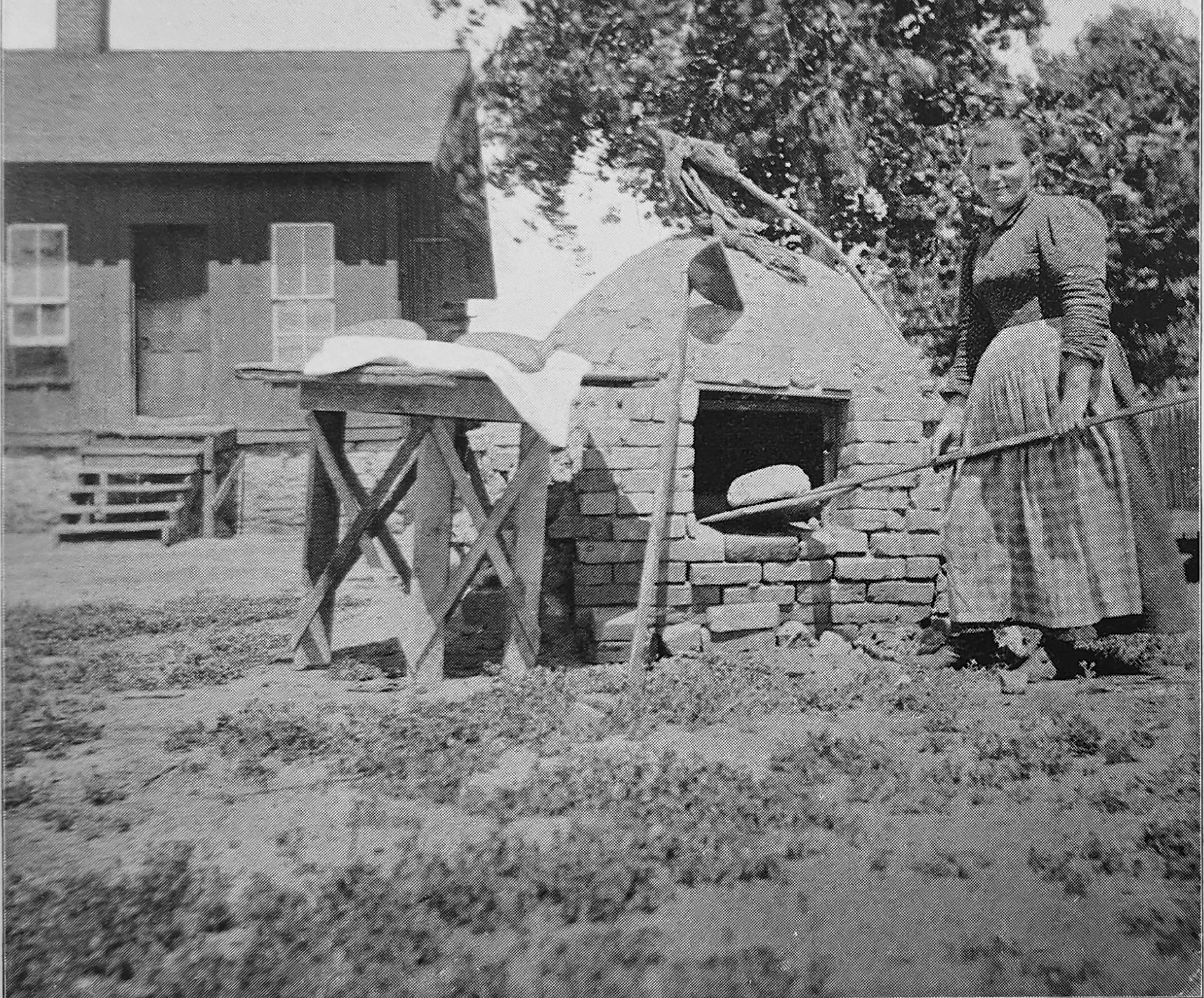
An Italian woman baking bread in an outdoor oven at El Moro, about 1901–1902.
Just Business
The Sociological Department was a business endeavor, intended to save CF&I money by increasing its control over its workers and influencing future generations to develop the values and ideals that would support business expansion into the future. But, as time went on, CF&I management grew skeptical that Corwin’s programs could deliver on their promises. From the very beginning, Corwin acknowledged that the massive and widespread workforce of CF&I meant his department would be unavoidably inefficient. Instead of a single facility, the department was required to oversee many small operations across the state, each with its own equipment and many employees working the same jobs but in separate locations, all at what he termed “ruinous expense.” He correctly predicted that the company would balk at the cost. In 1908, Lamont Montgomery Bowers, a business protégé of John D. Rockefeller Sr., an anti-unionist, and a critic of social reformers, took over as CF&I’s vice president. In the midst of the transition, Bowers slashed the Sociological Department’s budget.
Ultimately Corwin was like many other reformers of the day: at once motivated to educate and uplift the people in his care, but oblivious to the resentment his high-minded and heavy-handed policies engendered. He once compared working in Colorado’s industrial landscapes favorably to conditions in Pennsylvania, scolding the easterners for pursuing “the selfish interest of the mine owners and steel millionaires.” Out West, he claimed CF&I treated their toilers like “younger brothers…to be humored and taught by their elders.”
Five years after Rockefeller’s takeover in 1913, CF&I camps became ground zero for the Colorado Coalfield Wars. Though the strikers that precipitated the violence were most explicitly about gaining union representation for workers, the company’s control over its employees' lives was a major motivating factor behind their push for unionization. After months of skirmishes between laborers and company-hired guards, the Colorado National Guard attacked the striking workers in April 1914 at Ludlow, resulting in escalated warfare between the factions. Following the Ludlow Massacre, striking miners waged a guerilla war against CF&I. For fifteen total months, strikers fought against CF&I’s hired guards, strikebreakers, and the Colorado National Guard, until federal troops called in by President Woodrow Wilson came in to pacify the region.
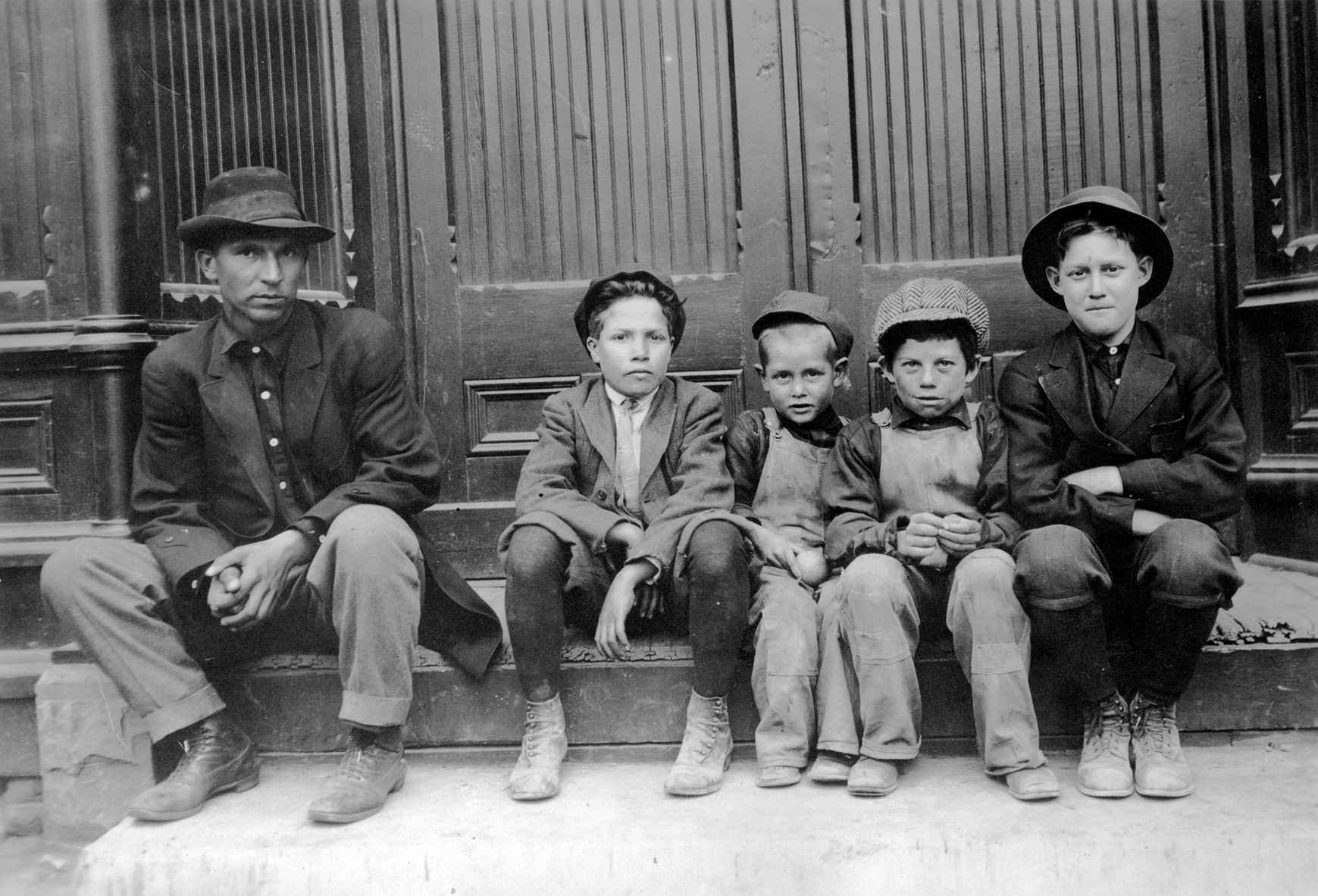
A miner and his young sons sitting on a stoop in Las Animas County, Colorado, during the 1914 Colorado Coalfield Strike.
The unity found in the strike colonies, argues Thomas Andrews, represented a unique “vision of Americanism.” The miners subverted CF&I’s image of conformity and instead created their own ideal. The uprising coincided with the Sociological Department’s closure in 1914. A year later, CF&I introduced the Rockefeller Plan, a public relations campaign that resumed aspects of the social-betterment work. Instead of an internal operation, CF&I partnered with the Young Men’s Christian Association (also known as the YMCA) to promote Protestant middle-class values to the workers.
As the twentieth century carried on, the needs of Pueblo and the coal hinterlands outgrew CF&I. As early as 1906, the Sociological Department was financially supporting only three of the camp kindergartens, while local school boards took charge of the rest. Eventually the very idea of company towns died away, helped along by Colorado’s deeper integration into the broader national economy, its growing middle class, pressure from unions, the economic downturn of the Great Depression, and the introduction of cars.
Richard Corwin remained influential in Colorado education, serving for decades on the Pueblo School Board. His attitudes towards immigrants and nativist leanings continued appearing in his work. As part of a later American Medical Association investigation into the conditions of rural schools, Corwin condemned the country, claiming that “undesirables” filled the schools and the only hope of “improving our race or saving our nation” was through eugenics. Corwin remained active in southern Colorado until his death in 1929, and his name is still prominent in Pueblo, including in the name of the city’s second largest hospital, St. Mary-Corwin.
The perceived threat of millions of newly arrived immigrants speaking Italian, Greek, and Spanish and practicing Catholicism, against the US-born white Protestant population, presented an opportunity for experimental social engineering across the nation. In southern Colorado, measures to “Americanize” its foreign-born employees across the region melded with the new logic of industrial capitalism to produce a specific approach to assimilation and integration of immigrant populations. While the company and many of its contemporaries no longer exist, the ramifications of their kindergartens and other programs still resonate in classrooms today.
Though stripped of some of the more odious racialized thinking of 120 years ago, “Americanization” and nativist sentiments still course through contemporary discussions around immigration and education. Colorado’s educators still face similar questions as their counterparts from the early twentieth century, including the question of how to best prepare their students to be members of a vastly diverse nation.
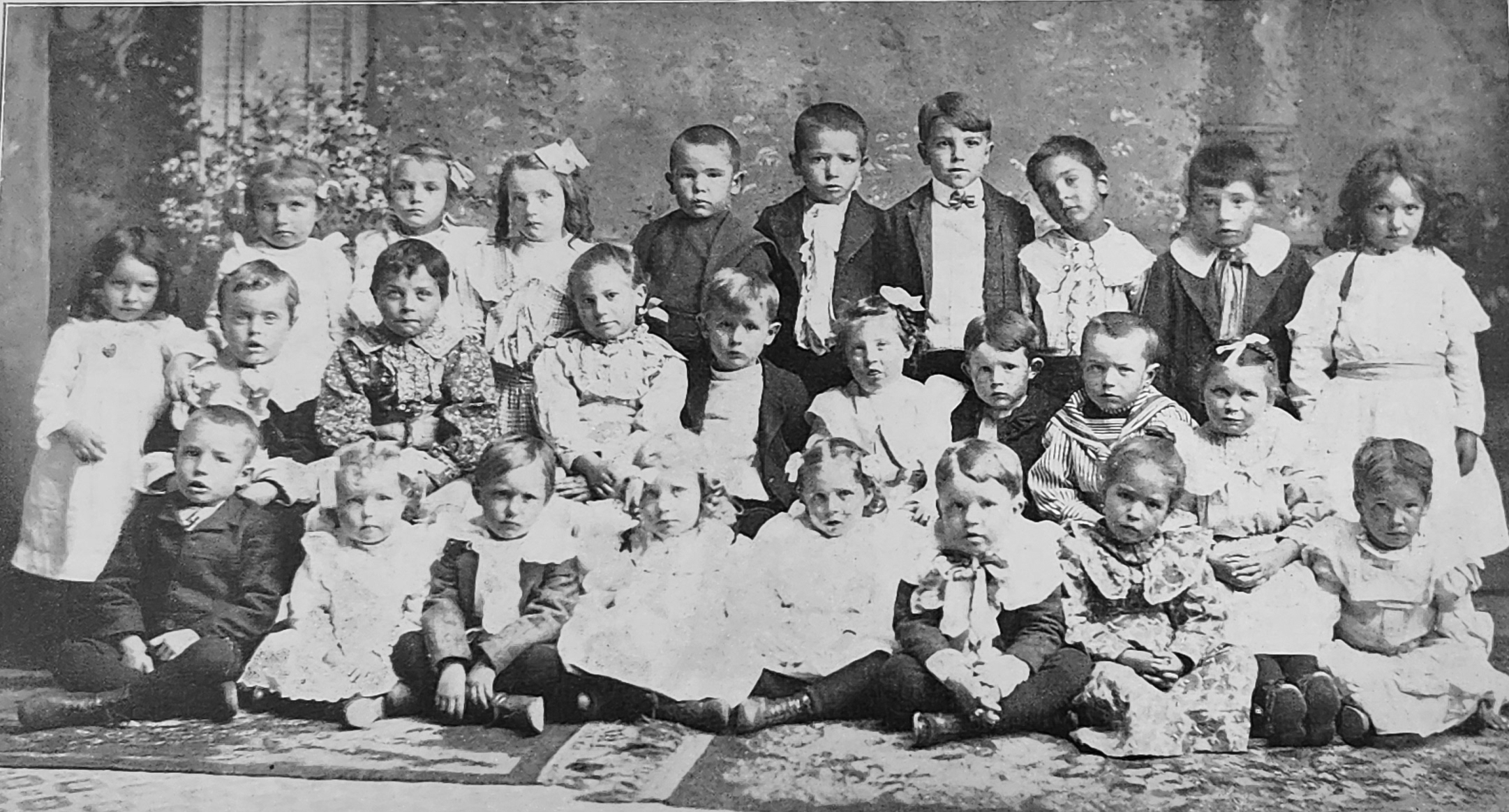
Children of the Starkville Kindergarten, about 1903–1904.