
 Membership
 Donate
 Shop
Shop

















Denver's Stonewall
How a revolutionary City Council meeting in 1973 sparked Colorado’s movement for LGBTQ+ rights.
On the evening of October 23, 1973, members of the Gay Coalition of Denver (GCD) and more than 300 of their friends and allies packed into the evening’s Denver City Council meeting. The purpose of their so-called revolt was to encourage the repeal of four laws police were using as legal justifications for harassing the gay community. Charges such as loitering and cross-dressing provided cover for discriminatory treatment, while solicitation charges and laws against perceived sexual deviance had long been selectively enforced against Denver’s LGBTQ+ communities.
The meeting got off to a rough start. The city council president, Robert Koch, did not want to hear from the gathered group, but after other members of the council expressed interest in what the GCD and its supporters had to say, Koch relented and allowed thirty minutes for the group to make their statements. Applause greeted the first speaker to address the council, marking the first time in the evening Koch threatened to remove members of the public or terminate the hearing because of what he considered ongoing disruptions of the proceedings. Removal, everyone knew, meant being taken by police to waiting buses, followed by arrest, and a ride to the station.
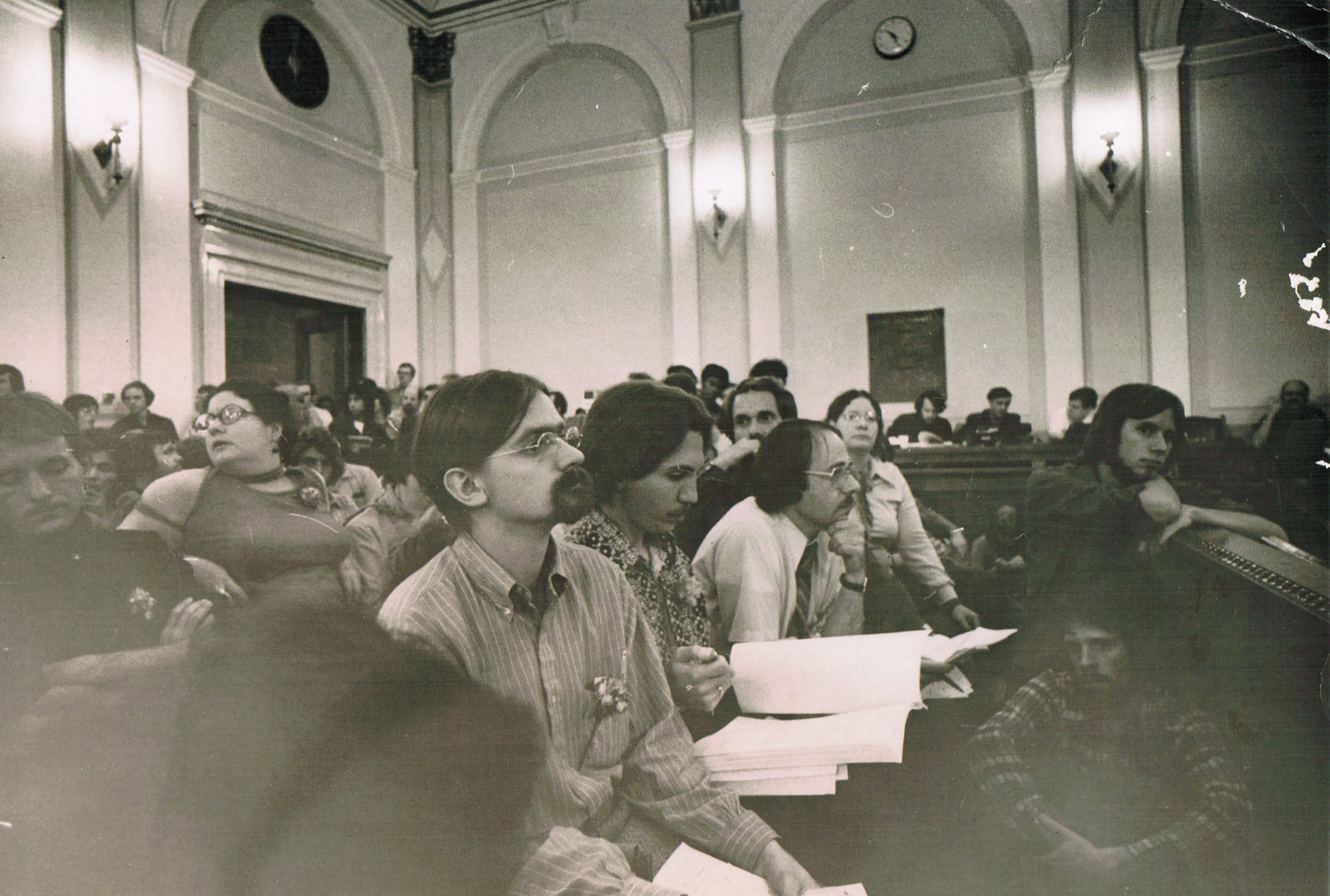
Activists attend a Denver City Council hearing about discrimination against the gay and lesbian community. The “gay revolt” becomes known as “Colorado’s Stonewall.”
For the next half-hour, speakers addressed the assembled councilmen. Their determination to assert their full and equal civil rights were part of a larger movement across the United States aimed at confronting unjust laws targeting LGBTQ+ communities. Though the Stonewall Uprising in New York City just a few years earlier is often credited as the spark that ignited the national gay rights movements of the 1970s, Denver’s own Stonewall moment at that city council meeting in 1973 marked the beginning of a still-ongoing era of change for Colorado and its capital city.
Fear and Persecution
Though it’s never been easy for gay or non-binary Americans to be open about their identity, the years following World War II were perhaps some of the most difficult.
Against the backdrop of the Cold War, the United States government considered LGBTQ+ people a threat to American national interests and set out to rid government agencies of employees hiding who they were. The justification, so the thinking went, was that anyone with that big of a secret could be blackmailed into spying for the enemies of the United States. Senator Joseph McCarthy, his chief counsel Roy Cohn, and FBI Director J. Edgar Hoover sought out public servants thought to be harboring a secret private life. Known today as the Lavender Scare, it was a time of disregard for civil rights, and the government opened numerous investigations for homosexuality, or what they termed sexual perversion at the time.
By June 1969, with the Vietnam War dragging on, and civil rights at the forefront of the zeitgeist, a police raid on the Stonewall Inn in New York City lit the fuse of the modern gay rights movement. Fed up with unjust legal codes outlawing homosexuality and constant harassment, the Stonewall Uprising started a riot in response to a New York City police raid on the well-known bar. The ensuing uprising lasted days, and was the culmination of decades of repression and frustration. Stonewall is famous as the spark that thrust LGBTQ+ rights into mainstream consciousness because it inspired activists around the country to confront discriminatory and selective law enforcement targeting LGBTQ+ communities.
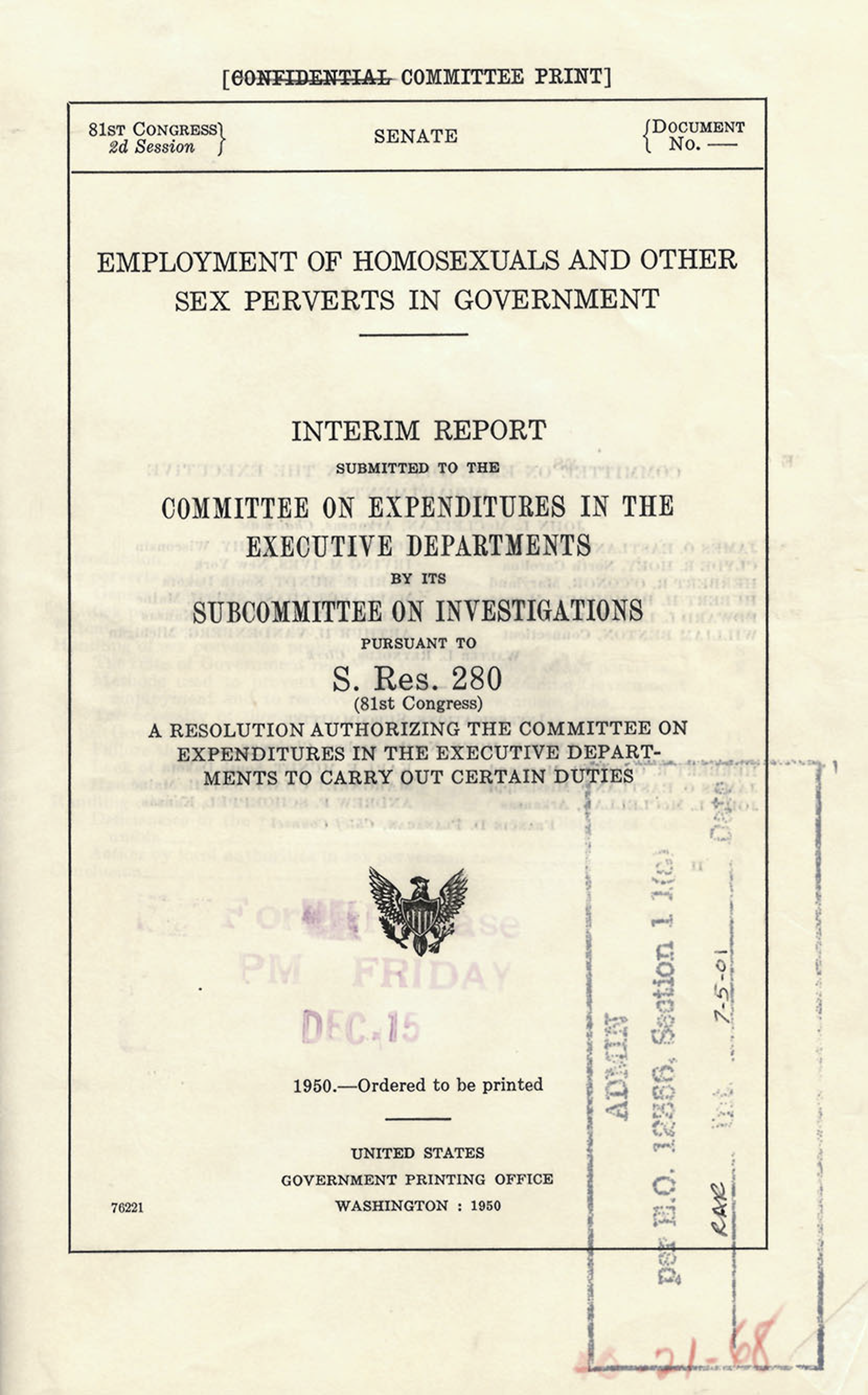
After covertly investigating federal employees’ sexual orientation, the Senate deemed homosexuality an illness and a threat to the government. More than 4,500 federal employees and military were removed from their posts in the so-called “Lavender Scare.”
Denver’s Gay Rights Movement
In Stonewall’s wake, the LGBTQ+ populations of cities across the US, including Denver, took up the banner of a national fight for LGBTQ+ rights. It was a time of rising consciousness and confidence for Denver’s gay communities. In 1972 Big Mama Rag began publishing their feminist newspaper, and Phil Price started OUT FRONT Magazine in 1976—still one of the longest-running LGBTQ+ publications in the country—to bring attention to police harassment and violence against the gay community. Two bookstores also opened during this time, Category Six Books and Woman to Woman Feminist Bookcenter.
By 1972, collective action was taking off, and five people set out to change the course of LGBTQ+ rights in Denver. Gerald “Jerry” Gerash, Lynn Tamlan, Mary Sassatelli, Jane Dundee, and Terry Mangan formed the Gay Coalition of Denver (GCD) to fight back against police harassment of the gay community. Little did these individuals know at the time, the formation of the GCD would lead to the revolt on Denver City Council—Colorado’s Stonewall—one of the most pivotal events in the fight for Colorado LGBTQ+ rights.
The GCD was more than a grassroots organization. It also became a place for people interested in building an identity around something more substantial than the bar scene, where much of the culture was rooted at the time. Denver Free University loaned its building so the GCD could host an event they called “Approaching Lavender,” a coffee house that screened movies and hosted poetry readings and other events. Long before The Center on Colfax became the hub for the LGBTQ+ community in Denver, the GCD provided a similar function by offering services such as doctor referrals, counseling, and even a hotline for people to call with any type of question. The GCD empowered a community to speak up and let their voices be heard.
First issue of Big Mama Rag, a feminist newspaper, is founded in 1972.
Despite the GCD’s efforts, the LGBTQ+ community of Denver still felt like an underground movement, and many feared being outed if arrested by the police. Being outed in this manner often led to disownment by family and friends or losing one’s job or home. This was also the era during which the Denver Police Department started a campaign to entrap gay men.
A bus known as “The Johnny Cash Special,” was owned by a private citizen who took it around the country and rented it out to police departments. It would be parked around areas of town where gay men gathered. Plainclothes police officers would then entice men into the bus with the promise of seeing a Johnny Cash show. Once inside the bus, the police would say or do something that would lead to entrapment and arrest on obscenity charges. When the bus was full, the now-trapped men would be taken to the police station and booked on various charges. In a recent interview, Jerry Gerash wondered aloud about why the police decided to lure in gay men with Johnny Cash tickets. Were gay men really into Johnny Cash in the 1970s? Jerry didn’t really have an answer, but chalked it up to how out of touch the police were with the gay community at the time.
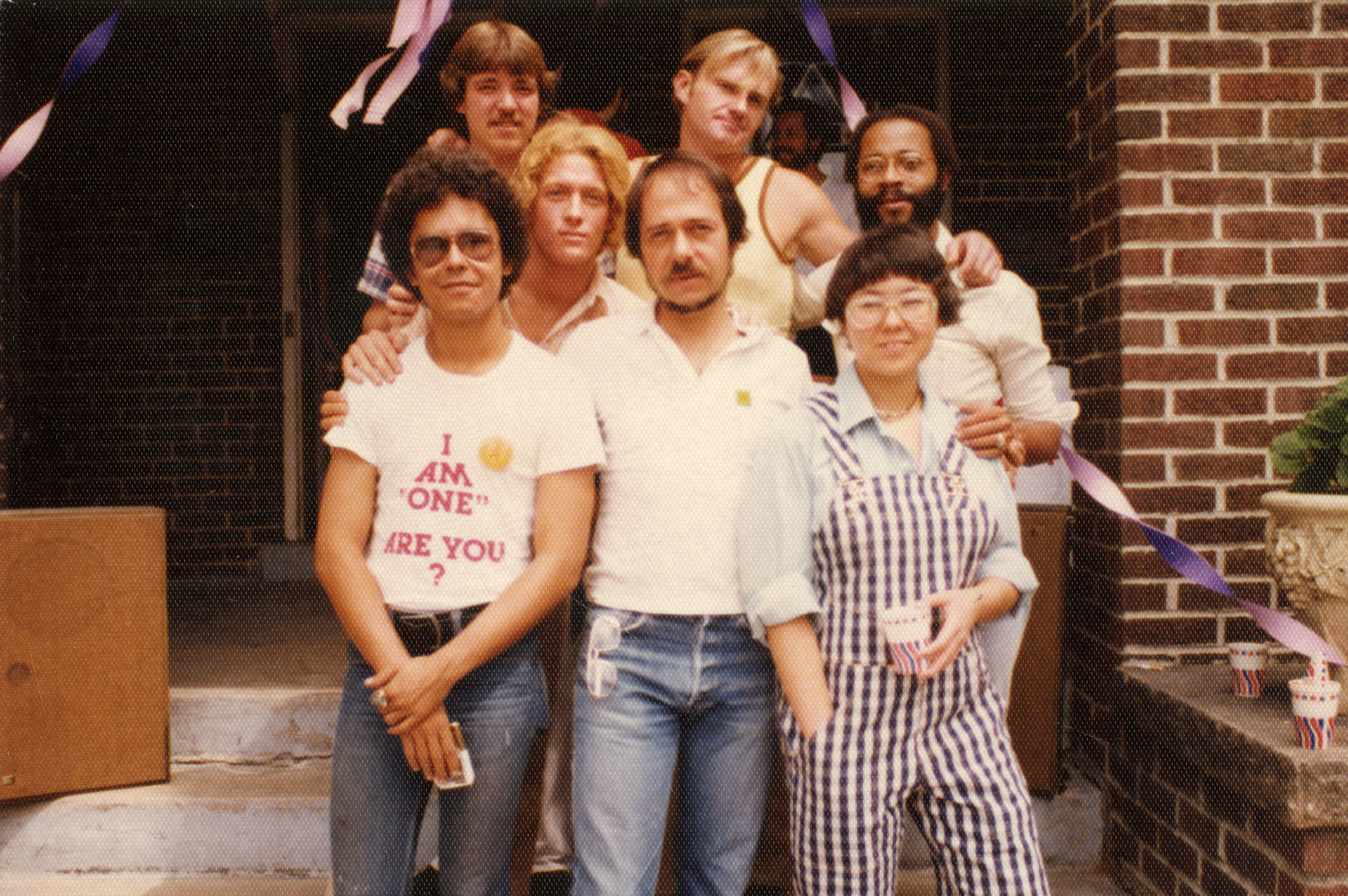
The Gay and Lesbian Community Center’s inaugural board members at their Capitol Hill building in 1977.
The Johnny Cash Special was an extreme example of the lengths police departments would go to as they targeted LGBTQ+ people, and the GCD seized on such unjust practices. They brought a civil lawsuit, Gay Coalition of Denver v. Denver, against the City of Denver to gain access to police records that clearly showed alarming statistics confirming that Denver’s police were targeting the gay community, and only the gay community, under these ordinances. The suit was, in many ways, the event that opened the floodgates of activism in Denver, and it helped set the stage for the GCD takeover of the city council meeting in October, 1973.
Denver’s Stonewall Moment
More than thirty people were lined up to address the City Council. Lyn Tamlin was first at the microphone. He was addressing police treatment of the gay community which catalyzed the formation of the GCD. Terry Mangan then stood to take the podium, giving a speech on the need to better define the term “lewd” and how “straight” men were no different than gay men and shouldn’t be targeted for prejudicial treatment under the law. He asked the council how many men had spent time at a bar talking to a woman with the intent of getting her to go out or go home with him, confirming for many the double standard under which Denver’s gay men had been living for decades.
Graph presented at the “Gay Revolt” Denver City Council meeting. The graph shows 100% of the gay men arrested was from just having a conversation. 99.1% of the complaining witnesses were vice cops.
The fifth speaker to take the podium that evening was GCD’s Jerry Gerash himself. Gerash was well-known as a practicing attorney who did a lot of pro bono work for people treated unfairly by the police. Later, in talking about his speech, Jerry admitted that he almost ruined the whole night for everyone. He explained that he had prepared slides to support the statistics of the police targeting the gay community and decided to begin his speech by announcing that he had a very obscene slide that would help make his point. President Roberts was ready to shut down the meeting, as no “obscene” slides would be shown. (Jerry admits that it was a bad joke, as the slide he was talking about merely showed data supporting the claim that gay men were by far more likely to be the targets of police action compared to heterosexual men.) However, Councilman Irving Hook spoke up and said he wished to see the slides, enabling Jerry to make his case. A more relaxed feeling settled over the council, and council members began to listen—really listen—in order to understand what the GCD and their supporters were telling them.
After Jerry’s time at the podium, the remaining speakers were permitted to deliver their remarks—in their entirety—pushing the meeting well into the early morning. One person who addressed the council was Dr. Lester Tobias, a psychiatrist who spoke to the fact that homosexuals are not different from heterosexuals and that homosexuality should not be considered a disorder, as it had been diagnosed for decades. Minds were changed and laws were overturned within a month. All four laws used against the gay community were struck down and could no longer be used as legal justifications for harassing the gay community. Though the fight is still ongoing to ensure LGBTQ+ people have full and equal access to their civil rights, the City Council Uprising of 1973 opened the door to more forceful assertions of equity under the law.
Onward
The legacy of the GCD and their actions that night still reverberate in Denver.
For one thing, the night they took over the city council meeting was the first time a group of LGBTQ+ individuals convinced a city to repeal laws that were being used to discriminate, putting Denver and Colorado at the forefront of the movement for LGBTQ+ rights. Supporters felt empowered and emboldened. In a serendipitous moment following the meeting, Jerry Gerash met a man who had come into town from San Francisco just to be there for the hearing. He was so impressed with how the GCD had organized and conducted themselves that he handed Jerry what he called a “stack of greenbacks” to continue the fight. That gift became the seed money to start the Gay Community Center of Colorado (GCCC), now known as The Center on Colfax.
More unintended outcomes grew from this pivotal event in LGBTQ+ history. Politicians running for office started looking to the GCD for support and endorsement, an indication of the rising political clout of the LGBTQ+ community. To help support the GCCC and keep up the momentum, Jerry created yet another group: Unity, an “organization of organizations.” He was unsure how well this would go over, as dues were involved to help fund the community gathering place. He was shocked and grateful that eighteen gay-supported businesses joined the new organization—and the membership kept growing each year. By the time the GCCC opened in August 1977, Unity had thirty-six members.
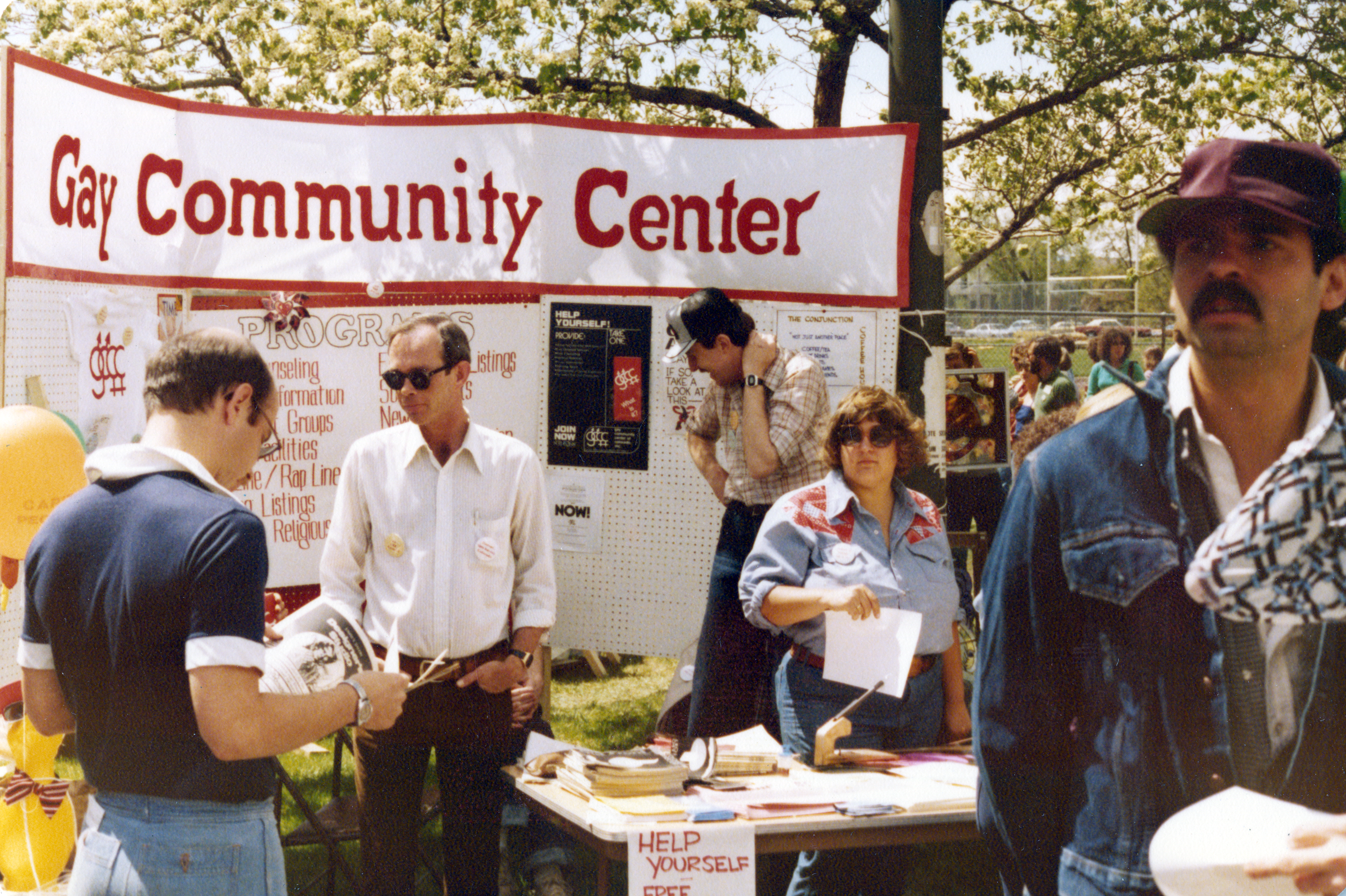
The Gay Community Center hosts a booth at the 1979 People’s Fair in Denver.
The Denver Police Department (DPD) has also undergone changes as a result of the GCD and Jerry Gerash’s activism. The DPD is only one of three agencies in the country, and the only one in Colorado, to be certified by Out To Protect, an organization committed to creating greater awareness and support for LGBTQ+ professionals working on or pursuing a career in law enforcement. The DPD is also one of the very few agencies with dedicated bias-motivated crime detectives.
October 23, 2023, marked the fiftieth anniversary of Colorado’s Stonewall moment. In recognition of the anniversary, video of the fateful meeting has been added to History Colorado’s YouTube channel. The film was in storage for fifty years, part of a larger unprocessed collection. As History Colorado’s curator for LGBTQ+ History, it’s my job to dig through the boxes, so when I saw the date on a set of film reels that had been lost to history, I knew exactly how precious they were. Thanks to the efforts of History Colorado staff and volunteers, the film is now digitized, ready for everyone to experience this very important moment for Colorado's LGBTQ+ community, perhaps for the first time in fifty momentous and change-filled years.