
 Membership
 Donate
 Shop
Shop
























Split Level
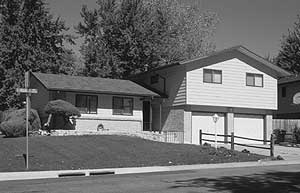
Split-level home in Denver.
Often referred to as a tri-level, a split-level is more of a building type than a style. Developed in the 1930s, it emerged in the 1950s as a multi-story counterpart to the dominant one-story Ranch house. Retaining the low pitched roof, overhanging eaves and horizontal lines of the Ranch, these homes added a two-story unit connected at mid-height to a one story section creating three staggered floor levels. This bifurcated floor layout reflected an interior planning theory that determined families needed three types of interior space: a noisy living and service area on the partially below grade level (represented by a family room and often a garage); the mid-level quiet living area (containing the living room, dining room and kitchen); and the upper level with the bedrooms.
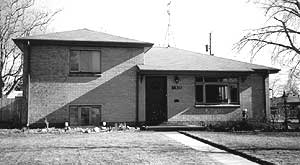
Split-level house in Denver.
A variety of wall cladding is used, such as brick and clapboard, and is often mixed with the brick relegated to the lower level. Attached garages, often partially below grade, are more characteristic of later construction. Windows typically include a picture window. There may be some traditional detailing, such as decorative shutters, but their unusual form clearly identifies them as modern houses. This postwar suburban house type remained popular through the 1970s. Although its heyday lasted about 25 years, new examples of split levels can be found today, attesting to the durable appeal of the design.
Common elements:
- two-story section connected at mid-height to one-story “wing”
- low-pitched roof
- overhanging eaves
- horizontal lines
- attached garages on the lowest level and often below grade