
 Membership
 Donate
 Shop
Shop


















Erin Clark | Silverado Savings and Loan Building
Season 1, Episode 1
Erin Clark, the Chief Real Estate Investment officer for the Denver Housing Authority, shares the story of the iconic, mid-century mod, turquoise building at 655 Broadway in Denver, Colorado. What was once the Silverado Bank, this 1950s steel framed building has been transformed into 110 permanently affordable apartments. Discover this wonderful example of adaptive reuse of an office to residential conversion. Who were the partners and what was the financing? Discover some of the challenges of converting this building and the impact it is having on the community today.
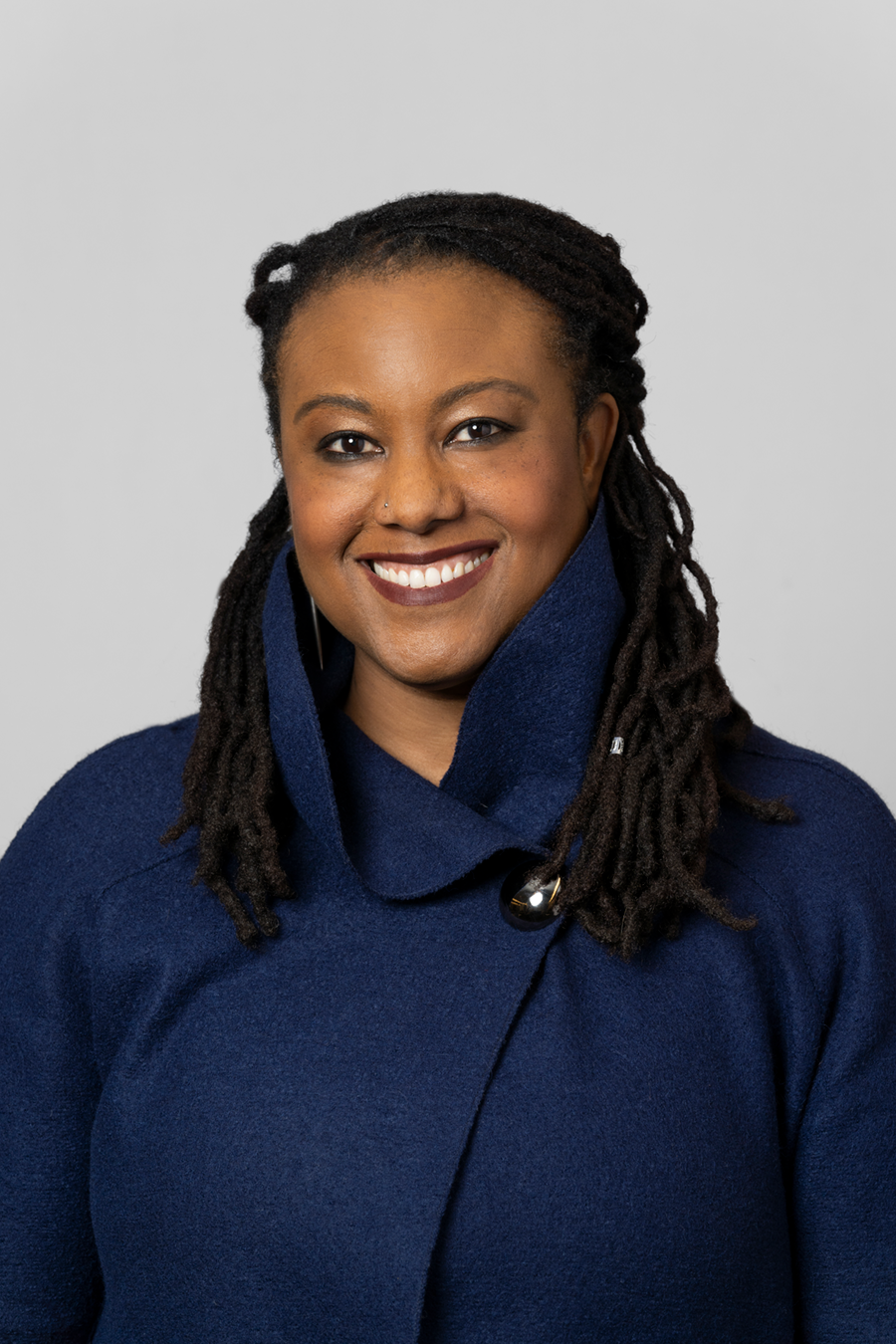
Erin Clark, Chief Real Estate Investment Officer, Denver Housing Authority
Episode Transcript
00;00;01;02 - 00;00;13;15
Unknown
Welcome to another edition of Reframed Preservation for a new day, where beloved old spaces are reimagined. We take a deep dive into the preservation of an amazing historic space.
00;00;13;18 - 00;00;17;18
Unknown
What did it used to be? What is it now and how did it happen?
00;00;17;18 - 00;00;28;25
Unknown
It's adaptive reuse and heritage for all. Brought to you by History Colorado and hosted by me down to Prince Colorado State Historic Preservation Officer.
00;00;28;25 - 00;00;54;18
Unknown
We are delighted to be here today with Erin Clark. Erin Clark, can you introduce yourself again? Thank you so much for having me. So yes. My name is Erin. I am a Denver native. And I currently hold the very long title of chief Real estate Investment officer for the Denver Housing Authority, which is the largest public housing authority in Colorado and really in the region.
00;00;54;20 - 00;01;19;17
Unknown
Well, you are an exciting part of many projects. But we are here today to talk to you specifically about a project on, sixth and Broadway, that I get to drive by every day. Can you, introduce us to this project? So, yes, what we refer to as 655 Broadway, we often name our, real estate based on the address.
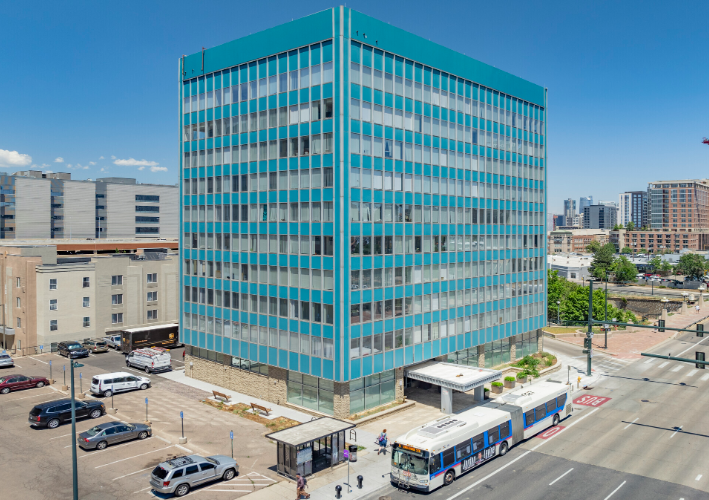
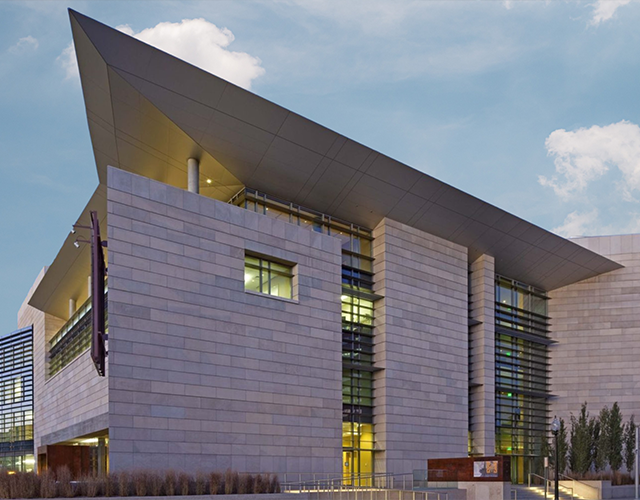
Exterior of 655 Broadway, the former Silverado Savings and Loan building.
00;01;19;19 - 00;01;28;14
Unknown
It is definitely an iconic, structure, that you can see as you're coming down Speer Boulevard and or going down Broadway.
00;01;28;14 - 00;01;47;00
Unknown
It is turquoise. It is a former office building. In the 50s, it was Silverado Bank. And, since then, it's actually on the Denver Health campus. And so it is a part of that that public hospital.
00;01;47;02 - 00;02;25;20
Unknown
And Denver, healthiest to operate there, administrative offices out of that building a number of years ago. Denver Health partnered with the Denver Housing Authority, or VHA, to renovate this building. So it's a it's a wonderful example of adaptive reuse of an office to residential conversion. And since December of 2023, it has, been housing seniors and non elderly disabled residents, in income restricted units.
00;02;25;22 - 00;03;00;28
Unknown
It's permanently affordable. To the residents there. And we have turned that office building into 110 permanently affordable apartments. And the partnership with Member Health is that on the second floor of the building, there are 14 single room occupancy c units or SROs. And Denver Health works with, folks who have been unhoused, but, are receiving medical treatment in the hospital when they're ready to be medically discharged.
00;03;01;00 - 00;03;26;17
Unknown
But when you're medically discharged from the hospital, you still have some recovery to do. And these are folks who don't have a stable home to be discharged to. And so, they have the opportunity to, up to as there is availability to move into one of these SRO units at 655 Broadway, to live there for a few months.
00;03;26;20 - 00;03;44;04
Unknown
As they're continuing to recuperate physically and to get on their feet financially, and we help them navigate into a permanent housing solution. So it's been a really exciting opportunity. But has been definitely a challenge as well.
00;03;44;04 - 00;04;00;06
Unknown
incredible. Starts out as Silverado Bank. And now is, housing, in a very, humane, filling a really important, humanity, need in our community.
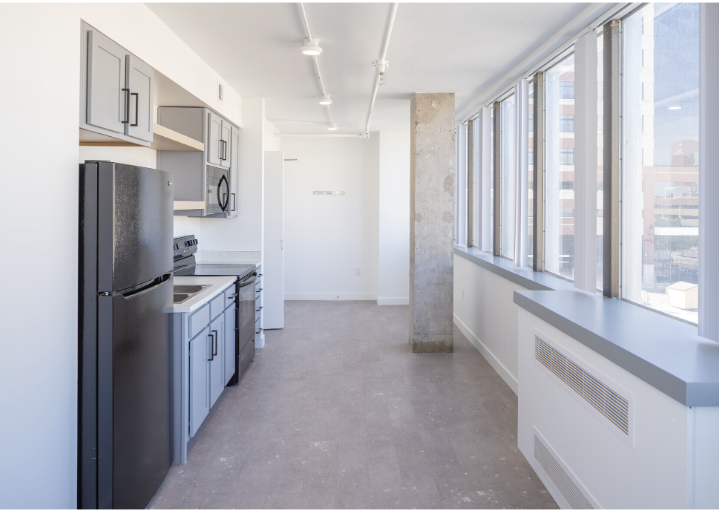
A peek inside one of the many new affordable places to live, made possible by a dedication to reusing rather than rebuilding.
00;04;00;13 - 00;04;05;01
Unknown
Can you explain what, permanently affordable, means?
00;04;05;01 - 00;04;25;24
Unknown
So for us, permanent affordability is, is making all of that upfront work really worth it. And saying we've done all this to preserve an opportunity for this housing to be affordable, and therefore we need it to remain affordable for as long as possible and not shift to market rate in the future. And then we have to kind of start over.
00;04;26;02 - 00;04;56;13
Unknown
So for us, in this particular example, Denver Health still owns the land under the building. Denver Housing Authority has put together partnerships that own the building, and we're leasing the land from Denver Health. And in that way, the property is still being stewarded long term by public entities and in the public interest. And so we actually it's it's recorded with the land.
00;04;56;13 - 00;05;09;15
Unknown
It is a permanent restriction that, for as long as these are the owners of this property, this will, remain affordable in the ways that we set it up to start.
00;05;09;15 - 00;05;17;25
Unknown
why does adaptive reuse make sense? In this kind of, complicated, structure?
00;05;17;25 - 00;05;20;22
Unknown
So in simple terms.
00;05;20;22 - 00;05;43;24
Unknown
Building is expensive. And as I noted bit before, you know, buying land and getting all the materials and, you know, we've had supply chain issues in the last number of years and, and turf wars coming and all these things that affect labor and materials and the design work that has to go into building a new building.
00;05;43;24 - 00;05;45;07
Unknown
There are costs to that
00;05;45;07 - 00;05;51;07
Unknown
as well as we have a lot of structures that exist in our communities
00;05;51;07 - 00;06;03;00
Unknown
That just needed some more love. And that, you know, already are a part of the fabric of our lives, and as a part of our community. And so,
00;06;03;00 - 00;06;11;16
Unknown
when there are those opportunities to, take an existing structure and just redo the inside of it.
00;06;11;19 - 00;06;39;27
Unknown
We it is an important kind of element to have in our toolbox as, as a way to develop housing in this particular location at sixth and Broadway at no longer made sense within the current market. And as our land uses to continue operating that as an office building. And the way that that tenancy works is, you know, you'd end up with a lot of turnover, probably of lease tenant.
00;06;39;29 - 00;06;44;23
Unknown
In this case, we know we have very high demand for housing. And so it
00;06;44;23 - 00;07;02;18
Unknown
theoretically feels to a lot of people like, okay, if we have a market that's shifting, we know that our demand for housing is sky high. We know that there's more remote work and other things, and people are shifting kind of what work means where we're doing our work.
00;07;02;20 - 00;07;29;13
Unknown
And so we know that we have right now higher vacancies on the office side, and strong demand on the residential side. So why not convert some of the office buildings into residences? With that being said, not every office building is the right opportunity for that adaptive reuse. And so I think it's important that we really thoughtfully consider.
00;07;29;13 - 00;08;00;29
Unknown
Where the opportunities make the most sense. This for us at 655 Broadway for Denver Housing Authority. Again, because it's that particular partnership with Denver Health, that it works with their programing and is co-located with, you know, other services that are right there. That made a lot of sense, and is close to where other the Denver Housing Authority properties are there, their efficiencies for us in maintaining that, that felt like a good opportunity.
00;08;01;02 - 00;08;08;20
Unknown
We know that a lot of people are looking at these opportunities in downtown Denver as well. And I think, it makes sense to be
00;08;08;20 - 00;08;12;21
Unknown
open to what are all of the, you know, possibilities. And,
00;08;12;21 - 00;08;17;03
Unknown
do we need to tear things down to build ourselves back up? But in
00;08;17;03 - 00;08;19;03
Unknown
it is really a case by case,
00;08;19;03 - 00;08;20;03
Unknown
proposition.
00;08;20;03 - 00;08;55;11
Unknown
is it true that the era of a building, may play into some of that calculation, whether, it makes sense to have that, you know, office to residential conversion? I think that's absolutely true. I think that's a really important consideration. And so, for example, the building that we're talking about, 655 Broadway, that is from the 1950s and that it has it was somewhat difficult in terms of how you do your Hvac systems.
00;08;55;13 - 00;09;21;18
Unknown
You know what? When you're going from an office to residential, you have to think about the plumbing and the electrical and the windows, and we'll get to that. But that's a very important consideration. But overall, we're looking at kind of the floor plate. Right. Like what is and when you think of an office offices, you have office suites typically.
00;09;21;18 - 00;09;51;20
Unknown
Right. And you'll have, you know, a bathroom on a floor. When we're talking about changing that to residential, every unit needs to have its own plumbing. It needs to have kitchens and bathrooms. And so. Part of the challenge is, you know, how do you get that plumbing all the way through a stack of units where that did not exist before?
00;09;51;20 - 00;09;52;09
Unknown
Right. So,
00;09;52;09 - 00;10;12;05
Unknown
for some styles of buildings, it's more expensive to do the adaptive reuse than to build from scratch. Where adaptive reuse from office to residential tends to work, the best that I've seen so far is actually when it is a slightly newer vintage building. Maybe 3 to 4 stories.
00;10;12;05 - 00;10;13;00
Unknown
With
00;10;13;00 - 00;10;15;24
Unknown
a lot of floor space on each floor.
00;10;15;27 - 00;10;24;11
Unknown
655 Broadway. We actually added additional floor, so it's ten stories total now. It wasn't a story building.
00;10;24;11 - 00;10;37;02
Unknown
And it's it's just kind of a smaller square. So we have less kind of room to work with. And we also had to, because of the age of the building and the style of it, it's a curtain wall structure.
00;10;37;02 - 00;11;05;25
Unknown
It's a steel framed, building. And so that meant that we couldn't change. The window panels in certain ways. That but we're still having to adapt, building to what people expect in the modern age. Right? We have made, inroads in terms of how we deliver power to buildings and how we, air conditioned them and heat them.
00;11;05;28 - 00;11;19;11
Unknown
And so there can be a lot of a lot of tensions there. And so I've seen that buildings built more in the 70s and 80s and more of kind of a suburban office park setting, even,
00;11;19;11 - 00;11;41;13
Unknown
seem to be more easily converted to the family style residential that that is really competitive in our overall residential market in ways that maybe some of the even older buildings where you have to do a lot more changes to get the plumbing to work and all those things, are difficult.
00;11;41;15 - 00;12;12;18
Unknown
The other big piece, for modern, tenants and also just in Colorado generally is, is parking, right? So, so at 655 Broadway, we have, surface parking. That's right there. We were able to work with Denver Health to, provide parking for our employees in some of their existing garages. That's a very different story when you're talking about downtown Denver and what people would expect with the condominium or in apartments.
00;12;12;20 - 00;12;32;02
Unknown
And, and a lot of the buildings don't have parking on site there. Do want to promote people getting out of the cars and walking more. But even in New York City, people have to have somewhere to, to store their car, even if they just use it on the weekends, to get out of the city or something like that.
00;12;32;02 - 00;12;40;21
Unknown
So, so those are other, factors that are, but definitely weigh into is this the right building to do that office to residential conversion.
00;12;40;21 - 00;13;05;07
Unknown
you are talking about this, pretty special partnership that this project has with Denver Health. And often times when we hear about, you know, great civic minded adaptive reuse projects, it does require partnerships and it requires, a multitude of financial, elements all coming together.
00;13;05;10 - 00;13;43;05
Unknown
Can you share what the, kind of financial stack is that enabled you to pull this project together? So I will, yes. So, in affordable housing, work and development, working in general, it is all about partnerships. Every moment of every day. It's about leveraging different partnerships, different, financial sources. And, something that's just true of our industry is that a lot of the decisions are being driven by your sources of capital.
00;13;43;07 - 00;14;00;21
Unknown
And that's something I'd love to for us to be able to a paradigm we'd like to get out of a bit. But the reality is that, as I noted before, when you're saying, okay, how much do you have to pay for your land, how much is it going to pay to, or is it going to cost to produce a building?
00;14;00;22 - 00;14;29;02
Unknown
And that is of high quality? And that will last and sustain for for the residents that are living there. And knowing that we have to have a lot of subsidy on the other end in terms of helping to support the operations of that building without putting all of those costs onto the residents who who cannot afford that.
00;14;29;05 - 00;15;04;15
Unknown
So in this particular case, part of what makes the opportunity available in the first place is that the land is already owned by the hospital. It is tax exempt. When owns a property, it is tax exempt. So right there, knowing that we're not purchasing property, that cost is now not gone into the affordability of the housing, that we are not paying property taxes on an annual basis that is helping with our operational cash flow going forward.
00;15;04;18 - 00;15;30;01
Unknown
In terms of building the building itself, we went to the well of what, over 90% of all affordable housing in the country uses, which is the high tech program or low income housing tax credit. So this is, has been around for decades where it's essentially, Each state has allocations of tax credits that they can award competitively in Colorado.
00;15;30;01 - 00;16;05;21
Unknown
That comes from chocolate or the Colorado Housing and Finance Authority. So we were submitting an application for tax credit equity that is been private equity dollars through banks and other sources. That in exchange for them providing money upfront, they in future years are getting a break on the taxes that they would owe by putting their dollars into an eligible project, such as our 655 Broadway.
00;16;05;21 - 00;16;29;08
Unknown
So that's again, how a lot of money flows into producing affordable housing across, across the United States. So we did get tax credits for this, both federal tax credits and state tax credits. So the state of Colorado has its own, kind of tax credit program to, to match some dollars with, with the federal dollars.
00;16;29;10 - 00;17;02;23
Unknown
And for 655 Broadway specifically, we also access, federal and state historic tax credits. And so we in order to access those tax credits, we had to have an eligible, you know, as a historically eligible building. And so we actually had to work with History Colorado and the State Historic Preservation Office. And with the National Park Service to, get the building registered on the Federal Register, so that we could access, some additional capital.
00;17;02;28 - 00;17;30;18
Unknown
I think it was around $4 million. Of the total that's been this is really about a $35 million renovation. And so that those are the major parts of the capital stack. So, we'll have a construction loan from a bank that then and then the tax credit equity as that's coming in is helping to pay off that loan.
00;17;30;18 - 00;17;46;05
Unknown
And so it's just all of these layers over time of kind of this money flows in at this time. And then this other money comes in and takes that money out. And so that's how we how we fund the construction, and, and generate revenues for the operations as well.
00;17;46;05 - 00;17;51;05
Unknown
That's how is my one of my favorite parts of these stories.
00;17;51;08 - 00;18;01;05
Unknown
And so we know that in this particular project you have had window challenges. Can you share about your window challenges?
00;18;01;05 - 00;18;09;00
Unknown
Absolutely. So I see this across the board with, historic preservation in general.
00;18;09;00 - 00;18;32;20
Unknown
Not only adaptive reuse, but just kind of those competing, really good objectives, right, where we are looking to preserve part of our history. And that is so key. Just as a quick aside, like I used to live in Los Angeles and that we kind of were like, where's the history? And but you realize that there are just certain things that make a place that place.
00;18;32;20 - 00;19;22;28
Unknown
And so it's so critical that we are really thoughtful about when we get rid of something that was there before, and, and what comes in its place and how we, you know, extend the useful life of, of our built fabric. And so just in my own experience and what I've heard from others, windows in historic preservation kind of keeps coming up where we're trying to modernize, you know, we're thinking about environmental sustainability and, you know, not having drafty windows and making sure that, you know, but a lot of the historic buildings will have even just the size of the opening for the windows is different than what we manufacture today to go
00;19;22;28 - 00;19;54;12
Unknown
in as windows. And so, there can often be a tension around we want to access money through grants and other things to preserve a building and part of from, from the builder side and from the owner side. We're thinking, well, part of helping to preserve this building is to like water seal it, air seal that, you know, help to regulate the internal temperatures of that building.
00;19;54;14 - 00;20;19;28
Unknown
Because we might not also have the money to upgrade the air conditioning or the heating and things. So we're just trying to be efficient in that. But often that can run come in tension with the esthetic of, you know, what are the characteristics that are deeming this structure historic. And so that is really the dynamic that we have experienced at 655 Broadway.
00;20;19;28 - 00;20;56;18
Unknown
And I and I've noted we've seen it in other places that, where because of the curtain wall structure there and the particular size of the window, openings and how really the building is, is window. And so we had very, you know, limitations on what types of moderately produced windows we could put in at scale, to be able to put them, you know, every one of these new residences.
00;20;56;21 - 00;21;19;15
Unknown
And we had to do a lot of extra engineering around. So what are the options for it going in there? How is that going to be installed? Is there a difference on there are four sides to this, to this building, you know, where sun hits more and other things. But we're trying to also meet modern energy codes.
00;21;19;17 - 00;21;50;25
Unknown
We build all of our new affordable housing to enterprise green community standards, and we make sure that there are really thoughtful, there's thoughtful design attention around environmental sustainability because to the earlier point, this work was really hard to do. And so we want to make sure that once we've done it, it is lasting as long as possible and serving as many generations of individuals of our neighbors as possible.
00;21;50;25 - 00;22;29;14
Unknown
And so environmental sustainability is really key to that. So I think that's an important element for kind of the historic preservation community. And, and those of us on the building side to really attack hard on and, and, and come to alignment on, because we. The esthetic of it does matter. Absolutely. But where can there be some flexibility and saying, okay, we're giving up a little of the esthetic here to say that this building's going to actually last longer.
00;22;29;17 - 00;22;52;19
Unknown
And so, but sometimes there's just kind of a, a very hard and fast rule around it. It's like either it looks like this or it's gone. And that's also where sometimes what might feel to us is subjective, is becoming a very, you know, objective rule. And you get this funding or you don't. And so I just, I like to name things.
00;22;52;19 - 00;23;25;11
Unknown
I just think that's a really important conversation to have. But yes, on Broadway we had to pick up a certain type of window, and have now found that it's perhaps in the way that it was installed is not been ideal. And so we're having to kind of take a fresh look at that, but it was really because of meeting the historic tax credits and kind of moving forward in those ways that that's where a lot of that decision making was come coming from.
00;23;25;14 - 00;23;55;17
Unknown
With, with a large group of people. And as I've noted, you know, I've seen that happen with with friends, with just an individual home who are like, we want to preserve this house. This means so much to our family and to many generations. And the pushback they'll get is that they can't find a window that works or the only type of window that could work for the historic esthetics is just exorbitantly expensive, and it's prohibitively expensive.
00;23;55;19 - 00;24;00;17
Unknown
And then we're at cross-purposes with wanting to preserve the structure.
00;24;00;17 - 00;24;24;26
Unknown
I appreciate that. And I think, you know, it's great to have somebody with your on the ground experience. As well as, passion for preservation. You know, to be part of these conversations, because you can help us think through what those challenges are and, help us think through what the solutions can be as well.
00;24;24;28 - 00;24;46;19
Unknown
So I yeah, I really appreciate that. And, you know, I think also, you know, when you're thinking about affordable housing, what you don't want then is to have somebody maybe their rent is affordable, but their utility bills are very expensive. Right? So these are, you know, one of those puzzle pieces, I think, as you're probably putting these projects together.
00;24;46;22 - 00;25;09;25
Unknown
Very much so. And thank you for noting that as well, in that, yes, when we talk about affordable housing, it is so much more than the cost to live in the unit as your rent or as your mortgage. It absolutely is. What is the cost of living right of your transportation costs? The location of your housing matters. So much of your utilities.
00;25;09;28 - 00;25;36;07
Unknown
So we that's why we look to. Rely on solar panels and, and, you know, electrify what we can and just trying to keep those costs down and again, extend the useful life of the buildings that we're we are building new as well, so that they can be part of our overall fabric and worth preserving in the future.
00;25;36;09 - 00;26;05;17
Unknown
But absolutely. Having to it's so important to think about all of the costs of all that it takes to for us to just all live every day. And the less anyone of us, any family, is having to focus on how they're going to pay just those basic aspects of living. More people can live right? Yeah, yeah. Well, I just thank you so much for sharing, this incredible project.
00;26;05;17 - 00;26;50;26
Unknown
I think it is really inspiring. To think about this, turquoise mid-century mod, bank, Silverado bank, which is, you know, an iconic, Colorado story, being transformed into, you know, a place that solves a number of, Denver's, you know, challenging modern day, concerns. Can you, you know, maybe share, what that just means to you personally?
00;26;50;29 - 00;26;55;14
Unknown
Personally? It is.
00;26;55;16 - 00;27;18;19
Unknown
Having this job, doing this work, and being a part of this community, it's just such a privilege. And and I know you're just kind of as you're driving down Speer, and this building is just. It is guiding you, and it's just right in front of you. You cannot miss it. It tells a story. You know, some people love the turquoise.
00;27;18;19 - 00;27;54;16
Unknown
Other people don't love it. It's not quite as divisive as, like, the blue horse out of the airport, but it definitely kind of it. It elicits conversations and makes you wonder what's the story behind that building. Right. And so I think that's a really special thing. We have honored the history of that building. We have in the mailroom on the first floor, a blow up cover of the Denver no, the Rocky Mountain News, one of the newspaper, right there that was showing how to win.
00;27;54;16 - 00;28;37;01
Unknown
The building was first opened and how it was so exciting to, you know, the community at that time. And so now it's it's getting another life, right? So that it can have this new presence, for those of us here now, in the future, and so knowing that we're getting to work on that day is also a key partner with the, preservation of the what's now called the Mosaic Community campus and South Park Hill, so I got to work on that when I was previously with an amazing local nonprofit, Urban Land Conservancy, or you all see, as we work to bring partners together, that's a partnership of Denver Public Schools and
00;28;37;01 - 00;29;06;12
Unknown
the Housing Authority and this local nonprofit and a lot of other nonprofits, affordable housing developers, Saint Elizabeth School to preserve the former Colorado Women's College, which later was University of Denver Law School, which later, was Johnson Wells University. And now that it's no longer a university, how could we maintain that as education and housing and open space for new generations?
00;29;06;12 - 00;29;31;16
Unknown
And so that's been really exciting as well. And now to be on the side of that, and we have two buildings that we're working with Archway Communities to, to turn into permanent supportive housing there. These are just all these, these gems of our community that if we can, you know, not just walk away from them and say, well, they can't serve as a dorm anymore.
00;29;31;16 - 00;29;58;01
Unknown
So I guess we just don't need it. It's like, no, a dorm can easily turn it into, housing for families going forward or for seniors or for those who have been unhoused and just need a stable place to be. And what also great about the adaptive reuse opportunity is there's more geographic, diversity of those. We don't have a lot of vacant land.
00;29;58;03 - 00;30;16;23
Unknown
So but we can take a building that's already embedded in a community and just kind of give it new life. And so, it's very it's very much an honor and privilege to be able to be a part of work like that in support of the community. That helped raise me. So I appreciate that and I appreciate all that.
00;30;16;23 - 00;30;34;15
Unknown
You all do here. And in your willingness to partner with us to, to solve some of the, some of the thorny issues, so that to the extent we're all rolling in the same direction, we're able to help each other. Yeah, yeah. Amen. Thanks. Thanks so much, Aaron Clark. We appreciate you. Thank you.
00;30;34;15 - 00;30;36;07
Unknown
Standing.
00;30;36;07 - 00;30;58;02
Unknown
To see photos from this addition, visit history colorado.org/podcast. Major funding for reframed preservation for a new day is provided by the Sturm Family Foundation and History Colorado, offering 11 beautiful, inspiring museums and historic sites that ignite imagination of all ages.
00;30;58;04 - 00;31;30;20
Unknown
Join us to discover your past and build a better future for all people in Colorado. Home to a free public research center, Colorado's Office of Archeology and Historic Preservation, and the History Colorado State Historical Fund, the nation's largest preservation program of its kind. Learn more at History colorado.org. This edition was produced by Sam Bock and directed and edited by Julie Jackson of Julie Speer Productions, with support from Troost Media Collective.
00;31;30;23 - 00;31;38;17
Unknown
Follow History Colorado on all social media platforms to stay in the know on all things history in Colorado.