
 Membership
 Donate
 Shop
Shop


















Fort Garland Museum Honored with Global Recognition as Site of Conscience
FORT GARLAND — March 3, 2026 — History Colorado’s Fort Garland Museum and Cultural Center in the San Luis Valley is gaining global recognition for its work “connecting past to present and memory to action.”
PRESS CONTACTS
Angelika Albaladejo, History Colorado Communications and Public Relations Manager
720-541-2334 | hc_media@state.co.us
The Fort Garland Museum and Cultural Center is joining the International Coalition of Sites of Conscience, the only global network that harnesses the transformative power of collective memory to dismantle violence and injustice, paving the way for more equitable and peaceful communities.
A Site of Conscience is a place of memory that prevents the erasure of the past in order to foster more just and humane societies today. Sites of Conscience provide safe spaces to remember and preserve even the most traumatic memories. These sites also enable their visitors to make connections between history and related human rights issues we face now.
“Joining the International Coalition of Sites of Conscience affirms our belief that how we tell history matters,” said Eric Carpio, Director of Fort Garland Museum & Cultural Center. “Being part of this global network strengthens our commitment to presenting history with honesty and nuance. It also reinforces the work we do in partnership with our community: creating space for dialogue, lifting up diverse voices, and ensuring that the past helps inform a more just and informed future.”
Fort Garland was established in 1858 as a U.S. Army outpost – ten years after the Treaty of Guadalupe Hidalgo, which ended the U.S.-Mexico War and ceded vast territories to the United States, forever changing the map of North America. Located in southern Colorado’s San Luis Valley, Fort Garland was built on the homelands and sacred spaces of Indigenous communities, including the Ute, Jicarilla Apache, and Navajo (Diné). The area was claimed by Spain in the 16th century and later governed by Mexico until the region became part of the United States in 1848.
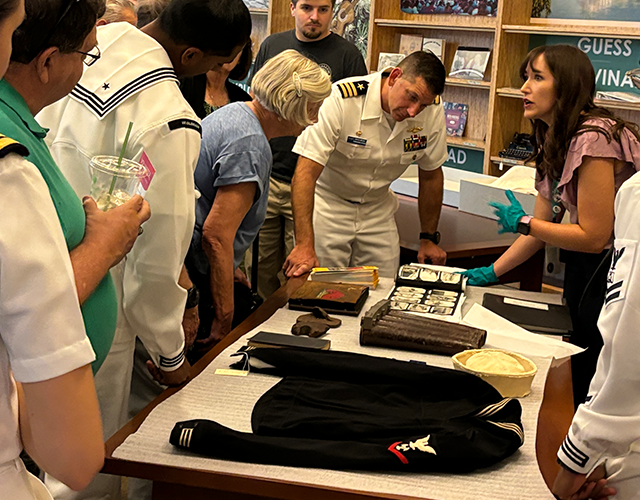
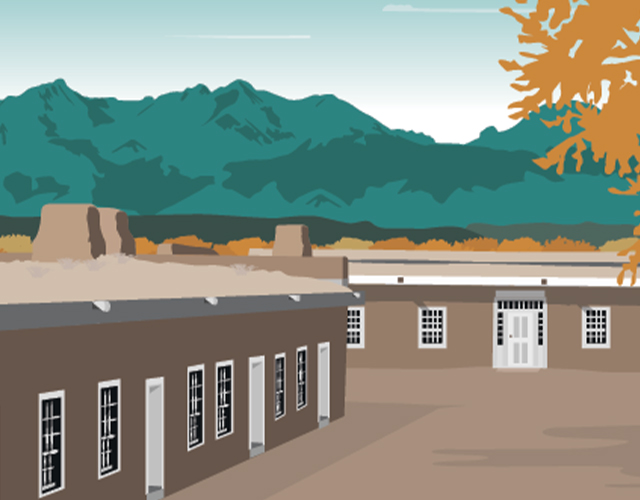
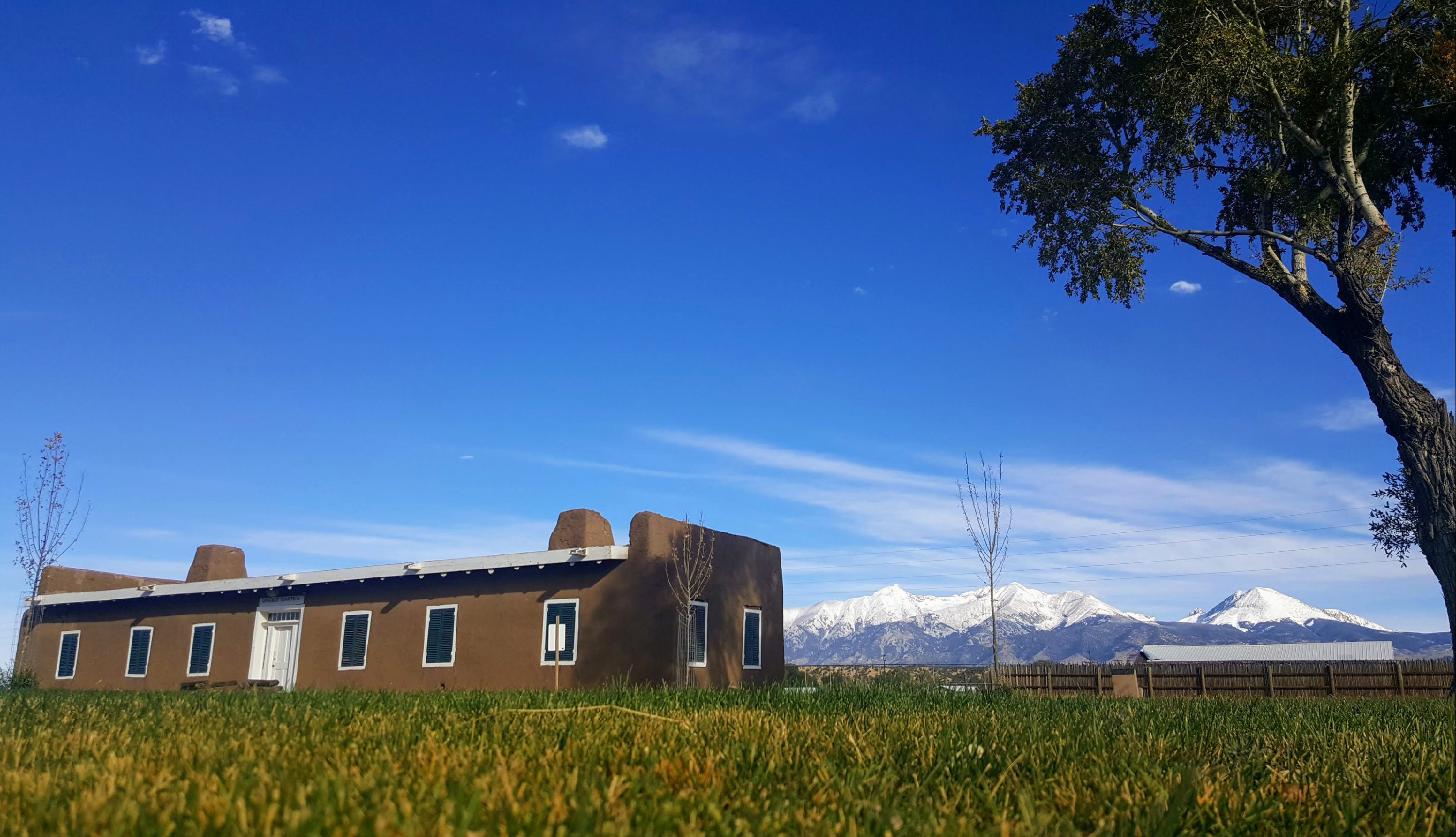
The Fort Garland Museum and Cultural Center makes this historic place accessible for visitors to explore life in a nineteenth century military fort by walking the parade grounds and touring five of the original adobe buildings. Visitors are immersed in the complex history of the San Luis Valley through thought-provoking exhibitions and public programs like the Borderlands speaker series. Through core exhibitions such as Unsilenced: Indigenous Enslavement in Southern Colorado and buffalo soldiers: reVision, the museum amplifies historically silenced narratives and encourages reflection, dialogue, and a deeper understanding of the region’s past and its continuing impact on the present.
As a new member of the International Coalition of Sites of Conscience, the Fort Garland Museum joins more than 400 sites in 80 countries in a powerful participatory network aimed at preserving places where struggles for human rights have occurred, talking openly about what happened there, and harnessing the strengths of memory, arts, and culture to build more equitable, just, and peaceful communities today and sustain them well into the future.
“We are thrilled to have Fort Garland join our network, and excited to work with them in amplifying historically silenced narratives and promoting dialogue on these crucial topics,” said Elena Del Hoyo, who manages Membership and Stakeholder Engagement for the International Coalition of Sites of Conscience.
The Fort Garland Museum will continue to highlight southern Colorado’s rich and complex history – with special offerings throughout 2026, which marks 150 years of Colorado statehood and 250 years since the founding fathers signed the Declaration of Independence.
This summer, the Fort Garland Museum is collaborating with the Harwood Museum of Art in Taos, New Mexico to open the exhibition Unearthing Futures / Desenterrando Futuros. This ambitious and sprawling cross-border exhibition explores adobe as a living practice that connects art, architecture, and ancestral knowledge across the Southwestern United States. Through unique installations at both locations, artists will show how adobe endures not through permanence but through renewal — its survival bound to the annual acts of maintenance, ceremony, and reciprocity that give it life. Unearthing Futures also extends well beyond the museum galleries, offering a road trip experience guided through a website and phone app highlighting historic and contemporary adobe structures dotting the landscape between these southwestern cities. This expansive engagement with adobe artworks, homes, churches, and community spaces serves as a living archive of memory, labor, and cultural continuity. As we reflect on 150 years of statehood and 250 years of nationhood, Unearthing Futures offers visitors a timely opportunity to examine histories and cultural practices that predate state and national borders, while fostering meaningful dialogue about our shared future.
About the Fort Garland Museum and Cultural Center
Fort Garland was built in 1858, ten years after the Treaty of Guadalupe Hidalgo, during U.S. expansion into the west. Today, visitors can explore life in a nineteenth century military fort by walking the parade grounds and touring five of the original adobe buildings.
The Fort Garland Museum & Cultural Center – a community museum of History Colorado – offers exhibitions amplifying historically silenced narratives and encouraging reflection, dialogue, and a deeper understanding of the region’s past and its continuing impact on the present. The museum is located at 29477 CO-159, Fort Garland, Colorado, and is open every day from 9 a.m. to 5 p.m. The museum offers two dual-port accessible Electric Vehicle charging stations on site for travelers through the San Luis Valley. Visit www.FortGarlandMuseum.org or call 719-379-3512 for more information.
About International Coalition of Sites of Conscience
The International Coalition of Sites of Conscience (ICSC) harnesses the transformative power of collective memory to dismantle violence and injustice. We are a global movement fueled by 1,200 partners in 80 countries, addressing deep -rooted global issues. We invest in the memories, lived experiences, and expertise of local communities to identify innovative solutions that advance justice and forge pathways to a more equitable and peaceful future. Learn more at sitesofconscience.org
About History Colorado
History Colorado is a division of the Colorado Department of Higher Education and a 501(c)3 non-profit that has served more than 75,000 students and 500,000 people in Colorado each year. It is a 147-year-old institution that operates eleven museums and historic sites, a free public research center, the Office of Archaeology and Historic Preservation which provides technical assistance, educational opportunities, and other access to archaeology and historic preservation, and the History Colorado State Historical Fund (SHF), which is one of the nation’s largest state funded preservation programs of its kind. More than 70% of SHF grants are allocated in rural areas of the state. Additionally, the offices of the State Archaeologist and the State Historic Preservation Officer are part of History Colorado.
History Colorado’s mission is to create a better future for Colorado by inspiring wonder in our past. We serve as the state’s memory, preserving and sharing the places, stories, and material culture of Colorado through educational programs, historic preservation grants, collecting, outreach to Colorado communities, the History Colorado Center and Stephen H. Hart Research Center in Denver, and 10 other museums and historic attractions statewide. History Colorado is one of only six Smithsonian Affiliates in Colorado. Visit HistoryColorado.org, or call 303-HISTORY, for more information. #HistoryColorado