
 Membership
 Donate
 Shop
Shop

















Press Release
Black History Story Ideas & Resources at History Colorado
DENVER — January 15, 2026 — From Black frontiersmen to entrepreneurs, cowboys, doctors, philanthropists, artists and so much more, African American communities have helped shape the West in the face of adversity. For History Colorado museums and historic sites across the state, understanding American history calls for digging deep into the rich stories of the Black experience throughout the Centennial State.
PRESS CONTACT
Angelika Albaladejo, Manager of Communications and Public Relations
720-541-2334 | hc_media@state.co.us
History Colorado is proud to highlight the contributions made by people of the African diaspora, during Black History month and year round, as the fight against discrimination continues. Throughout 2026, History Colorado is inviting the community to take part in a once-in-a-generation commemoration of 150 years of Colorado statehood and 250 years of the United States.
History Colorado is offering many ways to connect with the state’s rich Black history – from museum exhibitions to preservation projects, research studies, and storytelling through magazine articles and podcasts. History Colorado has also compiled a list of expert sources and resources, such as photographs and artifacts in our collection.
Exhibitions about Black History:
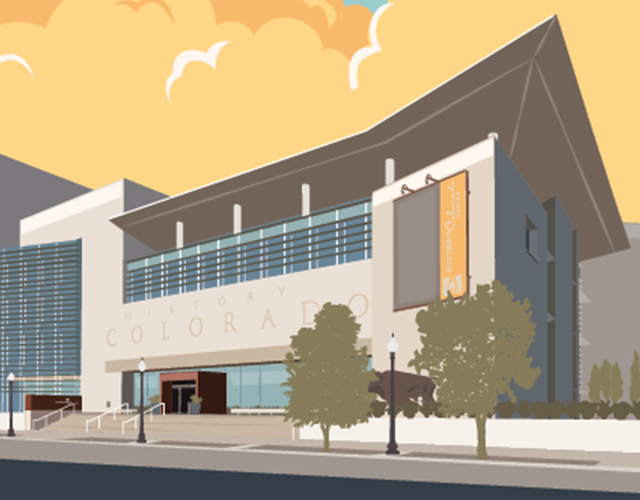
Moments That Made US, a remarkable exhibition at the History Colorado Center tracing 800 years of U.S. history, explores moments that have tested the ideals set forth in the Declaration of Independence. From the abolition of slavery to the Dred Scott decision, from Reconstruction to the Civil Rights Movement, Black history is woven throughout the exhibition with powerful objects like a first edition copy of the abolitionist-inspiring book Uncle Tom’s Cabin, Jackie Robinson’s baseball bat symbolizing the first major American institution to end racial segregation, and a drum kit belonging to Five Points jazz and be-bop drummer Shelley Rhym who came to Denver from the South during the Great Migration. Also featured is the story of Elizabeth Piper Ensley, a Black woman who became a prominent leader in Colorado’s women’s suffrage movement – helping the state become the first where men voted to extend that right to women.
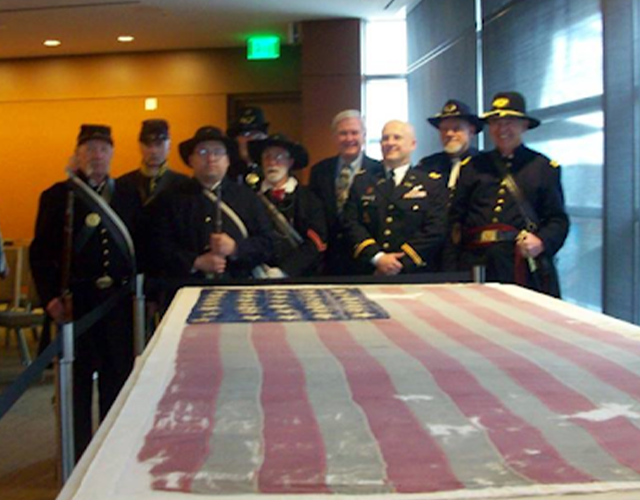
38th Star: Colorado Becomes the Centennial State is an exhibition at the History Colorado Center exploring why it took Colorado five tries and more than fifteen years to become the 38th star on our nation’s flag. When Colorado territory proposed a state constitution in 1865, it aimed to strip Black men of their voting rights. More than a hundred Black community leaders organized and signed a petition, delaying Colorado’s statehood as the U.S. Congress debated whether the Union should admit a state that excluded Black men from voting. Soon after, Congress outlawed any territory from denying voting rights to men on the basis of race.
Proclaiming Colorado's Black History is a traveling exhibition heading to the El Pueblo History Museum. This exhibition shares fascinating stories and artifacts from the experiences of Black Coloradans – from their early exploration and settlement in the Centennial state to their ongoing achievements and the places they’ve transformed. The exhibition will open on Martin Luther King Jr. Day, January 19, following a march in collaboration with the NAACP Pueblo Chapter.
Lincoln Hills: Mountain Sanctuary, an exhibition in Colorado Stories at the History Colorado Center, was recently reimagined to capture the significance of this Rocky Mountain haven where African Americans could enjoy the outdoors—and leave discrimination behind. This revamped exhibition uses newly collected oral histories, photographs, and recreational wear to expand visitors' understanding of Black recreation and travel during the segregation era.
- The Lincoln Hills Museum of Memory project includes audio recordings of oral histories from community members who experienced Lincoln Hills, as well as historic photographs.
- The Lincoln Hills: Escape from Racism online exhibition explores Black history in Colorado from before the Civil War through the Civil Rights Movement.
Zoom In: The Centennial State in 100 Objects at the History Colorado Center includes pivotal moments in Colorado’s Black history, such as the “Sneaker Campaign” that took Wellington Webb door-to-door in 1991 to become Denver's first African American mayor and how Black men fleeing racial segregation built communities like the agricultural colony of Dearfield.
The buffalo soldiers: reVision exhibition at the Fort Garland Museum & Cultural Center presents an emotionally evocative artistic interpretation of the history, impact, and complicated legacy of the all-Black Army regiments created in 1866 following the Civil War.
- History Colorado produced a behind-the-scenes documentary, The Making of buffalo soldiers: reVision, showing how eight independent artists from across the United States collaborated to make artistic creations ranging from prints to poetry which trace this history from slavery to service.
The Ms. Destiny exhibition at the Center for Colorado Women’s History includes the story of the valiant and determined Cathay Williams, who cut her hair short, took a man's name, and became the only woman to serve in the all-Black Buffalo Soldier regiments following the Civil War.
Preservation of Black History:
The State Historical Fund awards millions of dollars every year to support preservation projects across the Centennial State, including in Black communities. Some projects funded in 2025 include:
- The Owl Club of Denver is a prominent all-Black debutante cotillion club that has served the Mile High City since 1960. History Colorado added the red-brick building to the National Register of Historic Places in 2024 due to its important connection to Black heritage, and explored those rich traditions in an exhibition last year. In 2025, the Owl Club received $250,000 to rehabilitate the building’s interior.
- Winks Panorama Lodge, an historic African American resort at the heart of Lincoln Hills, received $220,284 for construction documents and hazardous materials testing to support rehabilitation of this segregation-era haven from discrimination.
- Manzanola United Methodist Church – which was an essential center of community for The Dry, a predominately Black homesteading community in Otero County – received a pair of grants totaling $500,000 for construction documents, roof rehabilitation and phase two of their window rehabilitation.
- Eighth Street Baptist Church, one of Pueblo's oldest Black congregations and a site of Black women's suffrage activities, was awarded $250,000 for emergency stabilization and construction documents.
The Colorado Heritage for All Initiative aims to add historic designations for 150 unrecognized historic resources that tell the stories of marginalized communities by the end of 2026. Recent additions to the State and/or National Register of Historic Places as a result of Colorado Heritage for All include the Eighth Street Baptist Church in Pueblo, the Tate House in Boulder, the Hicks Homestead in Weld County and many more.
The African American Travel Sites project is a multi-year community engagement initiative aimed at identifying potentially eligible historic resources associated with Green Book travel during the segregation era. This project is led by History Colorado’s State Historic Preservation Office with funding from the National Park Service.
- History Colorado consultants at Front Range Research Associations identified 280 properties in Colorado associated with African American travel and recreation, of which 161 still exist today. The next phase includes listing eight additional properties to the National Register.
- This project has so far added the following places to the National Register:
- The McGuire House was Colorado’s only Soldiers and Sailors Club for Black servicemen returning from World War I from 1919 to 1920. Later it served as a beauty shop for Black travelers during the segregation era of 1947 to 1950.
- The Equity Savings and Loan Building/Cousins Building provided space for African American businesses, professional offices, a meeting hall, and apartments from 1924 to 1974. It was also a significant commercial building along the Welton Street corridor from 1909 to 1974. Pauline Robinson, an African American librarian, founded the Cosmopolitan Branch of the Denver Public Library at this location in 1945, starting programs for the Black community.
- The Moore House/Childress Tourist Home was a tourist home for Black travelers to the Pikes Peak area during segregation. Dr. Isaac and Katherine Moore, and later Mrs. Blanche Childress, operated the home from 1930 to 1950. Dr. Isaac Moore was Colorado Springs’ only Black doctor from 1925 to 1931, and he organized efforts to gain full civil rights for African Americans.
Black History Research:
The Colorado Black Equity Study is a state-legislated effort to conduct evidence-based historical research of practices, systems, and policies of the State of Colorado that have harmfully impacted Black Coloradans. The Black Caucus at the Colorado State legislature advocated for this community-envisioned legislative measure, which is funded entirely by grants, gifts, and donations.
The Museum of Memory is History Colorado’s public history initiative that works together with Colorado residents to co-author a shared history. Several Black community members have recorded oral histories and shared photographs and other archival materials through Museum of Memory projects, including the Five Points Plus Neighborhood, the Whittier Neighborhood and Lincoln Hills.
Black History Resources and Publications:
The Black History and Heritage webpage is dedicated to highlighting the contributions made by people who identify as Black, African-American, or part of the African diaspora, as it relates to the history of the West.
History Colorado has partnered with the Colorado Historic Newspaper Collection to digitize historically Black-owned publications, The Colorado Statesman and The Statesman.
The Black History Trail highlights the African American experience in Colorado through both virtual and in-person guided experiences of various historical stories that trace Black history in Colorado from pioneer days to modern times.
The Ku Klux Klan Ledgers webpage includes the complete digitized copies of two KKK membership books, as well as a number of online articles covering aspects of Black Coloradans’ historical and ongoing struggle for equality. One of these ledgers is currently on display in the Moments that Made US exhibition.
The Colorado Magazine has published many articles related to Black history over its more than 100 years of operations, including:
- "Forbidden Unions" by Devin Flores
- "A Black Studies Professor’s View on 'Restoring Truth and Sanity to American History'” by Claire Oberon Garcia
- "The Sam Cary Bar Association: Colorado’s Vanguard for Black Attorneys" by Gary M. Jackson
- “Ada Belle Evans,” and “Black Cowboys Unveiled,” by Acoma Gaither
- “Habari Gani? (Or, What’s the News?),” and “A Rocky Mountain Dream,” by Dexter Nelson II
- “Health, Recreation, Education, and Uplift: Lincoln Hills and Black Recreation in the Colorado Mountains,” by Ariel Schnee
- “Don’t Leave Home Without Your Green Book,” by Cindy Nasky
History Colorado’s critically acclaimed podcast, Lost Highways: Dispatches from the Shadows of the Rocky Mountains expands the history of the American West by exploring how overlooked stories from the past have shaped current world events, including these episodes focused on Black history:
- “The Dearest Field,” which tells the story of a predominately Black homesteading community that sprung up on Colorado’s Eastern Plains in the aftermath of the Civil War
- “Game Changers” is a special episode of Lost Highways celebrating the 100th anniversary of Negro League Baseball and the little-known role Colorado played in integrating our national pastime
- “A Lynching in Limon” chronicles one of the most horrifying racial terror lynchings in U.S. history that took place in the small town of Limon on the Eastern Plains
- “The Original BlacKkKlansman” explores the story of Dr. Joseph Westbrook, who infiltrated the KKK in the 1920s in an effort to protect the thriving Five Points community in Denver
- “Busted: The Case of the Denver Police Department” looks back at the origins of policing in America through the lens of the Denver Police Department, how their role in communities has transitioned over time, what happens when they abuse their power, and the long struggle for change
- “Cathay Williams/William Cathay: Buffalo Soldier” dives into the story of Cathay Williams, the Black woman who chopped off her hair, put on men’s clothes, and enlisted as a Buffalo Soldier under the name William Cathay
- “You Don't Know Barney Ford” discusses the resiliency of Barney Ford, who came West in search of gold, owned and operated hotels and restaurants, lost them in fires, rebuilt them, and enjoyed a reputation as a king of hospitality in early Denver, Breckenridge, and Cheyenne, Wyoming
Expert Sources Available for Interviews:
Acoma Burns, History Colorado’s Associate Curator of Black History
- Acoma Burns relocated to Denver from Minneapolis, Minnesota for her position as Assistant Curator of Black History at History Colorado. She holds a masters degree in Heritage Studies and Public History from the University of Minnesota. While in the Twin Cities, she worked as a Public Programs Associate at the Minnesota Historical Society. She is a 2023 recipient of an Emmy Award as host for the show Jim Crow of the North Stories, a Twin Cities PBS original. She has also worked as a Preservation and Protest Collections Care fellow with the Midwest Art Conservation Center and the George Floyd Global Memorial. Much of her research interests include early twentieth century mutual aid networks and Black Cultural studies.
Chloé Duplessis, History Colorado’s Black Equity Study Program Manager
- Chloé Duplessis is a Denver-based historian, curator, and artist who is leading a team of researchers in conducting evidence-based historical research of practices, systems, and policies of the State of Colorado that have harmfully impacted Black Coloradans as required by Senate Bill 24-053. Duplessis brings a wealth of experience in historical research, administration, leadership, community engagement, and capacity building to the Colorado Black Equity Study. She has previously worked with History Colorado and other Denver area cultural institutions to create ground-breaking multi-sensory exhibitions which merge accessible contemporary art with historical interpretation to explore complex themes of race, equity, identity, and spirituality. Duplessis’ art installation 12 Tablecloths is traveling to several History Colorado community museums throughout the year, and is currently installed at the Trinidad History Museum.
Terri Gentry, History Colorado’s Engagement Manager for Black Communities
- A third generation Denverite, Gentry has a bachelor’s degree in African/African American Studies from Metropolitan State University of Denver and a master’s degree in Humanities, focus Public History and Museum Studies, from the University of Colorado Denver. Gentry is a staple of Denver’s Black community, and has been recognized by the state for her leadership and civic engagement. Gentry volunteers for the Black American West Museum & Heritage Center. As part of her role as Engagement Manager for Black Communities, Gentry develops relationships with communities across the state and leads Museum of Memory projects where she works with Colorado residents to co-author a shared history.
Marcie Moore Gantz, State Historical Fund Director
- Marcie Moore Gantz is a cultural preservation leader committed to stewarding places that carry meaning for communities across Colorado. As Director of the State Historical Fund, she oversees more than $10 million in annual investments supporting preservation and archaeology projects in all 67 counties—helping safeguard sites that anchor history, identity, and community life. A lifelong Colorado resident, Gantz previously served as Grants and Accessibility Manager for Colorado Creative Industries and has held leadership roles across arts, culture, and philanthropy, including the Deputy Director at both Scientific & Cultural Facilities District and the Gill Foundation’s Gay and Lesbian Fund for Colorado, as well as Managing Director for Cleo Parker Robinson Dance. She is the founder of Nia Philanthropy, where she worked at the intersection of equity, data, and social investment to strengthen purpose-driven organizations. Her approach centers on people, place, and care, advancing cultural preservation as a responsibility for future generations.
Dr. Claire Oberon Garcia, former State Historian and professor of English at Colorado College
- Dr. Claire Oberon Garcia is a member of the Colorado State Historian's Council, where her research focuses on Black history as it is portrayed through literature, with a particular emphasis on women of the Black Atlantic in the early part of the twentieth century. She is co-editor of the collection From Uncle Tom’s Cabin to The Help: White-Authored Narratives of Black Life (2014) and several book chapters and journal articles, including: “Fighting for the Right to Remember: More museums and sites dedicated to the memory of slavery are being created, but they’re igniting debate,” with co-author Alecia McKenzie in New African Magazine (2016); “Remapping the Metropolis: Theorizing Black Women’s Subjectivities in Interwar Paris” in Black French Women and the Struggle for Equality 1848-2016 (2018); and “‘No one, I am sure, is ever homesick in Paris’: Jessie Fauset’s French Imaginary,” in Paris, Capital of the Black Atlantic: Literature, Modernity, and Diaspora (2013). Her work with museums includes serving on the advisory committee for the Colorado Center for Women’s History and contributing to the exhibit catalogs for Beyond Mammy, Jezebel, and Sapphire (2018) and ReOrientations: Defining and Defying 19th Century French Images of the Arab World (2015). Her work has also appeared in The Colorado Magazine, Palimpsest: A Journal on Women, Gender, and the Black Atlantic, The Feminist Wire, The Ethnic Studies Review, The Chronicle of Higher Education, The Henry James Review and the International Journal of Francophone Studies. Her book, ‘For they have seen the relativity of all things’: Black Women Writers in Paris, 1900-1960, is under contract with the University of Georgia Press, and she is currently the Principal Investigator for the Mellon Foundation Grant to Colorado College, Humanities for OUR Times: From Epistemologies and Methodologies to Liberatory Creative Practices and Social Justice, which will support the integration of humanities questions with social justice work.
Black History Photographs:
“Man and woman sitting on running board of automobile,” 1921, 84.371.1 / 10043831
“Herbert Harold Hall (1893-1961),” 1921, 84.371.2 / 10043832
“Scenes from the East Portal of the Moffat Tunnel,” 1922-1923, 84.371.5 / 10043851
“Herman Frederick Hall (1893-1984) or Herbert Harold Hall (1893-1961),” 1921, 84.371.80 / 10043802
“African American woman at drinking fountain in City Park,” 1920-1921, 84.371.91 / 10043813
“Black child,” -studio portrait with a dog, Oliver E. Aultman, 1890-1910, 85.1.34 / 20010059
“Winter near Trout Lake,” -a Rio Grande Southern train in San Miguel County, William Henry Jackson, 1882-1900, 86.200.745 / 20100721
“Kansas City Smelting Co. blast furnaces,” William Henry Jackson, 1880-1890, 86.200.1640 / 20101641
“Photograph,” -Homer F. Bedford, Ralph Carr, George Washington, Ray Brannaman; defense bonds check, Denver Post, 1942, 86.296.557 / 10037307
“Walsen Colored Club,” 1910-1912, 87.41.38 / 20005013
“Photograph,” -Meeting of the Phylis Wheatley Branch of the Y.W.C.A., Mr. Cloud, 1953, 87.516.162 / 10033609
“Photograph,” -Neusteters Store on California St, 1912, 88.42.21 / 10055028
“Photograph,” -Clara Brown, 1860-1880, 89.451.1585 / 10027902
“Photograph,” -billiards parlor, 1890-1910, 89.451.1760 / 10038044
“Portrait of James P. Beckwourth,” W. G. Chamberlain, 1860-1864, 89.451.1762 / 10026611
“Photograph,” -Barney L. Ford, 1860-1880, 89.451.1766 / 10031421
“Photograph,” -Ludlow Strike, 1913, 89.451.4793 / 10031432
“Photograph,” -Leadville Strike, 1896, 89.451.4971 / 10046426
“African Methodist Episcopal Church,” 1879-1887, 89.451.5915 / 10049248
“Photograph,” -Perry-Mansfield Camp (Steamboat Springs), 1969, 90.140.331 / 10054243
“Group of people in a park picnic,” Charles S. Lillybridge, 1904-1915, 90.152.1342 / 20002084
“Photograph” -Works Progress Administration women singing, 1930-1940, 90.260.18 / 10045233
“Cowboys around a chuck wagon,” 1890, 90.314.524 / 10031870
“No. 227-Fort Garland,” -10th U.S. Cavalry, Charles Weitfle, 1875-1880, 93.84.1 / 10030609
“A Street in Creede, Colo.,” 1893-1894, 93.343.5 / 20004709
“Group portrait on the Uintah Reservation,” 1890-1900, 94.367.3 / 10045258
“Photograph,” -Fannie Mae Duncan, 1950-1960, 95.219.5 / 10055051
“Firefighters from Engine Co. Number 3,” -all-Black firefighting team of Five Points Neighborhood, 1947, 98.182.1 / 10038917
“The Debonaires Annual Cocktail Dance May 29, 1956,” MCCLOUD, 1956, 2005.55.2 / 10049525
“Group photograph of the 10th Cavalry Regiment, Troop E,” J.D. Givons Photo, 1900, 2020.48.12
“10th Cavalry military band,” 1900, 2020.48.16
“African American family posing by Balanced Rock on burros,” Paul Goerke, 1900, 2020.73.7
“BLM Banner (and associated photographs),” J. Audrey Nelson, 2020, 2020.84.1
“Henderson House,” -home of Colorado’s first licensed Black architect, Michael McGrath, 2019, 2021.111.74
“Framed photograph of Harvey Craig Sr. and Rolan (Dixon) Craig,” -likely taken at the Dry, a Black homesteading community in Otero County, 1930s, AR.OH.708 / 2022-4-1
“Telluride Burro Train,” 1890, 2022.57.245
“African American Pioneers,” -photographed in front of cabin, 1890, 2022.57.253
“George Morrison sitting next to his portrait,” 2022.57.989
“Photograph,” -of people outside Q. J. Gilmore Undertaker, 1920-1940, PH.PROP.12 / 10025023
About History Colorado
History Colorado is a division of the Colorado Department of Higher Education and a 501(c)3 non-profit that has served more than 75,000 students and 500,000 people in Colorado each year. It is a 146-year-old institution that operates eleven museums and historic sites, a free public research center, the Office of Archaeology and Historic Preservation which provides technical assistance, educational opportunities, and other access to archaeology and historic preservation, and the History Colorado State Historical Fund (SHF), which is one of the nation’s largest state funded preservation programs of its kind. More than 70% of SHF grants are allocated in rural areas of the state. Additionally, the offices of the State Archaeologist and the State Historic Preservation Officer are part of History Colorado.
History Colorado’s mission is to create a better future for Colorado by inspiring wonder in our past. We serve as the state’s memory, preserving and sharing the places, stories, and material culture of Colorado through educational programs, historic preservation grants, collecting, outreach to Colorado communities, the History Colorado Center and Stephen H. Hart Research Center in Denver, and 10 other museums and historic attractions statewide. History Colorado is one of only six Smithsonian Affiliates in Colorado. Visit HistoryColorado.org, or call 303-HISTORY, for more information. #HistoryColorado