
 Membership
 Donate
 Shop
Shop


















Press Release
New 38th Star Exhibition Explores Colorado Statehood as 150th Anniversary Approaches
DENVER — September 18, 2025 — What if the fifth time wasn’t the charm when Colorado was repeatedly trying to gain statehood? Few people know that Colorado is the Centennial State that almost wasn’t. 38th Star: Colorado Becomes the Centennial State is a revolutionary new exhibition opening at the History Colorado Center, which pulls back the curtain on the turmoil that led the rejection of our statehood four times, until Colorado Territory was finally granted statehood in 1876 during America’s 100th anniversary.
PRESS CONTACT:
Jeannie McFarland Johnson, Director of Marketing and Communications
303-866-5786 | hc_media@state.co.us
DENVER — September 18, 2025 — What if the fifth time wasn’t the charm when Colorado was repeatedly trying to gain statehood? Few people know that Colorado is the Centennial State that almost wasn’t. 38th Star: Colorado Becomes the Centennial State is a revolutionary new exhibition opening at the History Colorado Center, which pulls back the curtain on the turmoil that led the rejection of our statehood four times, until Colorado Territory was finally granted statehood in 1876 during America’s 100th anniversary.
Many Coloradans aren’t aware of the many attempts at statehood. For 17 years, starting in 1859, and through four presidential administrations, debates swirled over whether Colorado should be a state. Individuals and communities supported or rejected statehood due to politics, voting rights, and financial concerns. Should Colorado be a state at all? And, if it does become a state, what kind of state should it be? 38th Star shows visitors where the state of Colorado began by revisiting its origins through authentic photographs, documents, artifacts, and voices that formed the Centennial State.
“This exhibit tells the origin story of our state,” said Katherine Mercier, exhibition developer and historian at History Colorado. “Much of what we know and love about Colorado today was formed through statehood. But the story of statehood is not just one story. We highlight the founding figures who sought statehood, as well as those who opposed it. We include voices from both those who were part of the narrative and those who were left out. All these elements came together for Colorado’s statehood in 1876, but it was not easy.”
The Timeline to Statehood
Each attempt at approving a state constitution and getting it passed at the federal level had its own set of obstacles.
- In the first attempt in 1859, miners voted against statehood to avoid paying taxes.
- The second time in 1864, many Hispano residents in southern Colorado and miners felt that statehood did not represent their interests. A power-hungry political ring of Denver men championed statehood along with President Abraham Lincoln, but it failed.
- A group of 137 Black voters in Colorado influenced the third attempt at statehood in 1865 and 1866. Their right to vote had been removed in the proposed state constitution, so Black community leaders collected signatures and sent a petition to Congress, urging them to reject Colorado statehood. Many members of Congress agreed Black men should have the right to vote. This resulted in the passage of the Territorial Suffrage Act, which granted any man of voting age the right to vote in a territory, regardless of race.
- While Congress ultimately passed statehood in 1866 and 1867, Colorado Territory could not move into statehood without approval from the executive branch. President Lincoln had been assassinated in 1865. His successor, President Andrew Johnson, vetoed Colorado’s third and fourth attempts at statehood due to Colorado’s small population, but also due to federal politics.
- The fifth attempt in 1876 finally had the right mix of timing and support. By 1875, Colorado's statehood received the endorsement of President Ulysses S. Grant and Congress. Colorado voters approved a state constitution on July 1, 1876. President Grant signed a proclamation on August 1, 1876, making Colorado the only state established during America's centennial anniversary. Those in favor of statehood welcomed this prestigious distinction with enthusiasm and nicknamed Colorado “The Centennial State.”
"In its quest for statehood, Colorado's persistence prevails in the midst of the post-war politics of westward expansion, emancipation, suffrage battles, and conquest," said Dawn DiPrince, president/CEO of History Colorado and State Preservation Officer. "This evidence-rich exhibit helps us to understand the contradictions of Colorado's formation that continue to resonate in our lives 150 years later and inform how we build the next 150."
Statehood negatively impacted Indigenous people who had been living on the land that became Colorado. The Cheyenne, Arapaho and Ute Tribes were displaced by white settlers who forced them from their land and strained their resources needed for survival. The U.S. government pursued treaties that removed Indigenous people from the land, shaping the map of Colorado we know today. 38th Star shares statehood’s impact on Tribes and highlights the Indigenous communities’ enduring connection to the land. In addition, visitors will have the opportunity to engage with an interactive map that shows the shifting boundaries from territory to statehood.
38th Star: Colorado Becomes the Centennial State is the second of three major exhibitions at the History Colorado Center developed to commemorate the twin anniversaries of American independence and Colorado’s 150th anniversary in 2026. The other signature exhibits include:
- Expedition 1776: The Journey of Domínguez Dominguez and Escalante - now open - invites visitors to follow one of the earliest European expeditions which traversed the Colorado Plateau, mapping the region and engaging with Native cultures that thrived there for centuries prior to European arrival.
- Moments that Made US - opening November 22, 2025 - is a marquee exhibition featuring more than forty artifacts that witnessed the moments that shaped the United States. This once-in-a-lifetime exhibition assembles treasures from American history rarely seen together - especially in the U.S. West. These objects bore witness to powerful turning points in our history and highlight how people have shaped the path of the nation.
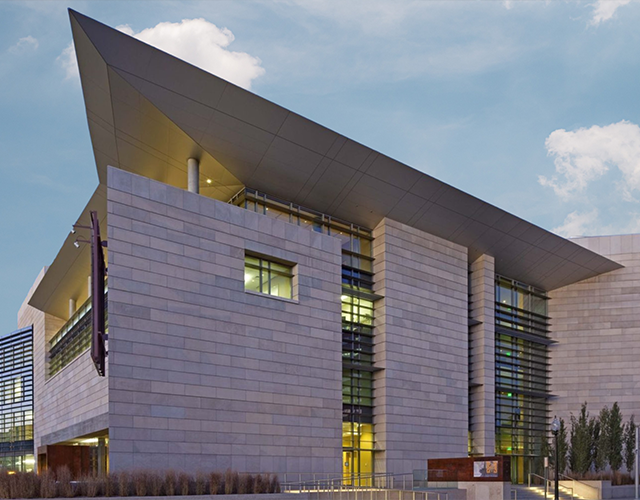
38th Star: Colorado Becomes the Centennial State opens September 26 at the History Colorado Center in Denver. The History Colorado Center is located at 1200 N Broadway and is open daily from 10 a.m. – 5 p.m. Admission for kids 18 and under is free every day. This exhibition is sponsored by Rio Grande Co., CBS Colorado, Colorado Public Radio and Westword Magazine.
About History Colorado
History Colorado is a division of the Colorado Department of Higher Education and a 501(c)3 non-profit that has served more than 75,000 students and 500,000 people in Colorado each year. It is a 145-year-old institution that operates eleven museums and historic sites, a free public research center, the Office of Archaeology and Historic Preservation which provides technical assistance, educational opportunities, and other access to archaeology and historic preservation, and the History Colorado State Historical Fund (SHF), which is one of the nation’s largest state funded preservation programs of its kind. More than 70% of SHF grants are allocated in rural areas of the state. Additionally, the offices of the State Archaeologist and the State Historic Preservation Officer are part of History Colorado.
History Colorado’s mission is to create a better future for Colorado by inspiring wonder in our past. We serve as the state’s memory, preserving and sharing the places, stories, and material culture of Colorado through educational programs, historic preservation grants, collecting, outreach to Colorado communities, the History Colorado Center and Stephen H. Hart Research Center in Denver, and 10 other museums and historic attractions statewide. History Colorado is one of only six Smithsonian Affiliates in Colorado. Visit HistoryColorado.org, or call 303-HISTORY, for more information. #HistoryColorado