
 Membership
 Donate
 Shop
Shop

















Press Release
Unravel the Intersections of Identity and Place in the History Colorado Center’s Newest Exhibition
Exhibition presents the lasting cultural traditions of the Hispano communities of the Upper Río Grande through contemporary arts
DENVER — August 8, 2024 — On August 23, 2024, History Colorado’s newest exhibition presenting the lasting cultural traditions tied to early Hispano settlers of southern Colorado and northern New Mexico opens to the public. Thoughtfully crafted with multiple artists and community collaborators, the exhibition — De la Tierra: Reflections of Place in the Upper Río Grande — uses contemporary art paired with historical objects to highlight the distinct culture of the Upper Río Grande region.
PRESS CONTACT:
Luke Perkins, Manager of Communications and Public Relations
303.866.3670 | luke.perkins@state.co.us
"Northern New Mexico and southern Colorado constituted the northernmost frontier of the Spanish Empire and later Mexico,” said Lucha Martinez de Luna, Associate Curator of Hispano, Chicano, Latino History and Culture. “Isolated from the rest of New Spain, the people living in this region formed a compact cultural group, their foundations deeply rooted in the land and bound to the water.”
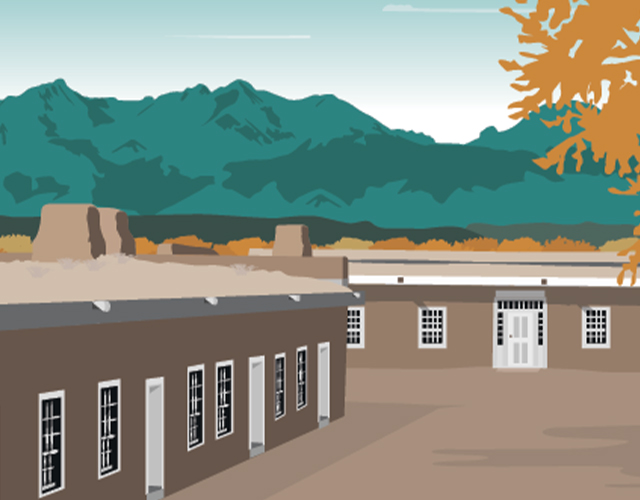
A region that extends beyond Colorado borders, the Upper Río Grande has been home to descendants of early Hispano settlers that have shaped the cultural identity of southern Colorado and northern New Mexico for generations. Within this region is the San Luis Valley, where –amidst the soaring rocky peaks and rushing waters – the settlers introduced sheep, horses, cows, goats, wheat, tools, and customs that have defined the Upper Río Grande for centuries.
Designed to transcend boundaries on the map, De la Tierra challenges us to consider how we think about Colorado’s borders while also sharing cultural traditions formed in concert with the land; cultural traditions born from a complex history of colonization, ethnic intermixing, and shifting geopolitical borders.
“The blending of cultures in the San Luis Valley resulted in distinct customs and traditions that many artists continue to reference in their work, and informs life in the lands of the Upper Río Grande,” Martinez de Luna said.
In order to properly capture the artistic influences of the cultural heritage of the Upper Río Grande, Martinez de Luna and Jeremy Morton, exhibition developer and historian for History Colorado, collaborated with contemporary artists that either hail from the Upper Río Grande region or have familial connections to it.
“The multiple generations of artists who collaborated on this exhibition allowed us to highlight how their art reflects individuality while also uniting communities,” Martinez de Luna said. “Through various mediums such as sound, movement, thread, paint, and metal, these artists convey their shared ancestral experiences and memories while creating a powerful reminder of life's richness and vulnerabilities.”
A complete list of the artists, as well as community members, who collaborated on De la Tierra: Reflections of Place in the Upper Río Grande can be found here.
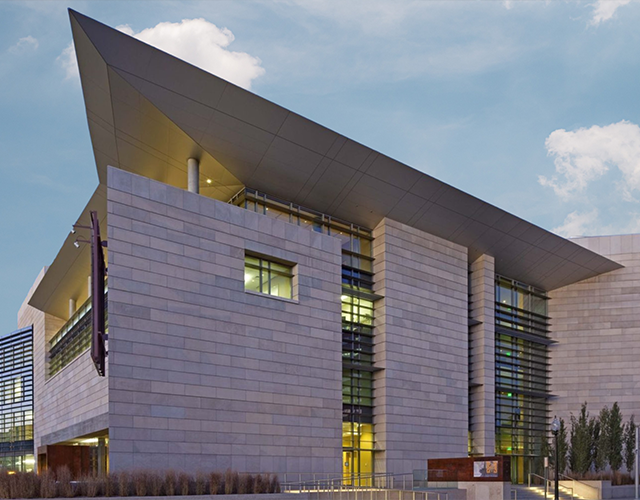
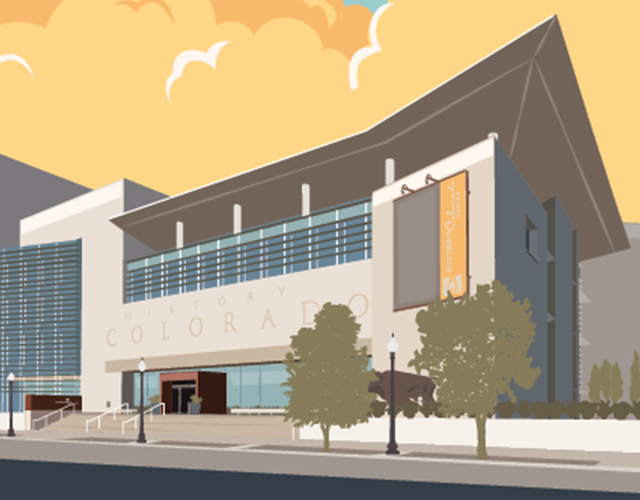
De la Tierra: Reflections of Place in the Upper Río Grande opens to the public on August 23, 2024, at the History Colorado Center in Downtown Denver. The History Colorado Center is located at 1200 N Broadway and is open daily from 10 a.m. – 5 p.m. Admission for kids 18 and under is free every day.
About the San Luis Valley
Home to the oldest continuously inhabited settlements in Colorado – the town of San Luis that was founded on the Sangre de Cristo Land Grant in 1851 – the San Luis Valley has an even longer history of Native American inhabitation and holds a profound importance to many of the Tribes with ties to what is now Colorado. Characterized by its cold desert climate, which includes low annual rain falls and frigid winters, life in the San Luis Valley has always been challenging and required its inhabitants to constantly innovate.
Additional information about life in the San Luis Valley and the cultural traditions of the Hispano people who call it home can be found in Hilos Culturales: Cultural Threads of the San Luis Valley as well as the Colorado Encyclopedia, The Colorado Magazine, and in History Colorado’s Borderlands of Southern Colorado exhibitions.
About History Colorado
History Colorado is a division of the Colorado Department of Higher Education and a 501(c)3 non-profit that has served more than 75,000 students and 500,000 people in Colorado each year. It is a 145-year-old institution that operates eleven museums and historic sites, a free public research center, the Office of Archaeology and Historic Preservation which provides technical assistance, educational opportunities, and other access to archaeology and historic preservation, and the History Colorado State Historical Fund (SHF), which is one of the nation’s largest state funded preservation programs of its kind. More than 70% of SHF grants are allocated in rural areas of the state. Additionally, the offices of the State Archaeologist and the State Historic Preservation Officer are part of History Colorado.
History Colorado’s mission is to create a better future for Colorado by inspiring wonder in our past. We serve as the state’s memory, preserving and sharing the places, stories, and material culture of Colorado through educational programs, historic preservation grants, collecting, outreach to Colorado communities, the History Colorado Center and Stephen H. Hart Research Center in Denver, and 10 other museums and historic attractions statewide. History Colorado is one of only six Smithsonian Affiliates in Colorado. Visit HistoryColorado.org, or call 303-HISTORY, for more information. #HistoryColorado
Correction: an earlier version of this press release incorrectly identified San Luis as having been founded on the Conejos Land Grant.