
 Membership
 Donate
 Shop
Shop


























Forbidden Unions
How one of Colorado’s most unusual and disturbing laws changed a couple’s lives forever, and left echoes that continue to resound decades after it was repealed.
One night in 1941, James Jackson—a Black Denverite living in the primarily African American Five Points neighborhood—was awoken by a pounding on his door.
When he answered, he was met by a group of police officers, and in their custody was Jackson’s stepdaughter Caroline Brethauer. Almost as soon as the door was opened and they saw Jackson, the officers forced their way into the house.
These exact officers had bothered Jackson before, so he protested. “What is it now?” he asked them, according to court transcripts.
“You’ll find out,” one officer said as Jackson was arrested without a warrant, right there in his living room. “We’ve got a new judge down there. We’re going to break this up. We’re going to take matters in our own hands.”
The officers searched the house for their next quarry. They forced their way into the bedroom, where they found Mrs. Lydia Jackson—James’ wife—lying down. They told her she was coming with them and was under arrest, and told her to get dressed.
Mrs. Jackson did her best to comply, but when she tried to get some privacy as she changed out of her nightclothes, a leering officer followed her and kept his flashlight trained on her body.
“There isn’t anything I’ve never seen before,” he chided her when she protested at this awful treatment.
The Jacksons were taken away to the police station. It was not the first time the police targeted them, but it was certainly the most serious. In fact, it was the third time they’d been arrested for violating two of the most discriminatory and unusual laws in Colorado’s history.
The police were there to assert public control over the most private of institutions. They were there to break up the Jacksons’ marriage.
You see, James was Black, and Lydia was white.

The home of Dr. Clarence Holmes, a Black dentist in Five Points. The Jacksons’ home was not far from this one, and likely looked similar.
Anti-miscegenation laws—laws that ban marriage between people of different races or ethnicities—have a long history in the United States. Almost every state passed some version of one. Some states banned all interracial marriage, while others only forbade marriage between white and Black citizens. Only nine states never had an anti-miscegenation law on their books, and almost all of them were in the Northeast. For the rest of the country, including every contiguous state west of the Mississippi, racism dictated the rules for the institution of marriage.
Colorado’s own anti-miscegenation law was introduced very early on. It was a legacy of the original territorial government. And even within the peculiar institution of anti-miscegenation, this law was a very unusual one, shaped by Colorado’s history as a borderland.
Interracial marriage in Mexico had been a fact of life since the Spanish conquest in the sixteenth century. While the Spanish Empire had imposed basic laws forbidding mestizaje—the mixing of races—for centuries, they were largely unenforced. By the time Mexico gained its independence in 1821, most of its citizens were, to some extent, of mixed race. In fact, mestizo identity became a key part of Mexican national identity in the 1800s, and endures to this day.
So when the newly formed country of Mexico overturned the old caste system imposed by the Spanish in its 1827 Constitution, it also tossed out with it the institution of slavery and anti-miscegenation laws.
While discrimination endured in Mexico, especially when it came to economic class and religion, this attitude towards racial identity set the country firmly apart from its neighbor to the north. These tensions led directly to the Texas Revolution, spearheaded by white immigrants from the United States who were loath to liberate their slaves—which, in turn, sowed the seeds of the Mexican-American War of 1846–1848.
When the dust settled, Mexico ceded over 500,000 square miles of territory to the United States, stretching from central Texas all the way to the Pacific. The frontier between the two countries shifted south, from the Arkansas River all the way to the southern stretches of the Rio Grande. And as that border moved, it suddenly brought almost 100,000 Mexican nationals into the United States.
The Treaty of Guadalupe Hidalgo included a number of protections for those people, who suddenly found their homes had transitioned from one country to another. It declared that:
The Mexicans who, in the territories aforesaid, shall not preserve the character of citizens of the Mexican Republic [...] shall be incorporated into the Union of the United States, and be admitted [...] to the enjoyment of all the rights and citizens of the United States [...] and shall be maintained and protected in the free enjoyment of their liberty and property.
This included, implicitly, respect for their marriages, no matter their race.
Almost three decades later when Colorado was pursuing statehood, lawmakers had to take this treaty into account. Property rights, marital status, and more were already causing a seemingly endless string of disputes and headaches to officials in Texas, California, and the New Mexico Territory for years. (In fact, many of those disputes are still being brought up in court today, two centuries on).
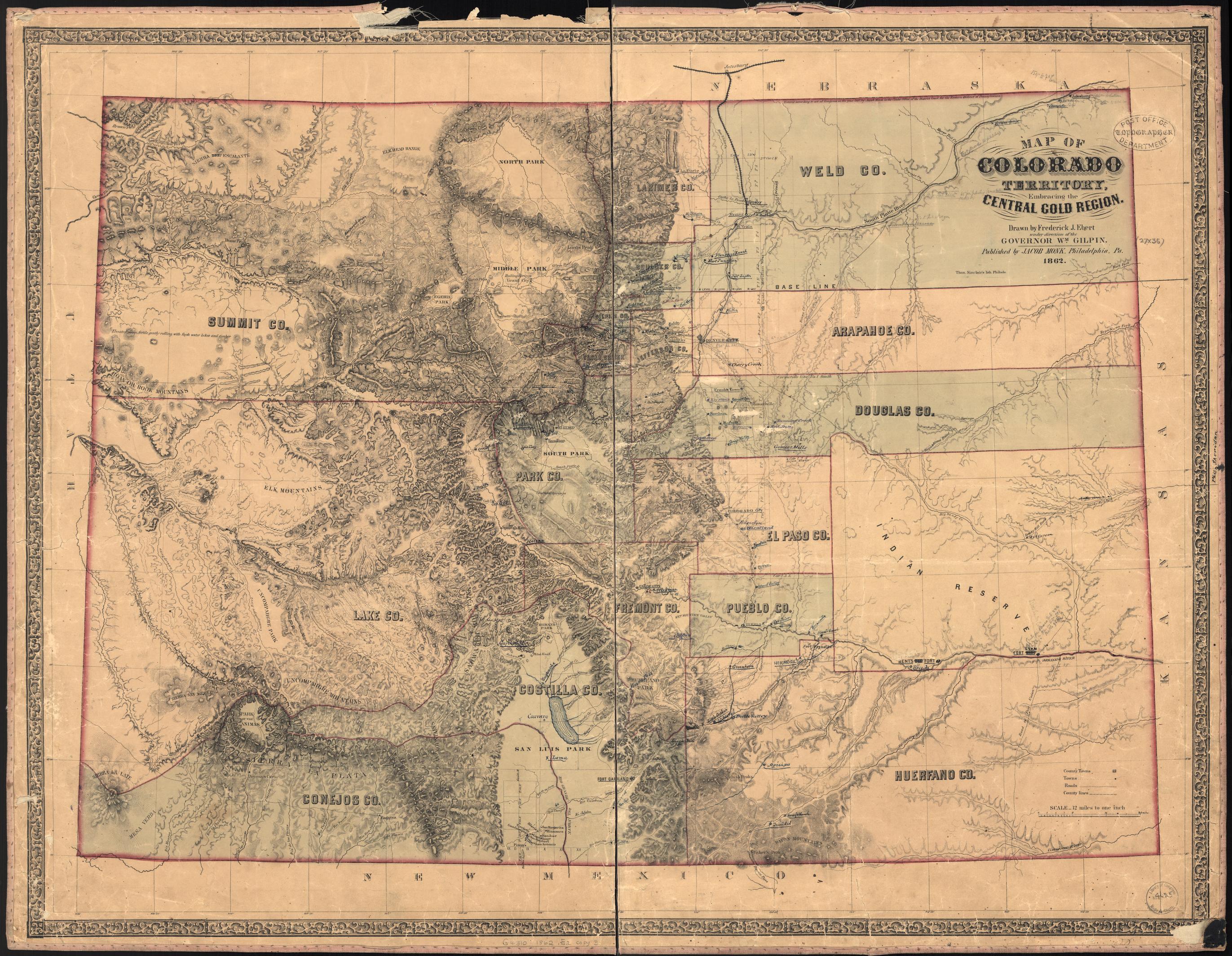
“Map of Colorado Territory embracing the Central Gold Region,” published by Jacob Monk in 1862. Only fifteen years before this map was printed, everything depicted south of the Arkansas River (visible running through Pueblo County) or west of the Great Divide was part of Mexico.
But this was not going to stop the openly racist leaders of the Colorado Territorial Legislature. Deeply concerned with the alleged societal evil that was mixed-race relations, the very earliest Colorado laws (passed as provisional during its time as the unrecognized Jefferson Territory) included a provision that “no white person shall be married to any person being a negro or mulatto.” When the time for statehood came, this territorial law was one of many carefully pored over by legal experts. But instead of overturning it or even simply leaving it out, they were preoccupied with how to make it more robust.
Worried the law might violate the rights of former Mexican nationals under the Treaty of Guadalupe Hidalgo, but unwilling to allow Blacks to marry whites, Colorado’s First General Assembly struck upon a very unusual solution:
All marriages between negroes or mulattoes of either sex, and white persons, are also declared to be absolutely void. This section shall extend to illegitimate as well as legitimate children; Provided, that nothing in this section shall be so construed as to prevent the people living in that portion of the State acquired from Mexico, from marrying according to the custom of that country.
So this ban on miscegenation only applied to Black Coloradans and their spouses, and only north of the Arkansas River. So in half the state, mixed-race marriages were illegal; while in the other half they were not.
This bizarre, unique geographic carve-out ensured Colorado’s anti-miscegenation law technically abided by the terms of the treaty, but also made it that much more difficult to enforce. In much of the state it doesn’t seem to have been consistently applied, for obvious reasons. Officers and officials had no real way of tracking what part of the state marriages happened in, especially for common-law marriages or couples who moved even relatively short distances. In Pueblo, for example, a mixed-race couple’s marriage might be null and void if performed in one neighborhood, but perfectly legal and valid only a few blocks away, across the Union Avenue bridge and on the other side of the Arkansas River.
But a hundred miles north in Denver was a different story.
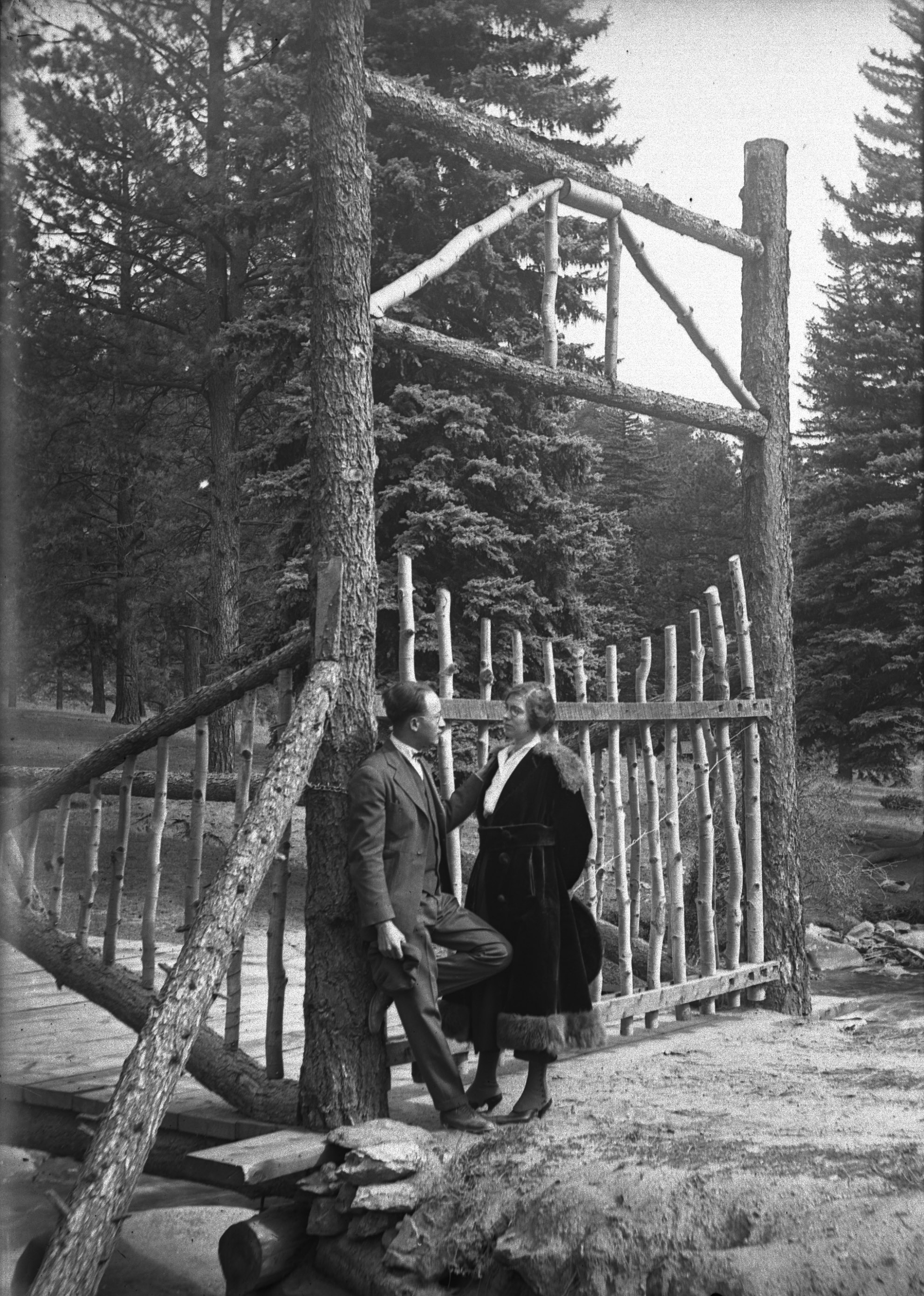
Denver resident Edmeaux Homer Hall and his first wife Dorothy Ellen Miller Hall, likely photographed on a road trip along the Pikes Peak Highway. Edmeaux Hall identified as white or “Spanish” on the census, but both his parents had been listed as “Black.” Edmeaux married twice, both times to white women.
James and Lydia Jackson were held without bond by the City and County of Denver for three days, separated from Lydia’s teenage daughter Caroline. They’d gone through this twice before already, both times at the hands of the same arresting officer. He’d arrested them in 1939, and even after they moved to a new house, he followed and arrested them again in 1940.
The charge was never actually miscegenation under the state law (which did not make its violation a criminal offense). Instead, the Jacksons were repeatedly arrested for violating Denver’s vagrancy ordinance, which at the time applied to anybody leading an allegedly immoral course of life without actually defining what constitutes a moral, or immoral, life.
A common application of the law was to break up premarital cohabitation, on the basis that sex before marriage was improper and, thus, immoral. It was on that basis that the Jacksons had been arrested three times, despite the fact that they were married in November 1939.
In the 1941 case, the police refused to even entertain the notion that they actually were married. One officer refused repeatedly to call Lydia by her married name, referring to her instead as Mrs. Brethauer, the name of her ex-husband. And when the Jacksons attempted to defend against the immorality charge, the courts treated them much the same. The city attorney argued that under Colorado law the Jacksons could not legally marry, and thus had been cohabitating immorally. The judge agreed. They were each fined 150 dollars for their crime, a large sum at the time and equivalent to almost 3,500 dollars today.
But that wasn’t the end of it. The Jacksons fought this ruling, which not only slapped them with an immense fine but also legally annulled their marriage. In early 1942, the Supreme Court of Colorado agreed to hear their appeal.
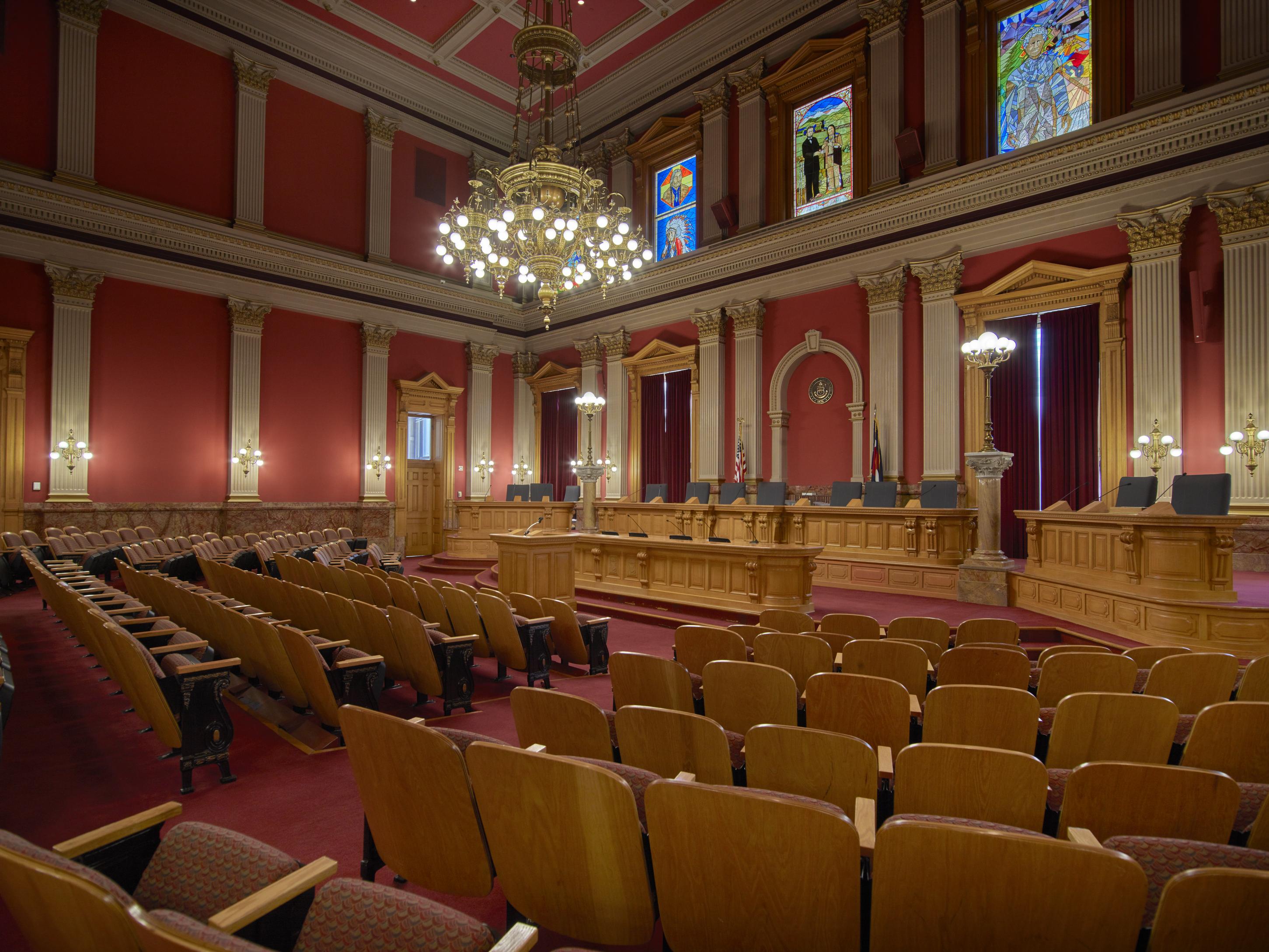
The old Colorado Supreme Court Chambers in the state capitol in Denver, where the Jacksons’ appeal was heard in 1942.
Denver’s bizarrely extensive vagrancy law, and the Denver Police Department’s habit of using it to justify harassing Black citizens and interracial couples, were unfortunately nothing new.
The vagrancy ordinance dates back to 1886, when the first version was passed into law. At that time, in the decades after the Civil War, vagrancy laws like this were increasingly common across the country.
They emerged first in former slave states as part of the “Black Codes,” new laws passed during Reconstruction which restricted and controlled the labor and behavior of Black Americans. Early vagrancy laws—often passed alongside or as part of Black Codes—were often blocked by Reconstruction-era oversight for their obvious unconstitutional discrimination. General Alfred Terry, charged with overseeing Virginia’s reintroduction into the Union, decried that state’s 1866 Vagrancy Act as providing an excuse to arrest Black citizens and force them into prison labor—“A condition which will be slavery in all but its name,” he wrote.
But as Reconstruction waned through the 1870s, efforts to pass vagrancy laws persisted. Laws of this nature spread across the country specifically because of how vague they were. They could be justified with platitudes, and then were wielded with incredible prejudice against unwanted elements of society. Across the country but especially in the South, they allowed the arrest of people who were only presumed by the court to be “shiftless”—that is, homeless, jobless, or generally lacking the ability to support themselves monetarily—and put them to work for the good of society. The presumed-shiftless were often people of color.
As time went on the vagrancy laws became even broader, and as a result could be wielded against any perceived threats against social norms. People of color and mixed-race couples, of course, but also sinners, sexual nonconformists, labor activists, and more.
Following the lead of many other constituencies, Denver’s city council expanded the city’s vagrancy law in 1905. It now explicitly included a bafflingly long list of unwanted elements—not just the unhoused or unemployed, but also pimps, prostitutes, loiterers, drunkards, con artists, fraudsters, people who swore in public, anybody found in possession of a lockpick, owners or users of a craps table, and both bowlers and billiards-players. But in doing this, they also untied immorality from “shiftlessness.” In Denver, it was now possible to be a vagrant simply by being immoral, regardless of one’s financial or housing status.
Thus, by the 1920s, this ordinance had become a one-size-fits-all cudgel the authorities could use to punish, jail, or otherwise remove citizens who didn’t fit in with their vision for harmonious status quo. Denver City Council revisited the law in 1927, but by that point the city’s politics were firmly under the control of the Ku Klux Klan. Officers—many of whom were KKK members themselves—harassed and intimidated people of color and religious minorities using the law as flimsy legal justification. The Council was content to let the law stay as it was, and the city continued to use it as justification for discrimination—including against mixed-race couples like the Jacksons.
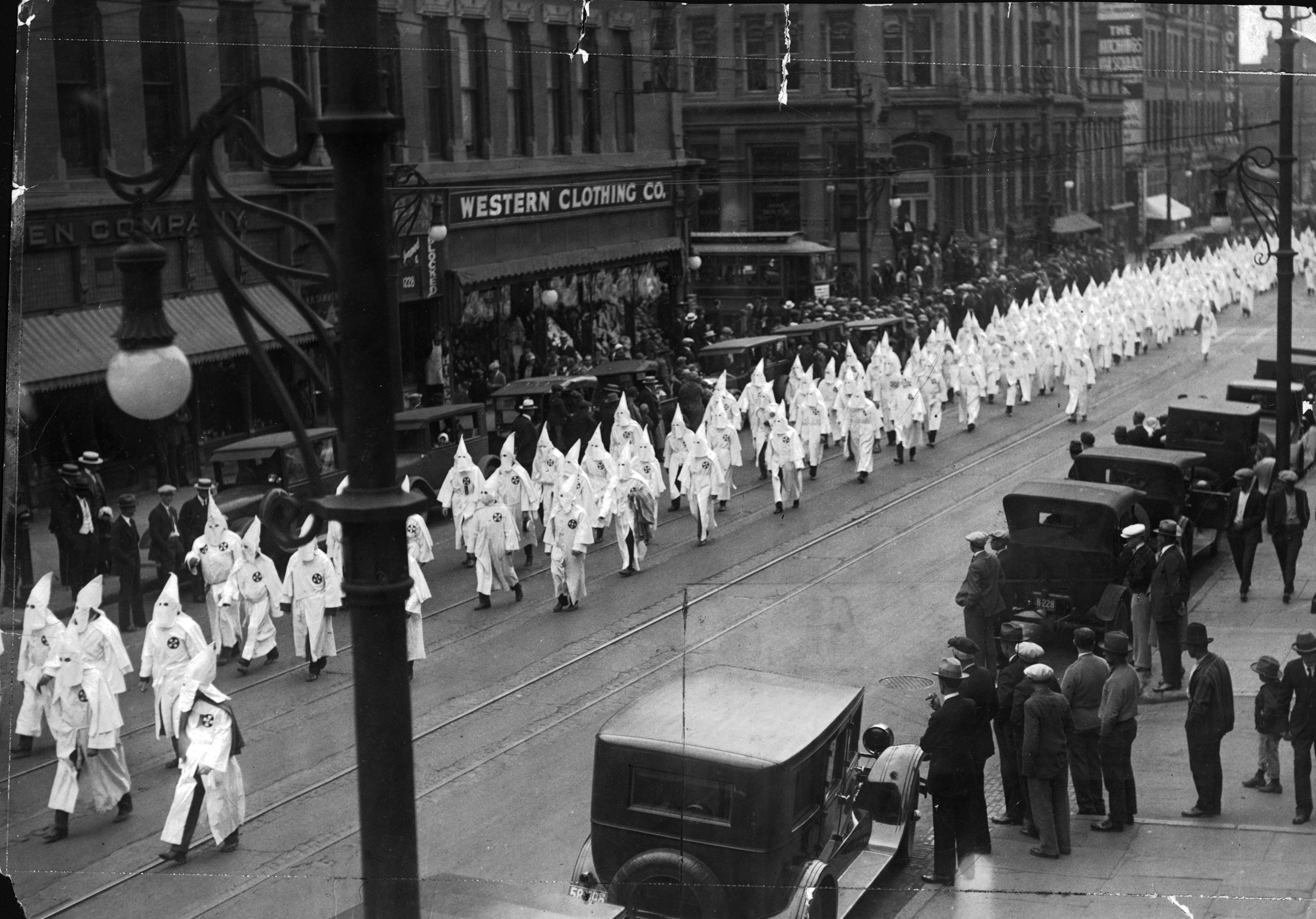
Members of the Ku Klux Klan parading in downtown Denver in their regalia on May 31, 1926. At the time, many city and state officials were either firmly in the pocket of the Klan or members themselves.
This happened under the administration of five-term Denver Mayor Benjamin Stapleton, who was first elected in 1923. It was an open secret that Stapleton was a member of the Klan, and earlier in 1913, when he was a Denver police-court judge, he presided over another miscegenation case.
A white woman, Nora Harrington, had married a Black man named Frank Frazier. Harrington protested to the courts that she was one-eighth Black, and even offered to prove it (admittedly using a blood test, which was more or less quack medicine at the time). Then-judge Stapleton declined, saying that the fact she “would suffer the ignominy” of being labelled a “negro woman” was, itself, “substantial proof” that she was one.
While the Klan was largely discredited and ousted from state-level government as the 1930s wore on, Stapleton nonetheless won reelection as Denver’s mayor again and again. He was still mayor when city police arrested the Jacksons for the third time in 1941.
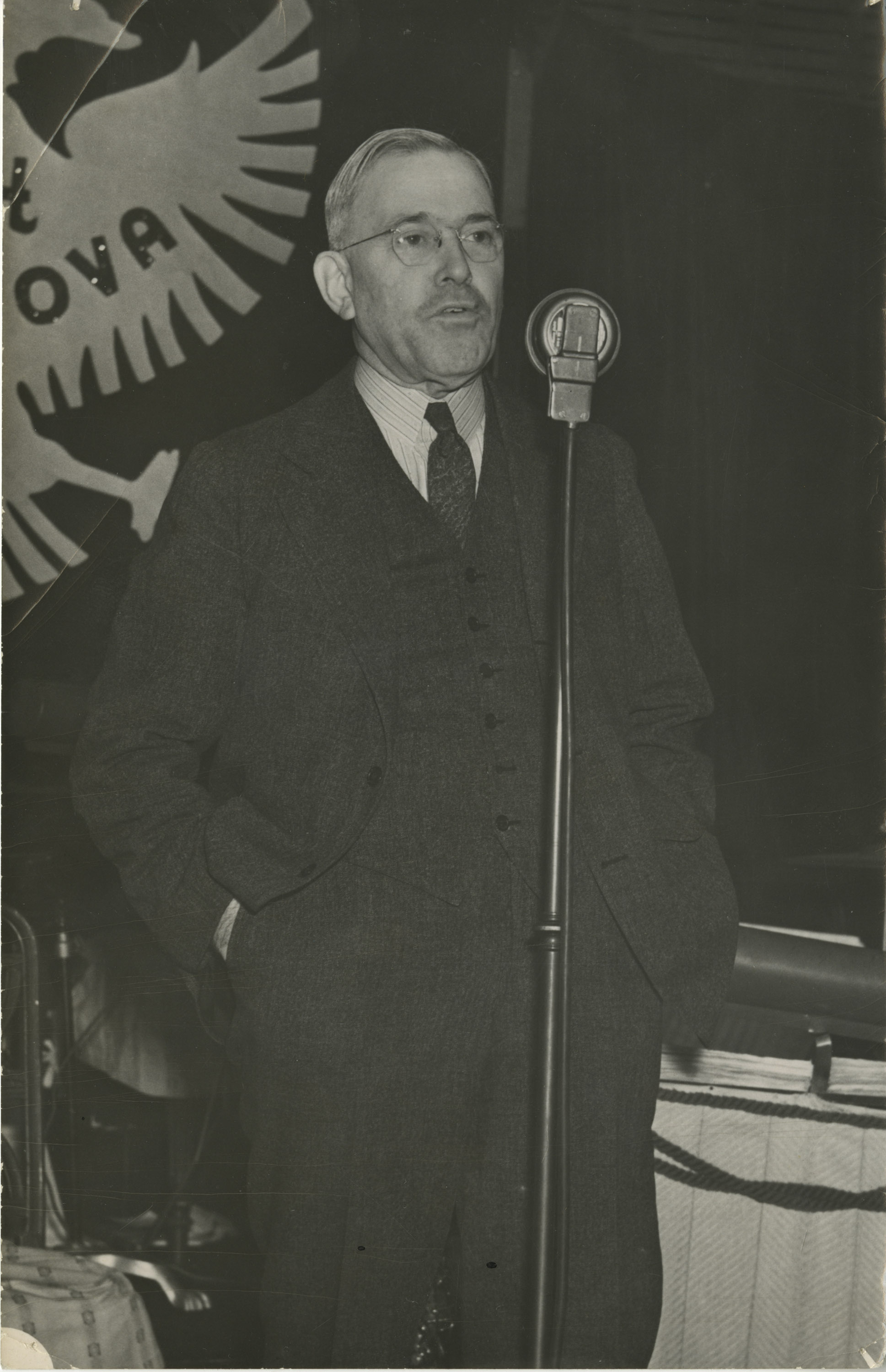
Denver Mayor Benjamin F. Stapleton in 1939. His KKK membership was an open secret, but Denver's citizens continued re-electing Stapleton, who held the office from 1923 to 1947 with only a one-term interruption.
When the Jacksons’ case came before the Colorado Supreme Court in 1942, it hinged largely on a single argument: that Colorado’s anti-miscegenation law, the basis for their vagrancy convictions, was unconstitutional. Their counsel based this on the Equal Protection Clause in the US Constitution’s Fourteenth Amendment—“Nor shall any state [...] deny to any person within its jurisdiction the equal protection of the law.”
According to the defense, Colorado’s statute violated this clause because it discriminated against Black Coloradans, and that it was, furthermore, ambiguous and “limited in its operation to but a portion of the [state].”
Unfortunately, in a five-two split decision, the court disagreed. The lead opinion, written by Justice Haslett Burke, found that the law was “impregnable to the attack here made.” Justice Burke stated bluntly that there was no question of discrimination in the Colorado law, because the statute applied “both to white and black.” Because the lower court had fined both Mr. and Mrs. Jackson there had been no discrimination, according to Burke and his fellow justices.
As for the argument that a law of this nature could not fairly be applied only in some parts of the state, the court seemingly didn’t care to think about it too hard:
We know no custom of [Mexico] that contravenes the [anti-miscegenation law]... Again, there is no evidence that the city of Denver, wherein the alleged common-law marriage was contracted and consummated, lies within the excepted territory.
Basically, because the judges apparently weren’t familiar with the treaty or with Mexican legal precedent, and because Denver was not, nor ever had been, south of the Arkansas River, they decided it was all a moot point. And so, Colorado’s discriminatory anti-miscegenation law stayed on the books for another seventeen years.
However, Justice Otto Bock wrote the dissenting opinion, disagreeing with just about every point that Burke made. Bock argued that Denver’s vagrancy law was ridiculous and inconsistent with common law; that two people, regardless of race, living in a common-law marriage could not be committing immorality; and that “it seems, therefore, that we have a geographical immorality within the state, applicable to Denver but not to some other portions of Colorado.” He went on to conclude:
Counsel for the Jacksons challenge the constitutionality [of Colorado law] on grounds which, in my opinion, are of a serious nature. [...] The judgment should be reversed and the case remanded, with directions to dismiss the complaint and discharge the defendants.
But despite Bock’s damning rhetoric, the dissent of two judges didn’t amount to much. The court had ruled against the Jacksons, and they were forced to pay the fine and accept that, in the eyes of Colorado, not only were they no longer married—they never had been.
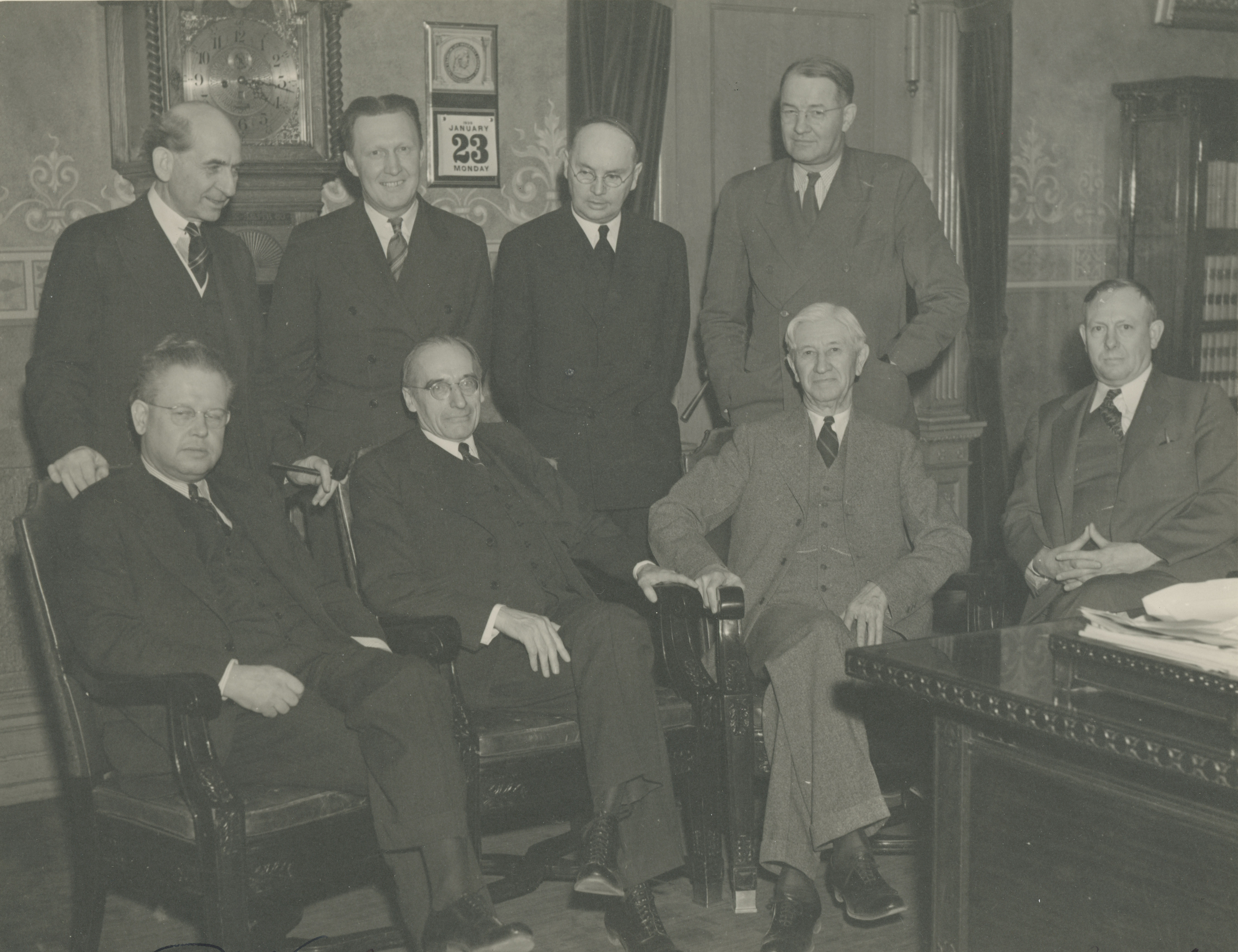
Governor Ralph Carr with the justices of the Colorado Supreme Court in 1939. Otto Bock is third from the left in the back row; Haslett Burke is at the far left in the back row.
What happened to the Jacksons was unjust, from beginning to end.
For three years they were harassed repeatedly by the police. They endured violations of their most basic human rights, including their right to privacy and their right to marry. And when the time came for those rights to be defended, the Colorado Supreme Court made the ignoble decision to sweep their arguments under the rug and accept the consequences of two discriminatory laws.
Today Americans tend to equate Civil Rights cases with the Deep South. It’s easy, as Coloradans, to forget—or not want to recall—our state’s own sordid history of discrimination. But the truth is that this treatment the Jacksons endured was not unusual. Not in Denver, not in Colorado, not anywhere in the country. Not too long ago—within some Coloradans’ living memory, in fact—discrimination was not an unspoken rule. It carried the weight of law.
It wasn’t until 1948 that the tide began to turn against anti-miscegenation laws in the US. That year, long after other countries such as Mexico had enshrined equal rights regardless of race, the California Supreme Court overturned their state’s own discriminatory law. It ruled in Perez v. Sharp, on an extremely similar basis to the argument made by the Jacksons’ lawyers, that California’s statute violated the Fourteenth Amendment. This made California the first state in more than fifty years to overturn such a law, either in the courts or the legislature.
Perez v. Sharp sent ripples across the country. Over the next two decades, fourteen states followed California’s lead. Colorado was among them.
In 1957, the Colorado State Legislature quietly struck the anti-miscegenation clause from marriage law. At a time when race relations and the Civil Rights Movement was a hot-button issue nationwide, this was a surprisingly understated occurrence. No major newspapers in the state reported on it, even as they ran front-page articles on Brown v. Board of Education.
This change in the law came sixteen years too late to help the Jacksons, but it did finally overturn one of the most unjust, and most unusual, laws in Colorado history.
Unfortunately, we don’t know what exactly happened to the Jacksons after their trial. Like the 1957 legislation change, Jackson v. Denver didn’t garner much media attention. The Jacksons were never famous, and like countless other victims of state-enforced discrimination they faded into history. And with their extremely common names and lack of details, trying to track their lives through census records is difficult. But they left a lasting legal legacy in the United States, one which endures to this day and crops up in strange ways.
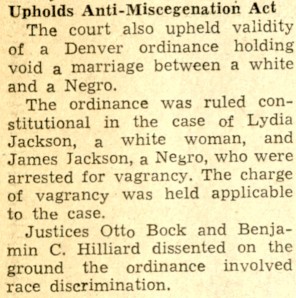
This short article from the Rocky Mountain News was the only time the media really reported on the Jacksons’ case. Colorado’s discriminatory laws, and how they were enforced, were not considered newsworthy in Denver at the time.
Since the Colorado Supreme Court ruled against them in 1941, two major cases have cited Jackson v. Denver as precedent.
The first, in 1955, was the also unusual case of Naim v. Naim in the Supreme Court of Virginia. In that case, a Chinese American man had married a white woman (unlawfully, under Virginia state law), but after their divorce she sued him for alimony. He refused to pay, on the grounds that as their marriage was not legal, it had legally never happened. The court agreed, citing Jackson v. Denver, and in the spirit of what was characterized as “preserving racial integrity,” Mr. Naim was not required to pay anything to his ex-wife.
The second was another divorce case, this one once again right here in Colorado. In 2021, a same-sex couple was locked in a legal battle over property. One of the two men argued that because their marriage was performed in 2003, more than a decade before same-sex marriage was recognized in Colorado, they had, in fact, never been married—much as the court had declared the Jacksons were never married, eighty years earlier.
This time, the Colorado Supreme Court upheld the marriage. The lead opinion argued that, despite the precedent set by the case against the Jacksons, the later United States Supreme Court case of Obergefell v. Hodges retroactively overruled the ban on same-sex marriages.
This is the strange legacy of the Jacksons’ legal troubles. It feels simultaneously bizarre in hindsight that the monumental and disturbing case of Jackson v. Denver seemed to leave no impact on the public consciousness—but also that it would be cited as recently as 2021, in another controversial marriage termination case.
It’s probably for the best, however. It’s a reminder that this strange and awful story is not some product of the distant past. The horrible treatment of the Jacksons, and the unjust dissolution of their marriage, was not only all too real, but also all too recent. Millions of Americans still feel the legacies, not just of this case, but also of hundreds more.
The Jackson family’s fate, as much as any of the far-more-palatable incidents in our shared history, is part of Colorado’s inheritance. It’s up to us to decide what to do with that knowledge.
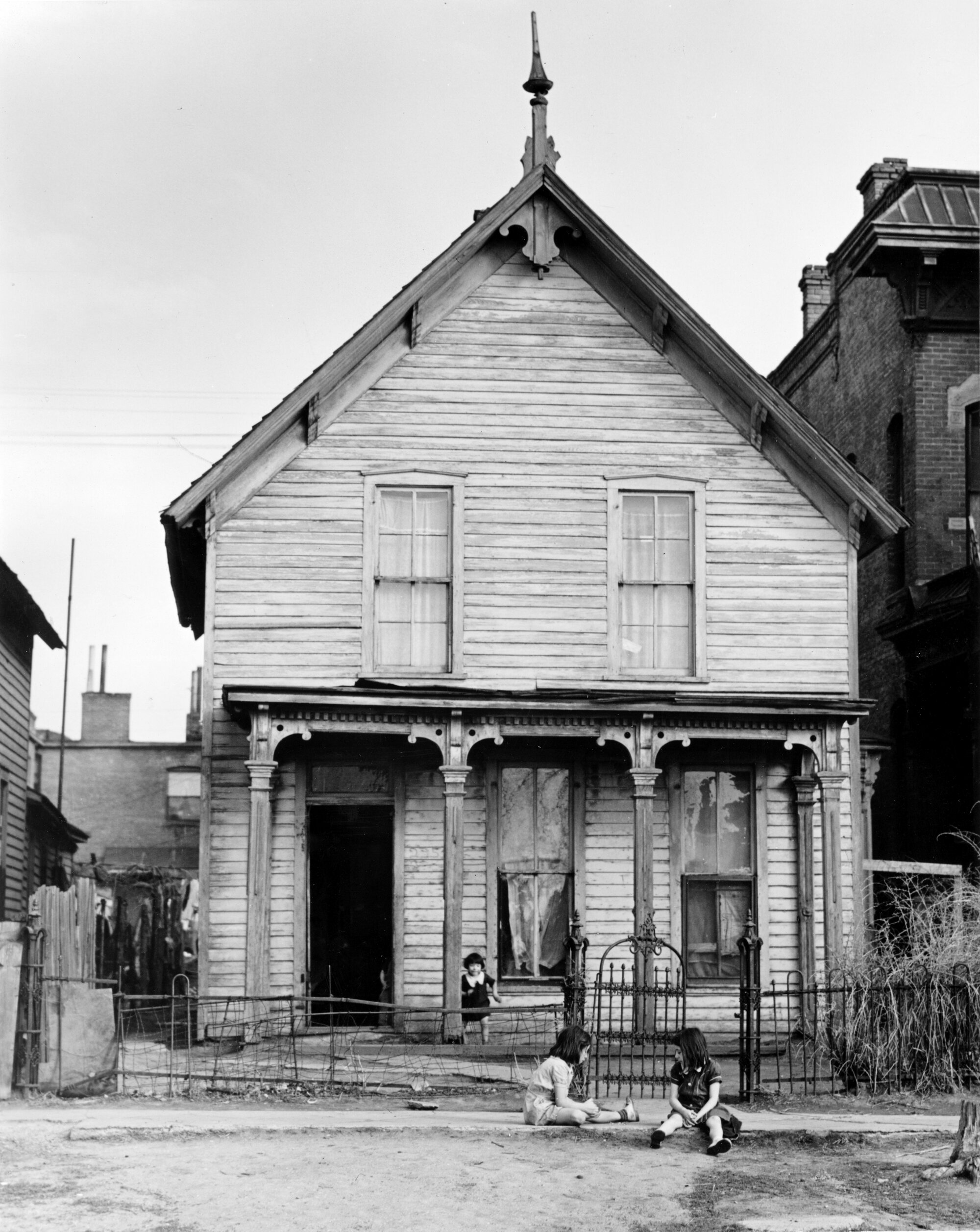
Young girls playing in front of a clapboard house in Five Points during the 1930s.
Defense Attorneys in Jackson v. Denver
Sidebar by Jim England
The two defendants prosecuted in 1941 for violating Denver’s miscegenation statute were represented at trial and in appeals by two prominent Denver attorneys.
The first, George G. Ross, was one of Colorado’s first Black attorneys. Born in 1879 to two formerly enslaved parents, Ross graduated from Colorado Springs’s Palmer High School before enrolling in Howard University’s Law School. He was admitted to the Colorado Bar, and began a legal practice in Denver, combining that with publishing and editing The Denver Star, one of Denver’s Black newspapers. He and his wife Gertie were active in Colorado’s first branch of the N.A.A.C.P., which Gertie had helped found. In addition to his more prosaic civil and criminal practice, Ross handled a number of civil-rights cases, including challenges to Denver’s segregation of school functions and its segregated bathhouses, and to the enforcement of racial restrictive covenants.
After Denver police arrested James and Lydia Jackson, Ross was joined in representing them by Denver attorney Samuel Menin. Menin was some twenty-seven years younger than Ross, white, and Jewish. He had graduated from Westminster (now Denver) Law School and his practice was primarily criminal defense, although it often had a strong civil-rights component, as when he represented accused communists in the 1930s. The year 1941 was a busy one for Menin, as he was already representing labor activists convicted of violating a Walsenburg parade ordinance and also challenging three Latino brothers’ expulsions from a Fremont County school for declining to participate in flag salutes.
For a fuller account of Ross’s life and career, see Martinez, “Outstanding Lawyers in Colorado History: George C. Ross (1879-1864),” 44 Colorado Lawyer 55 (July 2015).