
 Membership
 Donate
 Shop
Shop





















Obliterate and Forget
Season 1, Episode 4
Dr. Holly Norton offers us a look at Colorado's federal Indian Boarding Schools and their traumatic legacy.
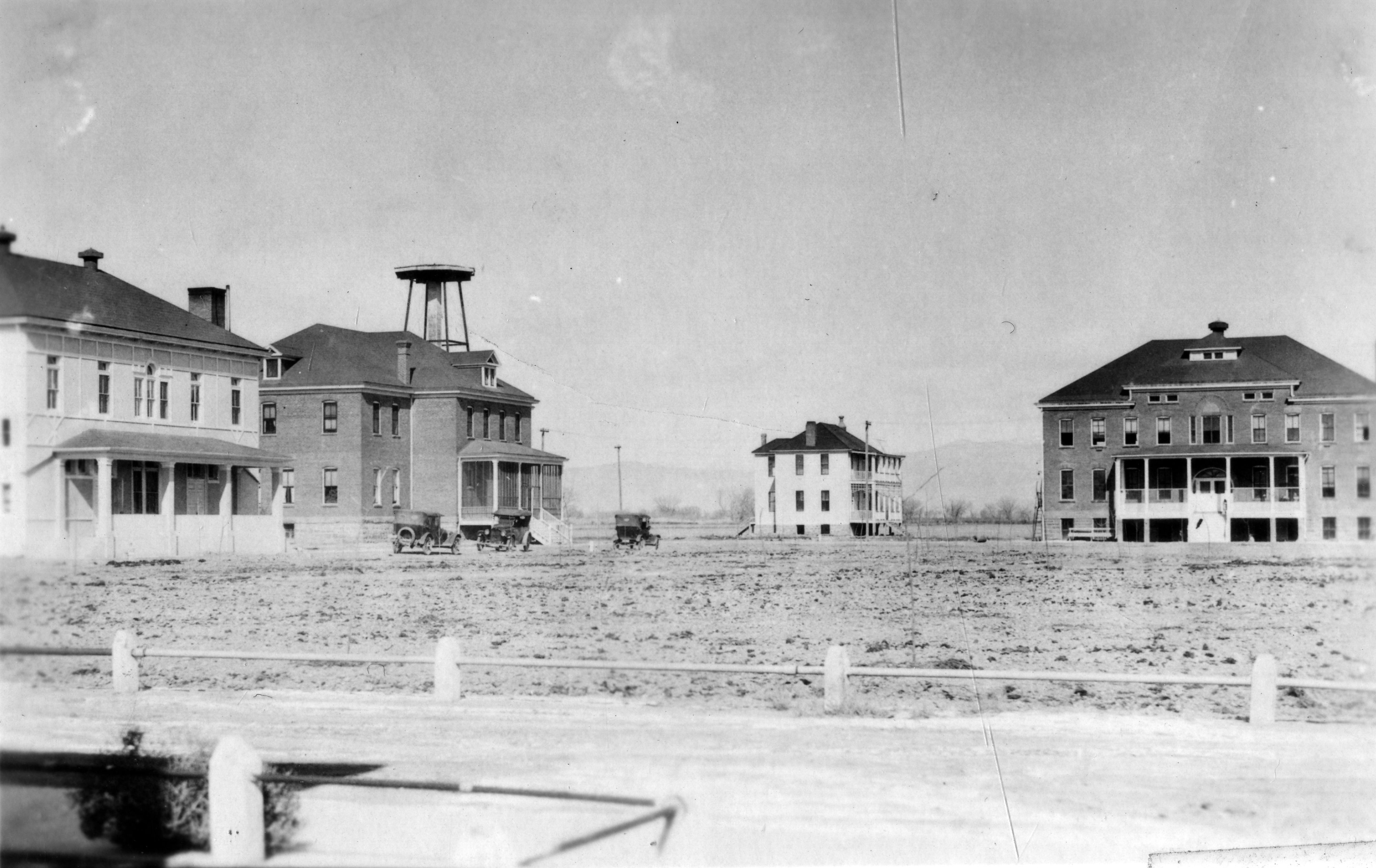
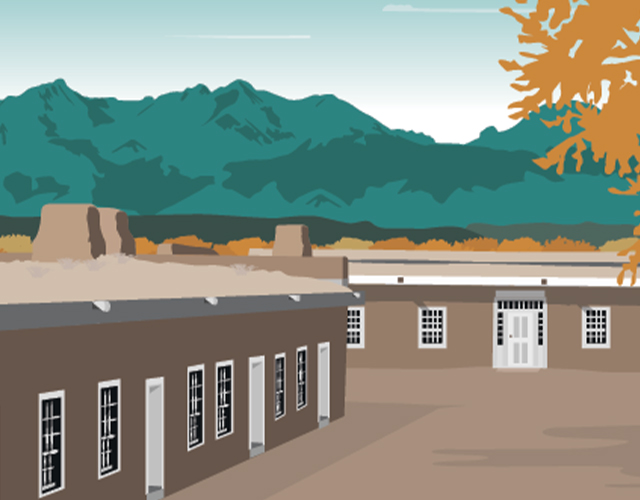
The Grand Junction Indian Boarding School, date unknown. Most of the buildings shown here were built with student labor.
Transcript
[Download]
Sam Bock [00:00:05] Welcome to the Colorado Magazine podcast from History Colorado. I'm Sam Bock, managing editor of the Colorado magazine, and I'm excited to bring you audio versions of some of our very favorite articles. On this episode, Dr. Holly Norton offers us a look at Colorado's federal Indian Boarding Schools and their traumatic legacy.
Holly Norton [00:00:30] I'm Dr. Holly Norton, the Colorado State Archeologist. In 2023, History Colorado released a report requested by the state legislature on the impact of boarding schools on Colorado's indigenous people. This article is one piece of that ongoing study.
Holly Norton [00:00:50] Obliterate and Forget, A Brief History of Federal Indian Boarding Schools in Colorado by Dr.Holly Norton and Glenys Echavarri. Our collective history is punctuated by tragedies, and while these tragedies need to be faced head on, the following discussion may be upsetting for some listeners. For many Americans, the announcement in the summer of 2022 that the graves of 215 children were found in Kamloops, Canada was the first time they had heard of residential schools for Indigenous children. Or that there were atrocities visited on the students who attended them. Since then, more than 1,000 graves of First Nations children have been located at other former residential schools in Canada. Public discourse around this long-ignored history is growing, and the U.S. Boarding schools that provided a blueprint for Canadian residential schools are facing a much-needed reckoning as well. Investigations into potential burial sites at boarding schools have taken place at several former Indian schools and no doubt will be given greater scrutiny. As tribes, survivors, and our larger community grapple with the horror of what students experienced in these schools, there are also many questions about the history of these institutions, and how they connect to larger political and social issues. Facing Indigenous peoples. The federal boarding school program was born out of President Ulysses S. Grant's Indian Peace Policy, which sought to create a permanent peace with American Indian tribes through nonviolent means, even while the Indian wars raged in the American West. Grant argued that limiting Native people to reservations and assimilating them to white culture. Was the only way to bring peace as the nation continued westward expansion. The earliest schools were founded by different Christian denominations, which established both schools and churches on reservations in an effort to abolish traditional religious practices and assimilate Native children. Denver was the site of at least one school run by the Catholic Church in the mid-1890s, although little is known about that particular institution. Between 1819 and 1969, the Bureau of Indian Affairs, BIA, established over 408 boarding schools across the country. The first such school was the infamous Carlisle Indian Industrial School in Pennsylvania in 1879, started by Richard Henry Pratt, whose philosophy of kill the Indian, save the man came to dominate the boarding school ethos. The Carlisle School itself was converted from military barracks, and Pratt encouraged abusive practices to strip students of their identities and language, to obliterate and forget their tribal culture, in the words of the school newspaper, as well as corporal punishment to force white behaviors. By taking Native children, the BIA intended to weaken tribal communities and prevent resistance against federal policies. According to Ezra Hayt, the Commissioner of Indian Affairs, from 1843 to 1893, the children would be hostages for the good behavior of their people. Federal boarding schools were designed to separate children from their families and tribes, breaking familial bonds through which culture and values could be transmitted. School administrators cut students' hair, confiscated or destroyed their handmade traditional clothing and belongings. Punished them for speaking their languages and banned any type of practice or behavior relating to their culture. Carlisle became the model for subsequent schools across the country, including the Teller Institute in Grand Junction and the Fort Lewis Indian School in Hesperus, Colorado. A devotee of Pratt's philosophy, Senator Henry Moore Teller, sought to replicate Pratt's methods at the Teller Institute. Which housed approximately 200 students at any given time. Publicly, the goal was to teach native children skills that could be applied in the factories in the industrialized northeastern United States, or to teach subsistence agriculture to ease the transition to reservation life. Curriculum focused on vocational training, which in reality meant long hours of hard labor for the children. They were used as free sources of labor. For both the schools and local communities. For instance, students trained in farming were hired out to farm and ranch families surrounding the schools. The Teller Institute also had a rigorous carpentry program, and by the time the school closed in 1911, 11 of the 12 buildings had been built by student labor. By 1910, two additional day schools were established on the Southern Ute and Ute Mountain Ute reservations. While day schools allowed children to remain at home with their families, they used the same approach of assimilating Native children through education and corporal punishment. Whether boarding schools or day schools, the schools were chronically underfunded and understaffed. In addition to harsh disciplinary measures and unsafe working conditions, The children were subjected to poor living conditions and were regularly denied adequate food, clothing, bedding, or bathing in latrine facilities. Unsanitary conditions, coupled with malnutrition and hard labor, led to outbreaks of measles, typhoid, and other diseases. Boarding school survivors have also recounted many instances of physical and sexual abuse. By educators and religious leaders. It can be difficult to know exactly how many students passed away at the boarding schools. There were a high number of deaths in the early years from diseases such as tuberculosis, and in some places, as high as one in 10 students may have died. Subsequent records around deaths and disappearances are poor or misleading, as sick children were often sent home to die. Children who escaped and died of exposure to the elements, or who died while laboring under the outing program were similarly excluded from death records. As an example, the Mount Pleasant Indian School in Michigan documented the deaths of five students throughout its 40-year existence. But tribal research in 2010 confirmed that at least 227 children had died there. By 1926, there were more than 60,000 Native students between the ages of six and 20 and 367 boarding schools across the country, representing nearly 83% of Native children of schooling age. The 1928 Merriam Report offered a scathing indictment of the boarding school system and the federal government's treatment of Native people more broadly. The report's authors did not mince words about the school, writing that the survey staff finds itself obliged to say frankly and unequivocally that the provisions for the care of the Indian children in boarding schools are grossly inadequate. The Merriam Report helped pave the way for the Indian Reorganization Act of 1934, which allowed more self-control by native tribes, including increased autonomy over local schools and curricula. By the 1960s, tribes gained more control over schools and conditions substantially improved. Some former boarding schools, like Fort Lewis College, remain educational institutions, which today focus on providing higher education opportunities for Native students. Others, like the Phoenix Indian School in Arizona, are now sites of remembrance. The legacy of the federal boarding schools is complicated and dark. These programs of assimilation were a continuation of the attempted genocide the United States government perpetrated against numerous tribes and indigenous people at various times over centuries. It was just one facet of a generational campaign aimed at extinguishing cultures and young after decades of war failed to solve the Indian problem. Many students who survived the schools were left with lifelong physical and emotional scars, many of which linger on in the form of generational trauma. Many of the students who died passed away while separated from their families and those who loved them without even enough consideration from school authorities to return their bodies. Forgetting these students and losing their graves was yet another in a long line of programs meant to erase Native people. Confronting the truth of what happened is just the first necessary step in acknowledging the shameful history and supporting healing in tribal communities.
Sam Bock [00:10:55] Thanks for listening to the Colorado Magazine podcast from History Colorado. To read more articles, subscribe, or see some of the photos from these articles, visit us online at HistoryColorado.org/publications.