
 Membership
 Donate
 Shop
Shop




















That's Why They Saved the Bricks
Season 1, Episode 1
History Colorado Curator Jeremy Morton walks us through his childhood mall memories, and the history of Lakewood's now-demolished Villa Italia Mall.
Transcript
[Download]
Sam Bock [00:00:04] Welcome to the Colorado Magazine podcast from History Colorado. I'm Sam Bock, managing editor of the Colorado magazine, and I'm excited to bring you audio versions of some of our very favorite articles. On this episode, Jeremy Morton brings you a look back at his childhood mall memories.
Jeremy Morton [00:00:29] My name's Jeremy Morton. I'm an exhibition developer and historian at History Colorado. And a while back, I decided to write an article about my childhood mall, a place called Villa Italia in Lakewood, Colorado. When I was a kid, my brother and I, we'd walk about two miles to Villa Italia, almost every day in the summertime. And we usually didn't have any money, so we would just sort of wander around from store to store. When we did have money, we'd go to Pocket Change Arcade and try to become the masters of the Mortal Kombat machine. And when I look back at my childhood and when I think about my relationship with my brother, I realized it's kind of synonymous with Villa Italia. You know, you get a sort of rose tint of nostalgia when you think about childhood. And that makes me think so fondly of Villa Italia, I love that place and I love my childhood. So I thought, I wanna talk about this. I wanna tie in some of those personal memories to the history of Villa Italia. And that's what this article's all about.
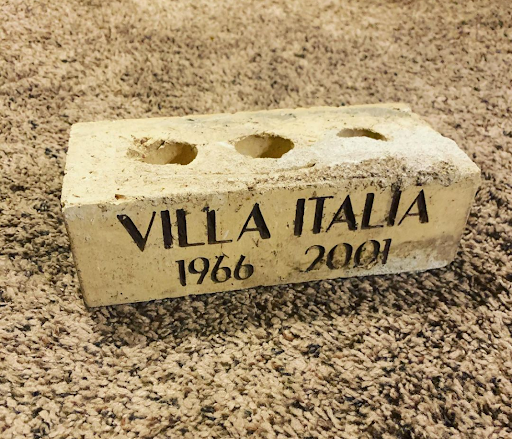
Jeremy Morton [00:01:38] That's Why They Saved the Bricks: A History of Villa Italia Mall. It was a good thing there were free napkins at the food court. That was the only way my brother Josh and I were going to become Mortal Kombat legends. There were too many masters of the Kombat craft, too many tricks, too many special moves we didn't know. We couldn't keep pouring quarters into the machine only to mash the buttons. There was no glory in that. No flawless victory. No pocket change arcade street cred. Our only hope was to find the cheat codes in the back of Walden books. There, revealed in the pages of a Mortal Kombat strategy guide, we could find all the characters' special moves, learn how to make Scorpion shoot out his claw, or make Raiden electrocute the competition. And we might even be able to memorize a fatality. Since we were perpetually broke, we had to borrow a pen from the woman at Miss Field's Cookies, snag some napkins from the nearby table, then sneak past the teenage-yet-hawk-eyed staff at the front of the bookstore. Then, once hidden in the back, we could write down the necessary information. Back, back, low punch. Then, voila! Get over here! Villa Italia Mall in the 1990s was a special place to be. It's where Josh and I grew up. We were mall rats. Latchkey kids with no keys, so we'd head to Villa Italia. Sure, it felt like a 10-mile walk, but once we were there, we were home. This was our domain. We stole coins out of the fountain to play more arcade games, and when only pennies remained, we went to KB Toys to play the newest Super Nintendo games for free. We explored Spencer Gifts until the employees told us we shouldn't be in that part of the store. Then we'd ride down the escalator, precariously perched on its banister. Just so we could catch the glass elevator back to the second floor. Our eyes were always peeled for any sort of free giveaway, any raffle, or survey company that would pay us just for answering questions. Maybe if we saved enough money, we could buy a pair of those new Reebok pumps at Foot Action. Little did we know, we were at the tail end of an epic retail run for Lakewood's favorite economic epicenter. We were the last of the mall rats. It was the end of the era of the American Mega Mall, and it was a vital part of how so many of us grew up. Memories about the way we were. Josh and I weren't the only ones to have our formative years shaped by our local mall. During the latter half of the 20th century, shopping malls in Colorado and across the country played a significant role in shaping personal identity. Strategically situated in burgeoning suburban areas, malls weren't merely commercial spaces. They served as cultural and social hubs. They were our central gathering places. They helped us define ourselves as individuals and communities. Malls weren't just about transactions. They were platforms for self-expression where people could explore and showcase their lifestyle choices and their tastes in fashion and entertainment. The communal nature of malls fostered meaningful interactions and they became integral to the social fabric of American cities. When we reminisce about those Colorado malls from back in the day, there's a palpable sense of nostalgia. It doesn't matter whether it was Cinderella City, Westminster Mall, Buckingham Square, or so many others I could list. The exact mall is largely irrelevant. The important thing is that those malls were where we forged friendships, where we had our first dates, and where we shared countless slices of pizza. There's a feeling of sentimental wistfulness, not for the shopping. But the experience, the shared moments, the rose-tinted view we sometimes get when thinking of the past. For Josh and me, Villa Italia wasn't just a place to shop. We didn't have any money anyway. It was the backdrop to an era of our lives. Sure, we've got the convenience of online shopping now, but it can't replace the tangible sensory experience of being a mall rat. The memories made at Villa Italia linger in our minds like the scent of a freshly baked batch of Miss Field's cookies. The Extravagant Eris Villa Italia would have never existed if the suburb of Lakewood hadn't grown to surround an Eris's massive mansion. Sensational stories and clickbait-level headlines in Fred Bonfey's Denver Post earned him a fortune by the early 1900s. When he passed, his daughter May Bonfils Stanton didn't get quite as much of the money as she thought she deserved, a penance for not marrying a Catholic as her father desired. But after some court battles, she did get enough to buy a 700-acre estate and build a luxurious home modeled after Marie Antoinette's Petite Trianon. She named it Belmar. Her property was as lavish as the name suggested. As she emerged from a chair once sat in by Queen Victoria, She'd walk past her piano previously tickled by Frederick Chopin and glance over the peacocks roaming her property. In the evenings, she'd throw extravagant parties in order to show off her expensive taste for antiquities and jewels. At one party, she bedecked her beloved poodle with the idol's eye, a 70.21 carat blue diamond surrounded by 35 carats of smaller diamonds. Watching the proud pooch scamper around with a necklace once owned by Persian princes and Ottoman sultans, she instructed the servants, don't let the dog out. When she and her poodle weren't taking a ride in her Rolls Royce, Bonfils Stanton contemplated how her estate would be used when she was gone and eventually began negotiating to turn the land she owned east of Wadsworth into a retail center. Those negotiations were ultimately finalized by her husband, Ed Stanton. After May Bonfils Stanton died in 1962. The widowed Ed Stanton decided to donate the mansion to the Archdiocese of Denver, but they found it too hard to maintain. Belmar Mansion, the most palatial building ever constructed in the Denver metropolitan area, was eventually sold, demolished, and turned into a generic office park. The Idol's Eye was auctioned off, bought by a Chicago jeweler for $375,000. And eventually found its way into the Smithsonian. Much of Bonfils' estate west of Wadsworth was donated to the city of Lakewood, and the land became the governmental center of Lake wood, featuring a public library and the Heritage Lakewood Center. Most of the land east of Wodsworth was sold or leased for retail use, paving the way for Villa Italia Shopping Center. So there you have it. If it weren't for an extravagant heiress and her resentful, strict Catholic parents, We wouldn't have a story about a blinged out poodle, and my brother and I wouldn't have had a retail haven. As a historian, it pains me to say that in the 90s, I wasn't concerned about the area west of Wadsworth. I wouldn t truly discover Heritage Lakewood until I was researching this article and found a comprehensive collection of tear sheet scrapbooks made by the former Villa Italia marketing manager. No, in the nineties, I was more concerned with Orange Julius. Checking my pockets to see if I had an extra dollar to add a raw egg to my smoothie. I mean, Rocky drank raw eggs, and he beat Apollo Creed. So it was absolutely essential for us to find that extra dollar. Maybe we could find some quarters in the fountains and use them for our nutrition this time instead of mashing buttons in the arcade. The Orange Julius Stand was there from the beginning. It was one of the few stores that never changed locations. Good old Orange Julius. Right at the main entrance, a consistent capitalist canteen. The mall magnate. That Orange Julius couldn't be built until Ed Stanton finished negotiating with an innovative mall magnates named Geri Von Frellick. Born in a log cabin, Von Frellick was an Oklahoma farm boy who had already set the merchandising world on its ear by building one of the first air-conditioned, enclosed shopping malls in the United States. He called it the Lakeside Center. And it opened in 1956. Yes, that lakeside, home to Denver's most famous or infamous amusement park, depending on who you're asking. It wouldn't be much of a stretch to say that Northwest Denver was the birthplace of the modern mall. When Von Frellick arrived in Denver in 1951, he had $2 in his pocket and was $643,000 in debt. In hopes of clearing that debt, he helped develop a new trend in merchandising. An indoor one-stop shop for all your retail needs. Von Frellick and other entrepreneurs of the time had a grand image of what the mall could be. It wasn't just a place for shopping. It was a social center, an essential hub for any community. After the success of the Lakeside Center, he conceived a new project and code named it Cinderella City. He wanted that mall to be built in Southwest Denver. But Cinderella City was delayed because no matter how much Von Frellick insisted the citizens wanted them all, they insisted they did not. Eventually Von Frellick convinced Inglewood City officials that no matter much the people of Ingle wood claimed they didn't want them all they really did. While Cinderella City is on hold the savvy developer collaborated with a lavish spin on a different project that eventually became Villa Italia Shopping Center. If May Bonfils Stanton was going to have anything to do with building a mall, it couldn't just be a boring stucco square. No, it would have to be classy. She already had a regal Parisian palace. Why not use Italy for inspiration this time around? With thoughts of the Galleria of Milan in their minds, Von Frellick and Bonfils-Stanton envisioned a place where people could socialize near Roman statuary before picking up their description at Walgreens. They could walk down terrazzo aisles towards the newest JCPenney fashion. Leading up to its opening in March of 1966, the marketing team ran an ad with a photo of the plot of land saying, this is how it looked before Villa, just a huge parcel of swampy, unattractive land, a place of tall grass where birds clung precariously to gnarled, weather-beaten trees, unlikely but a start. Von Frellick had built a concrete consumer oasis, replacing the unseemly wildlife refuge that existed prior to construction. Von Frellick bragged, this is a magnificently conceived commercial development with full attention to esthetics revolutionary in its field. Villa's original walls were laid by Lakewood Brick Company, a business that had been around since 1919, delivering bricks by horse and wagon when Denver's first roads were being built. I'd like to think they were chosen since their blonde brickwork evoked a Tuscan villa in the right sunlight, but it was probably because they were local and the company was newly equipped with a 300-foot tunnel kiln. Today, those bricks are some of the only surviving reminders of what local advertisers refer to as the Beautiful One. They were saved when the mall was demolished, engraved with Villa Italia 1966-2001, and distributed throughout the community. Old world charm, and new world lavishness. After two years of construction, Von Ferellich coordinated a three-day extravaganza to celebrate Villa Italia's opening. Each day, there was live music, a 20-minute firework show, and $100 bills given away every hour. A detective went to a safe to get the cash, and then, using confidential instructions of where to go in the mall, delivered the prize. Von Frellick and his architects delivered what they'd promised. Visitors sauntered amid old world charm and new world lavishness. They were greeted by tall columns topped with statues of early Roman figures. They entered through graceful arches evocative of a Tuscan villa made of antiqued brick, stucco and wrought iron. Below the Mediterranean tile roofing, crystal chandeliers from Europe lit a sunken area where a fountain bubbled. The ads the day before the opening were only slightly hyperbolic. The fountains of Rome, the palaces of Venice, the markets of Naples, elegantly rolled into one. Villa Italia. The Maldru people was shopping equal to one third of downtown Denver, but in case that wasn't enough, there was an indoor merry-go-round, a ceiling-high concrete tree, and performers and events planned to make every visit new and exciting. Denver's public television celebrity, Blinky the Clown, made multiple appearances. There were car and art shows, days of gold panning, trained monkeys, and acrobatic canines. The open areas were occupied by temporary mini golf courses and extravagant holiday displays. Once there was even a real live polar bear equipped with penguin sidekicks. It was enough to keep them all relevant and revenue high for about a decade. More important than visitors passing through to get the latest Woolworth fashion were the local people that created lasting memories in the mall. Many of these memories were collected by Heritage Lakewood. People recalled the smell of caramel corn as they entered the building, first jobs, following their mom's giant steps as they maneuvered through crowds, buying wedding dresses, getting busted for skateboarding in the parking lot, and what a game changer the food court was for family dinner. By the 90s, the food court was on the second floor, right across from Sam Goodie. Josh and I sought out free samples from sympathetic food court employees, and once our stomachs were satisfied, we set out to satiate our eardrums. Sam Goody was where we bought our first cassettes. Bush's Glycerin and Coolio's One, Two, Three, Four. We were cultured with nuanced, respectable musical taste. There were headphone stations where we could listen to full albums by artists like The Smashing Pumpkins, Tupac, and Beck without paying a dime. We were standing in a store that should have never existed. Not just Sam Goody. The entire second story was never part of Von Frellick's plan. The renovation. If you grew up in the 1970s, 80s, or 90s, odds are you had a favorite mall. For me, it's clearly Villa Italia. I'll go to my grave insisting there wasn't a better mall in the country, but if I'm objective, the truth is that most people could substitute a different mall with different stores and a different food court, and they could wax on with a similar level of fondness and nostalgia. Malls represent a part of us, our narrative, our identity, but there is one thing that makes Villa particularly unique among its contemporaries, and that's its renovation. As the 80s came roaring in. The malls of the 60s were struggling to keep up with a market oversaturated by similar places in nearby neighborhoods. It was tough for destinations like Villa Italia and Cinderella City, which eventually opened two years after Villa, to compete with malls like Southwest Plaza and South Glen Mall. Von Ferellick eventually decided to sell Villa to a real estate group, Cravco, that breathe new life into the beautiful one. Although the original design featured a small mezzanine on the second floor for the mall and security offices, there was no room to add more retail space. CraftCo decided to change that. Rather than tearing it all down and starting from scratch, which would have been simpler and cheaper, they decided to build a second floor on top of the existing structure. They blew the roof off the entire main corridor and all of the courts. All the while, they kept the mall open out of necessity, making Villa Italia not only one of the earliest malls, but apparently one of the first open-air shopping centers, if only for a short time. They added stores on the top of all the shops on the south side of the mall, which sounds like a simple thing until you take into account that the existing stores had to remain open the entire time. Since those stores weren't built to hold an entire floor, It was decided to build a truss that spanned the roof, which was supported only by the columns at the front and back of the building. They basically built a bridge across the roof of the old stores, which supported the entire second floor of the mall. As a result of being built on a bridge, that side of the Mall was now three feet higher than everything else, so visitors would find small random stairs and ramps that it seemed that the new stores were at the same height. As everything else. Not much was done on the north side of the building's roof. But if you remember shopping at Villa in the 1980s or 90s, then you remember that there were stores on both sides of the second floor. The company cleverly converted the existing mall offices into small, thin shops and built similarly sized stores above the corridor to give somewhat of an illusion of a larger mall without having to build an entirely new roof back on that side. I remember as a kid seeing a store in one of those spaces that sold only flags. And even as a child, I recognized that selling only flags was a terrible business proposition. Now, it makes a little more sense. Not much more, but the store was tiny and leasing it must have been pretty cheap. I think it speaks to the love the people of Lakewood had for the mall. The renovators could have just torn the entire thing down and built something new. And most likely that would have been cheaper. But by that time, Villa Italia held a generation of memories and had made Lakewood more than just an average suburb. It was more than a place for people to shop. It really was, as Von Frellick had hoped, a central gathering space for the community. I would like to think that, had they proposed tearing it down, the developers would have been chased out of town with pitchforks. The result of the renovation was a modernized mall fit for the 80s. There were sharp angles, more fountains, palm trees, and neon. Lots of neon. Nearly everything was changed except the location of the stores, some of the original brickwork, and, peculiarly, one small section at the northwest side of the building that remained essentially untouched. Maybe that was saved as an homage to the original concept, a fellow architect not wanting to completely delete the admirable work of their predecessor. With so much money spent adding a second floor to the building, there wasn't much left for the exterior. The expressive, Italian-inspired concept became essentially a large stucco rectangle, something May Bonfils Stanton would have never been associated with. The architects did what they could, given the budget, and kept large stuccco arches at the main entrances. But it was clear that the intensive renovation was geared primarily toward the shopping experience once visitors were already in the building. That's the building Josh and I remember. The glass elevator with a neon sign directing us to the food court. Thoughtful, kind food court employees that would spot us from a distance and put out a fresh plate of free samples as we approached. Patterned tile we could skip across on our way to make prank phone calls at the pay phones. Tropical foliage fed by skylights and a lingering smell of chlorine from all the fountains. And never even crossed our minds that the building had undergone an extensive renovation. Everything felt warm and inviting. Everything looked timeless and intentional. Belmar's return. Villa Italia's impressive renovation gave it a second win during the peak of mall culture. The Miami Vice esthetic fit right in with the 1980s zietgeist. And Villa's popularity only grew in the 90s, but the decline of malls came abruptly. Retail trends shifted. Consumers and retailers embraced open-air shopping centers and e-commerce. Malls lost one store, then another, then another, and when they lost one of their anchors, a big department store like Montgomery Ward or Joslyn's, that marked the beginning of the end. Without an anchor, entire sections of the mall went vacant. And the more the mall deteriorated, the harder it was to find retailers. At one point, Cinderella City had only two stores. Remaining open in a mall with 1.5 million square feet of retail space. The city of Lakewood saw what happened to Cinderella City and didn't want to wait for the same thing to happen to Villa Italia. In the late 1990s, city officials began looking for ways to redevelop the area. Rather than the mall being their city center, they planned to create a downtown essentially from scratch. It was decided they would tear down Villa Italia, the beautiful one. Shuttered its doors on July 15, 2001, and demolition began the following winter. On the land, the developers planned a mixed-use, residential and retail, open-air shopping center. Only one name made sense for Lakewood's new central business district. They called it Belmar. As the fingers of a backhoe sifted through what had once been the pride of a neighborhood, the people who'd grown up in Lakewood knew that something intangible had been lost. That's why they saved the bricks. Anyone who's gone back to their childhood playground only to find out that it's now a parking lot, they know the feeling. It's the feeling of loss. Not just a place, but of time. A concrete demonstration that things won't be as they once were. Recollections that can never be recreated are now just remembered. Experiences shared with loved ones are now dusty footnotes of a bygone era. It's a memory of when the mall was my third place, the spot where my brother and I could go with no money and no plan, and somehow spend hours that became days, a place and time that encapsulated our entire childhood. I know Villa Italia Mall was built as a place to entice people to empty their wallets, to waste money on things they didn't need, but it became so much more than that for two brothers growing up in Section 8 housing. It was a place we could go to become equals, a place where we could escape poverty. We'd dream about what we'd buy once we had the money. We'd listen to albums we couldn't afford, read books without leaving the store, try on clothes we had no intention of buying, and all along, we talked. We learned about each other and ourselves. We laid the foundation for what our relationship would be. Two brothers that each understood the other like nobody else can or ever will. Eventually, we got our own Villa bricks. We went back, and standing in front of the only building from Villa to survive demolition, we held up the bricks for a photo. All grown up on the outside, but still the same 90s mall rats on the inside.
Sam Bock [00:26:03] Thanks for listening to the Colorado Magazine podcast from History Colorado. To read more articles, subscribe, or see some of the photos from these articles, visit us online at HistoryColorado.org/publications.