
 Membership
 Donate
 Shop
Shop





















Major General Maurice Rose
The lasting legacy of a Colorado World War II hero.
We caught up with Marshall Fogel, co-author of the new trilogy detailing the life and service of the highest-ranking commander killed by enemy fire in the European Theater of World War II. The subject of the first book in the series, Major General Maurice Rose grew up Jewish in Denver, and attended East High School before enlisting in the military. Copies of the trilogy are available from the History Colorado Online Shop or in person at the History Colorado Center in Denver.
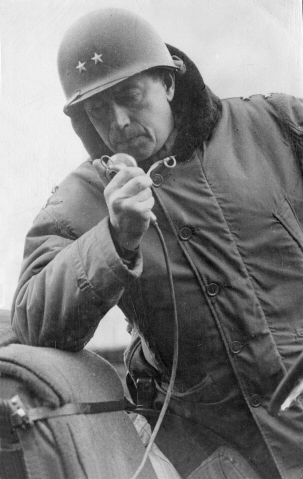
Rose giving orders into a radio in Cologne, Germany in March 1945, shortly before he was killed in action.
Give us a little more background, who was Maurice Rose?
Rose is best known for commanding the 3rd Armored Division during World War II. He attended East High, although we found out that he never finished school there. Records show he dropped out and ran away to join the army at age sixteen. He was certainly the highest-ranking Jewish man in the entire army, and he was very well liked and respected, so his shocking death was a real blow to the troops under his command.
These books represent an incredible amount of research. What got you so interested in General Rose’s story?
I was young—under the age of ten—and we'd go to the General Rose Hospital, and in the foyer was a beautiful case with Rose’s helmet with two bullet holes in it and it had a big portrait of General Rose on the wall in the foyer. I remember asking my father “Who is this guy?” I knew it was something to do with a Jewish hospital, but I didn't know anything about Rose and he said “Well, we don't talk about it.” He wouldn't talk about General Rose. All I knew is that he said “Well, we used to sit shiva for him.” Wow. But don't talk about it. So I sort of let it go, but over the years, I always wondered, who is this guy? And when I retired, I decided to find out.
It sounds like some people were really uncomfortable talking about him. Can you tell us more about why that might have been?
There was a rumor that Rose converted to Christianity to make sure his religion wouldn’t interfere with his promotions. Which obviously would be really damaging to his reputation with the hospital named for him and his legacy as a Jewish general. And nobody wanted to talk about the rumor. But it did make some sense since we know he would have faced real prejudice for being a Jew and may not have been promoted if he were outwardly observing his religion.
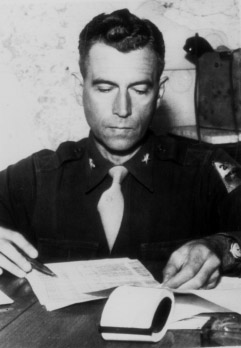
Rose, photographed working at a desk before his promotion to Major General.
Did he convert? What did your research turn up?
After a lot of searching, I found out that he didn’t have the J on his dog tags that would indicate he was Jewish. And then I learned he listed about six denominations of Christianity on his hospital records, which I think was kind of a code—nobody is going to have that many religions before the age of forty-five. But that’s all pretty circumstantial, I needed stronger evidence. The breakthrough came when I talked to a genealogist who turned up a letter from Rose to his parents during World War I. According to the letter, which he wrote to his parents after he was wounded in France, he broke out from a hospital to return to the front lines with his men. There he was about to lead a charge out of the trenches, and just before he leapt out, the letter says he yelled “Shema Yisrael,” or “Hear, O Israel”—one of the most important phrases in the Jewish religion. Which is something you only tell your parents about if you still consider yourself a Jew.
How is General Rose remembered today?
Of course there’s the monument in front of the Colorado State Capitol Building and the Rose Memorial Hospital in Denver. So he’s well known for his accomplishments and service—he was, after all, the first to negotiate the surrender of a German armored unit in World War II. But one thing I kept running across talking to soldiers was how good looking he was, the best looking guy you ever saw. He was a leader of men, the kind of guy that inspired people and had a real presence.
It’s unusual for such a high-ranking officer to be killed. How did that happen?
Rose was known for leading from the front, for wanting to be close to the action so he could see what was going on. In fact, the mockup of the memorial statue bears the words “follow me.” There were occasions where he would cross bridges with just his driver alone to show his troops it was safe to cross, and he always put his command post way too far in the front. It made his commander, “Lightning” Joe Collins, nervous. That’s why, on March 30, 1944, he was near the head of a column that was about to be surrounded. They suddenly found themselves cut off by a German tank, and that’s when its commander opened a hatch and shot the general at least fourteen times with at least two bullets striking him in the head. It was national news when he died, America has lost a great general.
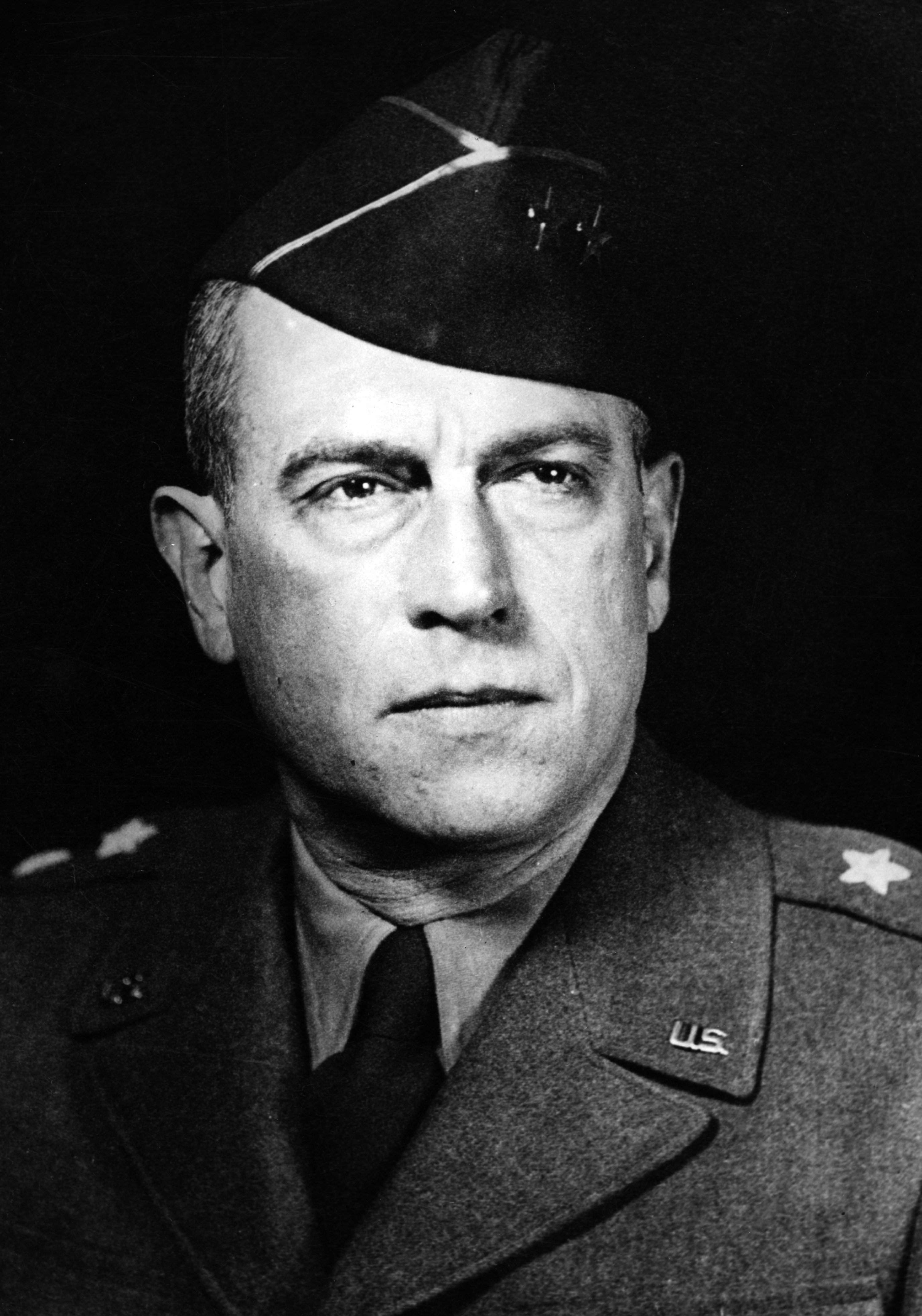
Major General Maurice Rose.
What happened after his death?
General Rose’s body was recovered the next day and he was buried in the Netherlands American Cemetery in the village of Margraten. The people there take care of the graves, and it’s an honor to be given responsibility for General Rose’s grave. The school there is named for him, that’s how well-regarded Rose (and American GIs in general) are in the Netherlands. After the war, some of Rose’s men gathered together some savings to start the hospital in his honor. Eisenhower came out twice to dedicate the hospital. The man is remembered not just for what he did, but for who he was.
The trilogy is mostly about General Rose, but you and co-author Jere Corlett also explore the story of another Colorado-born general, Jere’s relative, Charles H. Corlett. Tell us more about Corlett and that story.
Corlett grew up in Monte Vista and started at West Point at age nineteen where he got the nickname “Cowboy Pete” since he worked as a ranch hand until he enrolled and was good with the horses. He served in World War I and was instrumental in developing amphibious landing tactics in the Pacific during the early years of World War II. Then, in July 1944 when American and Allied forces found themselves stuck in Normandy, he and General Rose were instrumental in Operation Cobra, a successful attack on German defenses that changed the tide of the war in Western Europe. Not bad for two kids from Colorado!
You were also involved in the effort to put up the monument in Denver. What is your hope for that statue and for the trilogy?
Rose embodied four very important things: initiative, innovation, diplomacy, and leadership. I want people to see the statue and read the book and to know how important those qualities are in terms of success, not just in the military, but in life. As for the books, I think it’s good for everyone, maybe kids especially, to see this Jewish hero and to know that Jews weren’t just victims in the war. So I think the lesson to take away from Rose’s story is that the strength of this country comes from diversity, meritorious diversity, and the value of the respect you earn from the different people around you by working your way into leadership positions.