
 Membership
 Donate
 Shop
Shop
















Lucas Koski | Loveland Feed and Grain
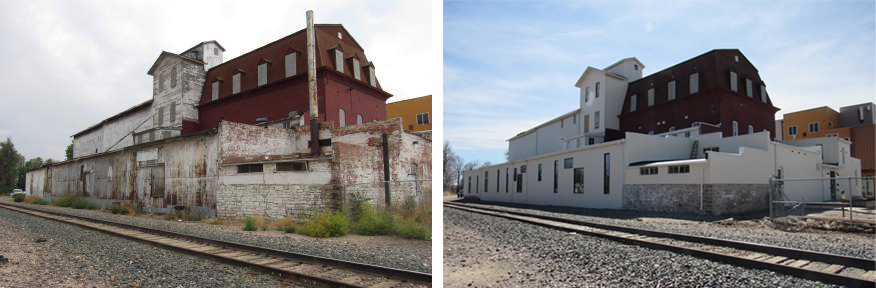
This week on reFRAMED: Preservation for a New Day, Colorado State Historic Preservation Officer, Dawn DiPrince, chats with Lucas Koski about the process of saving a community’s iconic structure while addressing the need for an arts and commercial space in Loveland. Learn more about how Lucas and his partners at the national nonprofit Artspace used state tax credits to help preserve a huge and iconic agricultural building that is now inspiring artists and entrepreneurs in the heart of Loveland. It’s adaptive reuse and preservation for a new day, brought to you by History Colorado.
Episode Transcript
Dawn DiPrince - HC: Lucas, can you introduce yourself and tell us about your amazing project up in Loveland?
Lucas: Thanks, Dawn.
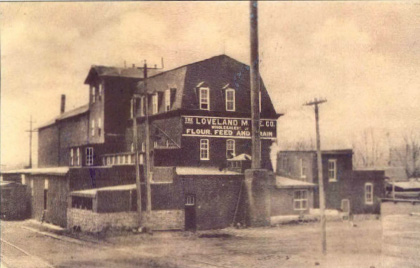
Lucas Kosky: Yeah, my name is Lucas Kosky. I am vice president of consulting at Artspace is a national nonprofit real estate developer focused on providing housing and space for artists and arts organizations. we're based in Minnesota, but we've had long roots in Colorado. starting back in 2010 in Loveland, where our mission, as defined by the community in Loveland, Colorado was to save the feed and grain. so our space got started with our work in Colorado by coming to Loveland and taking a look at that point 120 year old building and trying to figure out how to make sure that this amazing iconic kind of ad hoc structure that really had been a point of pride in the community for a long time but was no longer in operation as a feed and grain.
Lucas Kosky: could be saved for the creative community in Lovelin, Colorado. Artspace as a affordable housing developer and arts commercial space developer really tried to understand both what the community needed and what the building kind of spoke to in terms of its own voice. and it wasn't until about year 10 in our work in redeveloping the building that we found a path that made sense where we could not only save the historic feed and grain building…
Lucas Kosky: but also added to kind of the creative sector's ability to kind of enliven downtown LA.
Dawn DiPrince - HC: Yeah. Amazing.
Dawn DiPrince - HC: Part of what is interesting about what you're talking about is this idea seems to have started from the community's desire to save an iconic structure. and also to solve a current day need or challenge. But it seemed to begin with the iconic character of a building that needed a new purpose and…
Dawn DiPrince - HC: they weren't ready to let go of.
Lucas Kosky: Yeah, I think the funny thing about some buildings is that form really does follow function.
Lucas Kosky: And I Dawn't think there's anything more appropriate than a The whole purpose of a feeding grain elevator really is to move or elevate grains from one form of transportation to with some storage, with some mixing, but really it's a giant machine that is really just a big kind of vending machine for the agricultural sector. and so while it's has this kind of immense, beautiful volume and it's really picturesque from the outside, and there are some gathering spaces in it, when it comes to repurposing a building, like that for almost anything, it's not as easy as an old office space or a school or a warehouse, it's actually incredibly complex. which is a fun challenge. and so I think the community knew that this was an important building.
Lucas Kosky: It's right in smack downtown Lovelin. It was originally the source of power for all the lights on the streets in Lovelin back in the late 1800s I believe. and the creative community had used this as a point of emphasis that they not only were going to utilize this space to make sure that they were heard and they had an attractive following and kind of further enhance and amplify their creative artwork and using this building as a backdrop, but also that this building was a piece of Loveland's history and that piece of history couldn't be lost to time like so many other buildings do.
00:10:00
Lucas Kosky: across the country. and so when they said that they needed to save the feed and grain and that it needed to be a space for the arts, it was a pretty hefty challenge. and…
Lucas Kosky: I'm really happy that we found the partners along the way that could kind of meet that challenge head on to develop. But I think today is a really great addition to the wonderful creative CNO.
Dawn DiPrince - HC: I always love this idea of a feeding grain or…
Dawn DiPrince - HC: a silo almost making a rural skyline and a community just doesn't look the same once you take down a structure like that. it's not a skyscraper, But, these things, add to the form and character of a place. and they're important to keep around.
Dawn DiPrince - HC: You mentioned your partners that you needed, time to develop those right partnerships. What were some of those partnerships that made this possible?
Lucas Kosky: …
Lucas Kosky: I think first and foremost, it was the individual artists that made up the community. really too many to name and I wouldn't want to leave anybody out, but it was individual artists who banded together to put on art shows and to say hey, this is important to us. From that moment in time, I think local city council and city staff realized that there was a chance here. They reached out to Artspace to try to figure out how that could be Dawne. Felicia Harmon, who was a deep connection of ours and made sure this work was possible, was really instrumental in us understanding that History Colorado provided early stabilization funds foundations such as El Pomar and my goodness, going have to pause there.
Lucas Kosky: foundations such as Alpomar and Beter Foundation were instrumental in making sure that we had funds available to take care of this project in a way that made sense. but I think even more so, our partners at Colorado Creative Industries, who worked with us for a long time to not only make sure that we could think creatively about how to re redevelop this building, but worked tirelessly for lobbying efforts to make the community revitalization fund happen at the state level,…
Lucas Kosky: which really was kind of the keystone of which all the other funding sources were built upon.
Dawn DiPrince - HC: Yeah. …
Dawn DiPrince - HC: you said it took essentially 10 years for this vision to really actualize. what…
Dawn DiPrince - HC: what made it take 10 years? Was it mean funding was certainly a key piece of this, but was it getting that right mix of pieces and parts what took 10 years
Lucas Kosky: Yeah, sure.
Lucas Kosky: So, I think I like to tell the story a lot, not about projects in general. if we wanted to back in 2012 take a look at the feed and grain and say hey we're going to turn it into an event center the community I'm glad that they wanted to be an arts focused hub and I'm glad that people wanted to have a trace of the past in it but we needed to cash flow so let me take out historic tax credits and some state grants and some tiff funding and some other ways and some private investors I'm going to turn it into some type of wedding venue with a little bit of, commercial real estate on the side. I think that could have been Dawne. but that's not what the community wanted and that's not what we do. and so we didn't go down that path.
Lucas Kosky: and then in subsequent years when other opportunities presented themselves, including one that we were really close to pulling the trigger on, which was basically a small business incubator, we realized that some of the restraints and regulations and restrictions that the funding sources might put upon it. for instance, a limited, tenant length for any commercial tenants. that just didn't make sense with what we were hearing from the community and what we knew could really benefit the creative sector of Loveland. And then I think finally almost every scenario that we were familiar with in those 10 years until the Colorado Creative Industries helped get the community revitalization fund passed.
Lucas Kosky: it was very difficult to figure out a path of funding that made sense that it wasn't high-end housing but also was housing that made sense was sensible and quite honestly could drive a mortgage at all. And so the last iteration of this project in which we have about 5,000 square feet of I think s affordable commercial space but also nine units of kind of that missing middle of housing from 80% to 140% area median income. it wasn't really until that started to make sense as being a needed component of housing in Loveland, Colorado that we were able to say, "Hey, we could build oversized units for about nine families. charge rent for those nine spaces that would be less than if they were to have a studio space and a market rate apartment together."
00:15:00
Lucas Kosky: And that combination of utilizing the space in a way that was respectful to the architecture, was respectful to community wishes and also pencled when it comes to the cash flow of it all. really, in a weird way, it took us 10 years of trying out different puzzle pieces and making sure that if they fit, do we like the way the puzzle looked?
Lucas Kosky: And if we like the way it looked, did our partners who were helping us all those years, do they like the way it looked? and so it wasn't until this last iteration that it really kind of clicked together.
Dawn DiPrince - HC: Yeah. …
Dawn DiPrince - HC: you've got nine units that serve families. there's some aspect of this that serves the arts or creative industries. Can you talk about the mix of operations that exist within the structure?
Lucas Kosky: Yep. 100%. So we actually think of this project as part of a campus. when we came to Lovelin in 2010 2011 one of the things that we moved forward on was the actual creation and construction along with Lovelin housing authority of the art space lovelands next door. So it's 30 units of artist live work housing serving households between 30 and 60% area median income which is generally considered to be kind of like traditional affordable housing ranges.
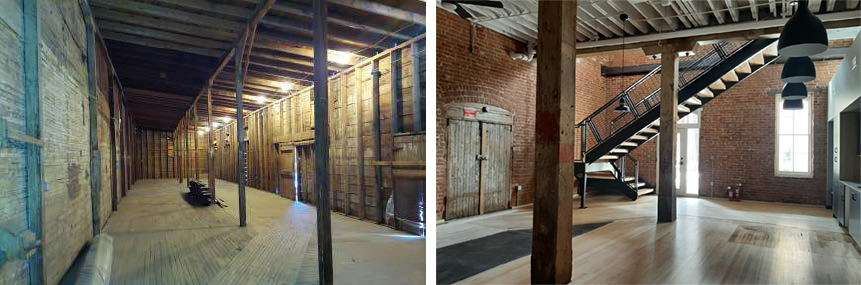
Lucas Kosky: and so when we advanced the feed and grain we knew that there already was 30 units of artist housing on site along with kind of a really nice attractive well-used gallery space and that if we were to supplement that on the campus. We wanted to try to expand the ranges of affordability and we were able to find a source that allow us to go up to kind of that missing middle component with oversized units. So those units are between 900 and almost 1,800 square f feet. So they're very large and very flexible and just frankly really beautiful. that allow a household to not only have a great iconic living space but also be able to do their work as an artist or as a creative inside their apartment. And then there's 5,000 square ft of commercial space for rent that's designed to go towards the creative sector as well. kind of broadly defined.
Lucas Kosky: But our goal is to have a balance of tenants that will have open studios that will have some foot traffic but not foot traffic dependent to kind of make it an active space and then the design of the building really is as kind of a circulator with the campus. so that there's a corridor down the middle, there's gallery space on all throughout the building, and that there's a public facing lobby that's really kind of a special space when you first enter the building that can be used for events, that can be used for performances, you can hang your own kind of solo show in. and so kind of thinking about that not as an individual building,…
Lucas Kosky: but as a place on the campus, it starts to feel more like a well-rounded kind of mini arts campus.
Dawn DiPrince - HC: Yeah. …
Dawn DiPrince - HC: when you're thinking about these projects, because you've Dawne several within just our state, but of course you've Dawne them across the country as well.
Dawn DiPrince - HC: Why are you interested in historic structures when you think about these kind of artwork live spaces?
Lucas Kosky: So, it's a great question and…
Lucas Kosky: any great question, there's an easy answer and there's a complex answer. And I hate easy answers, so I'll try to give you a middle of the road one. So, when Artspace first started back as a developer, I'll say I won't go all the way back. When we first started as a developer in the 80s, the IRS created two really key programs. The low-inccome housing tax credit program, which is what a lot of affordable housing comes from, and then the historic tax credit program, which I'm sure this audience will be familiar with. so when we decided that artists in downtown Minneapolis were getting priced out of their workspaces, we didn't know what to do, but we thought that maybe if we could build space as a nonprofit that they could work in that we would have some control over it.
00:20:00
Lucas Kosky: Of course, we didn't have any access to capital, but when those two programs were created, we realized that we could create affordable living space with additional square footage for work space. and that if you stacked the historic tax credit and the low-inccome housing tax credit together, you could get something like 90% of your capital stack all in one piece. and then you could raise the remainder of that the needs for that those funds through private philanthropy. so quite honestly the reason why we started as historic adaptive reuse developers was because there was funding available to do that work back in the late 80s nobody wanted these old buildings.
Lucas Kosky: So we get them for the proverbial dollar. and especially in the Midwest, some of these historic buildings were really well suited for adaptive reuse for residential spaces. So kind of picture 1900 brick building warehouses, really tall windows that were designed to use natural light to illuminate the entire floor plate. that's what we were doing. We were taking old sixstory warehouses, an old molasses factory and trying to just basically put in some bathrooms and some doors and let artists kind of run wild in the building. so we originally got into the adic rehabilitation kind of development sector because the funding was available.
Lucas Kosky: However, I think as any person working in the sector will tell you, you kind of quickly fall in love and you kind of go from being asked to kind of searching. and so whenever there's an opportunity to do any type of adaptive reuse, most people at Arts Space are really happy to do so because there's things that these old buildings can do and were built for that we Dawn't do in new construction anymore. not to mention that not from a dollars perspective, it always makes sense to save buildings, but from a community storytelling perspective, which is obviously really important. but also from a green energy perspective, not tearing down a building and reusing as much as possible is always going to be a greener path than trying to build something from scratch.
Lucas Kosky: so I didn't really answer your question, but the short answer is it was allowed us to build housing and workspace for artists. and then once we realized it was a really good fit in terms of the building stock that was available around the country, it was kind of the path to introducing ourselves into communities and allowing really cool buildings to be built. So, I will say that one of my favorite adaptive reuse projects besides the feed and grain that we've worked on the last few years is in downtown Trinidad.
Lucas Kosky: There's a whole city block I believe 13 units of artist live work housing on top of 20,000 square feet of city controlled commercial space. and that kind of opportunity on paper doesn't always make sense as delivering the most number of housing units for the greatest impact.
Lucas Kosky: But from a community impact perspective, it's so important that these iconic really important buildings Dawn't become dilapidated. And I can think of no better way than putting long-term sustainable affordable plans and infrastructure as a platform for artists to be on top of as a great way to make them vibrant and important in the community.
Dawn DiPrince - HC: I think it was Perfect answer.
Dawn DiPrince - HC: I mean, I love that you started with a practical money reason why you were interested in historic structures and then fell in love with the buildings. because, many of us come from being in love with the buildings and sometimes having a hard time coming up with those practical u money reasons why it's super smart to do it this way. so I appreciate that answer a lot.
Dawn DiPrince - HC: I'm curious, the data actually shows that renovating existing housing stock and existing buildings is cheaper per unit than it is to build new construction.
Dawn DiPrince - HC: That is what the data shows. is that real from the practical on the ground perspective?
Lucas Kosky: I can say that…
Lucas Kosky: if you give me data and Excel, we can make a lot of stories seem very true. so I Dawn't know the exact numbers you're referencing. I would say that most likely repositioning existing apartments or existing housing and doing that in a largely financial perspective where you're reassigning ownership and you may be doing a facelift on the project and you are basically turning into a revamped 70s apartment but in 2020. that is definitely cheaper than building new.
00:25:00
Lucas Kosky: I will say that conversion of a use type like a feeding grain into housing usually is going to be more expensive than constructing from new,…
Lucas Kosky: but also I think is money well spent.
Dawn DiPrince - HC: Yeah, the feed and…
Dawn DiPrince - HC: grain is a whole different level of an office to residential conversion.
Lucas Kosky: Yeah. Yeah,…
Lucas Kosky: that's definitely true.
Dawn DiPrince - HC: So…
Dawn DiPrince - HC: what are all the projects that you've worked on within the state of Colorado?
Lucas Kosky: So as I said we were first brought into Colorado to save the feed and grain. we then entered into partnership with the state as part of the pilot project for space to create was in Trinidad which is the 13 units of housing in the 20,000 square ft on Main Street plus an additional 28 units of workforce housing down the block. then our next project that has been completed is Ridgeway which is 30 units of live work housing in Ridgeway. We have a few other projects that are kind of bubbling and percolating, but nothing else has been completed to date. The other one that's in construction currently is in Colorado Springs. it's 51 units, new construction, kind of in the downtown core and kind of in a completely different way.
Lucas Kosky: what we heard when we visited Colorado Springs back in 2015 2016 is that a lot of young artists were getting priced out of Colorado Springs and couldn't live downtown anymore. And that since that time, if you look at a map, the amount of, really nice market rate housing, which is fantastic. We need more housing that has been built downtown is immense and it's astonishing, but most of that is out of affordability for the creative sector.
Lucas Kosky: And so that it was really important that we built artist live work housing in downtown Colorado Springs to make sure that the young 20some artist vibe remain downtown and that was a key component for the city and for the region to make sure that Colorado Springs has remained kind of a cool place so there's a lot of different reasons why we get involved. and sometimes it'll be new construction and sometimes it'll be 10 years of trying to save a building that was made for completely different purpose.
Dawn DiPrince - HC: Yeah, that's fantastic. what would you say have been some of your challenges along the way or lessons learned? Is sometimes a more positive way of thinking about your challenges?
Lucas Kosky: Yeah, I think challenge is positive too, challenges make is just something to overcome. I think there's a lot of things. some of the fun stories are I was kind of the point person on this project for most of those 10 years and walking through a building that still has grain in it. during the middle of winter you encounter a lot of biological mechanisms and vehicles both once living and that kind of was me understanding that even if building is vacant, it's not truly vacant. so there's that.
Lucas Kosky: the other really fun thing beyond our architect Gabe Berseron from Ratio who actually been with the project through four different architecture firms of his kind of a funny thing. he and I really developed kind of the willingness to say hey we're going to keep reworking these plans and try to figure out how we can make this work for the most number of people. When you look at a building that was originally built in 1880, then rebuilt and rebuilt and rebuilt, they did not really have handicap access or ADA compliance in mind. So, we literally spent probably days trying to figure out how to make everything as handicap accessible as possible throughout the gradient changes on site.
Lucas Kosky: and then probably the most fun, didn't think that would be a job of mine, and thankfully I was the one who actually had to do it, but because it's a grain elevator, when they process some of those grain, the molasses is a byproduct and they store molasses on site. So, we discovered, the molasses story. there was a pit that we thought I think we thought was 8 in deep by by about 10 ft wide. So a lot of molasses but we had to get rid of it. Turns out that where we measured was the The deep end of the molasses pit was actually something like 36 in. So they brought this huge 500gallon tanker.
00:30:00
Lucas Kosky: I Dawn't know how big it was, but it was a giant tanker to suck out all the molasses from the site. And our contractor told us that the guys who do that work, obviously they get rid of, chemical biohazards all day long, every day that they were all kind of sick from sucking up 100-year-old molasses and getting all the smells out of the air that it was one of the toughest jobs they ever Dawne. So, I didn't do anything with it, but it's a funny story. But finally, I think the other fun thing was as you look in this kind of a building that was built, quite honestly without blueprints, I Dawn't think there was in that the last 3 years when we really were doing some selective exploration, we found so many what we thought of as hidden rooms. it's like, I didn't realize there's another room here.
Lucas Kosky: But really what's cool is that the more you learn about the building, the more you realize it's an organism. and the fun thing was, as I said earlier, follows function. Almost everything we discovered in the process of redeveloping the building was Dawne for a purpose. So I was like, the reason why that room exists is because a wagon used to come through and they would drop their grain on that side of the elevator. And so they had to have augers go through the bottom of the building, down the shaft, and then up to these silos. it makes a ton of sense why there'd be a room over there. So, it was a really fun exploration project just to get all dusty and…
Lucas Kosky: crawl around, explore, some 30,000 square feet of space in that building. and only kind of become more and more appreciative of how complex some of these living buildings are.
Dawn DiPrince - HC: And the forensics of it all,…
Dawn DiPrince - HC: putting yourself in the mind of whoever was making those decisions in 1880 is pretty cool.
Lucas Kosky: Exactly. Yeah.
Dawn DiPrince - HC: So, one of the things that we often see is very much like the story you're telling of the community of Lelin, the beloved structure. they at least had a vision for what it could beish, but we see oftent times communities loving a structure and not knowing what it could be.
Dawn DiPrince - HC: we could hear a community think all 10 of their historic structures that they love should all be a museum. Most communities can't, sustain that kind of museum activity. so do you have advice for…
Dawn DiPrince - HC: how to help think through what kinds of ways a building could serve or how to discover a building's purpose for a community?
Lucas Kosky: Yeah, that's a great question and…
Lucas Kosky: I think there's a lot of wrong answers to that that people might think are right because they have anecdotal evidence that it worked. and I Dawn't pretend to say "Give me a random building in anywhere and I'll have a process that creates something." But I think something that happens so often is that people get really focused on what a use of a space is and not what space exists.
Lucas Kosky: So this space is going to be a music venue or this space is going to be a dance hall or this space is going to be a restaurant but what is the space not what the end use is but what is the actual space and have that space really consider I think in the feed and grain the moment that I had was that if we are
Lucas Kosky: able to structurally use the bins as both a dividing wall between the commercial space and the residential space but also as usable space then the possibilities became much greater. and so rather than just saying this won't work this won't work we just need a little bit more light a little bit more flow and a little bit more floor space. how can we get it and we are lucky enough that there was a solution inside the building.
Lucas Kosky: additionally, I really believe in diversity for a lot of reasons, but I think most specifically biological diversity is kind of I think about it is, rather than put all your proverbial eggs or maybe literal eggs in biological sense in one basket. try to think of as many ideals as possible and Dawn't say no to anything yet. play them out. So that the whole fun thing about doing a design chet or doing a community feedback isn't that you're going to find the idea that becomes reality. that you're going to test as many ideas as possible as wild as crazy as possible and see what works. I'm sure the very first person who said, "Hey, let's turn this old building into a climbing gym." Probably thought it was a crazy idea, but that's become like a model that makes sense for a lot of these big spaces.
00:35:00
Lucas Kosky: And so I think if I was to redo the feed and grain and not have the amazing arts community space, I probably would have tried to get as many fun, creative, non-real estate people just to walk through the building and imagine …
Lucas Kosky: and really not say there's a wrong answer because there's probably some truth in all the answers. so no magic bullets, but I think stop saying no before what to say yes to.
Dawn DiPrince - HC: Yeah, I think that is great advice.
Dawn DiPrince - HC: And I appreciate though that you also had the ability to take the time to really crunch these numbers and make sure what made sense on the financial side as well. when we're talking about creating preservation projects like sustainability feels really important financial s sustainability as well as environmental
Lucas Kosky: And let me just add to that. one of the things that's really fun about these projects is that the preservation in us, and I'll include myself in that group, we want to save as much as possible, rightly But also at the same time, we're trying to build housing. And so I was like, we can't really have a moldy grain shoot in the middle of someone's kitchen. that doesn't make any sense. And I Dawn't think very few people who walk through the feed and grain would say that we gotten rid of all the important things and now it's a brand new building inside. It's not like the soul of the building is still there.
Lucas Kosky: And so I think it's about finding the balance between how do we save what can last and what is made to stay and reinforce those things and then let the new life kind of take it over. it's really important that if this building is going to last another hundred years, not only that it's structurally sound, but that it's made that someone wants to live in. So that means we're going to have to put new windows in. I really want to, save the eastern shed in this case. but we're not gonna be able to rent it as commercial space unless we put in more windows. that's just the fact of the matter. No one wants to work in a dark room. And so I think it's about having those tough conversations with preservationists and supporters and saying I know that it's important that the building profile stays the same. we'll do everything we can to make sure that happens, but also understand that if someone's going to live here, they're going to want natural light or if someone's going to work here, we're going to need to have windows.
Lucas Kosky: And so trying to find a way that's respectful and intentional to the original building, but also doesn't hide the fact that it's got a new use.
Lucas Kosky:It's not a beating green elevator anymore.
Dawn DiPrince - HC: Yeah, it's very funny.
Dawn DiPrince - HC: I was going to ask you, what is your window story? You hadn't brought up windows yet, but you needed to add windows.
Dawn DiPrince - HC: That's your window story.
Lucas Kosky: My window story is that every time we counted windows,…
Lucas Kosky: we found more. I Dawn't remember what the final count was, but I think we restored something like 160. And when I say us, the Spectrum General Contractors, they're their in-house shop did all their restores something like 160 windows. so just it's amazing what they do. if the wood is rotted, they Dawn't remove the whole jam. They just take off the piece that's rotted, spliced in with the same type of species of wood, new glass, everything is just I Dawn't know. It seems like it'd be easier just to build a new window. But it's awesome. It's really cool to see that. And then I think what's really cool is that we tried to match kind of the rhythm and the shape and the size of these really random windows that were put wherever they wanted. but have them be different.
Lucas Kosky: So all of our new windows are kind of like black flat aluminum with one solid piece of glass. So it's really clear this is a new window. But I think in rhythmically speaking it it kind of makes sense. And then all the historic windows I want to say almost all brought back up to their original functioning intent.
Dawn DiPrince - HC: Always always.
Lucas Kosky: Dual hang all those really really cool thing. And windows are a big deal.
Dawn DiPrince - HC: What was the total cost of the project?
00:40:00
Lucas Kosky:in terms of dollars or…
Lucas Kosky: in terms of lives years spent dollars.
Dawn DiPrince - HC: Yeah, Yes, dollars.
Lucas Kosky: Okay, so that's also a tough question because there's a lot of work that staff and other put on What we call kind of like this last phase to go from stabled stabilized to kind of finish was about a $13 million project.
Lucas Kosky: hard costs roughly 3/4 of that or so yeah I would call it a solid 12 and a half of total development cost.
Dawn DiPrince - HC: …
Dawn DiPrince - HC: 12 and a half million. nine big units.
Lucas Kosky: At least Yep.
Dawn DiPrince - HC: A hundred year old molasses. and maybe unknowable numbers of biological species that like grain, right?
Lucas Kosky: some components of it. that is correct. There is much less raccoons, cats, and unknown excrement in the building if there's any anymore. So, one of the funny things about this building was I often contend with how do we make sure the sound and acoustics are correct? How do we make sure that light is good, that floors are solid, that water's warm, all those things. But I never spent so much time thinking about the smell of a building.
Lucas Kosky: So really thinking about, in a year from now when we finally lease this building up, what's it going to smell like? And so thankfully I'm happy to report that we were able to mitigate almost all that. It wood, still has got a bit of grain in it, but when you walk out the building, thankfully you Dawn't smell like the building for the next day anymore.
Dawn DiPrince - HC: Perfect.
Dawn DiPrince - HC: It sounds like an amazing success. it sounds like Art Space is doing incredible work from north to south here and east to west in the state of Colorado. and just appreciate all of the ways in which you are supporting rural communities, our cities, and of course our beautiful historic structures. We appreciate it.
Lucas Kosky: Thank you so much, Dawn. …
Dawn DiPrince - HC: It's no good.
Lucas Kosky: it's such a pleasure to work on this. it's such an important thing. and I'll just share one last story. I'm sorry if we Dawn't have time for it, but I grew up in the Midwest. My mom's from a French Canadian family. my great-grandfather, he developed and owned and operated three females in Minnesota. And we tried as a family, not me individually, to look at how those structures could be saved and converted to something.
Lucas Kosky: And thankfully the main one has been kind of as a profile is still standing, but there really wasn't any conversion opportunities. And so it really was a labor of love to say,…
Lucas Kosky: "Hey, These smells in a weird way are important to people." and I'm really happy that we got it over the finish line and that there's nine households living there and a bunch of people working and experiencing it for the next hundred years.
Dawn DiPrince - HC: Yeah. Amazing.
Dawn DiPrince - HC: Amazing. thank you very much for your time and sharing this incredible preservation story with us.
Lucas Kosky: All right. Thanks, guys. Bye.
Dawn DiPrince - HC: Yeah. Awesome. Thank you. Bye-bye.
For more information and other episodes, visit reFRAMED: Preservation for a New Day