 Membership
 Donate
 Shop
Shop
















David Fishering | Montrose Potato Growers Building
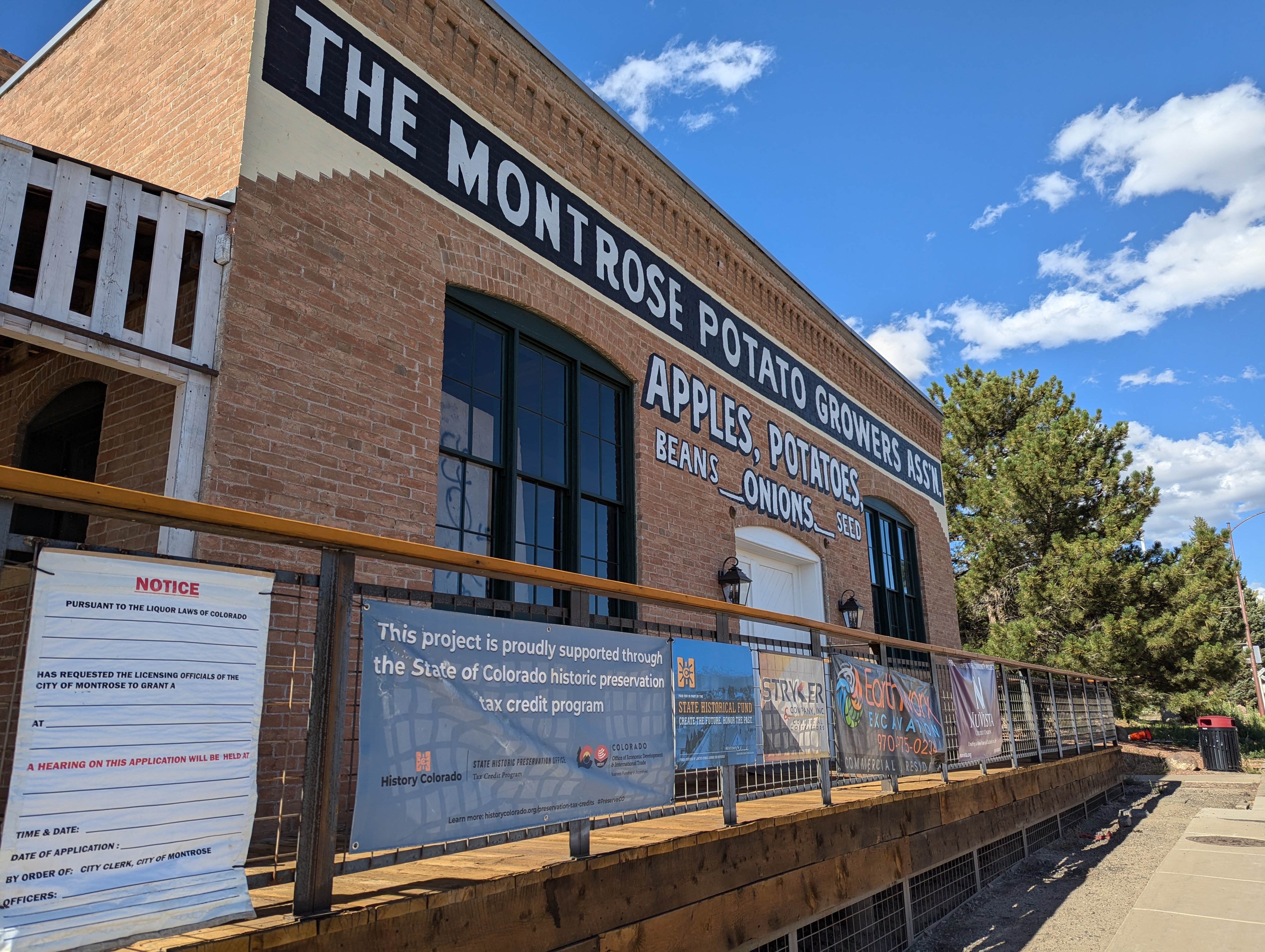
In this week’s all new podcast, David Fishering shares the story of renovating the Montrose Potato Growers Building. From its early uses in the 1900s as the headquarters of the Fruit and Produce Association to its current form as “The Association,” the repurposed warehouse now serves as a social spot to host clubs and meetings, as well as vendor spaces for goods and food. David talks about his personal history with the area and the familial effort with his dad to purchase the iconic Montrose building and secure the funds to preserve it. Join Colorado’s State Historic Preservation Officer, Dawn DiPrince, and discover more about how tax credits supported a project that helped keep the history and character of Montrose alive for a new day.
Episode Transcript
Speaker 1 [00:00:01] Welcome to another edition of ReFramed, Preservation for a New Day, where beloved old spaces are reimagined. We take a deep dive into the preservation of an amazing historic space. What did it used to be, what is it now, and how did it happen? It's adaptive reuse and heritage for all, brought to you by History Colorado and hosted By me, Dawn DePrince, Colorado State Historic Preservation Officer. Welcome, David. We are delighted to be here with you today. Could you just introduce yourself?
Speaker 2 [00:00:36] I'm David Fishering, the owner and head distiller at Storm King Distilling Company, but I'm actually here today because we're also, in addition to that business, we are very small developers here in Montrose, and we're the owners of the Montrose Potato Growers building that was recently successfully rehabilitated.
Speaker 1 [00:00:55] I love the story of the Montrose Potato Growers building. Can you tell us a little bit about the history of the building and how it now came to be, this magical place where you are operating a brewery out of?
Speaker 2 [00:01:11] The building was built in 1908. It was basically replaced a building that was built 1907. So the Montrose Fruit and Produce Association had a headquarters here on the same kind of footprint that this building is made out of wood. They built it in 1907 and it burned down that same year. According to the newspapers at the time, the thought was that the fire probably started here. But the fire back then, I went to school, I grew up here, I was in Montrose. And it's funny that we never actually talk about Montrose history very much. My wife is from England and in England, in London specifically, they still talk about the great fire of London that burned down the entire city. The fire in Montrose in 1907 almost burned down half of the city and I never knew about it until doing the research for this building. So long story short, this building burned down across the street from us now is actually a lumber yard and it was a lumberyard then. Caught that whole lumber yard on fire and then almost burned down what at the time was the courthouse building nearby. So, the guys that were part of the, you know, co-op of the time, the Montrose Fruit and Produce Association, they got together and amazingly rebuilt a building in under a year that has taken us since 2017 to rehab. So they were pretty efficient back then, I think. Anyway, so they built a building that in the newspaper they were quoted as saying they wanted to make sure that it was weatherproof, fireproof, and we kind of stand the test of time. And that's the building that I'm sitting in right now. So they built a brick warehouse in and of itself, nothing too sexy. It's four walls made out of brick, but it's a very good example of the type of building that was being done in kind of the rural areas of Colorado at the turn of the century. So as far as we know, our records that we were found on site kind of went out of use in the mid sixties. And at that time was predominantly being used to store wool and the cooler, There's a big cooler downstairs. Had been used in the 60s for cold storage for restaurants and that kind of thing that were around the area. One of the, on one of the ledgers, there's a restaurant from Ridgeway that obviously didn't have refrigeration. And so they were keeping stuff here for them, which is pretty interesting. Fast forward to, I think end of 2016, we bought the property in 2017, started work, basically just to save the building from falling down. When we bought it, it didn't a roof and it didn' have a floor. And so we basically just replaced the roof so that it would stop raining and snowing in here. And then, yeah, little by little, kind of three phases. So that first phase was kind of the structural, saved the building. The second phase was the big phase as far as what everybody saw, you know, driving by and like the historic part. And that's where we got the grant from the state to help with that phase, which was doing all the facade improvements. So we're putting all the brick outside, redoing all the windows, doors. And then that was pretty much it. Like it was a huge project. Obviously when the whole building is brick, it's a lot of, a lot of mortar to go through and then the decks around the building. So that originally the building had a platform that went around the entire building to aid in unloading on one side from carts and then loading train cars on the other side. It had been pretty, you know, as, as we know with wood and our climate, the side that had the rail cars on it was uncovered. And so it was pretty gone when we bought the building The south end, which faces our main street here, Montrose, that had been removed. We think when CDOT took over control of that part of Main Street as a state highway, we think that they claim that they're right away needed that space or something. But we were able to work with them and History Colorado to kind of rebuild what we had a picture of we knew existed out there. So we have a full wraparound platform like it used to be. And then the west side deck was a pretty big project because. That had been covered since 1912. And so the wood there was actually in very good condition. And so we wanted to keep it as, you know, as is as much as possible. And we were able to do that, which was pretty cool. And then fast forward to this year or 2024, we did the last phase, which was making the inside commercially viable for something. We had lots of ideas of what to do in here. The first idea was to put our distillery in here, that would have required probably 10 million that we didn't have. So back in 2018, we actually put the distillery in a building on the same property, but that was a kind of metal warehouse that was built in the 70s. And so we put the distillate over there. And so the other idea for this place was kind of inspired by all the warehouse kind of renovation stuff that you see if you go anywhere in Denver, you go to Rhino in Denver and every warehouse has become a mixed use food hall retail space. And that's basically what we have done with this. A much smaller scale because there's Montrose, but right now we've got four food vendors in here, a couple food trucks outside in kind of permanent stalls outside. And then we own the bar program that's here. So full bar, four food, vendors, Storm King, my distillery moved our retail space over here. And so we have a, you know, our bottle shop and all our merchandise and all that stuff. All of our tours start and end here. So yeah, so that's what we've turned it into. The building is called The Munchers Fruit and Produce Association, historically, everyone here in Munchos knows it as the potato grower building, because that's the last people that owned it was the potato growers association before they became the Muncher's co-op or the producers co-up. So we didn't wanna change, like we didn' wanna mess with any of the facade signage. And so the building is the potato growers building. The business or the space inside that is just called the association. Partly a play on the fact that it's part of the. The name of the building, but also because we wanted a place that you wanted to belong to. And this morning, I mean, right at nine o'clock, right when we open three different women's business groups were in here just meeting, just having a meeting here, just hanging out. And that's kind of what we want to do with the space we have. Last night, we had a puzzle night. People were in here just like doing puzzles for three hours. Sunday, we have, yeah, people are in here on Sundays playing board games. Uh, there's a lady that does salsa dance lessons in here on Sunday. And so we just try to create a community space that, yeah. But the place that people want to be and hang out.
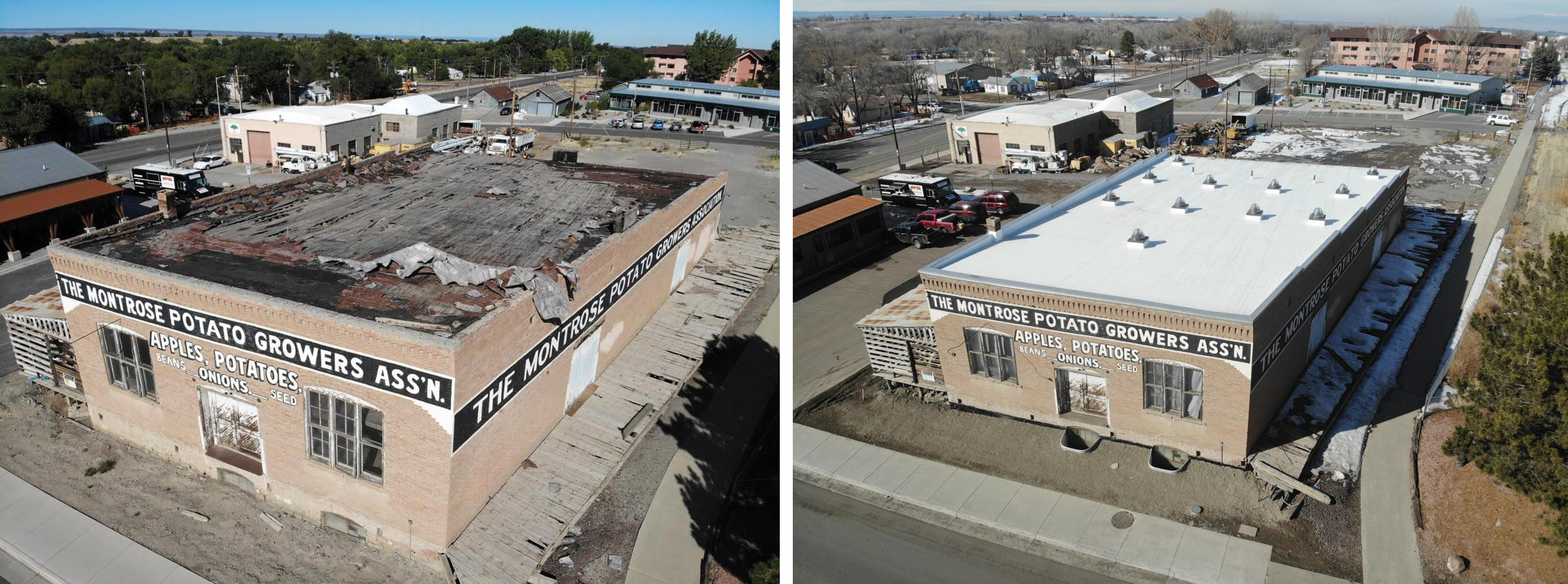
Speaker 1 [00:07:36] Clearly it had some good bones, even though it had no roof.
Speaker 2 [00:07:41] They shot they shot lasers down a bunch of the rows of bricks and other than like a few spots it has barely this building's barely moved an inch you know as far as settling and everything else since 1908 which I don't know if you're familiar with the soils out in western Colorado but they are atrocious I live in a house that's moved more than probably six inches and it's not even close to that old so
Speaker 1 [00:08:07] incredible. What do you think attracted you to you doing adaptive reuse on an old iconic structure rather than building this vision in a whole brand new structure?
Speaker 2 [00:08:22] So a couple of things. So one, this building. So I grew up west of here. And as a kid, you drive by this building every day. And we've lived here, my family's been in Montrose for almost 40 years. And my dad's had a business here and same thing every day, dad would drive down to work and every day he'd drive by this building and you know, I left and did my own thing for a while. And when I moved back here in 2014, he had already tried to buy the building, I think. Once by then. And then between 2014 and 2017, I think he tried two other times. And so he had always thought that this building was just really cool. And it is. It's easily the most, I think, iconic building in town that isn't a government building, right? That's a privately owned building. We just had another adaptive reuse in town for the, that's now the Rathbone Hotel. It used to be a budget line furniture and before, you know, originally was the Knights Pythias building here. And that's probably another one, right? Like everybody kind of sees that and, you know, recognizes that in town. The, our theater is probably one of the other ones that is a commercial building, but outside of those, this building just, it sticks out. It was, it's kind of by itself. So there's nothing else kind of around it. And again, it is not an architectural Marvel per se, but it's a very good example of how they designed warehouses at the turn of the century. And what's really cool is that the guy that did this building, the architect, actually was the architect for a bunch of the other historic buildings in town that have been preserved to some degree. And so that's kind of cool. But yeah, I know. So it's basically that it was a very iconic building and you could tell that it had, because it was just four brick walls, it had potential to kind of do anything, which is neat. And then, Outside of that, as far as not build, you know, other people built this property and a lot of them, their intent was to just bulldoze this thing and you know put up a whatever, a gas station or whatever. And I can't, you'll forgive me for the article or the study that was done. I can remember it now, but at the time, I remember being pointed to it by some development people that actually, as far like the energy that is kind of stored in these bricks and everything else, and the cost involved, it's actually cheaper to not bulldoze it. And so that definitely played a part in it. Building a brand new building granted in 2017 might've been a little cheaper than today, but not much.
Speaker 1 [00:11:04] Yeah, that embodied energy has economic benefit as well as environmental benefit. Yeah, excellent, excellent point. I'm always thrilled to hear adaptive reuse projects that maybe aren't obviously reusing it in the way it was originally using it. You're not using it for agriculture, right? But this was used originally for cooperative community use and um and you are you know you've teased out this idea that at the core of its agricultural original use um was this idea of cooperative uh both in an economic way but also in a community way and that that seems to be the heart of your business model.
Speaker 2 [00:11:59] Yeah, no, so it's one of the things that I kind of use when I explain why we did this here, is that I mentioned the Knights of Pythias building. So all the guys that were part of the Fruit and Produce Association at the turn of the century, they were also the guys that were leading that fraternal organization. It's all the same people. It's the same 10 guys that you see. Uh in any article from that time about this business you see them talking about what they're doing down there Their wives are always in the paper talking about What they're, doing on the weekend and whose house they're going to and everything else and so Even though yes, this was an agricultural, uh produce warehouse um, and it's you know, it's its existence was to Uh have a place to sort grade pack and then move produce onto uh onto rail cars outside of that, like deeper than that, if these guys were all the power brokers in town, which they were, then you have to imagine that while they were here working, they were talking, you know, talking shop talking about, you who's going to do what next in town and, you know, the politics of town and everything else. So yeah, I mean, yes, it was a center of commerce, but it was it was the center of community. And it would have been a very social place to be, I imagine.
Speaker 1 [00:13:27] Yeah, I'd love that. Thinking about the way that you have to navigate putting together a project like this, oftentimes this isn't a single person just throwing a project like this together. It requires partners, and it requires a number of financial... You know, opportunities to pull something like this together. So I would love if you could share with us all of the ways that you had to pull together partners or different financial elements to pull this off.
Speaker 2 [00:14:10] I think unlike maybe some projects of this size or larger that are privately done, my dad and I don't like having other business partners, for better or worse. And so financially, we definitely didn't want to have any investors that were going to not be silent, right? And since there's no such thing as a silent one, we basically avoided going in search of any other private money. Obviously, you know, loans with the bank outside of that, but no other actual private investors. So it's, it's been our you know and that it's kind of been true with the distillery projects as well. And that kind of played into getting the distilleries up and running kind of play into why it took the time it did to get this project done. In addition After that, we knew about the tax credit program from the get-go. And that first phase when we were just trying to save the building from getting any worse, that was the COVID phase. And so that was, I spent a lot of time during that period, that's when we got the building listed kind of at every level of government as a historic building, all the way up to the national register, which was great. And from that, you know, we were able to get the tax credit stuff going and that helps with we basically have sold those to credits every time we transfer those every time, because we don't need that many tax credits right now. And so that gave us some liquid cash that we could then either put back into the next phase of work, or use it to pay off part of the loan that we had from the bank. Speaking of the bank, locally here, one of the credit unions here has been a great partner in kind of seeing our vision and be willing to lend us money. Um, because, I mean, it really, I don't know if you've seen the photos, um, of what this looked like when we bought it, but the bank definitely took a chance for sure. Um, and they've stuck with us through the whole thing, which has been great. And then, uh, so phase two, though, you know, we knew that that was going to be a pretty big project just because we wanted to do it right. Um, we could have. You know, we could have just replaced all the windows in here with new windows. We could have done all those things and not, you know, not got tax credits and everything else for it, not, not gone for the state historic, you know, fund grant, but we want to do it right. And, you, we wanted to keep as much of the glass and the windows as possible and things like that. And we knew that doing that meant using contractors that cost more than normal contractors do. And, you know, there's when there's one guy in the state. That is doing Windows and you know he does it all by hand and he takes vacation as well like you got to just work with that and you just have to know that it's going to it's either going to be a cost element as far as there's money but or just time so we knew we wanted to do that but if we were going to go that route we knew that we probably didn't have the funding to do that and that's when we reached out to the city of Montrose to kind of be our partner because we can't apply as a private entity for state historic fund grant and Montrose has a pretty good track record, I should say, of working with the state in other capacities, but with historic stuff as well. At that point, I think the city had already received grants to do the train station here, the train depot. And so, the training depot and the old jail, I think, were the two historic projects that the the city had already worked with the state with and so. They had a good track record, and again, they were super excited about this project from the get-go. We went to City Council and to the staff back in 2017 when we first bought the property and kind of gave them an idea of what we wanted to do with this whole property. And they were so excited back then, and basically then it was just like, hey, you let us know when you need our help and we will figure out how we can help you. And so that was the first one that we applied once, and that was during COVID, I think, for the grant and we didn't get it. Just narrowly missed it, took the feedback and applied again the next time. And we got the full amount, $250,000 grant matching. So we knew we could at least do a half a million dollar project. It ended up being I think like $600,000 total to get that second phase done. But yeah, that would have not been possible for us At least. Not in the time frame, right? We would have been saving money from the distillery, basically pumping it into a fund and wait until we had that, you know, that money to be able to do this project, which would have put it back quite a ways. Or we would have had to sacrifice doing the historic preservation part of it, the historic rehab part of, and we would've just put in, you know new windows everywhere and everything else. So it was really awesome that we could get, get the city to support us. By kind of leading the charge and the grant. Great that we get the state support to do the project in the first place because now we've got a building that has way more character than if we would have just put new vinyl windows in it.
Speaker 1 [00:19:45] Yeah, absolutely. And it sounds like you're able to build a lot of buy-in and a lot of support. And then, you know, with the dollars that you were able to raise, that you are able to hire craftspeople throughout the state to help support your endeavor as well. So again, extending this this kind of community cooperative core that feels like is the heart of your business model, which I think is exciting.
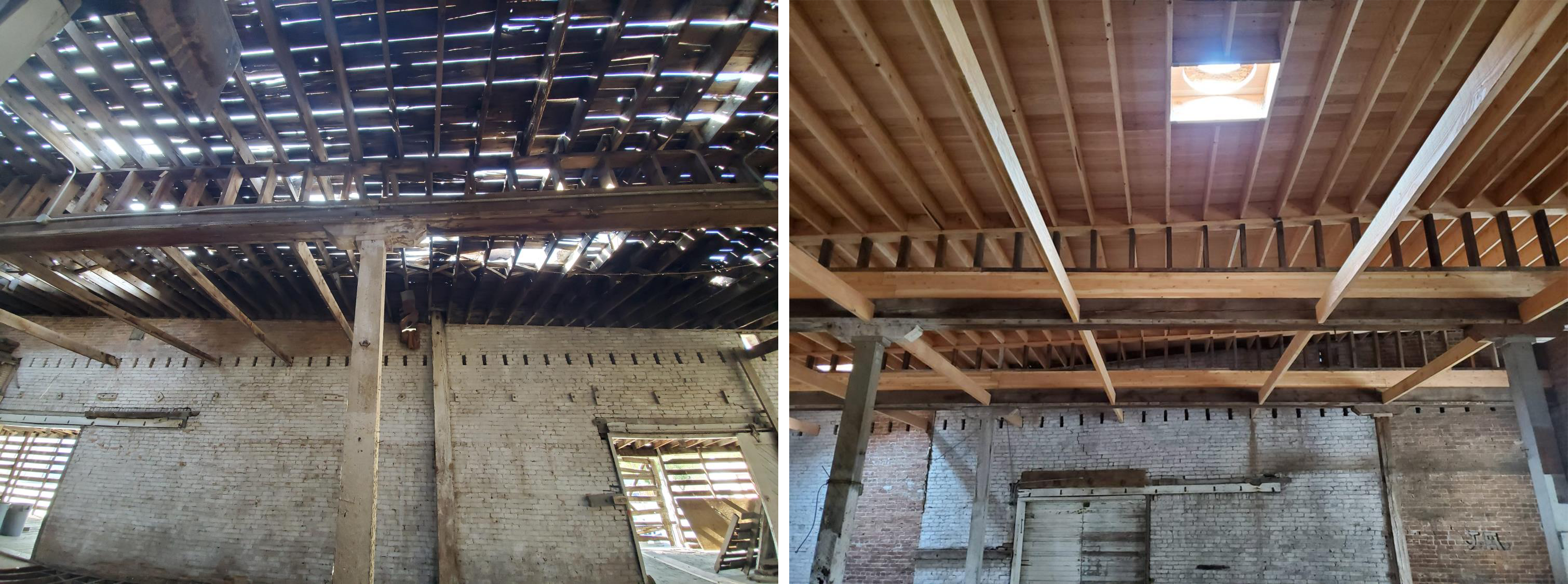
Speaker 2 [00:20:16] Yeah, we're really lucky as well. You know, the first phase and that first, I guess, experience with preservation stuff, I was basically doing all the paperwork by myself, solo, having never done any of that before. I don't speak historic preservation. I continually use the word preservation when eventually was told to stop using that because that's not what we're doing. But we were lucky that Tim Strode moved to Montrose right after he left working for the state. And I met him, I don't know how, I think he might've been here for like a day. And I was, the city made sure that we got, you know, in the same room together. And he was, him and his company and his expertise and everything was invaluable in getting, just getting us dialed in, getting our contractor, our general contractor. Uh, amazing general contractor, you know, we wouldn't have worked with anyone else here in Montrose, but they didn't, you know, historic preservation is not what they do. Like they, that's not, you know, not just from the work side, but just from like the paperwork side, um, having someone that could help all three sides, the city of Montrose or RGC, and then us as the owner kind of speak the same language and like move the project in the way that it needed to move to do it the right way. So his expertise has been invaluable here. And the community here was really, you know, just outside of our project and after our project, you know the fact that he's been in town has really allowed I think a lot of other projects to be successful here that may not have been or they may not of gone the historic rehab route on a lot these things in town. So that's been invaluable.
Speaker 1 [00:22:02] Yeah, that that is really great to hear.
Speaker 2 [00:22:06] It's not, it's not every day you get to the guy that used to be running the show. Absolutely.
Speaker 1 [00:22:09] Absolutely, moving to town. That's right. So what would you say maybe some of your lessons learned as you've gone through this process?
Speaker 2 [00:22:21] Just from the management perspective, as far as getting the project done sooner, it would have been better if we could have had a more defined timeline for our contractors and stuff. Because we were doing this kind of bootstrap three-phase situation, there definitely were parts of each one of those phases where we got kind of forgotten about as a project. And that was, it was frustrating. But again, like we couldn't have done it any other way. Doing a phased project was the only way we could make this happen. Time-wise, we probably should have been open for business last year, this time, would have been ideal. Instead, we just opened in October of 2024. So we've missed all of last summer, but I mean, the flip side of that is we'll have everything dialed in for this summer, so it'll be good. I don't know, I think the thing that I guess... The community seems to think that I'm an expert now. I'm not, but I get asked all the time about historic preservation stuff now. And so I think one of the things that I've learned is, one, the importance of it, which I'm a history buff anyway, so I know it's important, but communicating why it's importance to other people in town, particularly property owners. Montrose, unfortunately, the downtown, there's still a lot of absentee owners on our main street. And that kind of sucks for keeping the main street in it so that it looks like a historic downtown, right? Because some of them just aren't here. They don't really care. And that's too bad. But the ones that have moved into town or bought property recently, The city often likes me to talk to those people. To explain to them that doing things kind of the right way doesn't necessarily mean it's gonna be more expensive or cost them any more money or time or anything else. It's just a matter of figuring out how to do it. And I think the thing I learned is I wish the city cared about this kind of stuff when I was a kid and before that even. I don't know if you knew that the city took. The old Wells Fargo building on Main Street, this huge, ugly, white, faux concrete, whatever, 1970s architecture, maybe 60s, I can't remember, but the last thing it was, was Wells Fargos main office and Montrose, well, they pulled out of there a while ago, and the city, just because the building needed a lot of work, and it's one of those that, I don't know if it'll be City Hall forever, But at the moment no private investor was gonna go in there and do anything with it. And it's right on our main street. And they took it over. They took the facade back to at least the last iteration of brick that it was, so it looks way better. But back then, like there was no, nobody cared about historic preservation. And I don't know if that's a monstrous thing or a statewide or nationwide thing, who knows? But at least in town here, there's numerous buildings like that It used to be this beautiful Victorian bank building with a big spire on the corner where the clock was and everything else. You see the historic photos of it. It's like, oh, man, that would be so cool if that was still here. And instead, you're looking at this big white concrete edifice on Main Street. So I think the importance of historic preservation, rehabilitation, adaptive reuse for not just getting rid of blight, but keeping like. Improving that community field, giving the community something to identify with is super important.
Speaker 1 [00:26:24] Yeah, yeah, and I, you know, one of the things I'm taking away from this conversation is really thinking about, you, know, preservation. We often think about the bricks and mortar, the built environment, but hearing you talk about the Knights of Pythias, the people working in your building in the past. Is that it isn't just the preservation of the bricks and mortar, right? It is the preservation of a community fabric and reanimating and breathing new life into that community fabric, and that's why this preservation work matters. The bricks and the mortar is important, but it is important as our ability to be able to maintain these important community fabrics that hold our, that hold our places together.
Speaker 2 [00:27:21] Yeah, no, exactly. And I think there's just our little area here. If historic preservation would have been a thing in the 50s and 60s and onward, this little area would look way different than it does. And it would have more character to it. And so yeah, my wife and I moved back here to start a family. And I would love for my kids to see mantras, kind of regain some of that. Because it's too, I think it's just too easy to just keep building strip malls and chain stores and stuff. And then those things don't have any character. And then if you erode the downtown, erode, the historic main street and all that, then yeah, you still have a city here, but the community part of it.
Speaker 1 [00:28:13] Yeah, we're not rooted. It's the rootedness that we're looking for.
Speaker 2 [00:28:18] Yeah. And so those buildings, I think, you know, those historic buildings help as like a physical manifestation of that.
Speaker 1 [00:28:25] Absolutely, yeah, and your project, this potato growers project, I think is truly an embodiment of that ethos and that spirit. And it has been wonderful hearing you share all of this today. And I absolutely will be taking a trip this summer so I can hang out there and.
Speaker 2 [00:28:48] Yes, we do.
Speaker 1 [00:28:50] Be able to see all the nooks and crannies of this beautiful building.
Speaker 2 [00:28:54] Yeah, it's pretty cool. I don't know, again, I don' know what you've seen photograph wise, but we recently, some elderly woman in town had a box of stuff and she dropped it off at the historic society a couple months back and instantly got a phone call from the historic Society. They're like, oh my God, David, we have photos of the inside of your building, which we had never seen any. And sure enough, she brings up the historic society and bring them over here. And we look at them. And sure enough, there's this photo of these three gentlemen. And it just so happens that it's not the exact place, but it's close enough to where we've been taking photos, like geo-located, looking at the building from a particular angle. And this photo is almost the same angle. So you can kind of see what it was in, I think it's like 1912 was when the photo was taken. All the beams are still there. And you see what you see when we bought it, and then you see what it was when we finished. Like all the beams are still there. The old lift in the middle is still there, and it's really, and we now have that photo blown up, you know, like a six foot wide version of it on the wall. It's pretty neat. I mean, you know in America, we don't have stuff that goes 1066 or whatever, right? So 1908 doesn't seem like that long ago, but for our area it is. And so it's pretty cool to be able to see that.
Speaker 1 [00:30:19] Yeah, I love it. I love it. Thanks so much for your time today. And of course, your years of work on this very special project. We appreciate it.
Speaker 2 [00:30:30] Yeah, cheers. Thank you guys for all the help and support.
Speaker 1 [00:30:32] Yeah, thank you. To see photos from this edition, visit historycolorado.org forward slash podcast. Major funding for ReFramed Preservation for a New Day is provided by the Sturm Family Foundation and History Colorado, offering 11 beautiful, inspiring museums and historic sites that ignite imagination of all ages. Join us to discover your past and build a better future for all people in Colorado. Home to a free public research center. Colorado's Office of Archeology and Historic Preservation, and the History Colorado State Historical Fund, the nation's largest preservation program of its kind. Learn more at historycolorado.org. This episode was produced by Annie Lubinsky and Sam Bach, edited by Callie Mejia, and directed by Julie Jackson of Julie Spear Productions with support from Truce Media Collective. Follow History Colorado on all social media platforms. To stay in the know on all things history in Colorado.
For more information and other episodes, visit reFRAMED: Preservation for a New Day