
 Membership
 Donate
 Shop
Shop













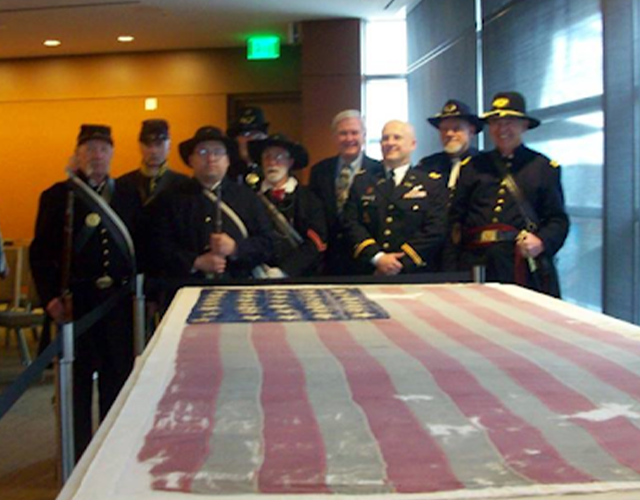








Remembering David Wetzel
The History Colorado family recently learned of the passing of David Wetzel, who served as editor and publications director from 1980 until his retirement in 2006.
Hiring me as an editor back in 1996, David gave me the opportunity of a lifetime. I quickly learned what a talent he was, and how selfless he was with his knowledge. Born in Salt Lake City and with two English degrees from the University of Utah, he’d become an impeccable historian of Colorado’s past—his wealth of knowledge matched only by his infectious passion for every nuance of the state’s history. For what was then the Colorado Historical Society he coauthored the books Robert S. Roeschlaub: Architect of the Emerging West, 1843–1923 (1988) and I Looked in the Brook and Saw a Face: Images of Childhood in Early Colorado (2002). In the pages of The Colorado Magazine, he chronicled a girl’s life at the turn of the twentieth century, the opening of Denver International Airport, and the career of historian LeRoy Hafen.
In his department, we produced journal volumes, a monthly newspaper, and Colorado Heritage magazine—today’s Colorado Magazine. Forging a partnership with the State Historian’s office, David also headed up the editing, and often the writing, of the museum’s exhibits while expanding the publications with offerings like the online Colorado Book Review, still going strong. Meanwhile, he was a walking encyclopedia of Colorado knowledge, always reliable to have a factoid at hand or to know where to find it.
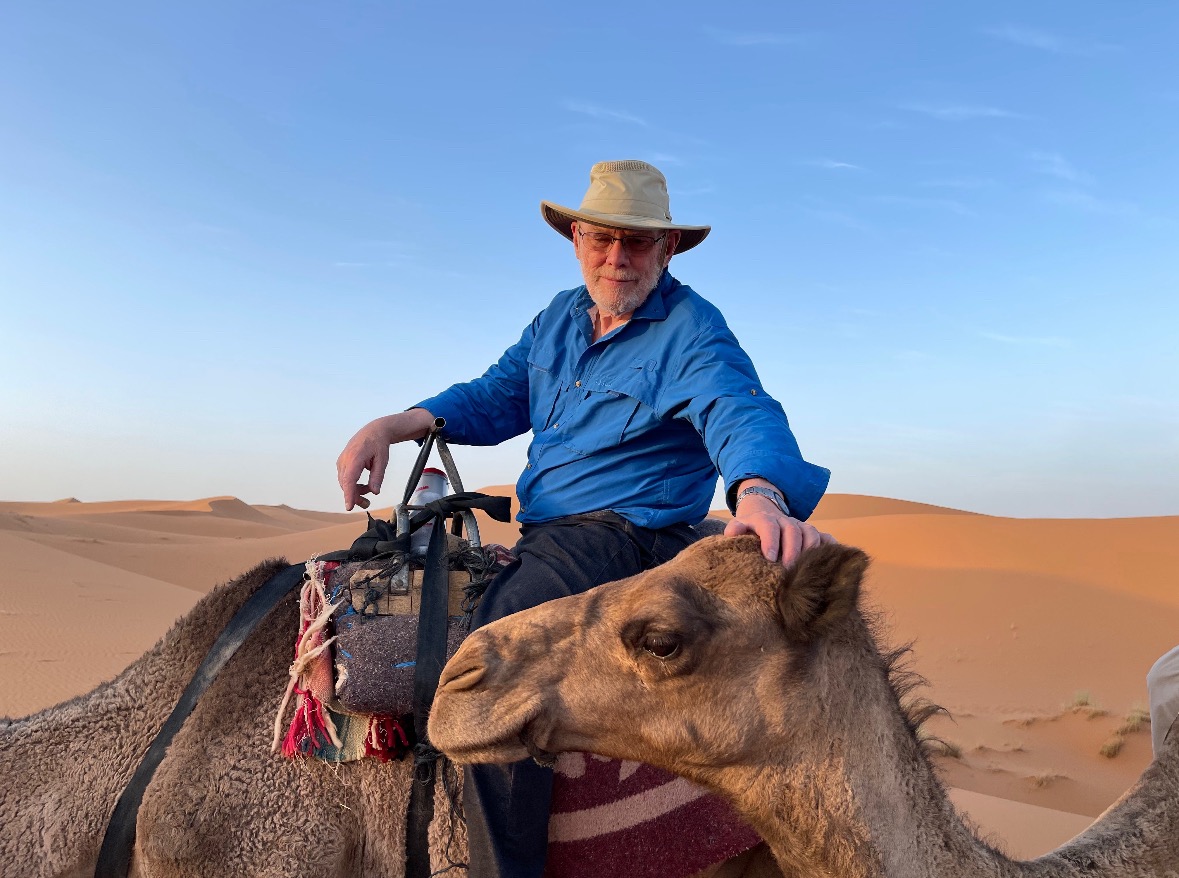
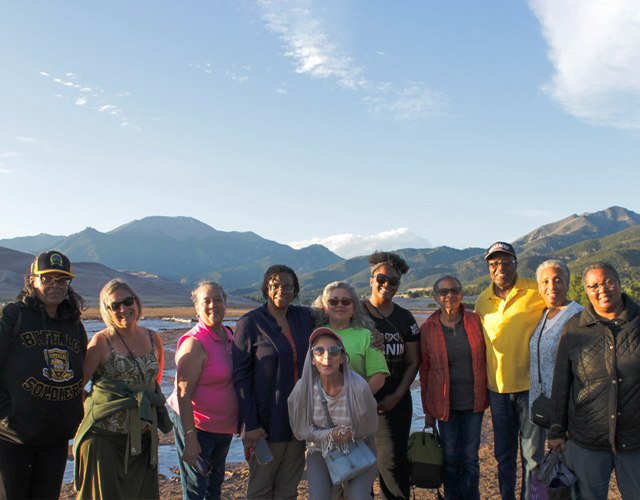
Retirement brought opportunities for travel. David and a group of friends visited Morocco in 2021.
For the book I Looked in the Brook and Saw a Face (its title taken from a line in a Eugene Field poem about childhood), he and photo editor Mary Ann McNair combed the History Colorado collections for photographs of children—their names usually unknown and their circumstances discernible only through details in the images themselves. He wrote the text in second person, channeling not just the ways of earlier times but the sensitivities of a child:
Once you stepped across the threshold, you immediately saw the sky, the horizon, and the landscape before it. As in your house, you grew familiar with the setting—trees, houses, gardens, fences, roads, fields, hills, and the whole shape of the earth around you…. But, however far you traveled, alone or with friends, there was a tether inside that always tugged—and that was time.
In so doing, he brought a literary sensibility to the study of Colorado history—something, I’d come to realize, he always did.
Just as importantly, “Wetz” could spontaneously launch into a perfectly rendered Shakespeare soliloquy (or sometimes it was Chaucer, we weren’t always sure) whenever the occasion demanded—which was surprisingly more often than one might think. There was singing. And he had one of those toy slide-whistles, which emerged whenever things got too serious. We had such hilariously good times in that office that the long-suffering staff of the adjoining Stephen H. Hart Research Center had to routinely pop their heads through the door to ask us to please, please keep the racket down.
David had a knack for spotting talent, too, bringing on editors like Clark Secrest, Larry Borowsky, Ariana Harner, Dianna Litvak, and Ben Fogelberg—all of them lauded writers of Colorado history in their own right. He set the exacting standards for approachable history and lively writing that followed after his retirement, which came at a time of shrinking print runs, print-on-demand technology, the rise of ebooks, and a growing emphasis on web content and online engagement. When I took on his role as department head after his retirement, it struck me just how well-poised he’d left us for those evolutions.
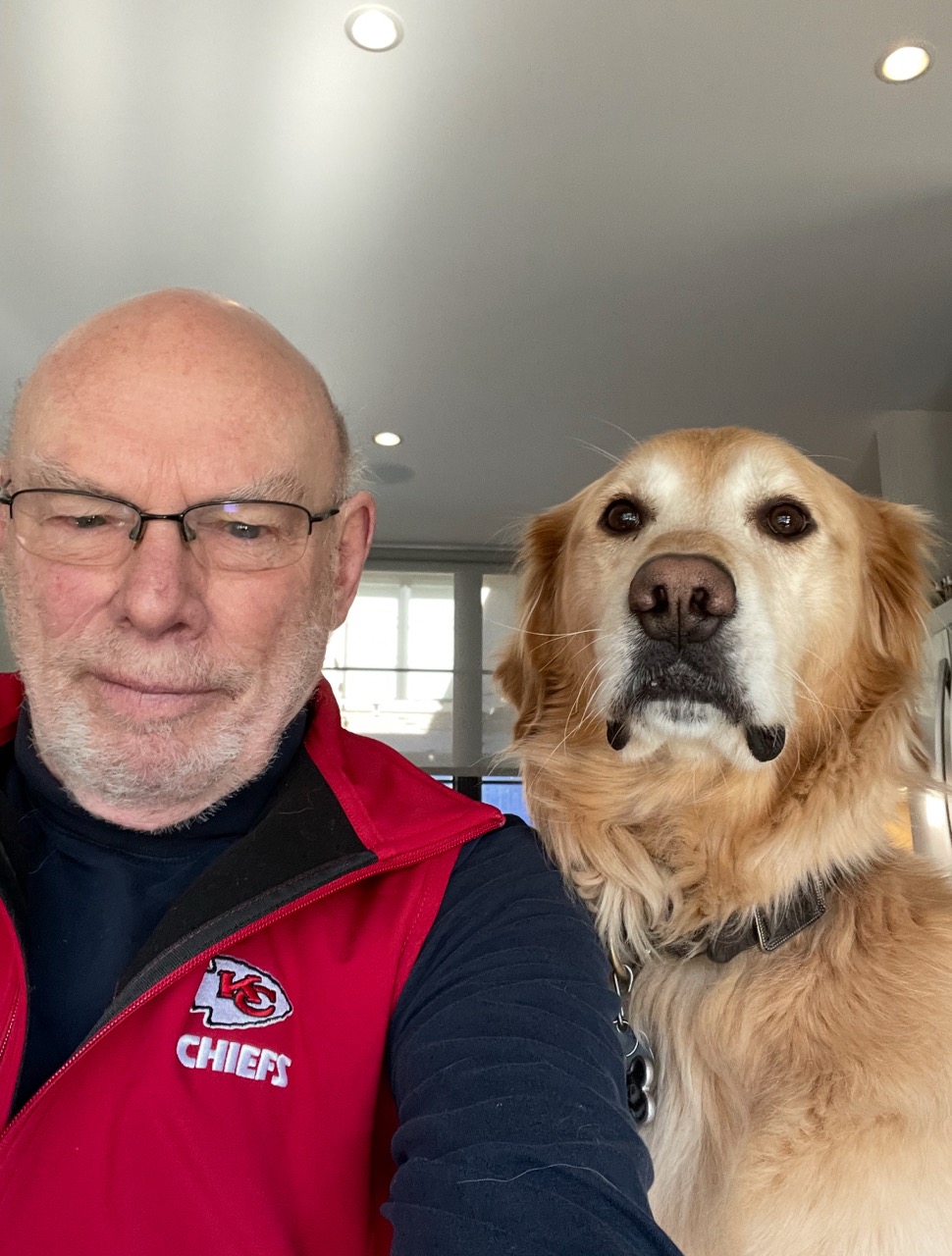
Shortly after retiring, David joined family in Kansas City and made it his new home.
And as an editor, he was just so good: an ally to the reader, an enemy to jargon and pomposity, and with a hawk’s eye for every imprecision, every redundancy, every tiniest of typos. Put it all down to his innate ability as a writer: He excelled as an author with a fluid and charming voice. His long-term side project and final book-length work, The Vanishing Messiah: The Life and Resurrections of Francis Schlatter (2016), is an intriguing masterwork of historical sleuthing and riveting storytelling.
In the more than 100 years of History Colorado’s publications, David served longer than any of the program’s directors except LeRoy Hafen, who founded the program back in 1923. Always content to be the “invisible hand of the editor,” as he liked to put it, David, writing in 2004, credited the “vast accumulation” of Colorado history “to the authors who have contributed to [History Colorado’s] magazines, journals, newsletters, and newspapers over the years.” The number of those writers whose careers he furthered—and of the readers whose lives he enriched—would be impossible to calculate.
David left an indelible mark on the institution and the people he leaves behind. While we can’t fill his shoes, we hope we’ve made him proud.
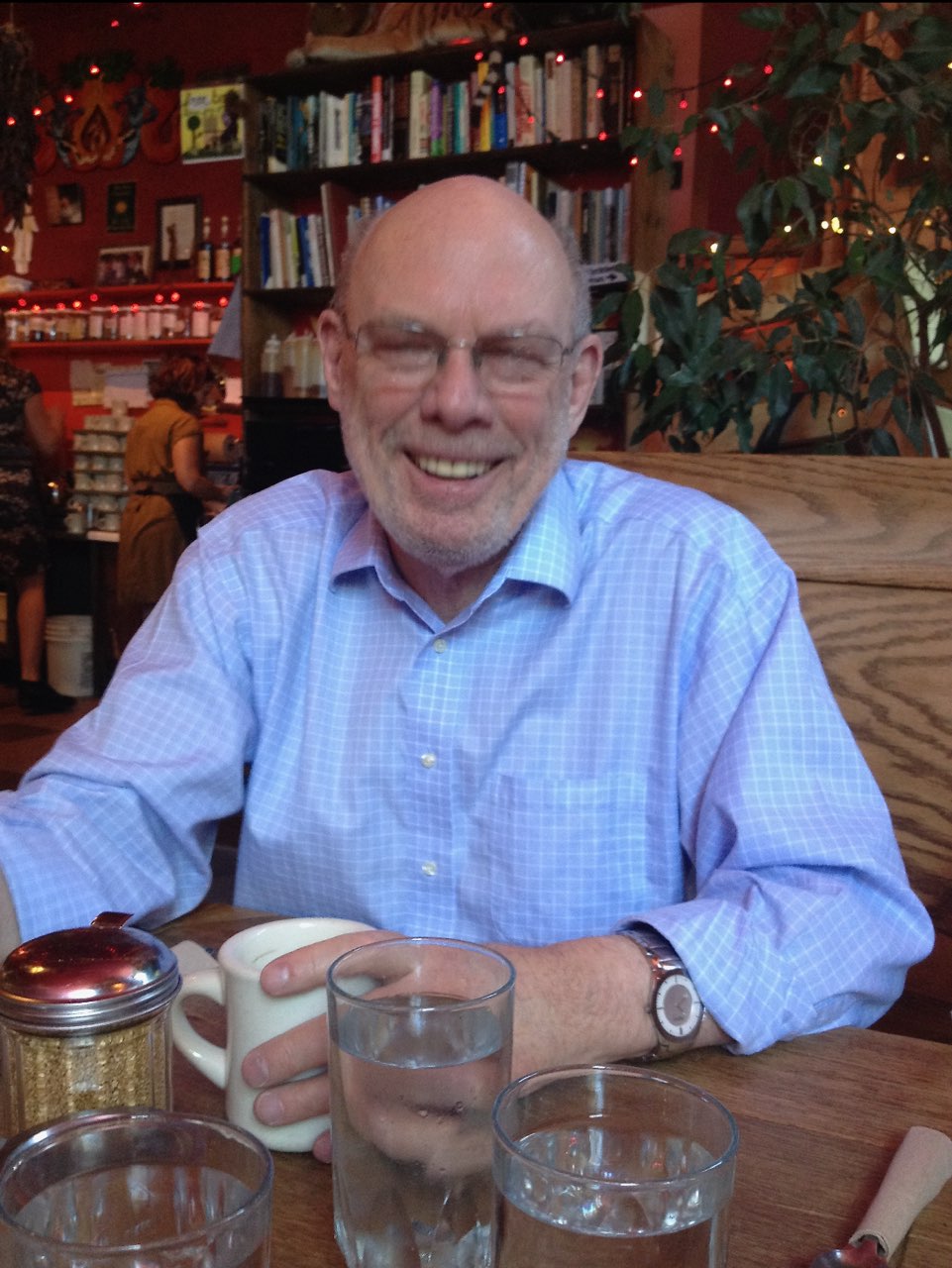
David Wetzel in his later years, still as quick with a smile as ever.