
 Membership
 Donate
 Shop
Shop
























Speaking Out for Self
The Black struggle to regain the right to vote in territorial Colorado, 1864–1867.
Shortly after the close of the 1864 session of the Colorado Territorial Legislature in Denver, Barney L. Ford, one of the city’s more well-to-do Black residents, learned that on March 11, an amendment to election laws took from him and other men of color the right to vote—something they could have exercised several times already since 1861. For it was in 1861 that, by legislative fiat, he and all other men resident in the territory at the time secured that right.
Three years later, however, skin color as a qualification was not overlooked when the legislature revisited the question: Who should be allowed to vote, and what shall be the criteria governing ingress to the circle of equals?
Clearly this shrinking of the public sphere was both a deliberate action and a provocative one, having all manner of import for present and future Black Coloradans. While it is the case that Blacks in Denver embraced both a kind of western rugged individualism and social adaptation to their new habitations, they also grew more inward-looking, implicitly setting a pattern of adjustment for later arrivals. Their political orientation became more conservative, and, in a number of ways, they mimicked the class biases of whites so as not to call unnecessary attention to themselves because of their small numbers—like a Black island in a white sea that, over the years, would take on a growing Hispanic population experiencing its own peculiar oppression.
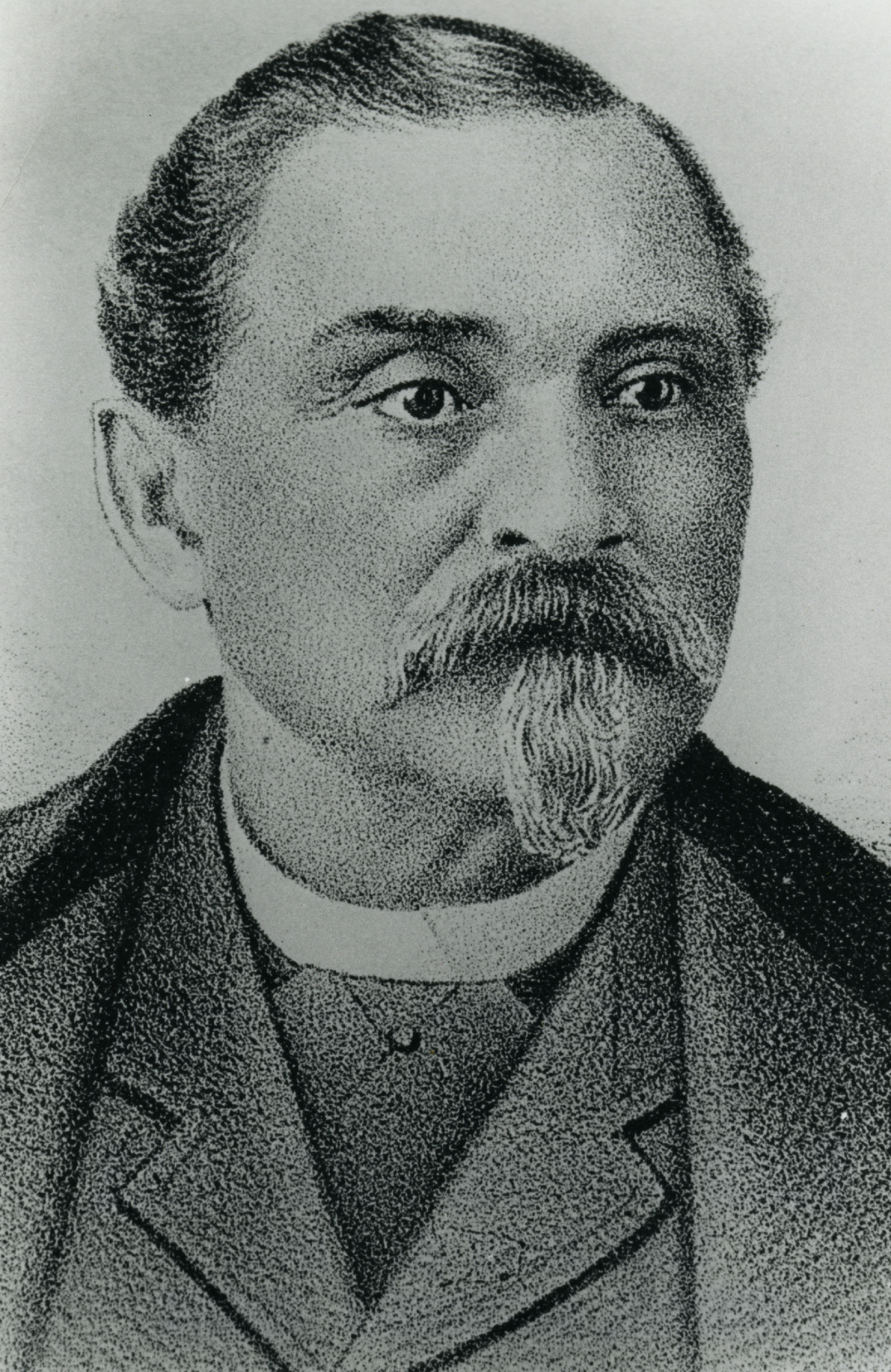
Photo-illustration of Barney L. Ford, a prominent Black businessman in Colorado’s territorial history and early statehood.
Barney Ford and several of his contemporaries—in particular Edward J. Sanderlin, Henry O. Wagoner, and most especially William J. Hardin—faced several questions given the paucity of the Black population in Denver, the seat of political activity. (According to the 1860 federal census there were twenty-three Black people contrasted with 4,726 whites in the city, while the 1870 federal census enumerated 234 Black residents contrasted with 4,518 whites.) The first question was, did they wish to do anything about this change in their status brought about by the “gerrymandering” of the public sphere, resulting in a reduction of their civil rights? Second, if they were going to seek a remedy, what would it be, and how would they go about it? And third was the issue of consequences—both short and long term—flowing from whatever action they took to reconcile this assault on their personhood intended to contain and constrain their influence in shaping the society of which they believed themselves to be a part.
There is little doubt that whatever was done to restore their franchise rights—a symbolic hallmark of American democracy and an altar to their marginalized status in the territory—Black folk were going to have to struggle to retrieve a basic right. The prize: a new, expanded meaning of American citizenship for the post–Civil War United States, a nation in need of new visions of freedom, liberty, equality, and justice. These were, after all, the founding concepts the new nation first propounded at a time when race-based slavery was an everyday fact of life.
Building a National and Local Context
The designation of Black people, first as trade goods and then as chattel property in seventeenth-century America, was made even more concrete as a part of national culture in 1857 when Roger B. Taney, Chief Justice of the United States Supreme Court, delivered his opinion in the matter of Dred Scott, saying that Black people
...were not intended to be included, under the word “citizens” in the Constitution, and can therefore claim none of the rights and privileges which that instrument provides for and secures to citizens of the United States. On the contrary, they were at that time considered as a subordinate and inferior class of beings, who had been subjugated by the dominant race, and, whether emancipated or not, yet remained subject to their authority, and had no rights or privileges but such as those who held the power and the government might choose to grant them that for more than a century before they had been regarded as beings of an inferior order…so far inferior, that they had no rights which the white man was bound to respect.
This was the legally codified racial context into which Colorado was born. Thus, in the summer of 1858 when William Green Russell and a party of Georgians (one of whom may have been James C. Stiles, a Black man) found gold in the Pikes Peak region, a westward migration was spurred the following spring. Thousands sought to get rich quick and return to the States to resume life as they had known it.
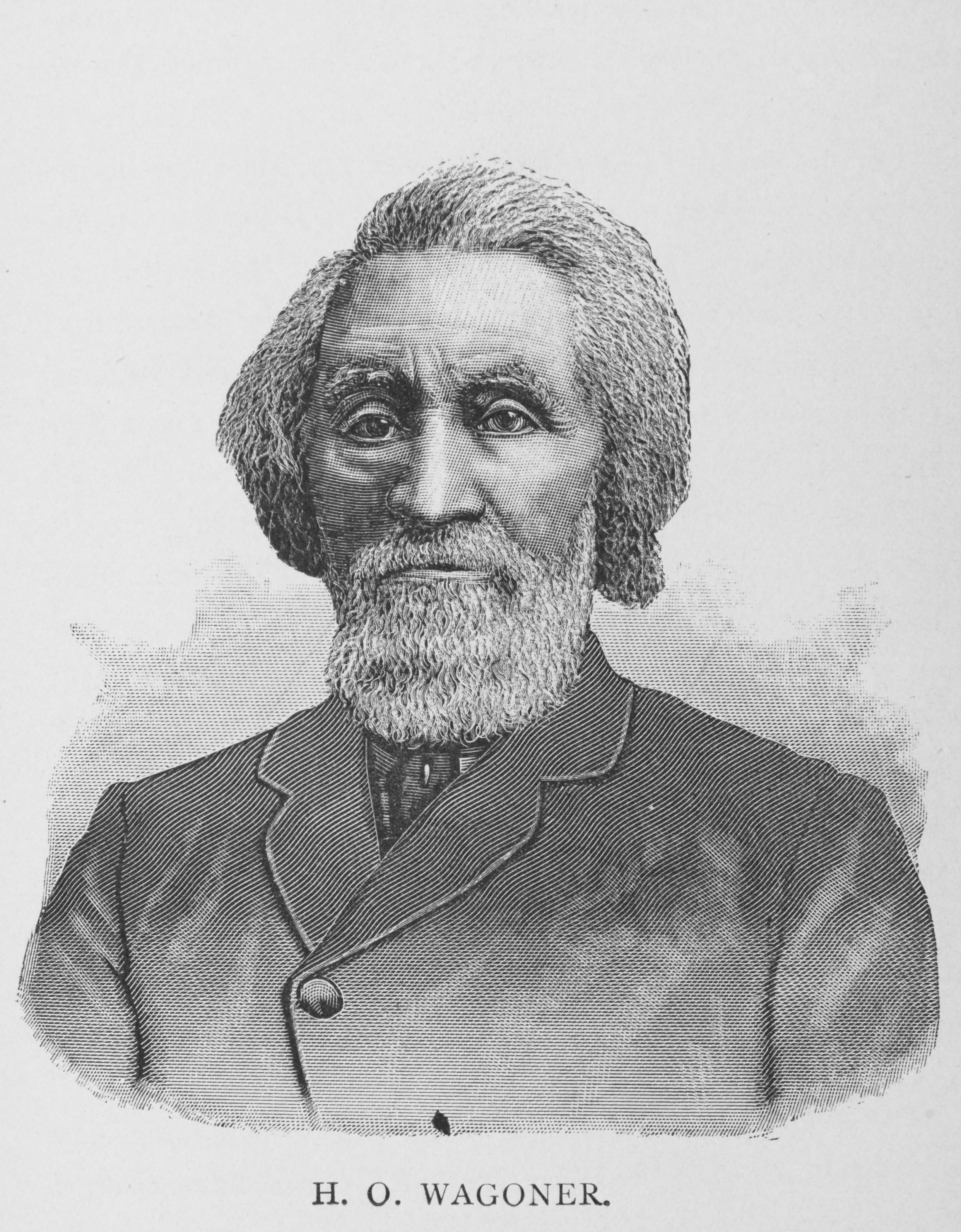
Henry O. Wagoner was born a free Black resident of Maryland, and from a young age became an ardent abolitionist. He participated in the Underground Railroad in Louisiana, Ohio, and West Virginia, and taught in a school for Black children in Chicago. In 1860, he moved to Denver to join the business prospects of his friend Barney Ford, and continued to be involved in civil rights for the remainder of his life.
Then, less than a year later, on October 16, 1859, John Brown, a fiery, uncompromising abolitionist who loathed the so-called “peculiar institution” of slavery, seized for a brief moment the federal arsenal at Harpers Ferry, Virginia. As tensions continued to build within the Union following Abraham Lincoln’s election as the sixteenth president of the United States, South Carolina—long a crucible of southern separatism—voted on December 20, 1860, to secede. By February 1, 1861, six other states had followed, with four more to come. And on April 12, with the firing on Fort Sumter in Charleston Harbor (less than two months after Colorado had become a territory on February 28), a war began that would bring in its wake unanticipated changes in the American and local social orders, with particular significance for Black people.
The status and experiences of Black people in Denver during this period are best characterized as representative of that peculiar species, the “Free Negro,” who was neither slave nor free, a creature dreamed up through liberal dashes of ignorance and assumption. Their initial count of twenty-three had expanded sufficiently by the middle of the decade for them to be a visible presence in the city; indeed, in 1864 at least two score of their number was described in the Rocky Mountain News, one of the city’s major daily papers, as they marched off to join the 54th Massachusetts Infantry of the United States Colored Troops.
These were people who had no natural right to access the process by which the preservation, protection, and defense of the privileges and position of the elites ensured the orderly exercise of authority. This had been evident as early as the first attempts to create the State of Jefferson in 1859, whose preliminary draft constitution was authored by William Newton Byers, the publisher of the Rocky Mountain News and an ardent supporter of statehood who used the Iowa Constitution of 1857 as a model.
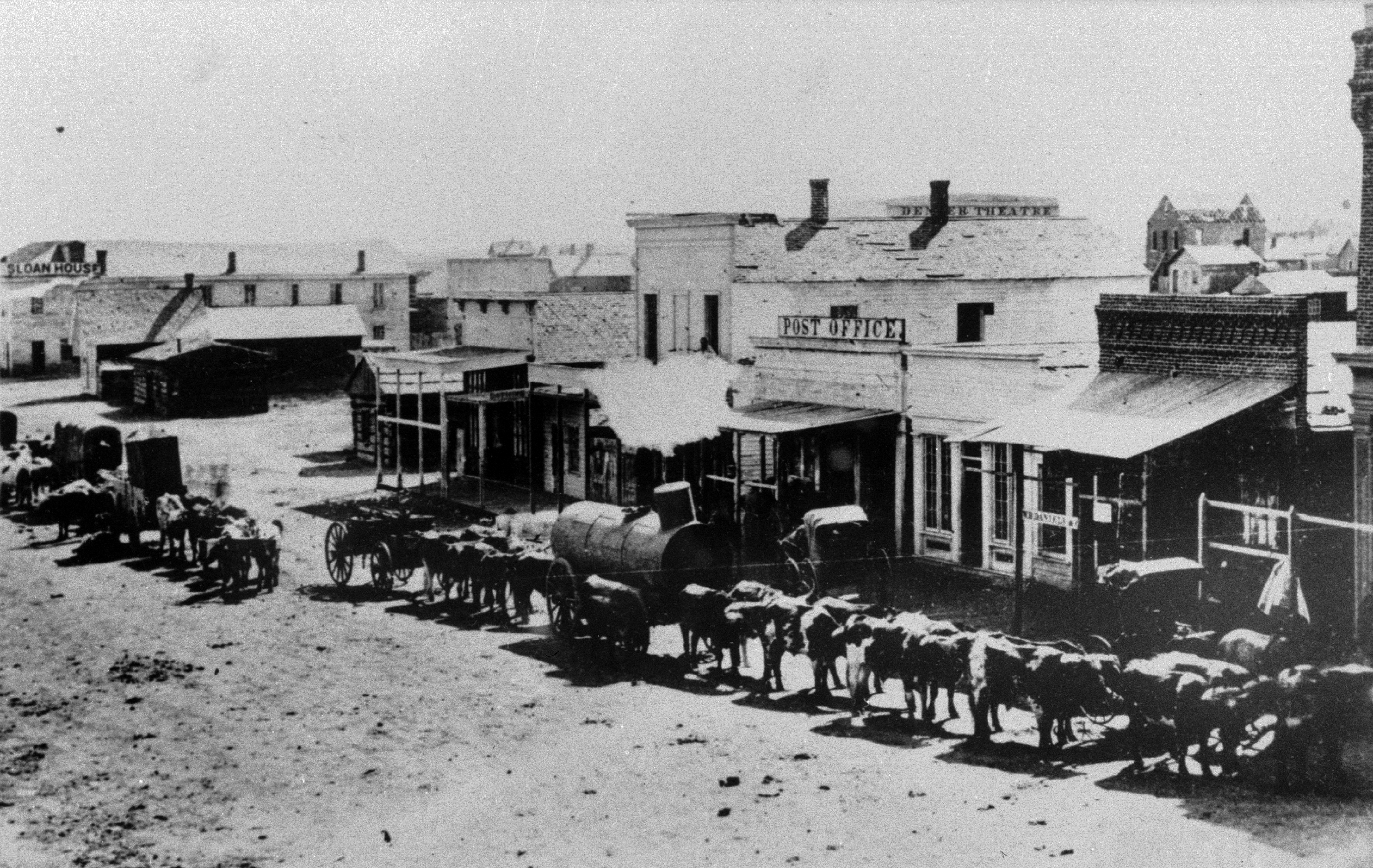
A wagon train on Larimer Street, then “downtown” Denver, in 1862. At the time, the city had a population of less than five thousand, and was not yet the official capital.
The Quest for a New Stability
On February 28, 1861, President James Buchanan signed the enabling legislation “To provide a temporary government for the Territory of Colorado.” In some respects, this quest for a new stability was a continuation of efforts that had begun earlier as it became clear that the miners’ courts and people’s courts, in their isolation from Kansas, were simply inadequate to the task of dealing with the growing complexity of life in the Pikes Peak region. Without a more reliable source of order, social stability could not be realized. And in the absence of social stability, economic development could not proceed at a pace fast enough for the Progressives whose objective was to create a new society at the far western edge of what they thought of as the “Great American Desert.” Realizing this vision would require cooperation and compromise—and perhaps restrictions on who would be deemed suitable for inclusion in the public space.
The first hint at who might be excluded carries over from the Jefferson State and Territorial proposals. If Black people were not seen as people, and if their numbers were so small as almost not to matter, then how do you explain the presence of a provision in the initial Provisional Laws of “Jefferson Territory” “that no white person shall be married to any person being a negro or mulatto of one-eighth negro blood”? Was it simply some southerners in the territory between 1858 and 1860 who might have influenced this statement, or was it perhaps a reflection of the character of a society designed by a small special interest group for a larger special interest group? Most assuredly, the number of decision makers would be restricted by the fundamental provision in the purported Territory’s “Provisional Constitution” granting the vote to “every white male citizen of the United States, of the age of 21 years,” which was reinforced in the Criminal Code, making it a misdemeanor for a person to vote “knowing himself not to be qualified,” punishable by a fine of not more than one thousand dollars or imprisonment for not more than a year.
Contrast this with what we find in the 1861 Organic Act approved by Congress and signed by the president, describing suffrage for the new territory:
And be it further enacted, That every free white male citizen of the United States above the age of twenty-one years, who shall have been a resident of said Territory at the time of the passage of this act, including those recognized as citizens by the treaty with the Republic of Mexico…shall be entitled to vote at the first election, and shall be eligible to any office within the said Territory…
This last sentence is of critical importance, as we will shortly see.
The first session of the Colorado Territorial Legislative Assembly approved on November 6, 1861, the following clause expanding the suffrage privilege:
That every male person of the age of twenty-one years or upwards, belonging to either of the following classes, who shall have resided in the Territory for three months next preceding any election, and ten days in the township, precinct or ward, in which he offers to vote, shall be deemed a qualified voter at such election…
Contrast this with what took place at the third session of the same body in 1864 when it amended the prior suffrage statute. Section 1 of this new act, approved on March 11, 1864, increased the residency requirement from three months to six months, redefined certain racial categories and requirements, moved election day, and, crucially, set forth a new required loyalty oath for voters.
Notably the clause doing away with the franchise right of Black Coloradans appeared in the middle of a set of actions where it would be less noticeable, begging the question of what these actions meant for the vetting process that Blacks would have to employ in seeking allies in their struggle to retrieve what had been taken from them.
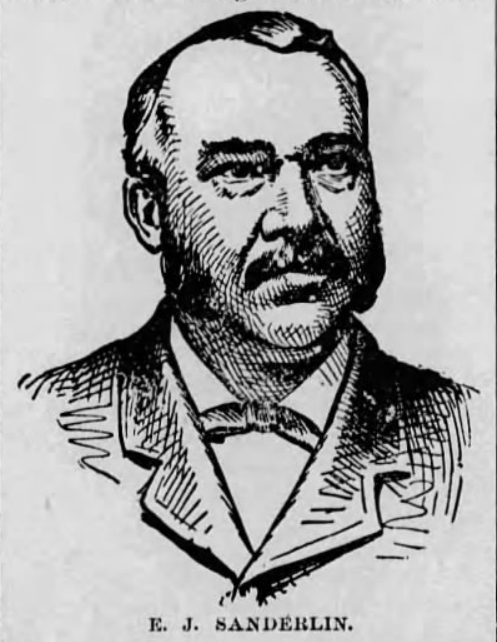
Born into slavery, Edward J. Sanderlin inherited a portion of his white slaveowner father’s estate after a lengthy lawsuit. He utilized this windfall to invest in mines in California and Colorado, opened businesses in Denver, and became one of the wealthiest Black men in the West. From early in his career, he used his wealth and influence to advocate for the right for Black men to vote not only in Colorado, but across the country.
A War of Words
With the southern states having withdrawn from Congress, and with the upcoming national elections giving pro-statehood forces in Denver the sense that their time was nigh, Coloradans moved to call a convention in July for the purpose of writing a state constitution they would submit to Congress for approval. A small number of Blacks attended this gathering to press for a remedy to their disfranchisement.
While the national Republican Party wanted additional votes in Congress to continue its program and foster policy creation for the postwar period, statehood hinged on whether there were enough people in the territory to support the costs of state government. Most of the miners and some smaller property holders would oppose it to the last. Unfortunately, the 1864 draft constitution modeled after Iowa’s did not address Black suffrage, a fact that would become more crucial in the ensuing years. As some anticipated, this constitution was not ratified by the voters because of the less-than-sanguine financial outlook in the territory and the uncertainty of whether and when the railroad would arrive to more effectively connect Colorado with the states back East.
Not long after, another attempt to secure statehood began, enhanced by an economic upturn early in the new year. At a second constitutional convention in June 1865, the question of Black suffrage was split off as a separate election proposal in the hopes of advancing the case for statehood.
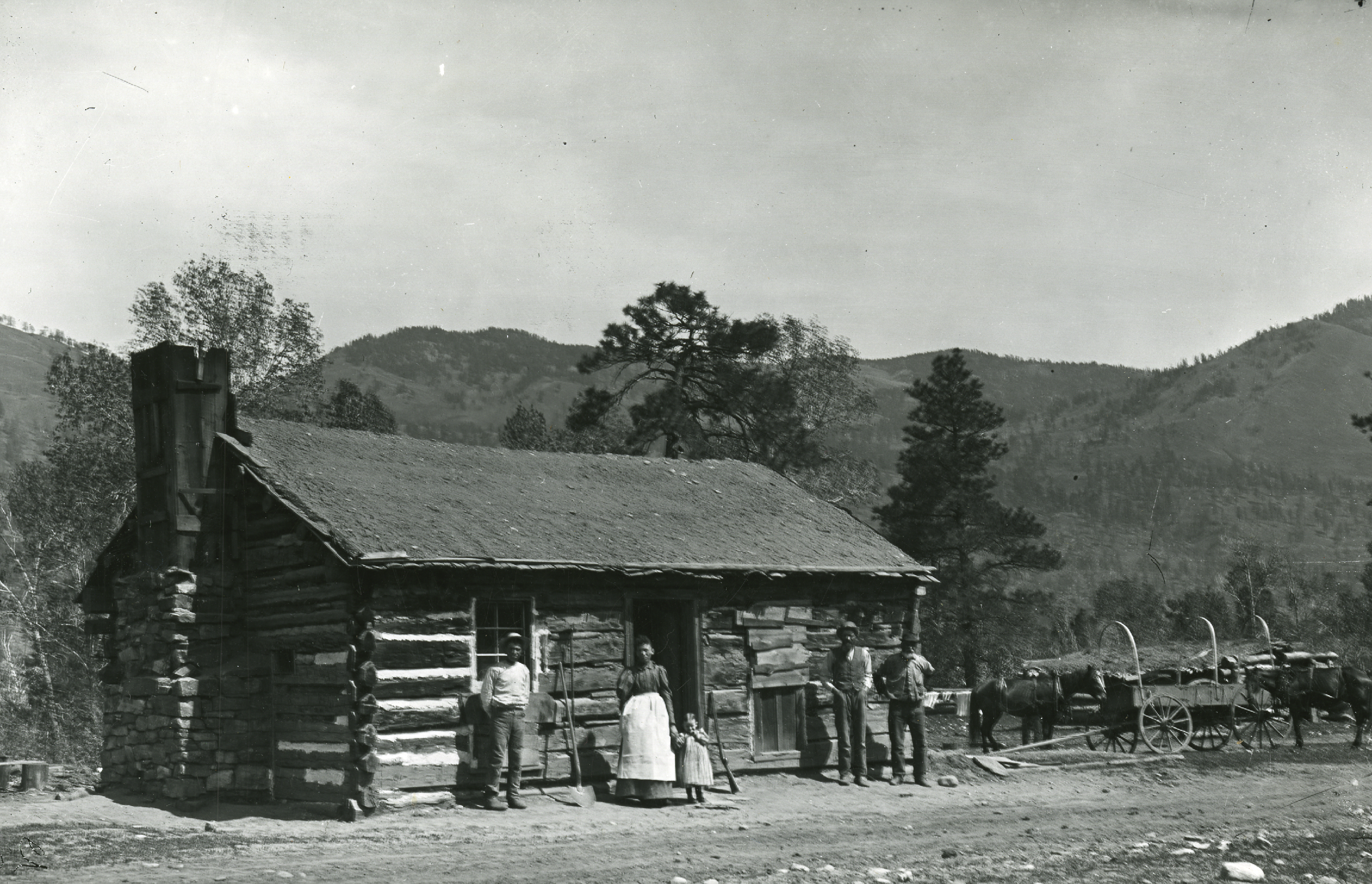
A Black family in their rural cabin, somewhere in Colorado, photographed circa the 1890s. As Colorado’s overall population grew during and after the Civil War, so too did the percentage of Black residents.
The fight over disfranchisement is particularly visible in newspapers of the era. Two of the state’s early titles, Black Hawk’s Daily Mining Journal and Central City’s Miners’ Register, took opposite sides on the suffrage question, albeit with a greater focus on the national scene than in the territory itself, but with clear import for Colorado.
The Register began the debate on May 3, contending, first, that they did “not believe the negro race, as such, prepared for ‘equality of rights under the laws.’” Indeed, this was something they, the publishers, “have never believed.” In that “equality would necessarily involve the rights of the elective franchise,” they were not yet “ready to concede” that “the masses of the colored population of the south from whose limbs the fetters of slavery have just fallen” were “qualified to exercise [that] right.” To make plain their impartiality on the issue, the Register stated further that there were also some whites who did not qualify either. What the editors, Collier and Wells, wanted to see before extending the franchise to all comers was that they were sufficiently informed about the issues so that their votes would reflect thought and careful consideration. On May 4, the Journal replied with a lengthy article, saying that its editorial staff was not
…of that party which placed the abolition of negro slavery above the restoration and preservation of the Union. We would have seen it extended over the United States rather than that the country should be finally separated. And holding that opinion, we looked upon the unconditional abolitionists as little better than the secessionists. Of course their motive was nobler, but the effect was the same.
Moreover, they rejoiced with their whole soul that slavery, the cause of the Civil War, was gone, because “its destruction was paramount to the restoration of the Union.” And, while the Register “would exclude men from voting on account of ignorance and vice,” the Journal contended that because the
…negro fights and pays; it would be less than a man who would not then allow him to vote. You tax him and give him a musket to defend your life and property and then refuse to let him vote! It won’t do. It ain’t fair; it ain’t right; it ought not and will not prevail.
A little later in the same column, the Journal makes a most interesting observation. It begins by stating that it favors universal suffrage; that Blacks had voted in all the original states save Georgia. It then asks whether, by continuing to deny suffrage to Black people, democracy is devolving. And, if that is what is happening in Colorado, what does it say about the wannabe state perpetrating the fiction that it is committed to democracy?
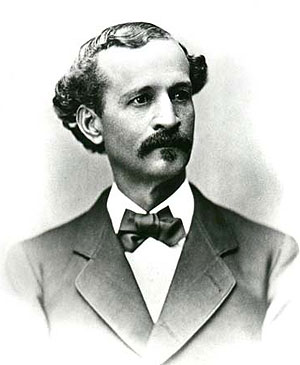
William Jefferson Hardin was born to a white father and Black mother in 1831 in Kentucky, and spent much of his early life traveling the country before settling in Denver in the 1860s. Before coming to Colorado, he briefly served as an officer in the Union army, but had resigned in protest of recruitment discrimination. After leaving Colorado, he went on to become Wyoming’s first Black legislator.
The new constitution created that summer was adopted by a vote of 3,025 in favor and 2,870 opposed, on September 5, 1865. The separate proposal for Black suffrage was defeated 4,192 to 476, sustaining the disfranchisement that was unacceptable to the Blacks and making clear that their quest was just beginning.
Most of the affirmative votes cast for suffrage came from Denver and the booming mining town of Central City, where the largest number of Black people lived. A substantial portion of the “no” votes came from the southern part of the territory. Although Congress passed a bill for Colorado’s admission as a state, President Andrew Johnson vetoed it, believing Colorado had not met all the conditions of the enabling act of 1864.
The public struggle to regain franchise rights for Black people in Colorado resumed shortly after the veto as a Black man, William J. Hardin, who had achieved some renown as a public speaker, took to the platform to challenge James M. Cavanaugh and congressional candidate John M. Chivington, infamous for his participation in the Sand Creek Massacre of the prior year, both of whom opposed Black suffrage. According to one newspaper account, Hardin, during his remarks that lasted some two hours,
…held his audience enchained, not so much by his eloquence, (though at times he became truly so,) as by his keen wit, his searching satire, and the true manner in which he applied his facts; the only moments that the utmost silence was not observed were occupied by bursts of applause or uncontrollable laughter.
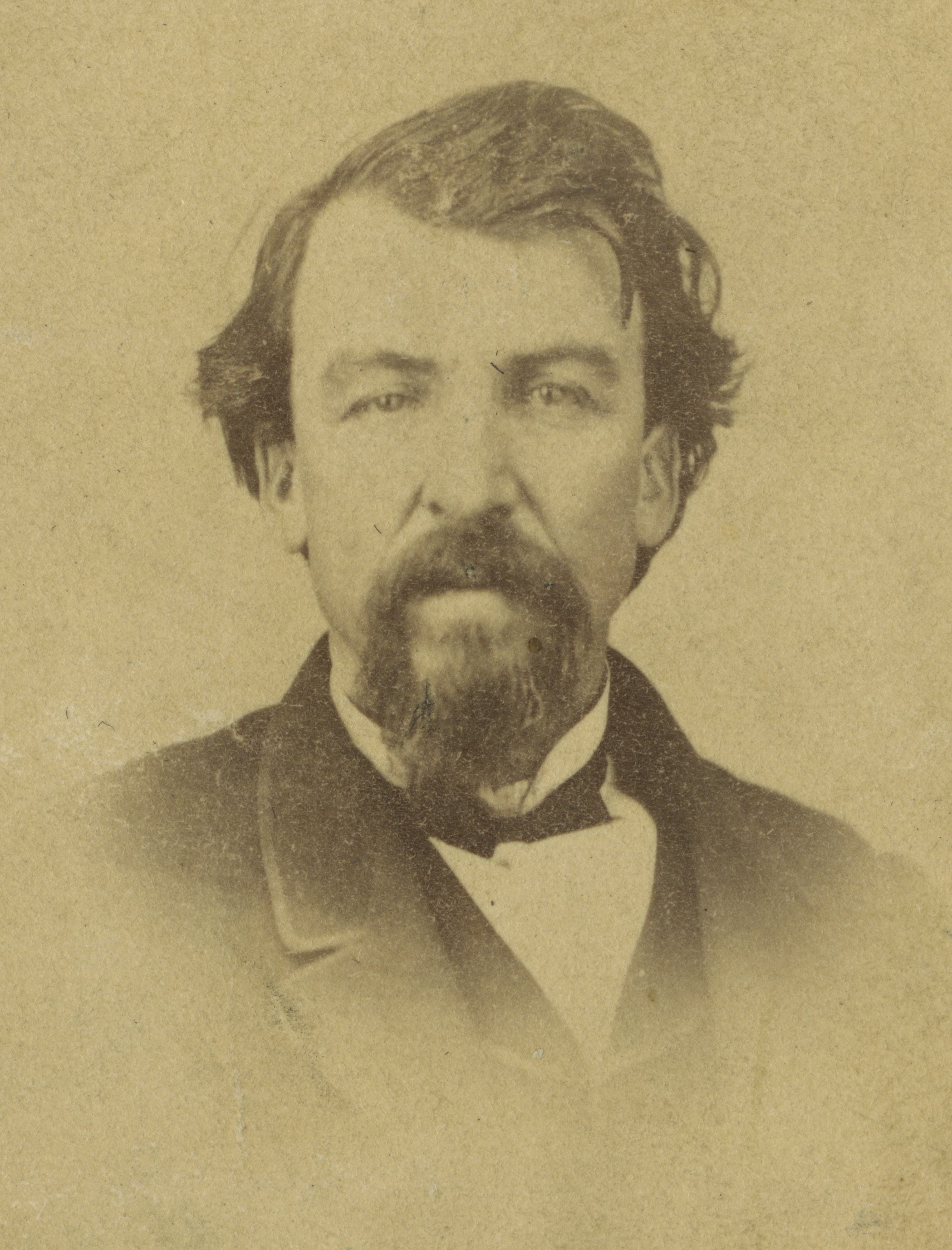
James A. Cavanaugh, delegate to the Colorado Territorial Congress, photographed in the 1860s.
Once he was seated, a vote was taken on whether Hardin “had not established by his address, at least his own right, even though a man of color, to a vote at the ballot box.” Unanimously, the audience agreed that he had. Even Cavanaugh, in remarks that lasted another ten minutes, was moved to change his position and commit himself to impartial suffrage.
Escalating the pressure, Hardin wrote to Horace Greeley, editor of the New York Tribune, on December 15, 1865. His intention, he said, was “to call your attention to the political condition of the colored people of Colorado.” He followed with a series of examples to make his case:
In this Territory we have few rights which the white men are bound to respect. We have taxation and no representation; we pay school taxes to educate white children, and at the same time we cannot draw a dollar from the school fund for the education of a colored child or the support of a colored school in the Territory. In the city of Denver two of our wealthiest colored citizens, B.L. [Barney] Ford and E.J. Sanderlin, pay taxes on from $30,000 to $40,000 each; and yet these men had to send their children East to be educated. In the State Constitution, recently framed and adopted by the Union or Republican party, they incorporated the words, “All White male citizens,” which excludes all her loyal colored citizens from the sacred right of Equal Suffrage.
Accordingly, Hardin continued, the colored citizens of the territory had prepared a petition, given to Territorial Governor Alexander Cummings on December 11 for transmission to Congress, a copy of which he included in his letter. Their intent was to beseech “that Honorable Body not to admit Colorado as a State until she erases from her Constitution the word White.”
Greeley replied on the editorial page of the New York Tribune on January 15, 1866. He took issue with Hardin’s contention that he, Greeley, had urged “the admission of Colorado without exacting Equal Rights for her colored citizens.” The exchange illustrates the case Colorado’s Black civic leaders were beginning to make for their own enfranchisement, and their frustrations with the constant media struggle.
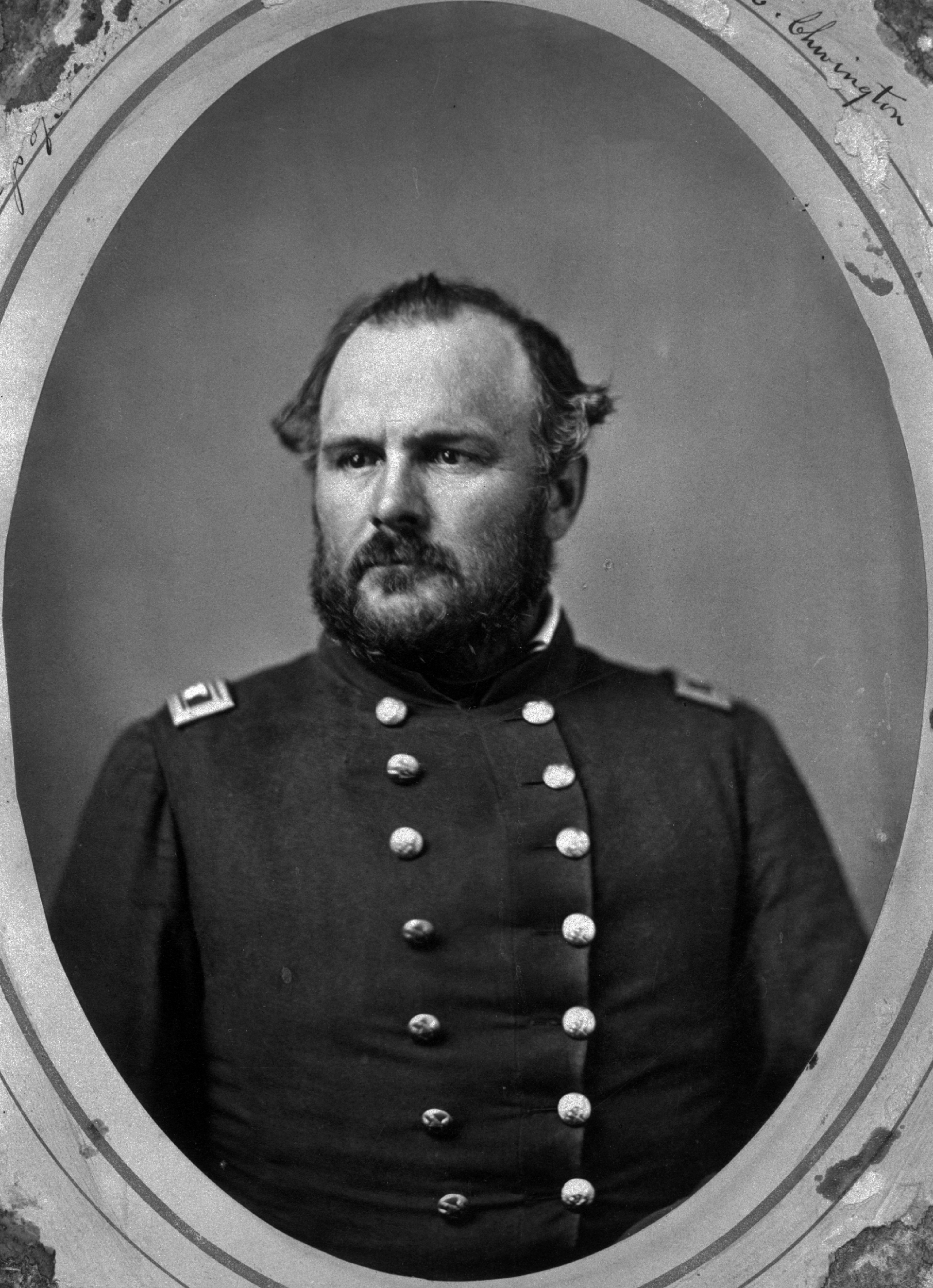
Photo portrait of Colonel John Chivington, notorious commander of the Third Colorado Cavalry at the Sand Creek Massacre. In addition to his military career, he was also very politically active in the new territory.
Pushed to Organize Against Statehood
Alexander Cummings had replaced John Evans (an advocate for statehood) as Colorado’s Territorial Governor in 1865. His role in the Black quest for retrieval of franchise rights was limited mainly to speeches to the Territorial Legislature on the incorrectness and immorality of their actions, and transmission of selected documents to Washington.
With respect to the first of these duties, Cummings responded to a request he had received from H.O. Wagoner, Albert Arbour, A.C. Clark, William C. Randolph, and William J. Hardin. On behalf of “the colored citizens of the territory,” the men wrote,
many of our people emigrated to this territory with a knowledge of the law of 1861, which gave us the same rights as to other citizens, and that we are now suffering from the unjust law of 1864, which deprives negroes and mulattoes of the right of citizenship; and we are suffering from a further injustice which we have personally called your attention to, in reference to the exclusion of our children from the public schools.
They did this believing Cummings would be sympathetic to their cause because of his service as a commanding officer of colored troops during the recent conflict. He prepared an address, the substance of which recapitulated the events contained in materials submitted by the committee.
Stating that he has “the honor to transmit herewith a petition of a committee of the colored citizens of this territory, on the subject of a law passed by the legislative Assembly during its session of 1864, by which they were deprived of their right to vote,” he continues, “It seems incredible, and if it were not for the record, it would be incredible that such a measure could have been adopted at such a time. The colored people, at that moment, were everywhere eagerly pressing forward to the support of the government, and their services were as gladly accepted.” He merely wanted the legislature to do what it had been elected to do: make equitable law that will benefit all of the citizens, not just a select few. But they did nothing. He then forwarded to the Secretary of State several documents, including a copy of a petition making the case against statehood for Colorado until it removed the odious clause from its proposed constitution.
The secretary forwarded the documents to President Johnson, who in turn remanded them to Congress on January 12, 1866, believing with Cummings that the election was of questionable legality. Senator Lyman Trumbull of Illinois moved for their submission to the Committee on the Judiciary and was informed by Senator Benjamin F. Wade of Ohio that they had already been submitted to the Committee on Territories.
On January 15, in a front-page Rocky Mountain News editorial, William Byers published a stinging rebuke to Hardin’s petition. He began with the contention “that over two-thirds of the voting population of Colorado [was] loyal to the Union.” He added that, for Black Coloradans who should feel indebted to the Union in the aftermath of the Civil War, standing in the way of statehood was “an act of treachery and ingratitude rarely exceeded.”
Blacks should, he went on, remember that social change is evolutionary, not revolutionary. Black people have seen some improvements over the past few years, and they must be content with “this regular progression, by which they were being advanced in the human scale”; they cannot have everything they want now!
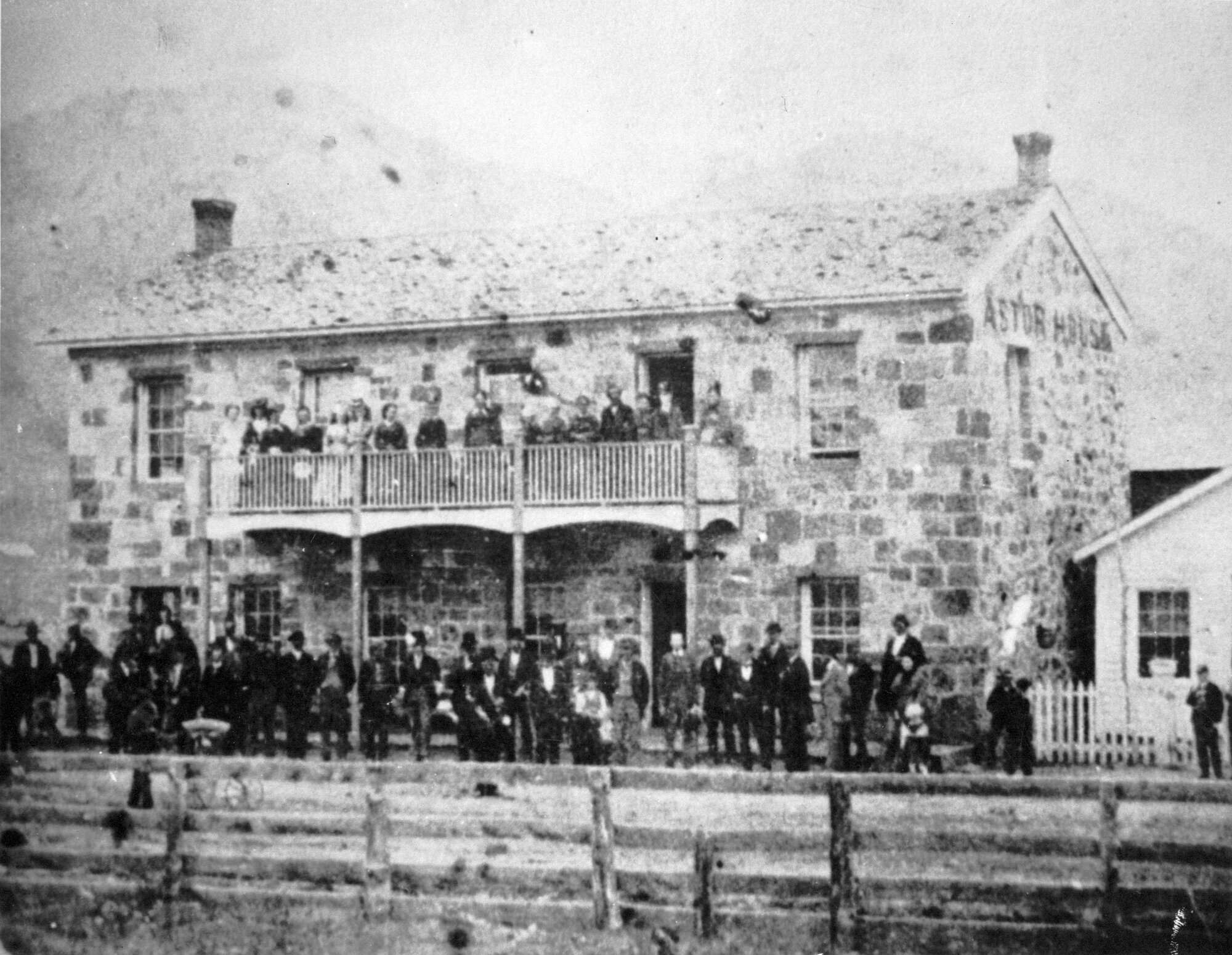
A crowd in front of the Astor House, a tavern and boarding house in Golden, Colorado, built in 1867. Before 1881, Colorado had no permanent capital, so the territorial legislature (and early state legislature) met in a wide variety of locations for official business, including in taverns in Golden.
Byers wasn’t alone in venting his frustrations. Also responding to Hardin’s petition, senators-elect for Colorado John Evans and Jerome B. Chaffee, wrote on January 29, 1866,
…the protest presented to your honorable body against such admission, purporting to be from colored citizens of Colorado, is without signatures, the names being printed thereon. And your memorialists have satisfactory assurances that many of said names were thus used without the knowledge or consent of the parties, and that they have expressed dissatisfaction therewith. And further, that the leading man among them regrets his inconsiderate action, and has since expressed in writing a desire for the admission of the State notwithstanding his protest.
They also wrote that the petition contained misrepresentations, including the assertion “that the framing and adoption of the Constitution were ‘accomplished by the utmost recklessness and disregard of law, and in many cases by actual fraud.’”
What neither of these gentlemen seemed to understand was the extent to which the inequity they detail vitiates the claim of procedural equity, no matter what they might contend about the ease of securing suffrage once the territory became a state.
Nothing more was done on the issue of Colorado statehood until March 12, 1866, when Senator Charles Sumner of Massachusetts attached an amendment to a bill stipulating:
That this act shall not take effect, except upon the fundamental condition that within the State there shall be no denial of the elective franchise or any other rights on account of color or race, but all persons shall be equal before the law.
The following day, Sumner removed his amendment allowing a vote on the bill. It was rejected 21–14 in part because he read into the record Cummings’s message to the Territorial Legislature to buttress his own arguments. However, political realities in the form of increased enmity between the Radical Republicans in Congress and the president resulted in its being brought back because two more votes in the Senate might make a difference.
On April 24, when the debate about Colorado statehood resumed, Sumner observed that the territory appeared to have experienced “a retrogression in republican principle.” At the outset of its creation, there was “a recognition of human rights.” But then, with the redefinition of who was a qualified voter, in “open and bare-faced [language a] caste was established. A discrimination, odious, offensive and un-Christian was organized in the statutes of the Territory.” Even worse, at the time the legislature took this particular action, “the country was still struggling in that terrible war involving the great question of justice to the colored race. At that moment this distant community, already aspiring to be a State in the Union, undertook to put its feet upon the colored race that had began [sic] to gather under its jurisdiction.” Indeed, they were themselves fighting for the Union. But “when they returned to their homes they found that the franchise that they had already enjoyed was taken from them; that they who had periled life for to save the Republic and to aid it in establishing the rights of all, when they once more found themselves at their own firesides were despoiled of their own.”
On the 25th, the bill approving statehood passed in the Senate 19–13, and in the House 81–57. However, Johnson vetoed the bill, giving insufficient population as a reason, without even addressing suffrage. As expected, the Rocky Mountain News was less than pleased at the result. It referred to Cummings as a “consummate ass,” roundly condemned him as having used his influence injudiciously, and made clear that Colorado would be better off without him and he should not return from the East.
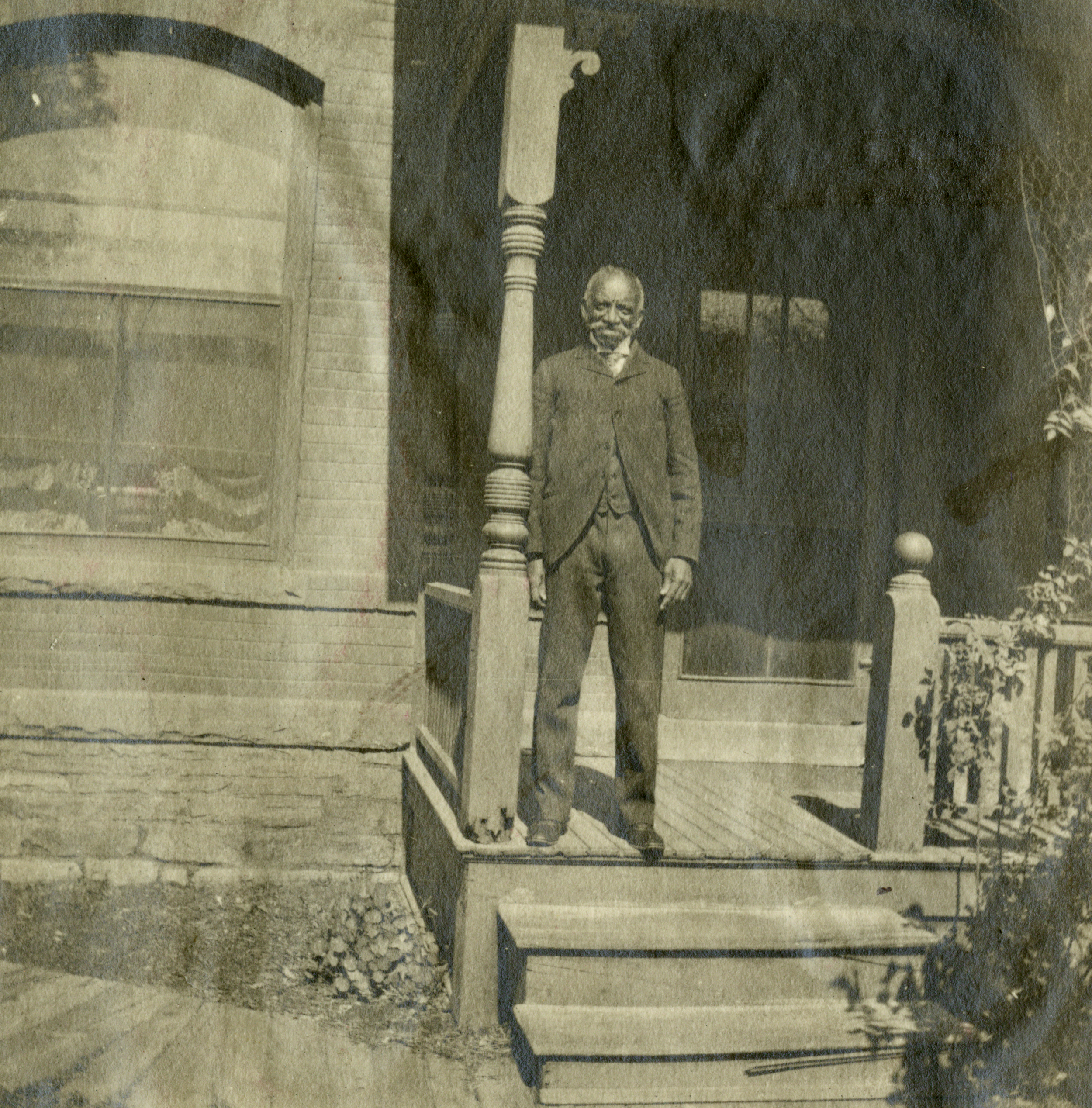
Irving Williams, an elderly Black resident of Denver, photographed on his porch circa 1900.
On his return, Cummings continued his unpopular activities, addressing the legislature in December 1866. Reminding them that he had already spoken about “the laws in relation to the colored population,” he commended them for taking remedial action to use the tax monies collected from them for the education of Black children in separate schools. However, the suffrage issue must still be fixed since the legislature had done nothing when he asked, and that was to be regretted:
It is true, slavery is abolished, but if its spirit remains, and a caste is to be retained among us by which a part of the people are to be deprived of their political rights, and of all hope of improvement in their condition, no matter how upright their conduct or meritorious their conduct, or to what degree of intelligence they may attain, it seems to me the war for the suppression of the rebellion will prove to have been only a partial success, and leave us with the root of the evil, ready again at a favorable moment to germinate and produce incalculable mischief.
Accordingly, he called upon the legislature to “do itself credit [by] responding to the public sentiment of the country on the subject [and establish] impartial suffrage, offering it to all classes and colors, on the same conditions.”
On January 9, 1867, early in the second session of the 39th Congress, Senator Wade of Ohio introduced House Bill 508 for consideration in the Senate. He indicated that it related to the subject that had been under discussion earlier—namely, “a bill to prevent hereafter any distinction on account of color in any of the Territories belonging to the United States.” The Senate, acting as a Committee of the Whole, adjourned before consideration of the bill could be concluded. So, on the following day, the discussion resumed and the following was proposed:
That from and after the passage of this act there shall be no denial of the elective franchise in any of the Territories of the United States to any citizen thereof on account of race, color, or previous servitude; and all acts or parts of acts, either of Congress or the Legislative Assemblies of said Territories, inconsistent with the provisions of this act, are hereby declared null and void.
A vote was then taken and the bill passed 24–7 with 21 abstentions. After its passage, Wade suggested that it be named “A Bill to Regulate the Elective Franchise in the Territories,” and the name was agreed upon. The House approved the bill that same day, and on January 31, 1867, it became law without Johnson’s signature.
Rights Restored but Still Under Threat
In April 1867, a little more than three years after Black citizens were deprived of the right to vote, Black suffrage was restored in Colorado.
In response, the Rocky Mountain News wrote:
A simple act of justice to the colored race of America, so far as the Territories are concerned, has been accomplished, and in all the proud majesty of independent citizenship, the lately reviled and down-trodden negro stands among us to-day.
Black journalist and businessman Henry O. Wagoner, writing to the editor a few days later, made clear that “Colored Men [Were] Awake to their [Changed] Situation.” Now that they possessed “the privilege of exercising the elective franchise in [the] Territories,” they wanted to insure to the best of their ability that Black voters would “be intelligent ones.”
The News also reported on February 16, 1867, that Black Coloradans would be holding “a festival in honor of their endowment with the right of suffrage.” On Thursday the 21st, William J. Hardin would address the attendees on the subject of “Equal suffrage and the duty of colored voters of Colorado.” On the day after the festival, the paper reported that
…Mr. Hardin’s address last evening attracted a large crowd at Cole’s hall. The speaker made an eloquent plea for the colored race, and showed logically that the black man, who assists in the support and defense of the government, should be entrusted with the ballot for its maintenance, and the creation of its laws.
Of particular importance, as subsequent history shows, was the understanding that a future Congress might undo what the 39th Congress had done, especially after the Radical Republicans’ losses in the election of 1867. In the last of the Civil War amendments, the Fifteenth, proposed on February 26, 1869, and ratified on March 30, 1870, a portion of the wording noted above—“race, color, or previous servitude”—was incorporated into Section 1 of that amendment as: “The right of citizens of the United States to vote shall not be denied or abridged by the United States or by any State on account of race, color, or previous condition of servitude.”
This work was excerpted from a longer essay by the author. The original is available upon request.