
 Membership
 Donate
 Shop
Shop


























The Most Famous Hostess You’ve Never Heard Of
The story of Ida Stingley Newhouse, once the darling of high society on two continents—now all but vanished from the history books.
Buried in the boxes of the Louise and Crawford Hill collection in the Hart Library at History Colorado Center is the photograph of a painting of a young woman. Her languid pose is one of relaxed elegance, typical of the Gilded Age. Her limbs are delicately draped over each arm of the chair, fan in hand as she gazes at the viewer with a slightly tilted head and knowing gaze.
Previously, this image had been attributed as a likeness of Louise Sneed Hill, the social leader of Denver’s Sacred 36 at the turn of the last century. This is understandable—after all, it was amongst her personal papers and images. But in fact, the woman in the image is not Louise. Rather, it is a picture of a renowned social favorite of the Gilded Age—a leading society hostess in London, well-known in Newport, Denver, New York, Paris, and Salt Lake City, who counted amongst her friends famous English composer Arthur Sullivan and King Edward VII. A remarkable Jewish, Western woman, Mrs. Ida Stingley Newhouse.
While information about her husband Samuel Newhouse, a successful mining magnate, is relatively easy to find, little has been shared about Ida. More than a century ago she was heralded as a reigning favorite of London society, yet since then Ida has all but vanished from the history books. Who was the captivating woman who entertained royalty, “captured hearts” in London, and was deemed one of the smartest hostesses in the United States and England?
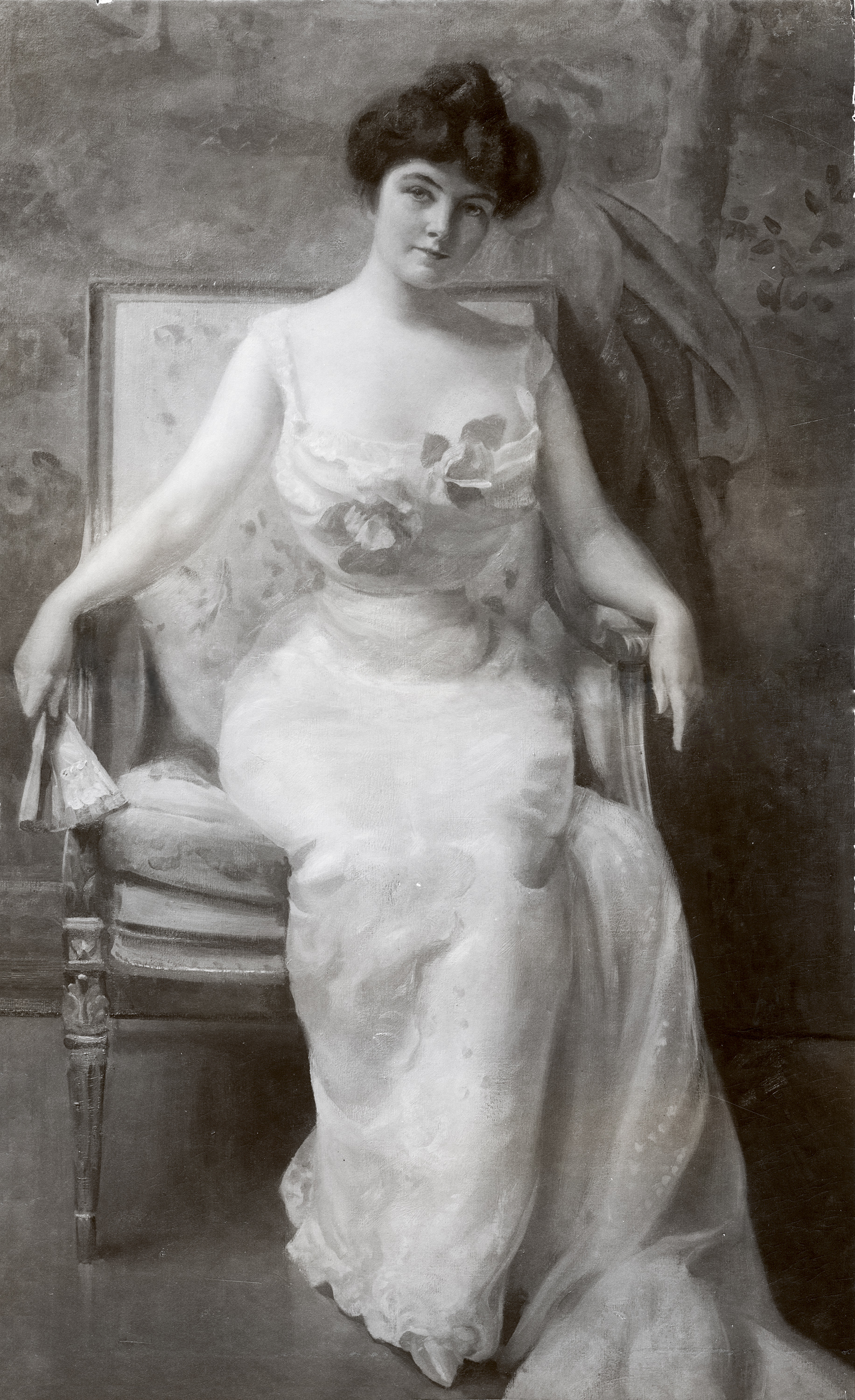
A reproduction of an oil painting of Ida Stingley Newhouse. Painted by Prince Pierre Troubetzkoy in 1908. Previously, this image had been incorrectly identified as a likeness of Louise Sneed Hill.
The story of beautiful Ida and energetic Sam is a western boom-and-bust tale. It was said that “no one rose faster or fell farther in a short period of time” than Samuel Newhouse. And while Ida did not leave behind an extensive collection like Louise Hill or other contemporary socialites, a surprisingly in-depth chronicle of her life can be crafted from the countless records she left behind in correspondence, newspaper articles, society pages, photographs, and oral histories.
From this tapestry of sources we can see that Ida Newhouse was a woman of great courage and strength. She possessed a spirit of generosity, and never failed to aid others in need or support philanthropic causes close to her heart. A woman of humble origins, she never disregarded her roots, and it was said that this is what endeared her to the English. From waiting tables in her mother’s boarding house to being invited as an honored guest of the Court in London and drawing rooms of fashionable society, Ida Stingley Newhouse was a woman of many talents who rose from modest beginnings to the highest echelons, making a notable impact every step of the way.
Origins & Fortunes
Ida Hiram Stingley was born on September 3, 1863, in Virginia to parents Hiram Stingley and Mary Hott[e]. She had two older siblings: Richard and Mary “Mollie” Stingley. Hiram passed away when Ida was just a young girl and her mother relocated the family to Manhattan, Kansas, where by 1870 she was running a boarding house. By 1880, Mary Stingley and the children had relocated to Boulder, Colorado and not long after made their way up to Leadville. According to the Leadville Daily Herald, Ida spent time socializing with other young women in the area and taking part in sporting activities; she was a “most graceful” skater.
Around 1881, Ida met Samuel Newhouse, who was almost ten years her senior. Born in 1854 in New York City to Jewish immigrant parents Isaac and Barbara Newhouse, his family relocated to Pennsylvania when he was young and settled near Wilkes-Barre/Scranton. The Newhouses became well-known members of the area’s “select circle of Jewish people.” Sam was educated in public schools before studying law, eventually moving to Colorado in 1879 where he settled in Leadville and delved into freighting and the newspaper business.
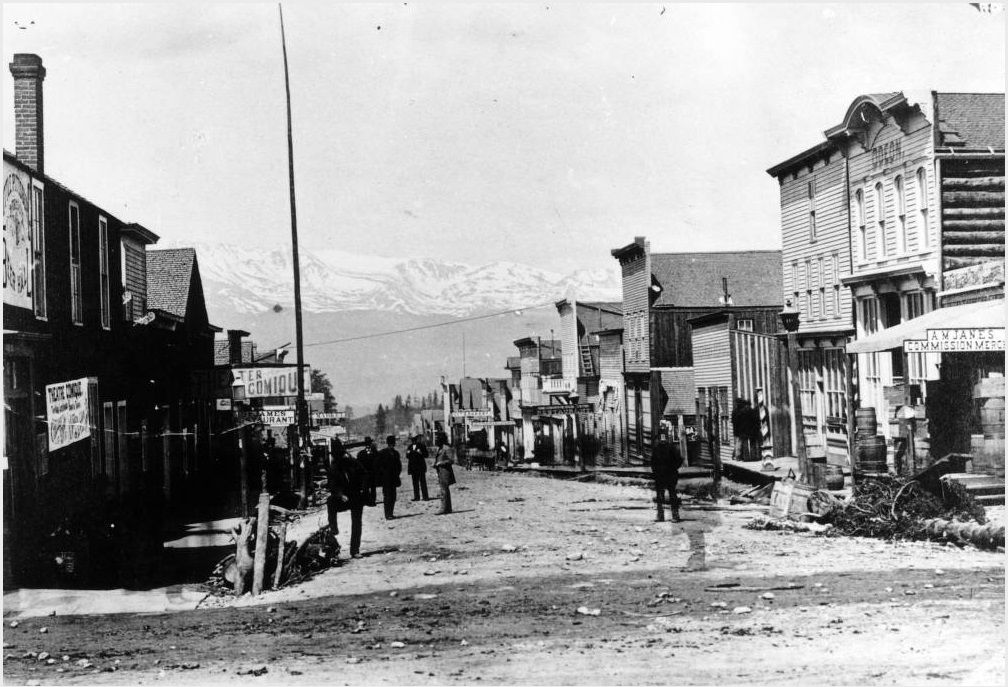
View west down the famous State Street in Leadville, Colorado. The business district included gambling establishments, brothels, and other businesses. Photo by George D. Wakely, 1880–85. Denver Public Library, Western History and Genealogy Department.
Ida and Sam first became acquainted at Ida’s mother’s boarding house at 110 West Sixth Street in Leadville, where Ida was working as a waitress. In December 1882, the Leadville Herald reported Sam and Ida were dating and attending local social functions together.
This kind of nosy reporting was typical of the time, especially in wealthy circles. In the late nineteenth century, the gossip economy was flourishing. While there specifically grew a thirst for information of the upper classes, it was standard practice to share the comings and goings of local residents. Before the days of posting to one’s story on social media, or even catching up with friends over a phone call, newspapers were the main vehicle for sharing everyday life happenings. It was a way to help spread common information, such as when a family left town (so others would know not to visit or “pay a call” on them), at a time when communication was limited. It was a thriving business, and one that Sam and Ida encountered more and more as they climbed the social ladder—leaving an often-fascinating paper trail for us to follow more than a century later.
On January 1, 1883, Ida married Sam in Denver. While there are not any contemporary reports on their union, The Herald Democrat shared in 1902 that Ida was “a very pretty girl and had many admirers in Leadville.” Of the few pieces of information subsequently published about Ida and her union, they all sadly misrepresented her age, claiming she was only sixteen at the time of her wedding (she was actually nineteen). Of Sam’s time in Leadville, the columnist wrote it was “a sad failure, with one exception, the choice of a wife.”
After their marriage (and a series of business failures for Sam), the Newhouses relocated to Ouray, Colorado. In Ouray, they became connected with another former Leadville resident, Chauncey Nichols, the manager of the newly constructed Beaumont Hotel. It was through this vital connection that Sam achieved his success.
Supposedly, Sam was working as a clerk at the hotel while he dreamed of investing in mining. In a fateful turn of events, an unnamed Englishman (who was apparently a member of British nobility) checked into the hotel and became friendly with Sam. When “his lordship” fell ill, Sam and Ida nursed him back to health. Ida took it upon herself to cook all of the Englishman’s meals, and she supplied “every little comfort and delicacy” she could think of. The man was ill for several months before he finally regained his strength and returned to his home country. Due to the exquisite kindness Sam and Ida had shown the Englishman, before he left Ouray, he made Sam an offer: If Sam could secure a legitimate mining deal, the Englishman would work with his connections to supply the money.

The Newhouse Tunnel, the entrance to the Newhouse Mine in Colorado.
With financial assistance from English backers, Sam acquired properties near Idaho Springs and formulated an idea for a tunnel that would greatly assist in mining drainage. Originally called the Newhouse Tunnel (now known as the Argo Tunnel), the plan grew in scope until it intersected with almost all the major gold mines in the area. In addition to the tunnel, Sam invested in a mining venture in Ouray. The results were spectacular and earned him millions. That serendipitous encounter with an ill Englishman, and Ida’s care and compassion for those in need, created the framework for the success of the Newhouses.
In the mid-1890s, still backed by his English investors, Sam decided to expand his business interests to Utah where he partnered with mining engineer Thomas Weir. Together the men acquired the Highland Boy mine, which was rich in gold, silver, and copper—and four years later sold it to Standard Oil for twelve million dollars. Sam’s mining businesses expanded, and in 1900 he purchased the Cactus Mine and surrounding town, renaming it Newhouse. By 1905, the once-failing mine town had numerous permanent structures including stores, homes, a library, hospital, and opera house. Sam also purchased a large amount of property in Salt Lake City—he owned an opulent residence at 165 East South Temple (once known as Brigham Street, the premier residential avenue in Salt Lake City that Brigham Young once called home)—and over the next twenty years he worked to build up the downtown area, financing more than thirty buildings including the first two “skyscrapers” in the city.
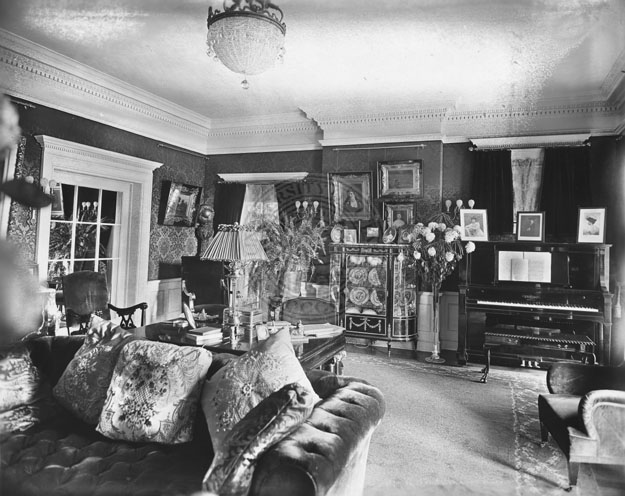
The drawing room of the Newhouse residence.
But the growth of their fortune was not Sam’s work alone. While Sam was busy with the traditionally male role of establishing the businesses, Ida wasn’t idle. She was a treasured “asset in dealing with European investors” who cultivated relationships with key contacts in Europe.
As their wealth grew, the Newhouses took up residence in New York and, by 1893, Ida began spending significant time residing at the Hotel Belgravia in London. It is unclear exactly how they made the leap into the international set (perhaps through their sickly nobleman friend), but by 1895, the Newhouses were welcomed guests of the British elite.
Social Success
In late-nineteenth-century America, antisemitism rose dramatically and became an obvious and prevalent issue. This racial and religious exclusion was not a new phenomena. Early on, American culture painted Jewish people as outsiders, otherizing them as greedy and untrustworthy people. These negative, harmful sentiments were deeply embedded into the fabric of American society and spread across the West, and were perpetuated in print. As nineteenth-century Rabbi Isaac Wise once said, Jewish people were portrayed negatively in “every cheap novel, every newspaper.” According to Rabbi Wise, jokes at the expense of Jewish people and culture were used in the press to “fill up space,” and many kept “jokes on hand for use in public address.”
The systematic exclusion of Jewish people had no bounds. Private institutions, clubs, universities, hotels, hospitals, law firms, and so on adopted anti-Jewish rhetoric, instituted policies and quotas against Jewish people, and operated exclusionary practices. With this strong sentiment surrounding her native country and social world, it is remarkable that Ida Newhouse was able to so effectively and completely enter high society. One must assume Ida possessed immense internal fortitude to tackle these difficult situations head-on.
In England, perhaps, Ida had a slightly easier transition. Prince Albert Edward, then Prince of Wales and future King Edward VII, had many Jewish friends and opened many previously-closed doors for Jewish people in British society.
That’s not to say antisemitism wasn’t present in Britain as well, or that it didn’t pervade London’s elite social scene. Indeed, Jewish people had not been legally allowed to take a seat in Parliament until 1858 unless they publicly converted to Christianity. Though the Prince of Wales possessed a welcoming stance to Jewish people and was unwavering in his expectation of British Jews being welcomed at social gatherings he attended, he was swimming against a broader current of antisemitism that was only becoming stronger across Europe. While the Prince’s support for their people must have been a comforting notion for Ida and Sam, it by no means prevented discrimination against them.
Despite the tumultuous times, with her smiling eyes and beauty Ida quickly secured valuable connections in British society. Early in her social career, she fostered a close relationship with famous English composer Arthur Sullivan, of Gilbert and Sullivan fame. The letters he wrote to Ida, preserved in his collection of papers at the Morgan Library, express clear affection and a sense of intimacy. In 1895, when writing to Ida about social activities, he penned and underlined quite simply, “I rely on you.” In further writings, the whimsical side of their relationship shines through as he wrote: “you and I will buy a golden chariot and together we will roll down Piccadilly and Victoria St.”
Interestingly, in 1897, Sullivan wrote to Ida about her financial situation. As her wealth was still growing, he expressed “I have great faith in you, and I am sure that when you are a millionaire you won’t throw me out or show me less affection than you do now.” He went on to write, “you know that in my sight you are a darling, and that there are very few people in the world whom I love more than you, if any.” He signed his letter to “My dearest little pearl. Ever your loving, A.” It seems that Ida returned these sentiments, as she once stated amongst her greatest sources of happiness was that she had been able to “retain the affection of all [her] old friends, despite the accumulation of money.”
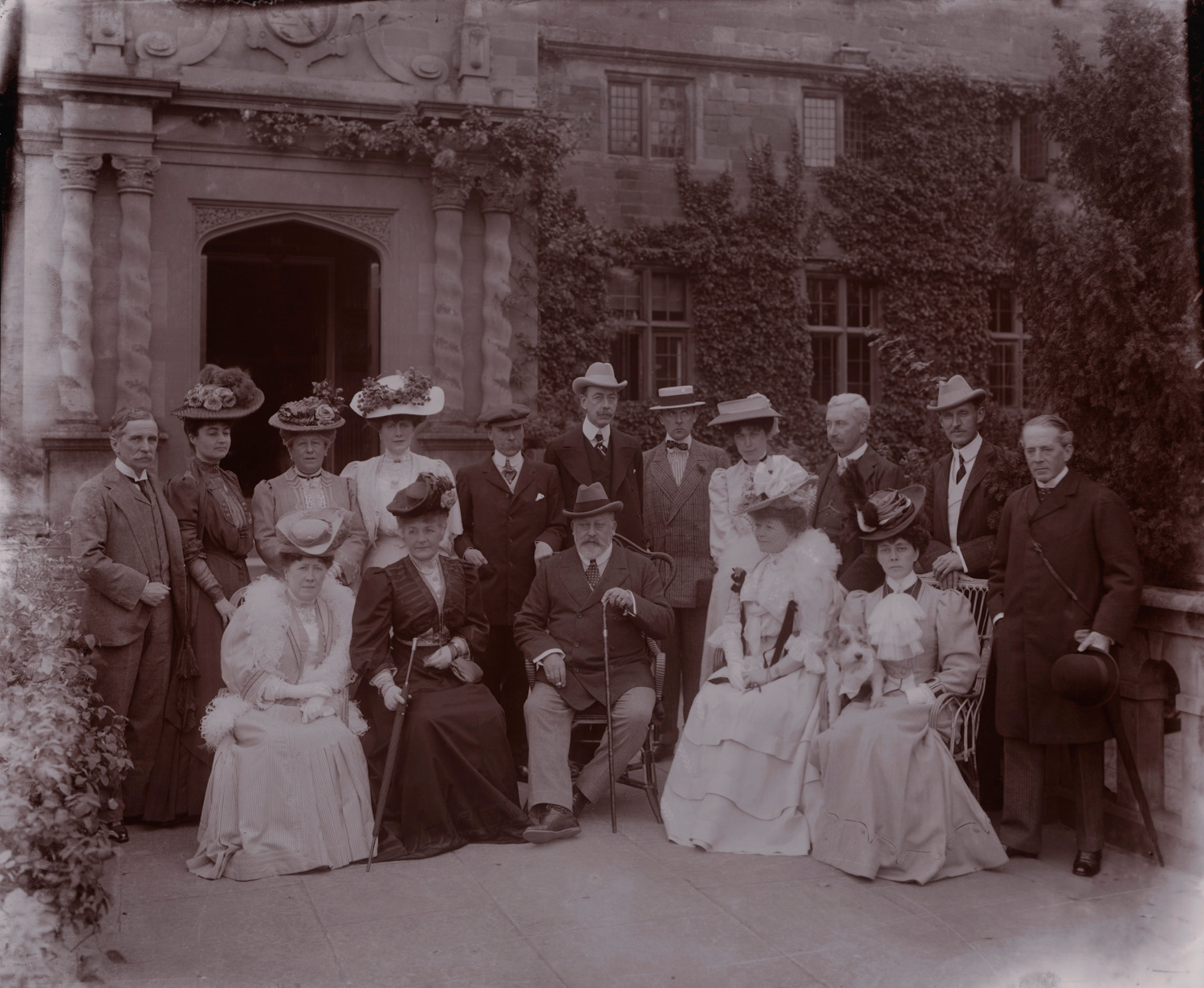
The Marlborough House Set was the nickname of the Prince of Wales’s social group, from the late nineteenth century through his ascension to the throne. The group was numerous and included more individuals than pictured here. King Edward VII is seated in the center. Alice Keppel, the King’s mistress and friend of Ida Newhouse, is fourth from the left in the top row. Photograph by David Knights-Whittom, between September 10 and 17, 1906.
Ida’s star continued to rise quickly, up to and beyond the turn of the century. Soon, she found connections that placed her amongst the Prince of Wales’s social set in London. She was a close friend of Alice Keppel, who became the Prince’s mistress in 1898. By 1901, Ida was considered “a notable member of the American colony in London” and that same year, her name became synonymous with a famous piece of jewelry—a string of Tiffany & Co. pearls.
Ida and Sam traveled to the Pan-American Exposition—a world’s fair held in 1901 in Buffalo, New York—and visited the Tiffany exhibit. It was a lavish display of glass, windows, bottles, tapestries, and more that occupied 16,000 feet of space in the Exposition. The piece that caught Ida’s eye? The “famous Tiffany pearls” that were supposedly originally intended for the famous Mrs. Astor of New York. Reportedly, Ida and Sam purchased the string for one hundred forty thousand dollars. Ida became known as “the woman with the finest pearls in the world” and her rope became “envy of many a noble dame.” Her jewelry collection did not stop there, however. Her jewels became a rather frequent press feature, including her pearl and diamond tiara and a set of seven rings of “rare cost and workmanship” given to her by Sam. These rings included a yellow diamond, white pearl, black pearl, ruby, sapphire, and emerald. The listing of her jewels was done amongst such illustrious company as the Countess of Carnarvon, the illegitimate daughter of Alfred de Rothschild.
Ida maintained a London residence (most often at the hotel Claridge’s) and in 1904, she had her photograph taken by the famous female portrait photographer Alice Hughes. It was published in the February 20 edition of The Queen, The Lady’s Newspaper. Alice was a society and royal portraitist, and was the favorite photographer of the royal family. Alice only photographed women (sometimes accompanied by their children), and her clients included Queen Alexandra, Alice Keppel, and many other aristocratic and royal women. To have Ida’s photograph taken by such an illustrious photographer and published in a London newspaper was something of a seal of approval from British high society. A short article on “Americans in London” accompanied the photograph, in which Ida was featured prominently. The reporter stated Ida was “one of the most popular” American women in London, and the dinners and luncheons she hosted during the Coronation season of King Edward VII were “some of the most enjoyable entertainment” of that season. The article went on to state that Ida was to be seen at all “smart functions” and was always amongst the “notably well-dressed.”
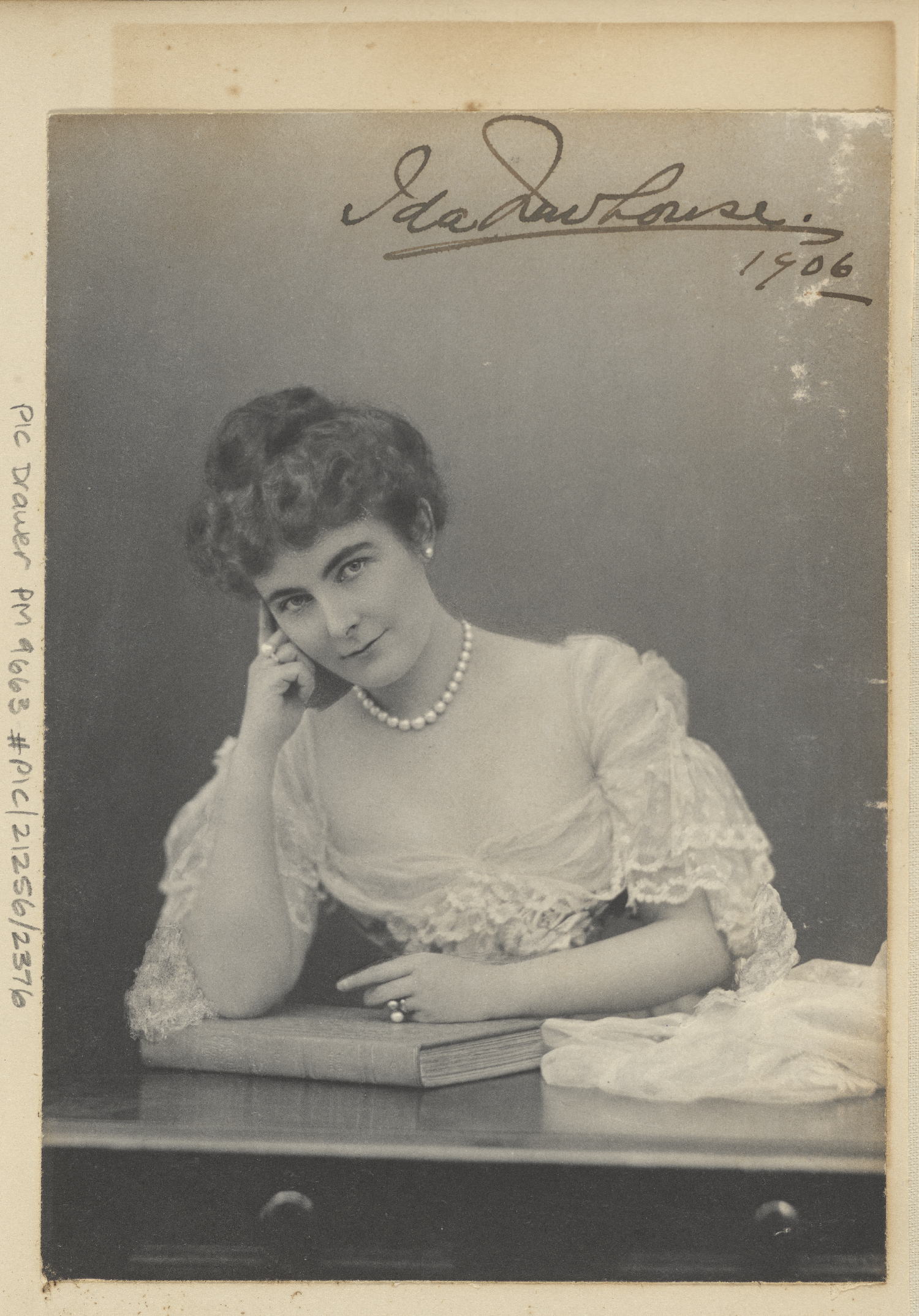
This image of Ida appears to be part of the same series of photos captured by photographer Alice Hughes. A very similar portrait of Ida (same set but slightly different pose) attributed to Hughes was published in The Queen in 1904.
Her social connections continued to thrive. She became very fond of now-King Edward VII, and it would appear he felt the same—it was noted that Ida was seated to his left at social dinners and breakfasts. After one such breakfast in 1907, reportedly Ida and His Majesty drove into the city together and did some shopping. In Ida’s parlor hung a portrait of His Royal Highness mounted in a silver frame and autographed. Ida eventually reached the pinnacle of international success when she was presented at Court. While not an unprecedented occasion, even for an American, it signaled a major nod of approval from the Crown and acted as a “golden ticket” of acceptance and recognition on an international scale. Being presented at Court gave further legitimacy to her social standing, and on May 26, 1908, Ida attended the state ball at Buckingham Palace by “royal command.”
In 1908, her social position was cemented further when Prince Pierre Troubetzkoy painted a life-size portrait of her. It is this painting that is reflected in the photograph in the Louise and Crawford Hill papers at History Colorado, and this portrait graced the stairway of the Newhouse’s Salt Lake City mansion.
Though she once said she really did “not care about money at all,” she admitted she was “fond of pretty things” and over the years she accumulated a stunning collection of gowns. This collection caused “sensations” in 1910 when she attended a series of events in Scotland, where she stayed with infamous New York socialites Mr. and Mrs. Bradley Martin at their rented estate near Loch Ness.
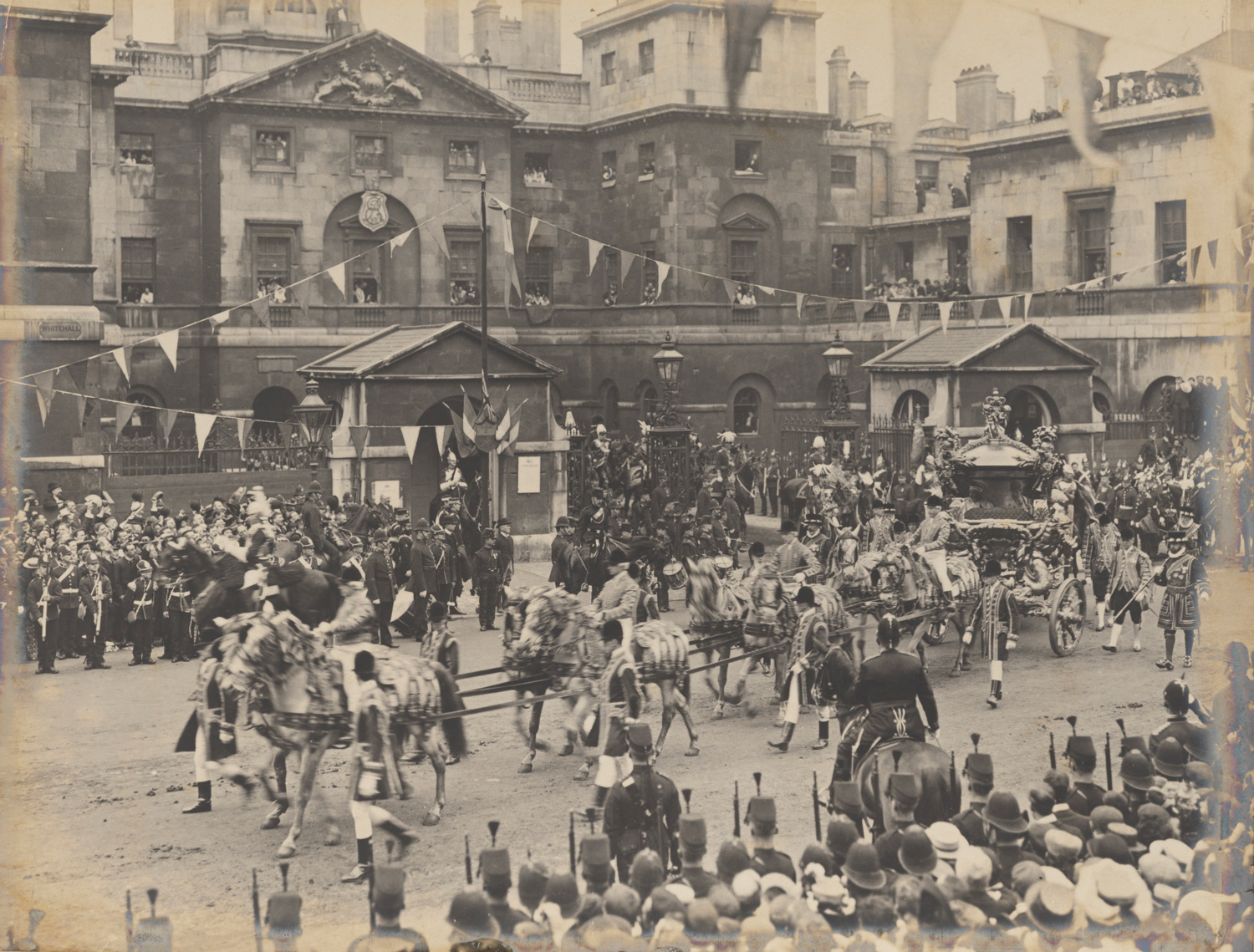
The Coronation Procession of King Edward VII outside Horse Guards, Whitehall, by an unknown photographer, August 9, 1902.
At the time, Ida was thriving at the peak of society, an unknown and unimaginable height for a Jewish woman of her modest background. Little did Sam and Ida know the sparkling world they had worked tirelessly to conquer would soon come crumbling down around them.
From Boom to Bust
Around 1910, Sam began to run low on funds. He was still investing in projects, but finances were becoming tight, especially with his work on the Newhouse Hotel, one of his elaborate projects in Salt Lake City. It took at least four years to gather the financing and finish the hotel, and in 1916 his financial empire took a downturn. He began selling off some of his property holdings in the city, but newspapers noted even with these sales he could still count himself amongst the class of millionaires.
In England, the death of King Edward VII in May 1910 had sent the country into a period of mourning and dramatically changed the British social world. With his death, the period of lavish decadence he oversaw first as Prince of Wales and then King abruptly ended. The London social season that year was all but canceled, with the few remaining events adopting a somber air as all attendees wore black mourning dress for the late monarch. That season of the Royal Ascot horse race, usually a colorful and decadent event, became known as the “year of Black Ascot.” Millions gathered for the King’s funeral and it was reportedly the largest gathering of European royalty ever. While it is not confirmed, one can imagine as a member of his circle, Ida would have attended.
After the period of mourning in British society, and despite their financial setbacks, Ida continued to support philanthropic causes and entertain. According to a 1912 newspaper article, she was voted the third-smartest woman in London. But as a more austere monarch ascended the throne and tensions in Europe erupted into war, it was clear that the London social scene Ida had called home for two decades would never be the same again.
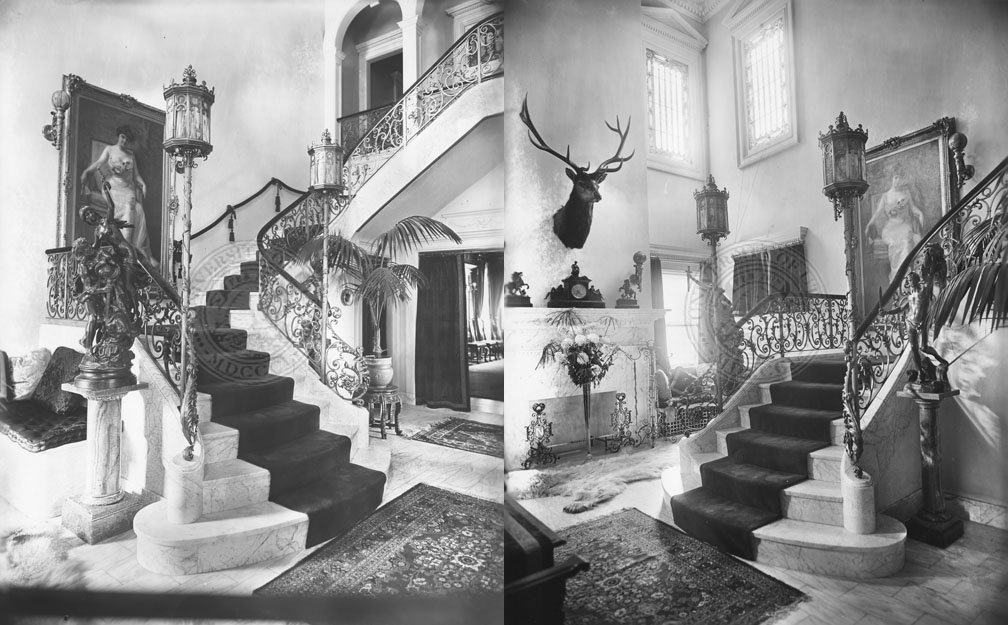
Two viewpoints of the stairway/entryway of the Newhouse mansion in Salt Lake City, Utah. The oil portrait of Ida is featured in these images gracing the landing of the staircase.
Ida remained in London during the First World War. One newspaper even claimed she acted as a Secret Service translator in the Foreign Office and volunteered in the canteen scrubbing floors and washing dishes—though this has yet to be substantiated. Regardless of the nature of her involvement, the war impacted her deeply. In an April 1919 letter to Crawford Hill, husband of Denver’s Sacred 36 social leader Louise Sneed Hill, Ida wrote “nearly every other friend” of hers in England was killed in the war. “It all seems like a horrible nightmare now,” she reflected. “Life can never be the same again to me.”
Sam and Ida spent the war years apart and they began renting out their Salt Lake City mansion to friends, and then to the Knights of Columbus to be used as their clubhouse. One can assume Sam took some of their personal belongings and lavish furnishings from their mansion to his new Salt Lake City hotel, where he was living on the eleventh floor. It was said Sam “sat in his elaborate offices on the top floor of the Newhouse Building, paneled with imported woods, furnished in rare mahoganies and tapestries, while listening to the division of his wealth.”
Some historians have claimed the couple separated in 1914; however, in 1919, after years spent living abroad, Ida returned to Salt Lake City and took up residence at the hotel alongside her husband. Though now living stateside, Ida was still friendly with the English elite and assisted them with American connections. In a September 1919 letter to Crawford Hill, Ida wrote of an English friend of hers, Lord Esme, who was interested in relocating to Colorado for health reasons. While not directly addressing her difficult financial situation, she let Crawford know her husband Sam was investing in a new “cotton deal” that he expected to “make a success” and she “felt sure he [would].”
Despite her apparent optimism, their financial situation only continued to worsen. Over the years, Sam and Ida had spent frivolously at times (supposedly on things such as thousand-dollar linen sheets recommended by King Edward), but had also been generous with their fortune. They had hosted lavish dinners in celebration of friends and their children—especially during the social season, when they would host dinners for girls making their debut. Guests were served on “solid gold plates and received pearl necklaces” as gifts. They also took care of their family members and purchased homes for them. All the while, they supported many charitable causes, giving freely to Jewish institutions and Catholic charities, and a Utah YMCA as well. Ida once said in an interview that she liked “comforts but money just for money’s sake has no charm for me.” As her world began falling down around her, this statement was put to the test. It was said “everything went…the private cars, objects d’art” and even some of their more expensive personal possessions.
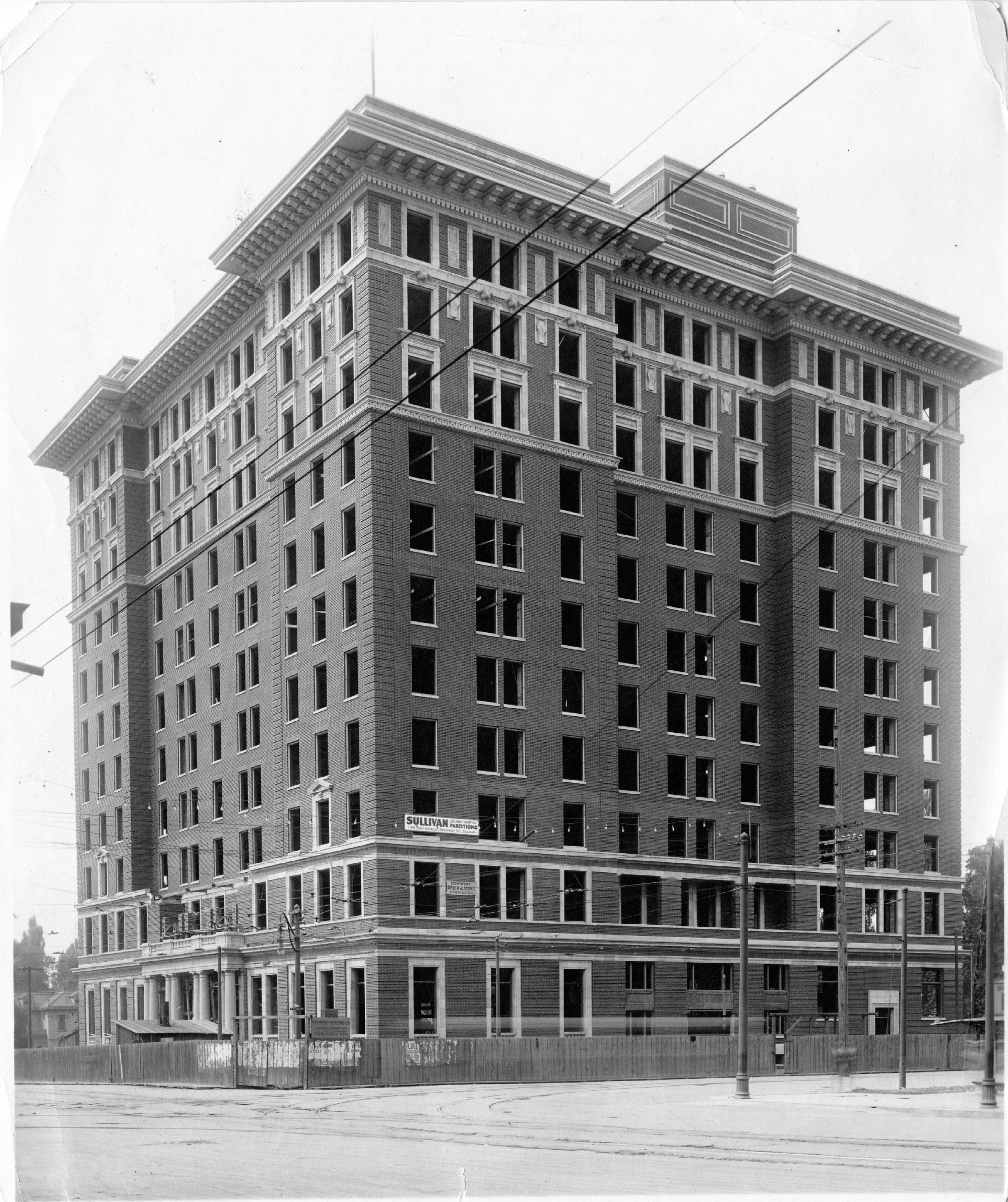
The Newhouse Hotel in Salt Lake City, Utah.
In 1920, Sam and Ida permanently separated. She left Salt Lake City for an “indefinite stay” with her mother in Los Angeles. Unfortunately by 1921 Sam, former owner of property and mining interests around the world, was broke and he moved to Paris to live with his sister. It seems unlikely their financial situation was the only reason they separated, as according to those who knew him, Sam “liked the ladies” and “always had a chorus girl or something around.” Shortly after that, Sam finally sold their mansion in Salt Lake City. Their former residence, once quoted to have cost one hundred thousand dollars, was sold for only twenty thousand. Their decadent wine cellar that was once filled with “Napoleon Brandies and vintage champagnes” reportedly sold for eight thousand dollars.
Sam made further attempts to regain his fortune by traveling to Mexico for mining projects, but nothing came to fruition. In 1929, perhaps in a moment of nostalgia or an attempt to reconcile with things he lost, he wrote to Louise Hill. While his letter no longer exists, in her February 19, 1929, reply she stated “I was delighted to hear from you again. I often think of you and all the pleasure you used to give us. We did have delightful times, did we not?” She signed her letter “Believe me, my dear Sam, always with best love.” Sadly, a year later, the once-successful entrepreneur, developer, mining magnate, and property investor, passed away in Paris in 1930.
Most newspaper death notices reported Sam as a “retired capitalist” and some speculated he must still have money based upon his earlier successes, but it appears Ida did not come into a large inheritance after his passing. Upon his death, Louise Hill sent Ida a letter expressing her condolences and enclosed a copy of Sam’s obituary in a Denver newspaper. Louise wrote she was “always devoted to Sam, and his passing makes me very sad.”
After Sam’s death, not much is recorded about Ida—in fact, the newspaper coverage ceased. After decades of opulence and high-society living, she spent the rest of her life quietly and modestly in Los Angeles, California. She passed away there on March 17, 1955, at the age of 91.
The drawing room of the Newhouse residence.
Legacy
The decadent jewels, haute fashion, fabulous homes, furnishings…at the end they were all gone, their whereabouts unknown. Supposedly, friends had come to their aid during struggling years, helping them retain assets in the form of an “informal receivership.” The Newhouses never had children of their own, but Ida had a close relationship with her niece, Mary Moore McCaskell, who spent time with her abroad. Ida hosted Mary’s wedding to Jasper Alan McCaskell in her Salt Lake City mansion in 1909. It is possible Mary inherited any pieces Ida was able to retain as the Newhouse wealth crumbled.
The story of Ida Stingley Newhouse is one of both ultimate triumph and loss. From one viewpoint, it is a classic boom-and-bust Western narrative—a timeless tale of striking it rich, achieving success, and, in the end, losing it all. The Newhouses were self-made and they achieved a level of social acceptance unheard of for formerly poor Jewish individuals of that time. Ida wielded immense social power, remarkable for anyone but especially for a woman of her time, and ran in the circles of some of the most famous, recognizable, and influential people in the world.
This begs the question: How was Ida able to make the leap into elite circles? How was a Jewish girl of humble origins, who had worked as a waitress and had no formal education to speak of, able to entertain at the peak of Gilded Age and Edwardian society? To become a sought-after companion and famed society hostess around the world in the smartest sets of her time? And how does that achievement disappear from the pages of history?
It is reasonable to assume the loss of their wealth played a role in history forgetting Ida’s name. With Sam’s financial difficulties, there was only so much Ida could do to remain socially active and a part of that world. But the Great War also changed her beloved London drastically. As she said, many of her friends perished in the conflict. She was able to maintain her remaining social connections throughout the 1920s—but with Sam’s continuing financial decline and death in 1930, Ida neither had the resources to continue maintaining her previous lifestyle, nor was she in a position to return to the workforce. At the time of Sam’s death, Ida was 67 years old and had not worked a salaried position since she was a teenager.
A combination of these factors contributed to Ida vanishing from public memory. But this prompts the question: Why was Ida forgotten when we remember other boom-and-bust women of her era such as Baby Doe Tabor? Is it because Ida’s life was not sensational or important enough? Most likely, it is because no one has cared about her story or taken the time to understand her life. Too frequently, women have been erased from the narrative. Traditionally, when they were included, the approach to women’s history was to choose one exceptional figure, writing a compensatory history: a belief that one female example of a generation, a culture, or phenomena was enough to represent countless women—no further examples required. While great strides have been taken in recent decades to rectify this, there are so many stories left to discover, so many women’s lives yet to be explored.
It was once said: “Mrs. Samuel Newhouse is a beautiful woman; she has every blessing that money can give as well as all that health can provide. Her simplicity, her frank cordiality and absence of pose are delightful to bear witness to in these days of snobbery and pretentiousness.”
While we may never possess a complete picture of the life of Ida Stingley Newhouse, through the fractured remnants we can say with certainty she was a woman of impressive nature. Ida was a small but mighty force; a formidable, Western, Jewish American woman who achieved social prominence most women of her time could only dream of. An improbable and incredible feat for someone who was once a young waitress and mining wife living in a cabin in Leadville.
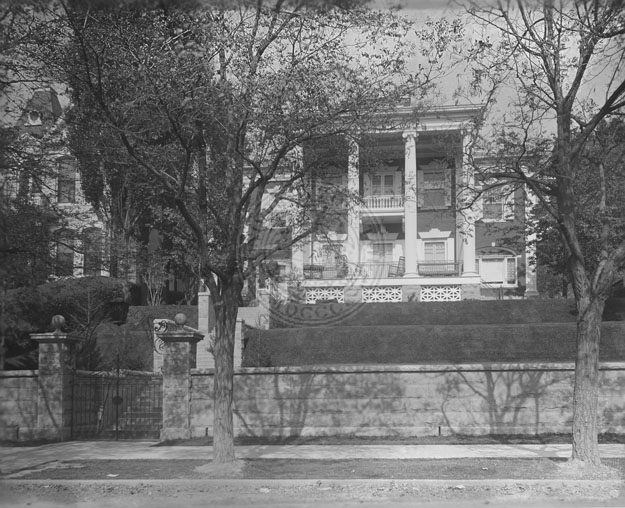
Exterior view of the Newhouse residence in Salt Lake City, Utah, about 1903.