
 Membership
 Donate
 Shop
Shop






























Rocky Mountain Martian
At the height of the Civil War, an international (and interplanetary) humbug straight out of science fiction dazzled the world.
In the summer of 1864, it was reported that scientists from across the globe gathered in the Colorado Rockies, at the base of James Peak, to investigate what was being heralded as “the greatest scientific discovery of times past and present”—undeniable evidence of extraterrestrial life!
But if you’ve never heard of this truly momentous scientific discovery, that’s really not very surprising. The entire affair was a marvelously elaborate hoax, a humbug that played out from June of 1864 to April of 1865, not in Colorado but, instead, in the pages of a trusted French newspaper.
All the News That’s Fit to Print—and Some That Isn’t
While their primary purpose is conveying the news, newspapers have also long been a source of entertainment. Admittedly, some come down overwhelmingly on the entertainment side of the ledger. Consider, for example, the absurd tabloids that until fairly recently were positioned on racks by grocery store cash registers. Many of us remember the guilty pleasure of reading their hallucinatory headlines while waiting to pay for our groceries.
Among the best known of the tabloids is the National Enquirer focused on salacious celebrity gossip, but for my money the best of the breed is the Weekly World News (WWN) filled with incredible stories that used to enthrall me with deliciously insane headlines like: “Noah’s Ark Was Alien Submarine”; “Belgium Destroyed by Rogue Asteroid”; “Archaeologist Discovers Lost Arms of Venus de Milo”; and “Aging Space Alien Applies for Social Security.”
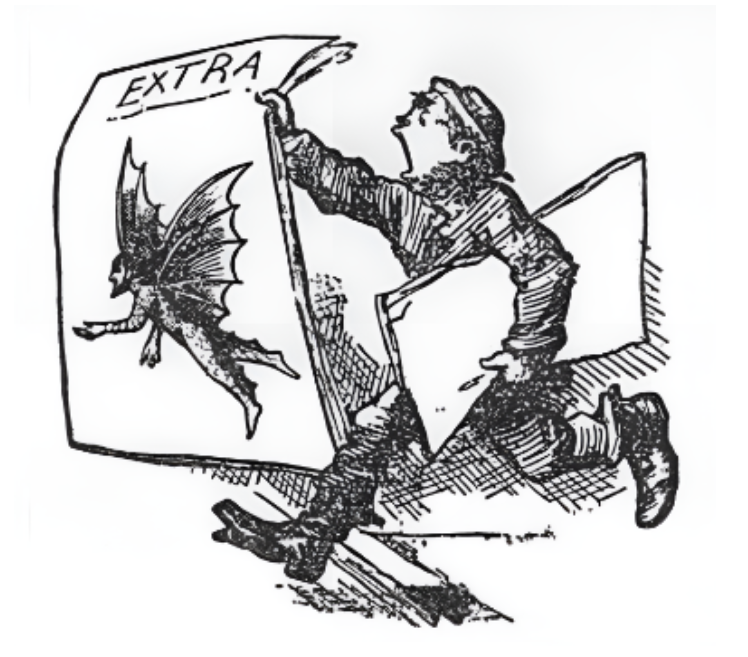
A cartoon satirizing the use of the “Great Moon Hoax” in 1835 by the New York Sun to increase sales. This earlier humbug claimed that flying “man-bats” had been seen on the Moon by a famous astronomer using a high-tech telescope.
Perhaps the WWN gave the game away in 2004 when it began publishing a disclaimer in each issue, suggesting that "the reader should suspend disbelief for the sake of enjoyment.” The story I am about to tell required more than just a little disbelief suspension. In fact, it required a lot.
Long before the supermarket tabloids, from the 1800s and into the early twentieth century, even serious newspapers published hoax articles in a conscious effort to gin up sales. They presented these stories as actual news without any disclaimers and with plots that rivaled anything tabloid writers would conjure up decades later.
For example, the April 8, 1885 edition of the otherwise staid Evening Chronicle of St. Louis carried the story of the discovery of an abandoned city, 360 feet deep, in a coal mine in Moberly, Missouri, located about 150 miles northwest of St. Louis. The newspaper account included descriptions of a “LITERAL WORLD OF WONDERS” (the Internet did not invent shouting in all caps) filled with statues, some carved in stone and some cast in bronze, accompanied by the skeleton of a giant human being who in life must have been more than fourteen feet tall. Though the story was retracted soon after its publication, people continued believing it was true for some time. They would show up to Moberly in droves to investigate the subterranean city for themselves. One property owner was so put out by the crush of visitors that he erected a sign at the entrance of the mine: “No burryied sity lunaticks aloud on these premises.” He was apparently neither amused by the attention, nor a particularly strong speller.
Then there is the Lost City in the Grand Canyon, announced in the Arizona Gazette on April 5, 1909. The article ostensibly was based on an account provided by a Mr. G.E. Kincaid (or Kinkaid) who claimed to have discovered a secret cave located in a cliff 2,000 feet above the Colorado River in the newly minted national monument (the Grand Canyon wasn't designated a National Park until 1919). Kincaid reported the discovery of a trove of wonderful things in the cave, including a monumental statue of a cross-legged Buddha alongside Egyptian artifacts allegedly dating to the reign of the Pharaoh Ramses. (Problematically, there actually were eleven pharaohs named “Ramses” so that name didn’t really narrow down the age of the supposed lost civilization.) Kincaid suggested that the extensive cavern could have housed a civilization of as many as 50,000 people. It was further reported that a Professor S.A. Jordan of the “Smithsonian Institute” was currently conducting excavations at the site.
It was troubling to some readers at the time that no such person worked at the “Smithsonian Institute” which, by the way, is close to, but not the actual name of our national museum. It’s the Smithsonian Institution. So it is possible that misstatements like those were intentionally left as breadcrumbs meant to lead the discerning reader to the conclusion that the entire story was a fabrication. No evidence of any such cave has been found but, unlike Moberly’s nearly forgotten underground city, the Grand Canyon’s lost civilization has had great staying power and is still touted across the Internet as real.
As readers of The Colorado Magazine will know from the recent article on the Solid Muldoon, the Centennial State was not immune to such journalistic silliness. For those unfamiliar, the Muldoon was a supposedly ancient petrified man, complete with a tail, “discovered” near Beulah in 1877. As absurd as that story was, the claim I am about to discuss may be even more outrageous.
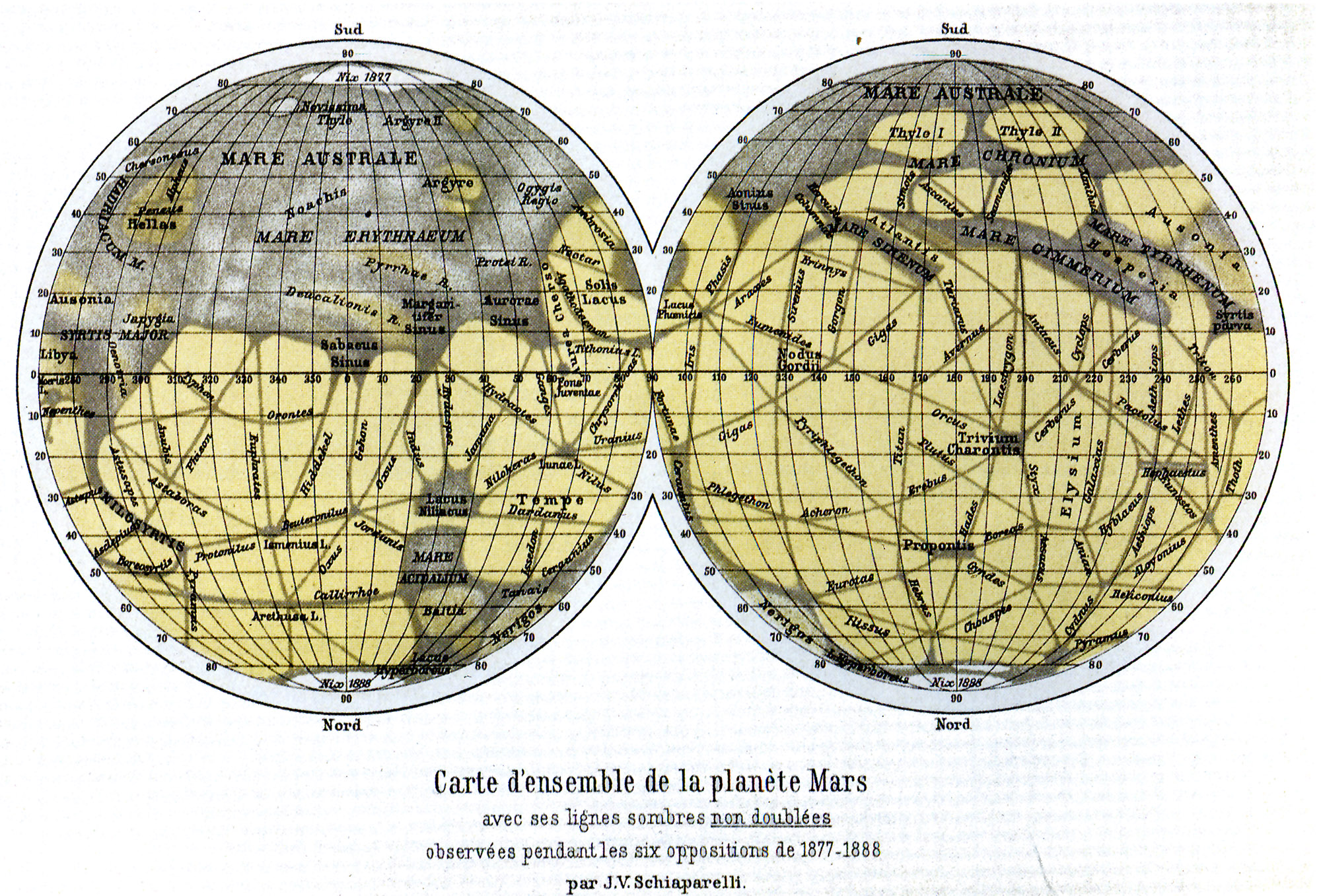
The assumption that other planets—including Mars—must be inhabited by intelligent life was widespread in the 1800s, no matter how many “discoveries” were revealed as hoaxes. This atlas of Mars’s surface depicting water-filled oceans and artificial canals was published in Mars and its Conditions of Habitability by Camille Flammarion, famed astronomer and ardent supporter of the existence of Martians.
Letters from America
The stunning discovery at the heart of this tale was revealed to the public through a series of fourteen letters submitted by “A. Lomon,” (Alexandre Lomon), an actual correspondent for the popular and highly regarded French newspaper Le Pays: Journal des Volontès de la France (The Country: A Journal of the Wills of France). Lomon was stationed in Richmond, Virginia, having been sent to America expressly to cover the Civil War. There is no indication that he traveled to Colorado during his tenure in America and he does not name a direct source for the extremely detailed accounts he provided to the paper. Lomon appears merely to be an intermediary, a conduit for passing along letters written by an unnamed eyewitness to the events transpiring in what was then the Territory of Colorado. I cannot be certain but I suspect that Colorado was chosen as the backdrop for the hoax precisely because it was considered rough, remote, and isolated enough that likely no one living there would even hear about it, much less question the story’s veracity.
The initial report concerned the remarkable discovery in the Rocky Mountains of a mysterious object that baffled investigators. According to the author of the dispatch from America published in Le Pays on June 17, 1864:
The extremely peculiar composition of this mass left the geologists in no doubt. The mass encountered at the foot of James Peak is not of terrestrial origin; it is an aerolith, and certainly the most curious ever seen…
The account went on to claim that the aerolith (a stony meteorite) had so captivated the public’s imagination that, “The war has almost been forgotten, and curiosity-seekers are flocking to the Arapaho region.”
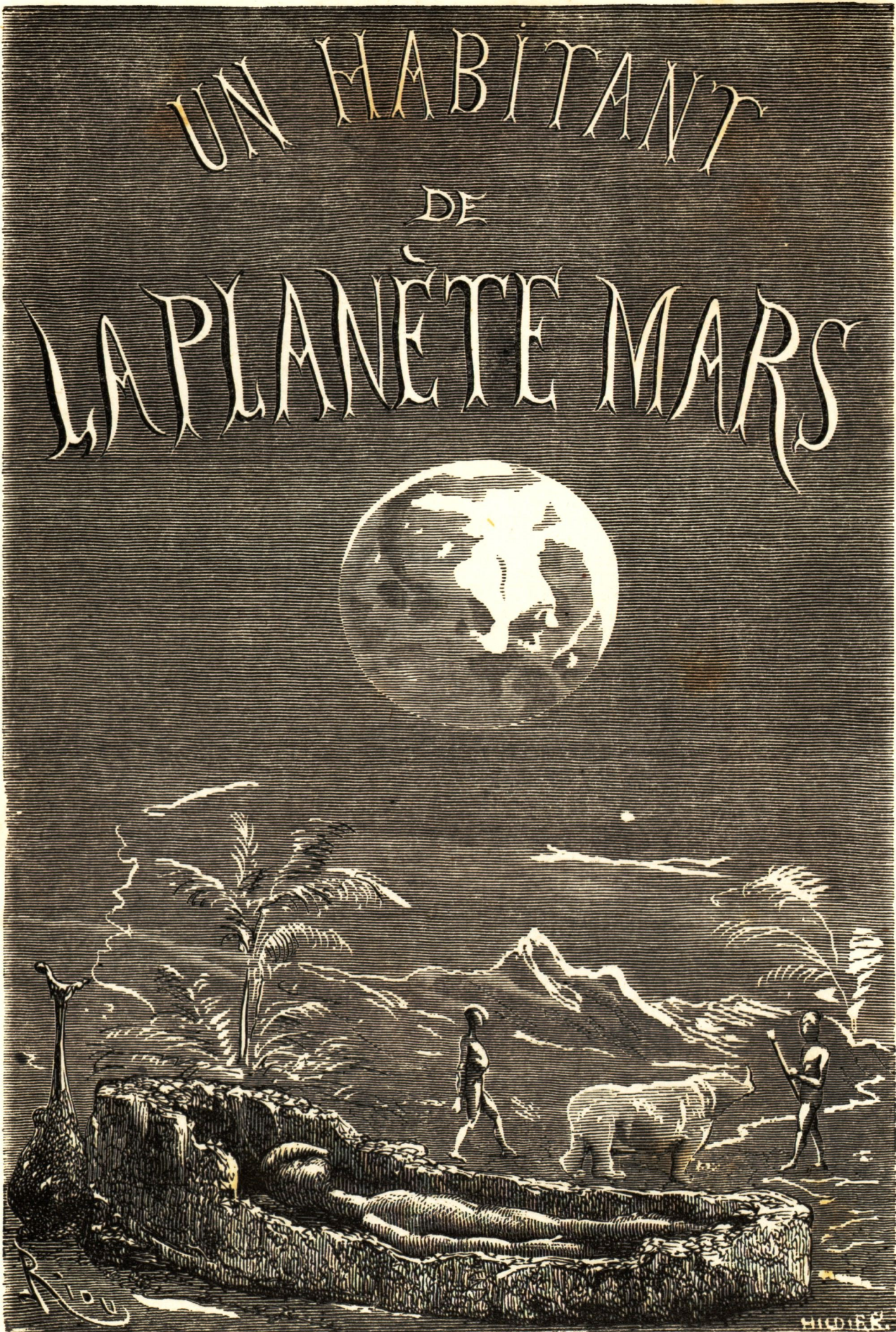
The frontplate of the book Un Habitant de la Planète Mars, published in 1865, shows the body of a Martian in repose in his sarcophagus. As the image also shows a couple of his compatriots walking nearby, the scene would have occurred on Mars before a wayward meteor snatched him up and then deposited him on James Peak near Denver.
A second letter was published in a following edition of Le Pays, and twelve more letters and a revelatory post-script quoting yet another note from the same source followed over the next eight months. The whole affair was then compiled in an 1865 book titled Un Habitant de la Planète Mars (An Inhabitant of the Planet Mars) edited by the paper's science correspondent Henri de Parville (That was his pen name; his given name was François-Henri Peudefer). In the preface to that book, de Parville describes the mysterious delivery of the letters: “At dawn, after waking up, almost every day for a fortnight, on a regular basis, we found a new letter with an American postmark on our work-desk, already open. The origin of this mysterious correspondence remains unknown to us, despite the most scrupulous research.” I assume in this context that by “we” and “our,” de Parville really means “I” and “my.” He was, after all, the most obvious recipient of a science news report delivered to the paper.
So, inspired by the mysterious delivery of undated letters reporting a stunning scientific discovery in Colorado, and without any direct sourcing or material evidence for any part of the tale, first a respected French newspaper and then a book publisher deemed it appropriate to print some (the newspaper) or all of them (the book) verbatim. The paper published a soft disclaimer for the first letter, saying its contents caused “great astonishment” and they published it “with all reservations” but they did not “doubt the honor of [Lomon].” In other words, whoever wrote the letter, Le Pays trusted Lomon for its authenticity.
The Man from Mars?
The tale told in the letters was quite astonishing. While drilling for oil on his property at the foot of James Peak, a Mr. Paxton encountered the remains of an egg-shaped aerolite made of a material certified by geologists not to be native to our planet. Scientists further determined that the peculiar meteorite, astonishingly, was hollow, inspiring them to slice into it to examine its interior.
A hollow space rock found in an ancient geological stratum in Colorado certainly was both interesting and perplexing, but what the scientists discovered in the aerolite’s interior was a scientific bombshell:
The watching men could not restrain a cry of astonishment. Before their eyes was a rectangular space about three feet deep and six feet wide, most certainly hewn out of granite. The empty space was heaped almost everywhere with calcareous concretions, something like stalagmites, which sparkled in the lamplight. In the center, a human form of short stature, seemingly enveloped in a calcareous shroud, was clearly visible. He was lying down, fully extended, and measured scarcely four feet in height.
The claim that this was “the greatest scientific discovery of times past and present” had apparently not been hyperbole. The meteorite housed the preserved remains of an extraterrestrial alien, the first evidence ever found to reveal that we are not alone in the universe!
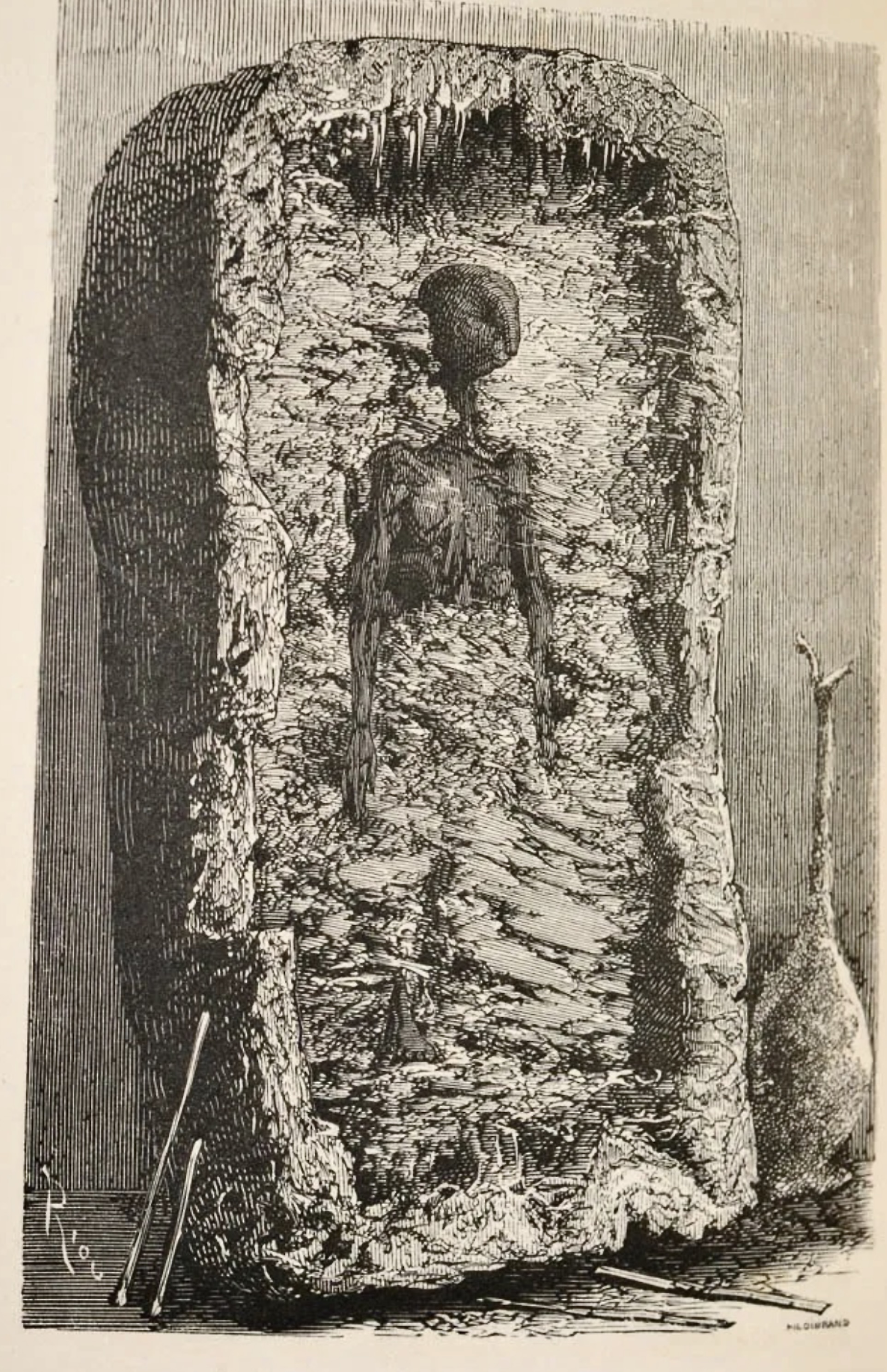
This engraving from Un Habitant de la Planète Mars depicts the quite alien-looking body of the Martian embedded in stone and propped up, after he was “discovered” in Colorado in 1864.
A careful inspection showed that the body was anthropomorphic—that is, it was generally human-shaped—but there were obvious differences between the extraterrestrial and us. For example, the creature’s arms were quite a bit longer than the human norm, with the tips of its slender fingers reaching well below the thighs.
It was in the morphology of his head, however, that the creature most greatly diverged from the human form. It appeared flattened on both sides, tapering toward the front and quite flat in the back, making the face look more like that of an insect than a human being. The most remarkable part of the face though was this: Just above where the nose would be expected, the creature had a small-but-discernible appendage that looked like an elephant’s trunk. Yes, a trunk.
Subsequent letters (the ones that were compiled in the book by de Parville) reported an ongoing debate within the scientific community in residence at the site about the ultimate origins of the extraterrestrial being, with some arguing he was from the Moon and others suggesting Mercury or Venus. However, there was one piece of evidence that appeared to clinch the case that the alien found in Colorado was, instead, from Mars.
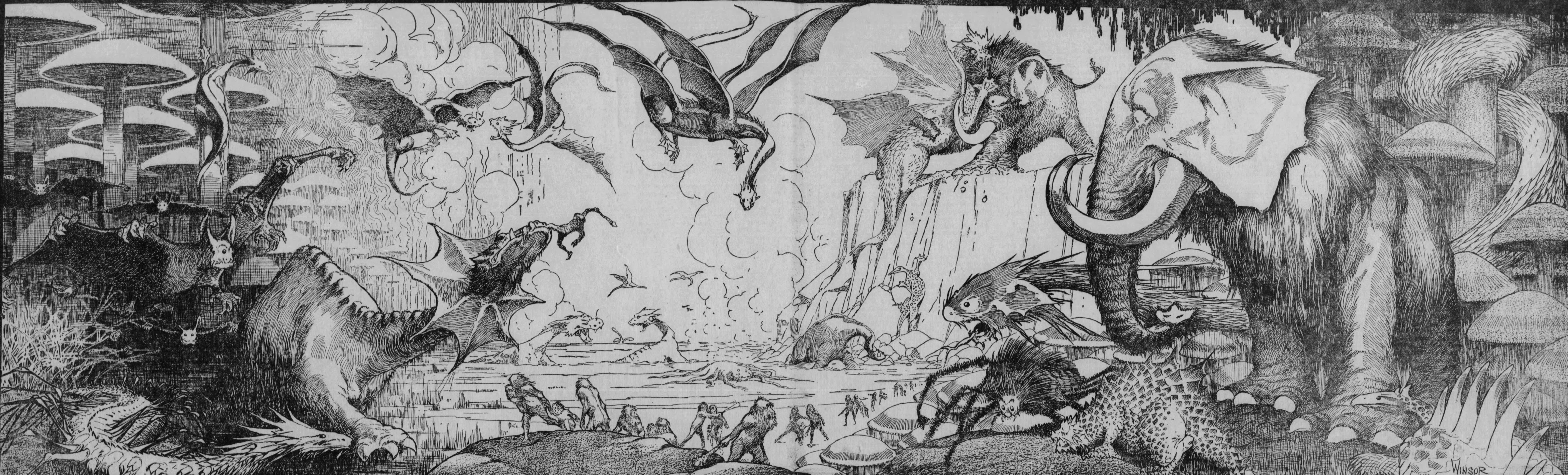
Long into the 1900s, newspapers continued to use extraterrestrial life to drum up sales. This illustration, titled “Terrors of Life on the Planet Venus,” accompanied an article containing wild speculation about what extraterrestrial life might be like.
Among the artifacts recovered with the body were metallic amphorae, yellow rods of indeterminate function, and, most significantly, an inscribed silver/zinc plaque. Images etched onto the plaque included an animal that looked like a rhinoceros, a plant that looked like a palm tree, an outline interpreted as representing a mountain, an inscription in an unknown language, and a schematic illustration of what appeared to be our solar system. This final image was the key for tracing the planetary pedigree of the alien.
In the early ’70s, NASA launched two probes—Pioneer 10 and 11—towards deep space, each carrying a special plaque. Designed to leave the solar system, those probes are now, more than fifty years after entering space, “boldly going where no one has gone before.” A team directed by Carl Sagan designed the plaques with the faint hope that an intelligent extraterrestrial life form might someday encounter one or both of them. The images etched onto the Pioneer plaques include those of a male and a female human being adjacent to a map of our solar system with the sun and planets in their orbital order. Further, there was a line connecting a schematic drawing of the spacecraft itself to the third planet, an existential “we are here” waypoint on the map.
Getting the jump on NASA by more than a hundred years, the plaque recovered in the alien’s sarcophagus also presented a map of the solar system. There was a celestial body depicted on one edge of the plaque, interpreted as the Sun, and then, in order away from our local star there were what appeared to be the planets Mercury, Venus, Earth, Mars, Jupiter, Saturn, Uranus, and Neptune (planet or not, Pluto would not be discovered until 1930). The planets were identified by their respective locations, reflecting their actual distances from the Sun.
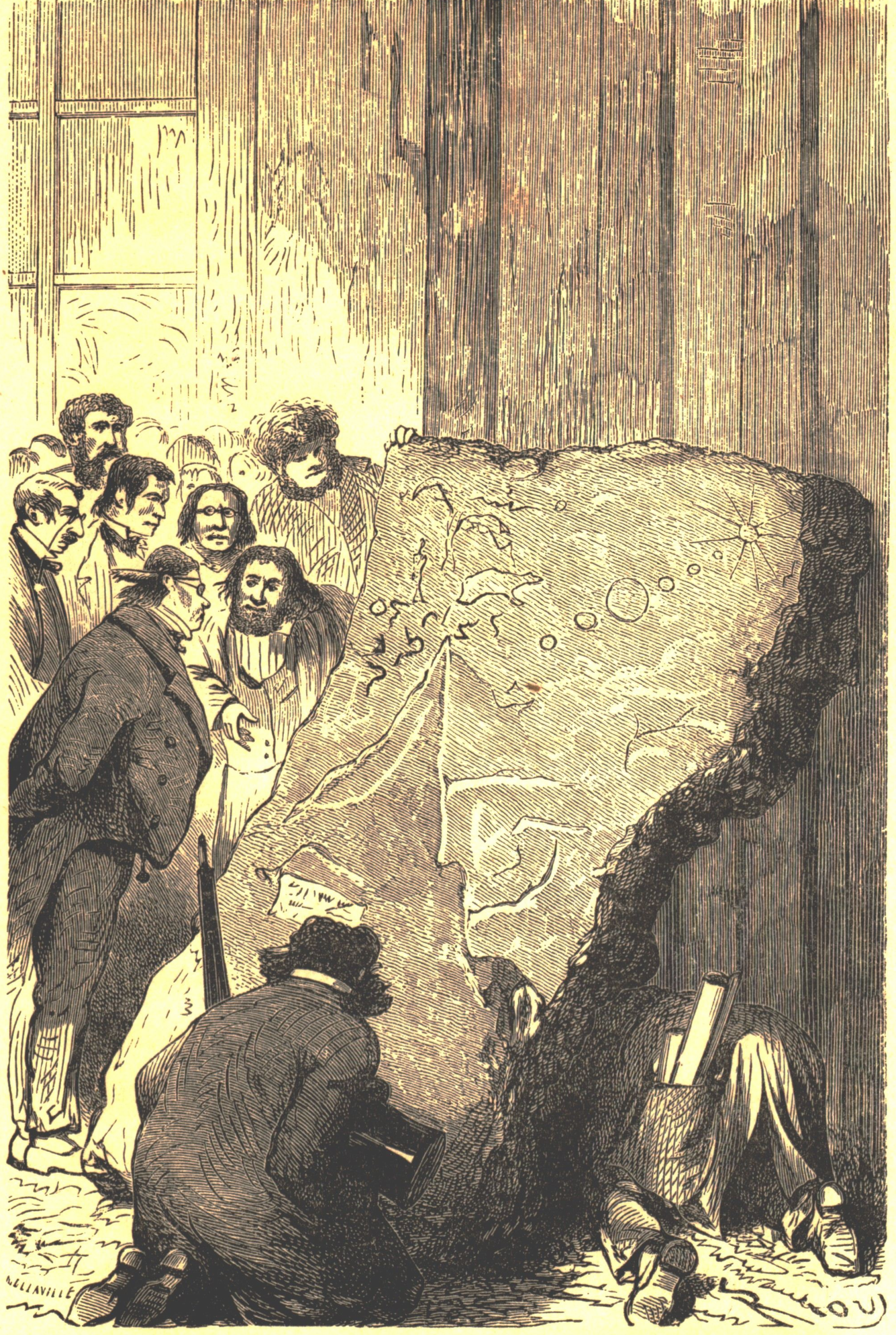
This image from Un Habitant de la Planète Mars shows the engraved plaque claimed to have been found alongside the Martian in his tomb. The scientists visiting Colorado are shown carefully examining the engraving on the plaque, a schematic drawing of our solar system, highlighting the planet Mars.
One of those planets was depicted differently, being disproportionately larger than all of the others. That planet is the fourth one from the sun, in other words, Mars.
Highlighting Mars in this way, by showing it as greater in size and, therefore, greater in significance, was interpreted by the learned men supposedly meeting in Colorado as the extraterrestrials telling us what planet they called home.
But how did the Martian in his sepulcher land in Colorado? It was speculated that the burial had originally been located on the top of a mountain on Mars, the same one drawn on the plaque, where it was struck by a meteor and displaced, itself becoming an interplanetary object. After being hurled into space, it entered the Earth’s atmosphere and crash landed at the base of James Peak in the “Arrapahys (Arapaho) country.” The geological stratum in which it was found suggested that this had occurred many thousands of years ago.
The assembled scientists agreed that this was the most likely scenario and found it ironic that the tomb of such an obviously important Martian had been snatched from its home and dropped on Earth. As they pored over the shattered mountain:
The archaeologists of Mars must have spent more than one sleepless night over these incomplete vestiges of another age...The scientists of Mars still have the base of the mountain; but what we have is a faithful representation of the entire mountain, the sepulcher and the dead man.
It was as if the tomb of King Tut had been blasted into space, leaving Earth’s scientists in the dark about the young pharaoh, as Martian archaeologists reveled in the “wonderful things” Howard Carter and the rest of humanity would never have the opportunity to examine.
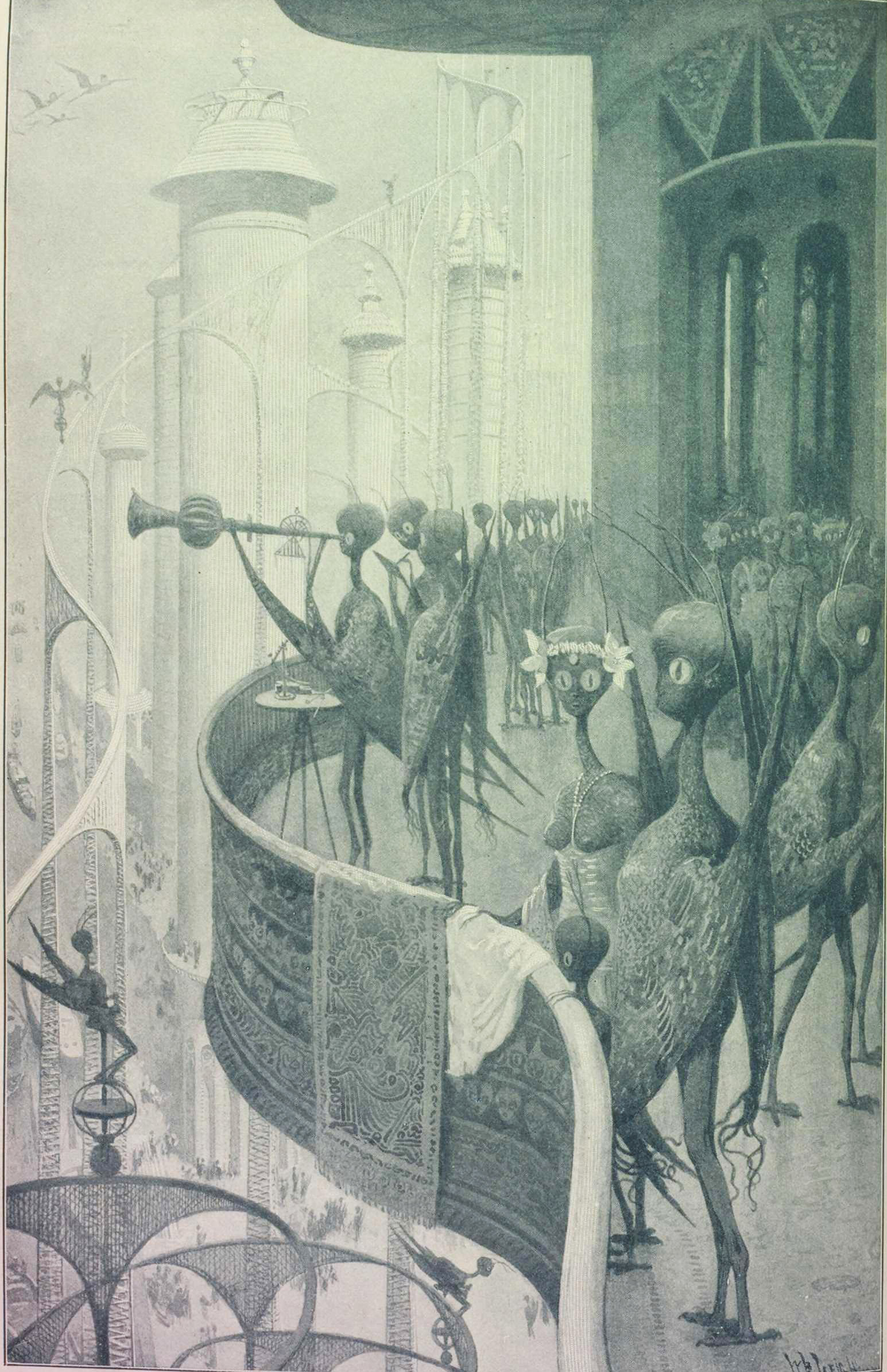
An illustration of a Martian city from H.G. Wells’s article “The Things that Live on Mars,” in which he tried to predict what life on Mars might truly be like.
Back Down to Earth
It was decided that the various elements of the stupendous discovery should be shared with the world and distributed to various museums, institutes, and universities for display and further study. In that distribution, France would receive the ultimate prize, the tomb and body of the alien. The timeline suggested that these artifacts would be shipped from America to Europe by no later than the end of December, 1864.
The world’s scientists waited expectantly for the arrival of the many elements of the discovery. But January, February, and then half of March passed without their delivery. Then came a tragic twist, revealed in the postscript by Henri de Parville for his book. He quotes a previously unpublished fifteenth letter from America, this one dating to March 13, 1865, conveying an extraordinary plea directed to European scientists:
Richmond, March 13.
Are we forgotten, then? For two full months you have had the inhabitant of Mars in your hands, and not a word from you.
This implies that the remains should have reached their destinations by mid-January, but it was mid-March and no Martian specimens had been delivered to anyone. De Parville expresses his exasperated confusion about this turn of events and then drops a bombshell nearly as big as the original announcement of the extraterrestrial. At the end of the final letter from America there is a signature: Henri de Parville.
Read that again. If you are flabbergasted by this revelation you are in good company. Allegedly, so was de Parville.
According to the post script, it was Monsieur Henri de Parville, writing from Richmond, Virginia who was the source of information about the marvelous discoveries made in Colorado. His letters were sent to Le Pays, received in France, and handed to Monsieur Henri de Parville—the same person!
Huh? How could the same person be writing the letters in America and then virtually instantly receiving them in France? That makes no sense, as de Parville freely admits. Questioning his own sanity, de Parville wonders to his readers if he has somehow been unconsciously writing letters to himself about what must have been an entirely fictional archaeological discovery. That may sound bizarre to you, and that’s because it is.
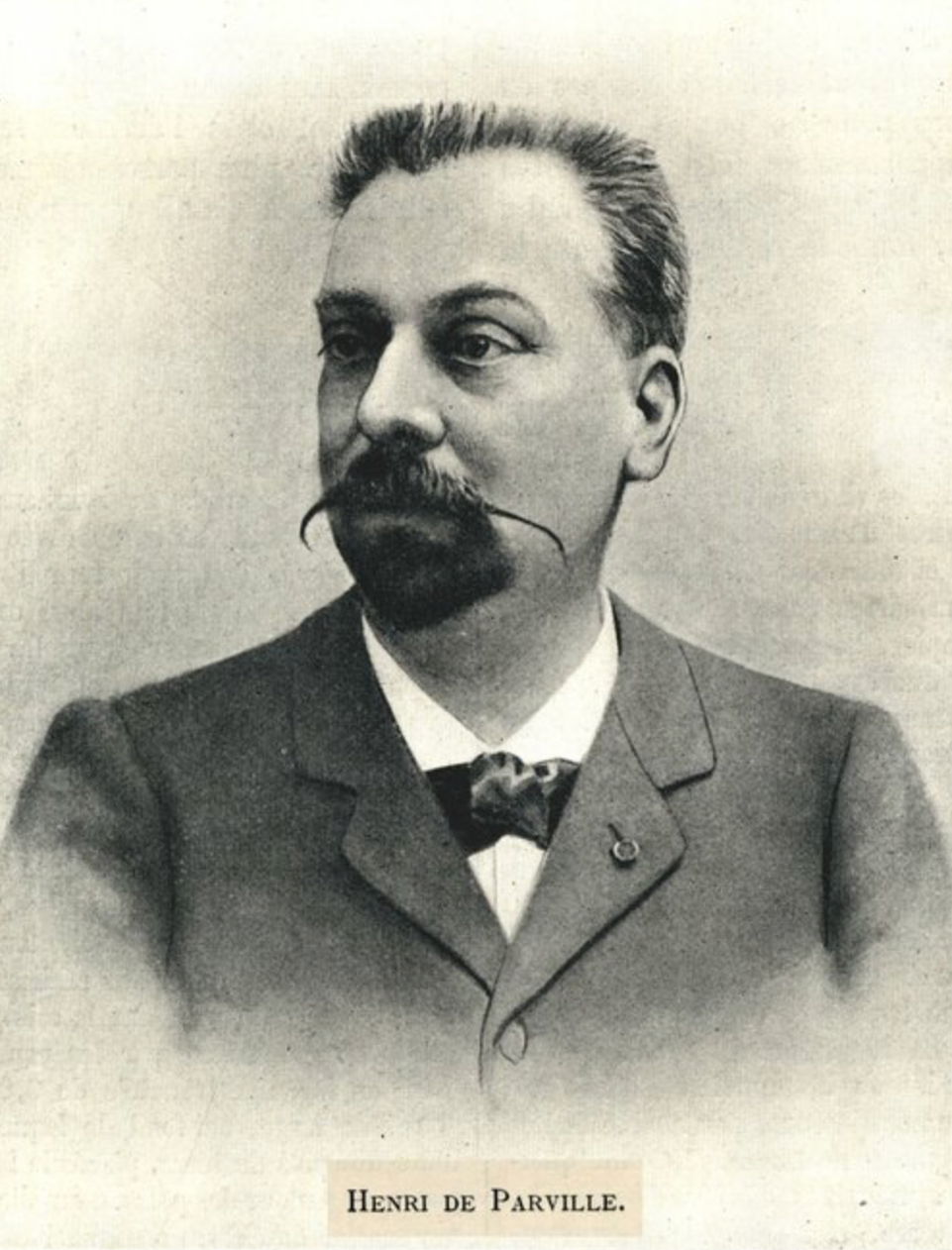
Henri de Parville. He originally presented himself as the liaison between his newspaper’s correspondent in America and the public in revealing the spectacular discovery of a Martian body in Colorado.
Plaintively, but I think actually sarcastically, de Parville reacts to the final communication from America with shock.
My signature—my own signature!—no doubt about it! This letter….Have I, then, written it myself? The ink is still fresh. What about my American correspondent, though?…I must have been my own correspondent for six months; all the letters must be from me to myself. Unknown to myself, I must have written to myself by night what I read by day….Come on, that’s impossible! I’m dreaming.
In truth, it was quite possible and he wasn’t dreaming. The entire affair had been his hoax from the start, not a work of science but of science fiction. As a science writer de Parville knew enough about the machinations of science and the personalities of scientists to lend the story what the book’s English translator, Robert Stableford, calls “superficial plausibility.”
Finally, de Parville ends his postscript with a backhanded confession, quoting the Roman poet Virgil: Felix qui potuit rerum cognoscere causas. “Fortunate is he who has been able to know the causes of things.” De Parville knows because he was the cause of things.
Oh, and one more thing in case you needed a little more convincing that the entire affair had been a humbug. De Parville attached a date to the postscript he included in the book. He wrote it on “1st April 1865.” That may qualify the Colorado Martian story as the most elaborate April Fools’ Day joke ever played out on the pages of a newspaper. You really have to hand it to him—Monsieur Henri de Parville makes the writers of the fabrications that regularly appeared in the Weekly World News look like a bunch of amateurs.
Author’s note: All quotes from An Inhabitant of the Planet Mars are taken from Robert Stableford’s English translation. A big thanks to William Honeychurch for helping us secure scans from a rare illustrated copy, and also to UFO historian archivist Jeff Knox whose X thread on the Colorado Martian alerted me to this twisted story in the first place.